Why Rwanda Keeps Showing Up on Every List
Ask a group of Black women solo travelers to name the safest place they've ever been, and Rwanda comes up more often than almost anywhere else on the continent. Not "safe for Africa" with an asterisk attached — just safe, full stop, in the way travelers usually reserve for describing a quiet Scandinavian capital. Kigali's streets are swept and litter-free, traffic is orderly, sidewalks are walkable, and the phrase locals use to explain it — umuganda, the mandatory last-Saturday-of-the-month community clean-up and civic work morning — has become shorthand for something bigger: a country that decided cleanliness, order, and safety were policy priorities, not accidents. Episode 10 of BTN's Solo and Free series lands here, in Kigali and the volcano country to its northwest, to ask why Rwanda has quietly become one of the top picks for Black women considering their first — or fifth — solo trip to Africa.
For the broader destination picture — Rwanda's post-1994 reinvention, full trip logistics, and what makes the country a bucket-list stop beyond the solo-travel angle — see BTN's destination deep dive, Kigali & the Mountain Gorillas: Rwanda's Quiet Reinvention. This episode focuses specifically on what Rwanda offers Black women traveling solo.
Kigali's Safety and Cleanliness Reputation, By the Numbers
The reputation isn't just vibes. A widely cited 2022 global solo-travel safety survey ranked Rwanda the 6th safest country in the world for solo travelers — ahead of most European capitals frequently recommended to first-time solo travelers. Multiple independent safety trackers used by solo female travelers rate Kigali specifically in the 4.5-out-of-5 range, with reviewers describing it as "the safest place I've ever been" and noting minimal catcalling compared to other major cities, on top of low violent crime and visible, consistent police presence around the city center.
The cleanliness piece traces back to a specific, enforceable policy: Rwanda banned single-use plastic bags nationwide in 2008, one of the first countries in the world to do so, and continues to enforce it seriously — bags can be confiscated at the airport on arrival, so pack accordingly. Combine that with umuganda, which mobilizes the entire country (residents, business owners, even the president) for a few hours of mandatory community upkeep once a month, and you get a capital city that looks and feels fundamentally different from the trash-strewn, traffic-choked stereotype some travelers still associate with African capitals. It's a stereotype Rwanda has spent two decades actively, deliberately dismantling through governance, not marketing.
Why This Resonates Specifically With Black Solo Female Travelers
Every one of the safety factors above lands differently for a Black woman traveling alone than it does for a general travel blogger. Low catcalling and harassment rates mean fewer of the daily energy-draining interactions that make solo travel exhausting elsewhere. Visible policing and low petty-crime rates mean less hypervigilance walking back to a guesthouse after dinner. And a Black-majority country where you are not visually marked as "the tourist" the moment you step outside removes a layer of scrutiny that shows up in places like parts of Southeast Asia or Eastern Europe. Add a genuinely warm, English-and-French-and-Kinyarwanda-fluent hospitality culture — Rwandans are frequently described by visitors as reserved at first but deeply hospitable once engaged — and Kigali becomes a rare destination where a Black woman traveling alone can exhale within the first day rather than the first week.
That said, respect the moment in history you're visiting. Rwanda's order and safety today exist in direct relationship to the 1994 genocide against the Tutsi, in which an estimated 800,000 to one million people were killed in roughly 100 days. The Kigali Genocide Memorial, where more than 250,000 victims are buried, is not a detour from your trip — it should be treated as one of its central stops. Go early in your visit, budget at least two hours, and give yourself space afterward before jumping into anything lighter. Understanding what Rwanda rebuilt itself from is essential to understanding why its current model of governance and civic order exists at all.
Gorilla Trekking: The Logistics, Cost, and What to Actually Expect
For most travelers, Rwanda's headline draw is trekking to see mountain gorillas in Volcanoes National Park, and it deserves the hype — but it requires real planning. As of 2026, the standard gorilla trekking permit costs $1,500 per person for international visitors, a price that has held steady for several years and funds anti-poaching patrols, veterinary care for the gorillas, ranger salaries, and community development in the villages bordering the park. Discounted rates exist: roughly 30% off when combining Volcanoes with another Rwandan national park during the November-to-May low season, and reduced rates for conference attendees extending a business trip. Private, dedicated trekking experiences run dramatically higher, into five figures, for travelers who want a fully customized visit.
The permit fee buys you one trek, one day, with one habituated gorilla family, capped at 8 visitors per group. Only about a dozen habituated families are open to tourism at any given time, which means the park issues roughly 96 to 112 permits total per day — a hard ceiling that exists to protect the gorillas, not to manufacture scarcity marketing. Book at least 3 to 6 months out, and if your trip falls in the June-through-September peak season, aim closer to a year in advance; permits for popular dates genuinely sell out. Book directly through the Rwanda Development Board or a reputable, RDB-registered tour operator — never through a third party promising a "guaranteed discount" on the standard fee, which is fixed by the government and does not fluctuate outside the official promotional windows.
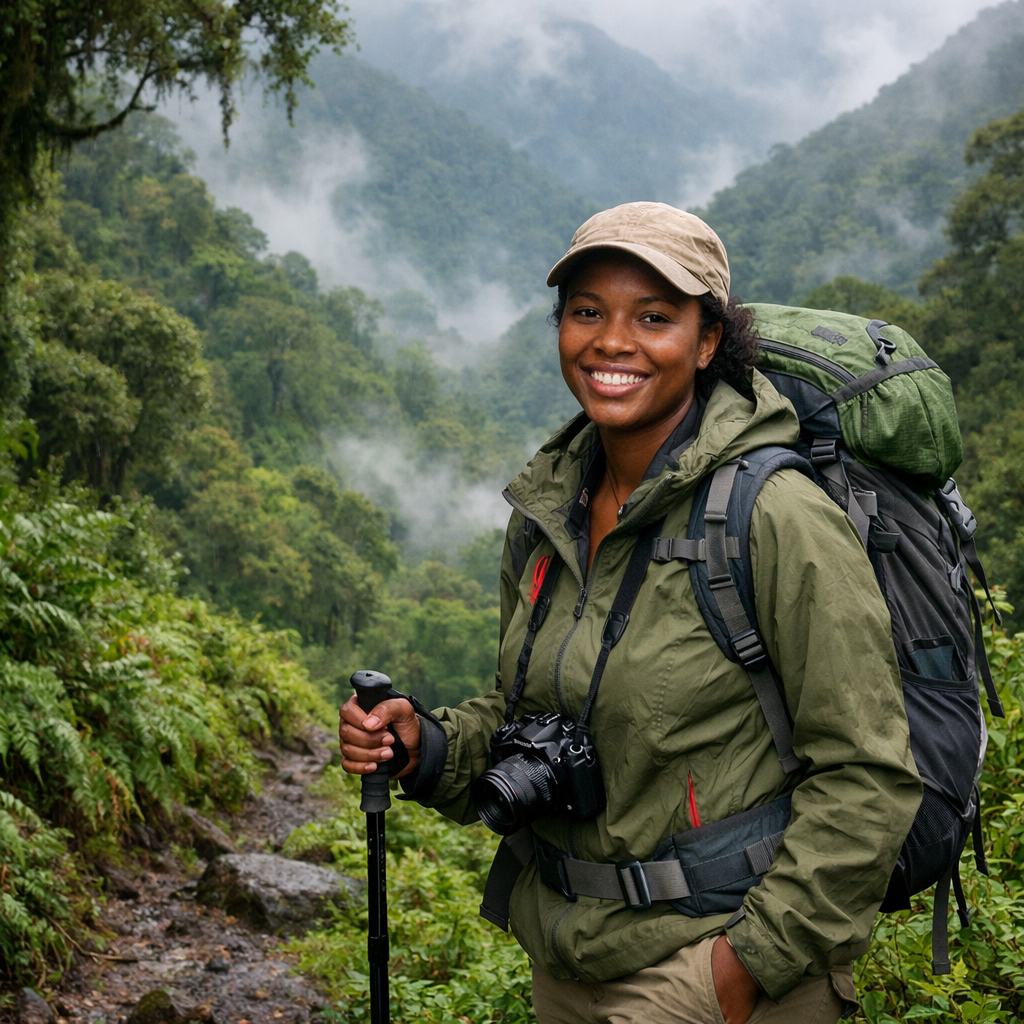
The trek itself starts with an early-morning briefing at park headquarters, then a drive to your assigned trailhead followed by a hike that can run anywhere from 30 minutes to several hours each way, depending on where your gorilla family is located that morning — porters are available to hire for a modest additional fee and are worth every dollar on the steep, muddy volcanic terrain. Once you locate the family, you get exactly one hour with them, at a required distance, under the supervision of armed rangers and trackers. Pack real hiking boots, gardening gloves for gripping stinging nettles, and rain gear regardless of season; Volcanoes National Park sits at high altitude in a rainforest, and conditions change fast.
Practical Solo-Travel Notes
Visa on arrival is available to citizens of every nationality, US passport holders included, for a standard single-entry fee capped at $50 (multiple-entry runs up to $70); you can also apply online in advance if you'd rather not handle it at the airport. Kigali International Airport is compact and easy to navigate solo, and licensed taxis and ride-hailing options are reliable for getting into the city center, roughly a 20-to-30-minute drive. Within Kigali, walking is genuinely pleasant during the day in central neighborhoods like Kiyovu and Kimihurura, both dense with solo-friendly cafes, boutique guesthouses, and co-working spaces that double as easy places to strike up conversation. For the multi-hour drive out to Volcanoes National Park near Musanze, book a private transfer or join a small-group tour rather than attempting public transport with trekking gear.
English is one of Rwanda's official languages alongside Kinyarwanda and French, and it's widely spoken in tourism-facing businesses, which removes a language barrier that complicates solo travel in much of the rest of East Africa. Mobile data is affordable and coverage is strong even near the park, so staying connected and sharing your location with someone back home is simple. As with any solo trip, register with the US Department of State's STEP program before departure, keep a digital and paper copy of your passport and gorilla permit separately from the originals, and buy travel insurance that specifically covers high-altitude trekking and emergency medical evacuation — standard travel policies frequently exclude activities like gorilla trekking, so read the fine print before you buy.
What Sets Rwanda Apart From Other East African Options
Kenya and Tanzania offer more famous savanna safaris and, in Zanzibar's case, beach time Rwanda can't match — but neither delivers Rwanda's combination of capital-city safety and cleanliness with world-class primate trekking essentially next door. Uganda offers gorilla trekking at a notably lower permit price, but its infrastructure, road conditions, and urban safety perception for solo women trail well behind Rwanda's. What Rwanda offers that its neighbors largely don't is a two-for-one: a capital city genuinely comfortable to explore alone, paired with one of the most extraordinary wildlife encounters on Earth a few hours' drive away, all wrapped in a governance culture that treats visitor safety and civic order as non-negotiable rather than aspirational. For a solo female traveler weighing her first trip to the continent, that combination is difficult to find anywhere else.
Coming Up Next Episode
Solo and Free continues the journey through destinations reshaping what independent travel looks like for Black women. Subscribe to the BTN podcast so you don't miss the next stop.
Listen & Follow
Catch the full audio conversation on the BTN podcast, and follow Black Travel Now across social media for the rest of the Solo and Free series as it drops.