The Country That Rebuilt Itself Into Africa's Safest Capital
There is a moment that catches almost every first-time visitor to Kigali off guard. You land at the airport, clear customs in minutes, and step into a city that looks and feels nothing like the images that may still linger in the world's memory from over three decades ago. The streets are swept clean. Traffic moves in orderly lanes. Street vendors don't hassle you. At night, you can walk between restaurants in the Kimihurura district without a second thought. Somewhere between the airport and your hotel, most travelers quietly ask themselves the same question: how did this happen?
The honest answer is that Rwanda's transformation was neither quick nor easy, and it was built directly on top of the deepest wound a nation can carry. This is a destination that asks something of the traveler that few others do — to hold two truths at once. Rwanda today is one of the most orderly, ambitious, and rapidly developing countries on the continent, a place that has become an unlikely case study in urban planning, digital governance, and civic pride. And Rwanda is also the site of the 1994 genocide against the Tutsi, a horror that unfolded in roughly one hundred days and claimed an estimated 800,000 lives. Any honest visit to this country holds both of those realities, and Black Travel Now believes that's exactly as it should be.
For travelers weighing a Rwanda trip primarily for its other headline draw — spending an hour in silent, eye-to-eye company with a wild mountain gorilla — this is your complete guide to both sides of the country: the sobering history that shaped it, and the once-in-a-lifetime wildlife encounter that has made it a serious bucket-list destination for adventurous Black travelers worldwide.
Kigali: Order, Cleanliness, and the Umuganda Effect
Kigali is routinely singled out by international travel writers and guidebooks as one of Africa's safest and cleanest capital cities — Lonely Planet has called it "a genuine contender for the safest capital in Africa," and it has been repeatedly recognized as one of the continent's cleanest urban centers. Plastic bags have been banned nationwide since 2008. Sidewalks are swept. Public spaces are genuinely maintained, not just for tourists but for residents.
A large part of that is due to Umuganda, a mandatory monthly community service day held on the last Saturday of every month from 8 to 11 a.m. Traffic stops. Shops pause. Every able-bodied Rwandan adult between 18 and 65 is expected to participate in public cleanup and community improvement projects in their neighborhood — sweeping streets, clearing drainage, building local infrastructure. It's not a photo-op initiative; it's a genuine civic institution, reinstated in 2009 as part of the country's post-genocide rebuilding, and it is widely credited with Kigali's remarkably tidy streets and strong sense of collective responsibility. If your visit happens to fall on the last Saturday of the month, expect reduced services and moving vehicles between roughly 8 and 11 a.m. — plan around it rather than against it.
Beyond the cleanliness, Kigali has quietly become one of the continent's most livable cities: reliable electricity and internet, a growing specialty coffee scene (Rwandan coffee is genuinely excellent and worth seeking out at cafés like Question Coffee or Inzora Rooftop Café), a compact and walkable city center, and a restaurant scene in Kimihurura and Kiyovu that ranges from Rwandan comfort food to serious international dining.
The Kigali Genocide Memorial: A Necessary Pilgrimage
No visit to Rwanda is complete — or honest — without time at the Kigali Genocide Memorial in the Gisozi neighborhood. This is sacred ground, and Black Travel Now asks every traveler to approach it with the gravity it deserves.
The memorial is the final resting place for more than 250,000 victims of the 1994 genocide against the Tutsi, their remains interred here after being recovered from mass graves and sites of violence across the capital. Built with the Aegis Trust and inaugurated on April 7, 2004 — the genocide's tenth anniversary — the memorial functions as both a burial ground and a museum. Its exhibitions walk visitors through Rwanda's pre-colonial history, the colonial-era manipulation of ethnic identity that helped set the stage for catastrophe, the 100 days of violence itself, and the country's long path toward justice and reconciliation. A children's room documents individual young victims — their names, their favorite foods, the way they liked to laugh, and how they died — and it is, without exaggeration, one of the most difficult and important rooms you will ever stand in. In 2023, the memorial was designated a UNESCO World Heritage Site, recognition of both its historical weight and its role in genocide prevention education worldwide.
Some practical and ethical notes: allow at least two to three hours, go with an open schedule rather than squeezing it between other plans, and know that photography is restricted in parts of the exhibition out of respect for victims and survivors. Many visitors find they need quiet time afterward before doing anything else that day — build that into your itinerary rather than fighting it. This is not "dark tourism" in the exploitative sense; it is remembrance, and Rwandans have made a deliberate national choice to keep this history visible so that "never again" is more than a slogan. Entry is by donation, and the memorial's proceeds support survivor assistance programs.
Volcanoes National Park: The Gorilla Trekking Experience
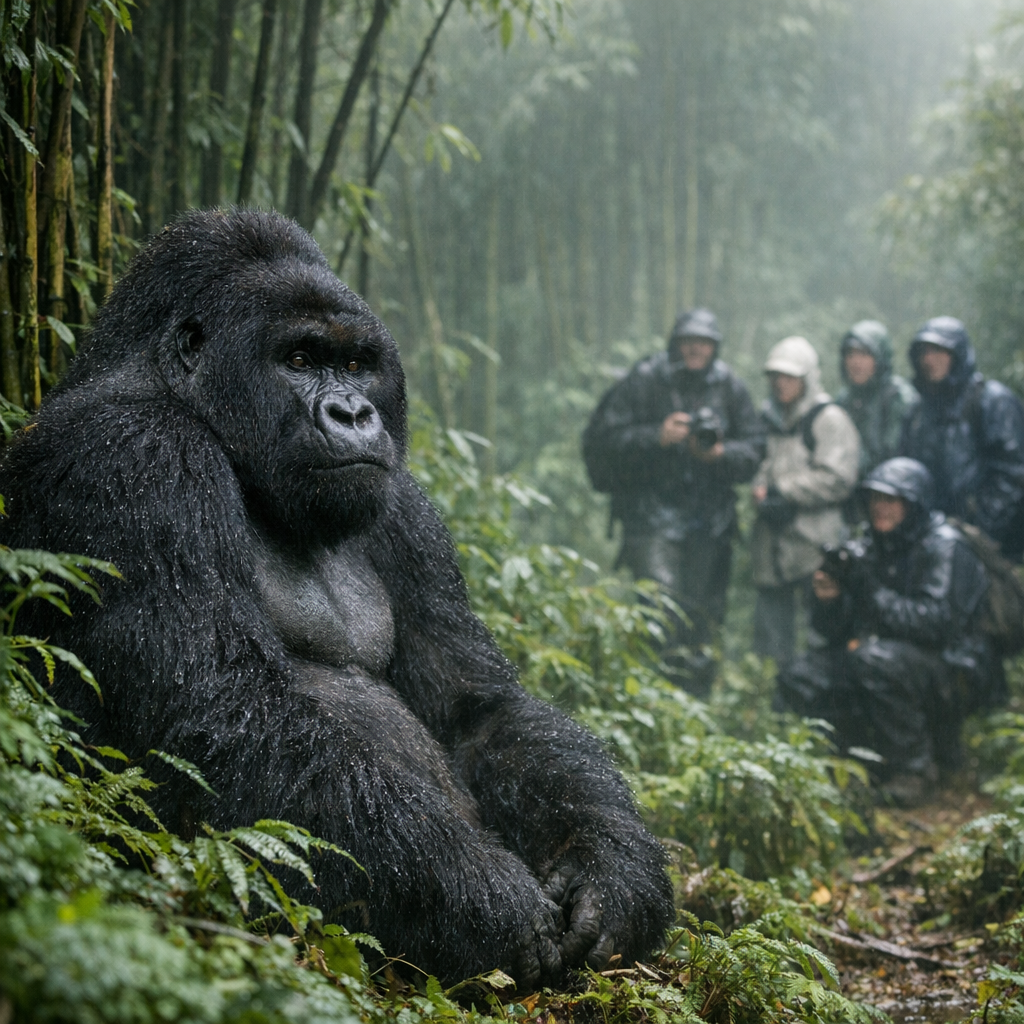
Ninety minutes to two and a half hours northwest of Kigali, the volcanic peaks of the Virunga Mountains rise out of terraced farmland into dense, misty rainforest. This is Volcanoes National Park, one of only a handful of places on Earth where you can trek through bamboo forest to spend a permitted hour in the presence of wild mountain gorillas — one of the most endangered great apes on the planet, and one of conservation's genuine recovery stories.
Here is what the experience actually involves: groups of a maximum of eight visitors, accompanied by armed park rangers and expert trackers, set out early in the morning toward a gorilla family whose location has typically already been scouted by trackers who stayed with the group overnight. The hike itself can range from a relatively easy 30-minute walk to a strenuous multi-hour climb through steep, muddy, vine-tangled terrain, depending entirely on where that day's gorilla family happens to be. Once you reach them, you get a strictly enforced one hour in their company, from a mandated distance — though gorillas, being gorillas, do not always respect that distance themselves. Silverbacks weighing up to 400 pounds move through the group with an unhurried, almost regal calm; juveniles wrestle and show off; and the silence of the forest, broken occasionally by a low grumble or the snap of bamboo, tends to produce the kind of quiet awe that photographs never quite capture.
What a Gorilla Trekking Permit Actually Costs
This is the number that surprises most first-time researchers: a gorilla trekking permit in Volcanoes National Park costs $1,500 per person. Rwanda raised its permit price sharply in 2017 (from $750) as a deliberate strategy to position gorilla trekking as a high-value, low-volume luxury experience rather than a mass-market one — the logic being fewer visitors, less pressure on a fragile and still-recovering gorilla population, and higher per-visitor revenue funneled into conservation and neighboring communities. That price has held steady since, and travelers should always confirm the current figure directly with the Rwanda Development Board or a licensed tour operator before booking, since permit pricing is a government policy that can change.
The permit itself covers only the trekking activity — it does not include transport, guides, lodging, or the customary tips for trackers and porters (hiring a porter, often a former poacher now employed in conservation tourism, costs a modest $10–15 and is one of the best small ways to put money directly into the local economy). Permits should be booked well in advance, ideally three to six months ahead for peak season (June through September and December through February, the driest and most popular trekking windows), through a registered tour operator or directly via the Rwanda Development Board. Because permit numbers are strictly limited, procrastination is the single most common way travelers miss out on this experience entirely.
Is it worth $1,500 for one hour? Every Black Travel Now team member who has done it says some version of the same thing: yes, unreservedly, and they'd do it again. This is not a theme park encounter. It is a wild, unscripted hour with a critically important, critically endangered species, in a landscape few people on Earth will ever stand in. Budget for it the way you'd budget for the trip of a lifetime, because that's precisely what it is.
Where to Stay
Luxury (near the park): Bisate Lodge and Singita Kwitonda Lodge are among the most celebrated eco-luxury properties in Africa, with volcano views, exceptional service, and conservation-focused design. One&Only Gorilla's Nest offers polished luxury minutes from the park gate.
Kigali luxury: Kigali Marriott Hotel and Radisson Blu Hotel Kigali offer dependable five-star comfort in the city center, both popular with business and leisure travelers alike.
Mid-range & boutique: Ubumwe Grande Hotel and The Retreat by Heaven in Kigali's Kiyovu neighborhood offer excellent service, strong restaurants, and a more intimate scale at a fraction of five-star pricing.
Budget: Guesthouses in the Remera and Kacyiru neighborhoods offer clean, secure lodging from roughly $40–70 per night — a smart way to offset the cost of a gorilla permit elsewhere in the trip.
🏨 Book Rwanda Hotels →Getting There & Visa Requirements
Kigali International Airport (KGL) is served by RwandAir with direct connections from London, Brussels, Doha, Dubai, and multiple African hub cities, plus a seasonal direct RwandAir route from New York (Newark). Most US travelers connect through Europe or the Gulf, with total travel time of roughly 16–20 hours depending on routing.
Rwanda has one of the most visitor-friendly entry policies on the continent: all nationalities, including US citizens, have been eligible for visa-on-arrival access since January 1, 2018. A standard 30-day single-entry tourist visa costs approximately $50 and is typically processed within minutes at the airport, though applying in advance online through Irembo (Rwanda's government services portal) can speed up arrival. Always double-check current fees and requirements directly with Rwandan immigration authorities before you fly, since visa policy is subject to change.
✈️ Find Rwanda Flights →Budget Guide
Rwanda is not a budget destination once gorilla trekking enters the equation, and Black Travel Now believes in being upfront about that rather than burying it in fine print.
Kigali city-only budget: $80–150/day — guesthouse or mid-range hotel, local restaurants, ride-hailing transport, museum and memorial visits.
Full Rwanda trip with one gorilla trek: $2,200–3,500+ for a 5–7 day trip for one person, once you factor in the $1,500 permit, private transport to Volcanoes National Park, park-adjacent lodging, and a few days in Kigali.
Luxury full itinerary: $5,000+ for a week including a stay at a top-tier lodge like Bisate or Singita Kwitonda, multiple activities, and premium transport.
BTN Insider Tips
Book your gorilla permit months ahead. Permits are capped daily and sell out during peak season. Don't build a trip around gorilla trekking without confirming permit availability first.
Physical fitness matters. You won't know which gorilla family you're assigned until the morning of your trek, and some hikes are genuinely strenuous. A reasonable baseline fitness level makes the day significantly more enjoyable.
Pack for mud and mist. Waterproof hiking boots, gaiters, a rain jacket, and gardening gloves (for grabbing stinging nettles and vines) are not optional extras — they're the difference between a good day and a miserable one.
Tip your trackers and porters. This is expected and it directly supports local families, many of whom are former poachers now working in conservation.
Give the Genocide Memorial its own half-day. Don't stack it against a flight departure or another major activity. Let yourself sit with it.
Learn a greeting in Kinyarwanda. "Muraho" (hello) goes a long way with Rwandans, who take real pride in their language and culture.
Is Rwanda Safe for Black Travelers?
Rwanda consistently ranks among the safest countries in Africa for any traveler, and Black travelers in particular report feeling an ease here that's distinct even from other welcoming African destinations — a function of Kigali's low crime rate, visible community policing, and overall civic orderliness. Violent crime against tourists is rare, petty theft is uncommon by regional standards, and solo travelers, including Black women, generally report feeling comfortable moving around Kigali during the day and in well-lit, populated areas at night. As with any destination, use standard precautions: secure valuables, use reputable transport, and stay attuned to your surroundings, particularly in Volcanoes National Park's rural approach roads after dark.
Mark Your Calendar
- Kwita Izina (September) — Rwanda's globally covered baby gorilla naming ceremony, a celebration of conservation success drawing conservationists, celebrities, and travelers from around the world.
- April 7 — Kwibuka, Rwanda's annual genocide commemoration period, beginning on the anniversary of the genocide against the Tutsi and continuing through 100 days of remembrance.
- Last Saturday of every month, 8–11 a.m. — Umuganda, when the whole country pauses for community service; expect quieter streets and paused traffic during this window.
- July 4 — Liberation Day, marking the end of the genocide and a significant national holiday.
Book Your Rwanda Trip
Rwanda asks more of its visitors than a typical beach-and-buffet vacation — it asks you to sit with history, to hike for hours through misty bamboo forest, and to spend real money on a single unforgettable hour. For travelers ready for that kind of trip, the reward is one of the most singular experiences left on this earth: a nation that rebuilt itself from unimaginable loss into a model of order and ambition, and a face-to-face encounter with one of the planet's last great apes in the wild.
✈️ Book Your Rwanda Trip Now →*Affiliate links — BTN may earn a commission at no extra cost to you.