The Ship That Changed Britain
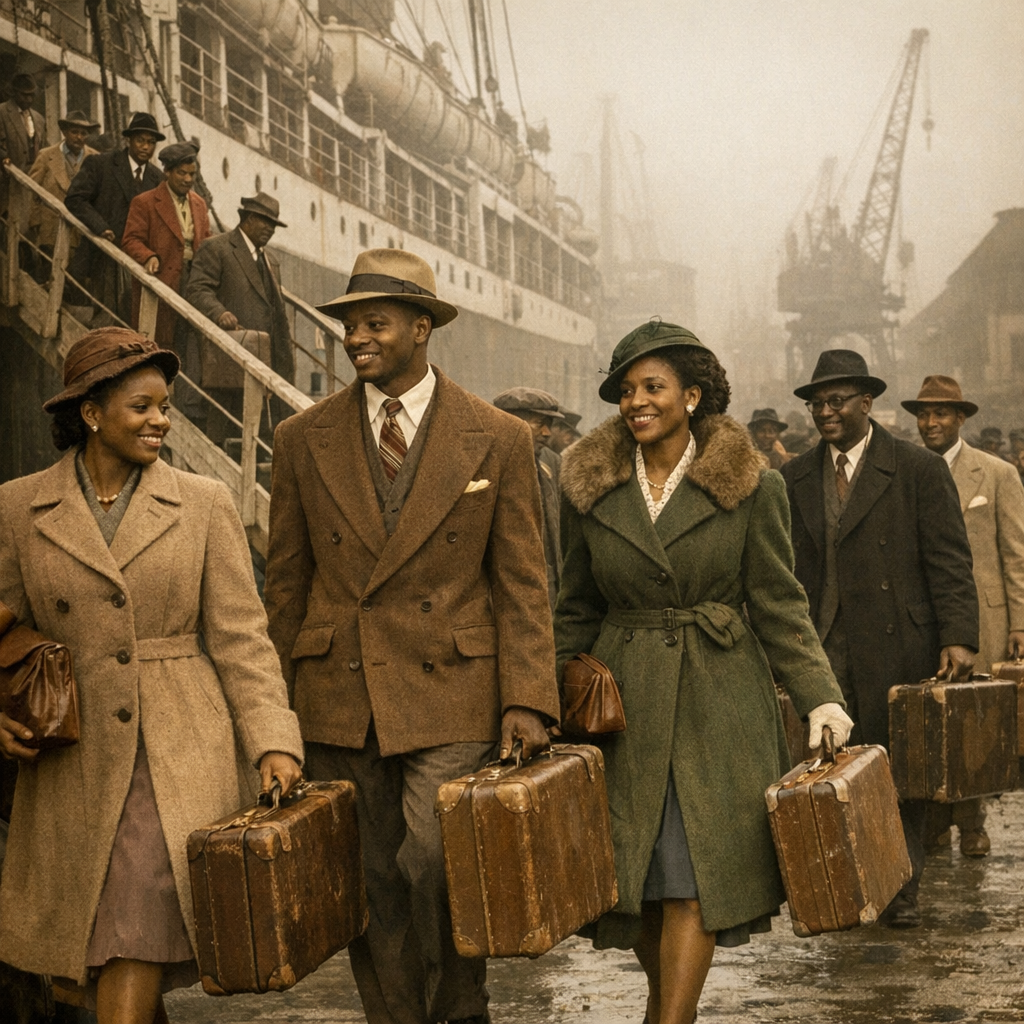
On June 22, 1948, a former German cruise ship turned British troopship called the HMT Empire Windrush docked at Tilbury, Essex, carrying 492 passengers from Jamaica, Trinidad, and other Caribbean islands — many of them ex-servicemen who had fought for Britain in World War II, others simply answering newspaper advertisements recruiting workers to help rebuild a country devastated by the war. They arrived under the British Nationality Act of 1948, which granted full citizenship rights to all subjects of the British Empire and its colonies. They were, by law, as British as anyone born in London. Britain, however, had not fully decided whether it agreed.
What followed over the next quarter-century was a wave of migration — collectively remembered as the Windrush Generation — that saw roughly half a million Caribbean people relocate to the UK between 1948 and 1971, filling critical labor shortages in the newly created National Health Service, public transport, postal services, and manufacturing. They built modern Black Britain, brick by brick, against constant, often vicious resistance, and their children and grandchildren became some of the most influential figures in British culture, politics, sport, and music. And then, in 2018, Britain betrayed many of them in one of its most shameful modern policy scandals — a story every diaspora traveler visiting the UK should understand.
Arriving to a Britain That Didn’t Want Them
The reality Windrush arrivals faced on landing bore little resemblance to the warm mother-country welcome many had been promised. Signs reading “No Blacks, No Dogs, No Irish” hung in boarding house windows across London, Birmingham, and Manchester. Landlords routinely refused Caribbean tenants. Employers who had actively recruited Caribbean workers for shortage occupations often relegated them to the lowest-paid, least desirable jobs regardless of qualifications — trained teachers and nurses working as cleaners and laborers because British institutions refused to recognize Caribbean credentials or simply would not promote Black staff.
Racial violence followed too. The 1958 Notting Hill race riots saw white mobs, some organized by fascist groups, attack Caribbean residents across the West London neighborhood over several nights — a defining, traumatic early chapter that, in a remarkable act of community resilience, directly led to the creation of the Notting Hill Carnival the following year, a celebration of Caribbean culture staged in defiant response to the violence. Today it is Europe’s largest street festival.
Building Black Britain
Despite — and in direct response to — this hostility, the Windrush Generation built enduring institutions: Caribbean churches that became community anchors when mainstream congregations turned members away; the Mangrove restaurant in Notting Hill, whose owner Frank Crichlow and the “Mangrove Nine” successfully fought police harassment charges in a landmark 1971 trial that publicly exposed institutional racism in the Metropolitan Police for the first time; sound system culture that seeded the UK’s entire reggae, dub, and later grime and drill music scenes; and community organizations that laid the groundwork for Black British political representation in the decades that followed.
Their descendants shaped Britain at the highest levels — from Baroness Floella Benjamin, who arrived from Trinidad as a child in the 1960s and became a beloved broadcaster and member of the House of Lords, to countless MPs, artists, and cultural figures whose parents or grandparents were part of that original half-million.
The 2018 Scandal: When Britain Turned on Its Own
In 2018, a British newspaper investigation revealed that the UK Home Office had, for years, been wrongly detaining, denying legal rights to, and in dozens of documented cases actually deporting Windrush-generation Caribbean-born UK residents — many of whom had lived legally in Britain for fifty or sixty years, paid taxes, raised British children and grandchildren, and never once needed formal immigration paperwork because their citizenship had been automatic under the 1948 Act. A hostile-environment immigration policy introduced years earlier demanded documentation that many elderly Windrush arrivals had never been issued and, in a further injury, the Home Office had destroyed the landing card archives that could have proven their arrival dates.
The scandal cost people their jobs, their homes, their access to healthcare and pensions, and in the most extreme cases, their ability to remain in the only country most of them had ever really known as home. It led to a formal government apology, a compensation scheme (which advocacy groups continue to argue has moved too slowly and paid out too little to too few claimants), and the resignation of the Home Secretary at the time. It remains, for many in Black British communities, a live and unresolved wound — a reminder that the citizenship promised in 1948 was never as secure as the law suggested.
Where to Experience Windrush History Today
The Black Cultural Archives, Brixton — Britain’s first dedicated home for Black British history, located in the heart of Brixton (one of London’s most historically significant Caribbean neighborhoods), with rotating exhibitions frequently centered on Windrush history and oral testimony.
National Windrush Monument, Waterloo Station — Unveiled in 2022, this powerful bronze sculpture depicting a Caribbean family climbing a ship’s steps stands in one of London’s busiest transit hubs — a permanent, unmissable public acknowledgment of the Windrush story.
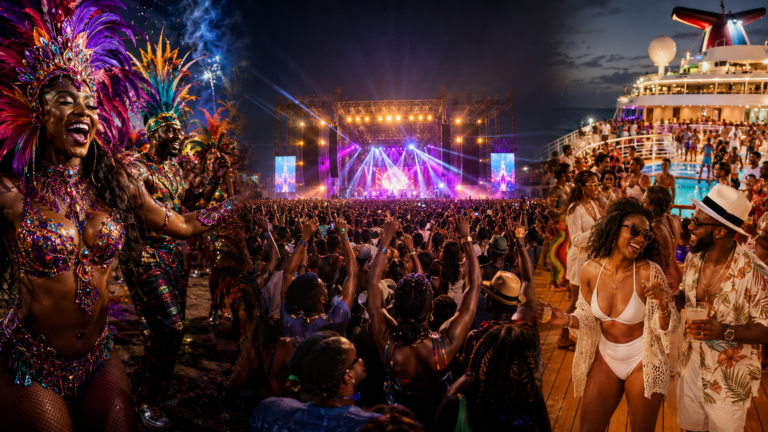
Notting Hill Carnival — Held every August Bank Holiday weekend, this is the direct cultural descendant of the community response to the 1958 riots, and remains the largest and most vibrant public celebration of Caribbean-British culture anywhere in Europe.
Brixton Market & Electric Avenue — The historic commercial heart of Black South London, still home to Caribbean grocers, record shops, and restaurants that trace their roots directly to Windrush-era settlement.
Tilbury Docks, Essex — The actual site where the Windrush landed in 1948, roughly 25 miles east of central London, with a memorial marker for those who want to stand at the precise point of arrival.
Where to Eat
Brixton and Peckham remain London’s most concentrated Caribbean food destinations — jerk chicken, ackee and saltfish, patties, and rum cake from generations-old family businesses. Try Fish, Wings & Tings in Brixton Village for modern Caribbean small plates, or the market stalls inside Brixton Village Market for old-school patty shops that have served the community since the 1970s and 80s.
Where to Stay
Base yourself in Brixton or Peckham for the most immersive experience of Black British culture, with a range of hotels and serviced apartments from budget to boutique, or stay centrally near Waterloo to be close to the National Windrush Monument and easy transit access across the city.
BTN Insider Tips
Visit during Notting Hill Carnival if your dates allow. Late August is the single best time to witness the living legacy of Windrush culture, though expect large crowds and book accommodation months ahead.
Take time at the Waterloo monument. It’s easy to walk past in a busy station — stop, read the plaque, and give it the attention it deserves.
Talk to elders if you get the chance. Many Windrush-generation individuals and their children are still active in Brixton community organizations and are often generous with their stories when approached respectfully.
Understand this is recent history, not distant history. Many original Windrush arrivals are still living, and the 2018 scandal directly affected people who are your parents’ or grandparents’ age — treat it with the immediacy it deserves.
Why This Story Matters
The Windrush Generation’s story is, in many ways, the diaspora story in miniature: people who answered an invitation, built a home out of hostility, created culture that outlasted every attempt to diminish them, and then had to fight — sometimes seventy years later — simply to have their belonging recognized by the country that asked them to come. It is a story of resilience without softening the betrayal, and it belongs on every diaspora traveler’s itinerary the next time London is on the map.