The Double-Take Heard Round Uttara Kannada
You brace yourself before a trip to India. You’ve read the blog posts, heard the stories from friends who’ve gone before you: the stares, the phone cameras that come out a beat too fast, the inevitable “where are you really from?” aimed at a Black face in a place where Black faces are assumed to be rare. So you steel yourself, board the flight, and land in Karnataka ready to be the most photographed person in every train station between Bengaluru and the coast.
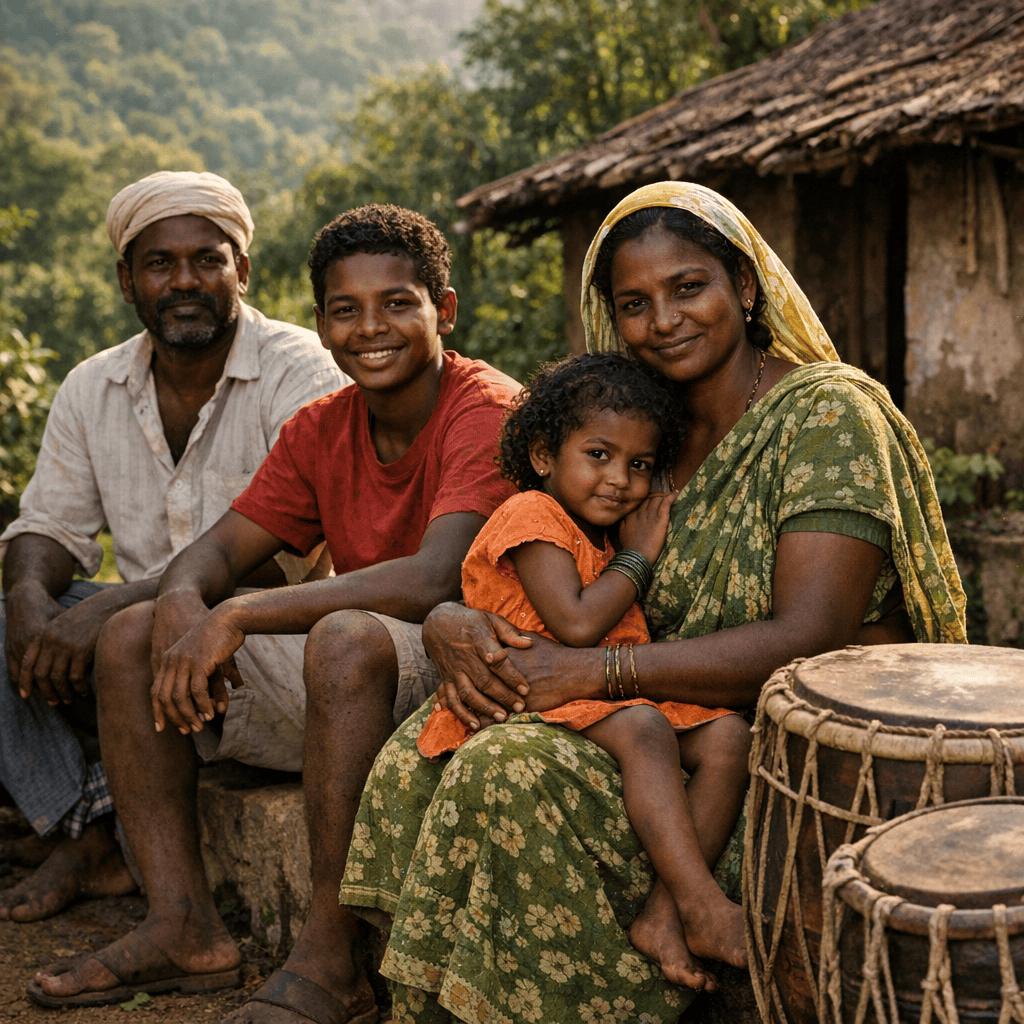
Then your rental car takes a wrong turn — or a right one, depending how you look at it — off the highway and into the forested hills of Uttara Kannada district, and you round a bend into a village where a group of people are sitting under a mango tree, and every single one of them looks like they could be your cousin. Same skin. Same hair texture under the headwraps and ballcaps. Someone laughs at something across the yard, and it’s a laugh you’d recognize at a cookout in Houston. For one genuinely dizzying second, your brain refuses to reconcile “rural Karnataka” with “family reunion.” Then a kid runs past speaking fluent Kannada, and the dizziness turns into something better: a question you didn’t know you had. Wait — there are Black people in India?
Yes. There are. They’re called the Siddis, and their families have been in India for something like 700 to 800 years — long enough that by the time the first enslaved African was forced onto a ship bound for the Americas, Siddi communities in India already had generations of local roots, local languages, and in at least one remarkable case, their own throne.
Who Are the Siddis?
The Siddi (also spelled Sidi or Siddhi) are a community of East and Central African descent living today primarily in India’s Karnataka and Gujarat states, with smaller populations in Maharashtra, Goa, and around Hyderabad in Andhra Pradesh — and a related community across the border in Pakistan. Estimates of the total Siddi population in India vary by source and methodology, ranging from roughly 50,000 up toward 150,000 people nationwide. In Karnataka’s Uttara Kannada district alone — the taluks of Yellapur, Haliyal, Ankola, Joida, Mundgod, and Sirsi, plus nearby Khanapur and Kalghatgi — an estimated 18,000 to 20,000 Siddis live in villages tucked into the same lush, forested Western Ghats terrain that made this corner of Karnataka a natural refuge for communities pushed to the margins of mainstream Indian society.
Genetic and historical research traces Siddi ancestry primarily to Bantu-speaking peoples of East and Central Africa. But “Siddi” isn’t a tribe or ethnicity in the African sense; it’s an Indian community identity that formed over centuries out of that African ancestry, layered with hundreds of years of life in South Asia. Today’s Siddis speak Kannada, Konkani, Gujarati, Marathi, or Urdu as their first languages, not any African language, and most, by their own account, don’t know precisely which African country their ancestors came from. What they carry instead is something arguably rarer: an unbroken, self-identified African-descended community that has lived on Indian soil for the better part of a millennium, on its own terms.
How Africans Reached India — Centuries Before Anyone’s Grandparents
The story of how African people came to be in India runs along the same set of ancient superhighways that connected East Africa to South Asia for two thousand years before Europe ever entered the picture: the monsoon trade winds of the Indian Ocean. Long before any Atlantic slave ship existed, Arab, Persian, and Indian merchant fleets had been sailing this circuit — the Swahili coast to the Arabian Peninsula to the ports of Gujarat and the Konkan coast — carrying spices, ivory, textiles, and, devastatingly, people. Arab traders began bringing East Africans into South Asia as early as the tenth century, roughly five hundred years before Columbus ever set sail.
The people who made that journey did not arrive under a single label or a single circumstance. Some came in chains, sold into the Indian Ocean slave trade run first by Arab traders and later by the Portuguese, who established fortified ports along India’s western coast starting in the early 1500s and used enslaved East Africans as laborers, domestic servants, and dockworkers. Others came by their own volition, or something closer to it: as sailors and navigators aboard Arab and Portuguese trading ships, as mercenary soldiers hired by Deccan sultans who prized their military reputation, and as merchants and administrators who worked their way into real authority in the courts of western and southern India. By the 1200s through the 1400s, oral tradition among Gujarat’s Siddi community holds that ancestors made the journey from the Horn of Africa, up through the Nubian Valley and Syria, and across the Indian Ocean to the Gujarat coast near Bhavnagar — one strand of a much larger, messier, centuries-long pattern of arrival with no single starting point and no single ending point.
What’s striking is how directly this contradicts the flattened version of the African diaspora most of us grow up learning — one Middle Passage, one direction, one outcome. The Indian Ocean slave trade ran longer than the Atlantic one, moved people along entirely different routes, and produced outcomes the Atlantic trade essentially never allowed, including African-descended people rising, within a few generations, to rule.
The Siddis of Janjira: When the Enslaved Became the Sultans
Nowhere is that reversal more dramatic than at Janjira, a fortress island off the Konkan coast in present-day Maharashtra. Starting in the early 1600s, a line of Siddi naval commanders — originally brought to India as enslaved soldiers and sailors serving the Deccan sultanates — took control of Janjira’s formidable sea fort and turned it into their own sovereign base. What followed is one of the great underappreciated military stories in Indian history: for roughly three centuries, the Siddi Nawabs of Janjira held that island fortress against every power that tried to take it. The Portuguese failed. The British failed. Even the mighty Maratha Empire under Shivaji — which conquered nearly everything else along that coastline — could never take Janjira. It remained an independent Siddi-ruled state, later recognized as a princely state under the British Raj, with the line of Siddi Nawabs continuing into the twentieth century.
The other towering figure of this era is Malik Ambar, born around 1550 in Harar, in present-day Ethiopia, and sold into slavery as a young man. Ambar was taken to the Deccan, educated, and trained in administration and warfare — and rose to become the de facto ruler of the Ahmadnagar Sultanate as regent starting around 1600. He commanded an army of roughly 20,000 fighters, blending Habshi (African), Arab, and Maratha soldiers, and spent more than a decade running a relentless guerrilla campaign that kept the vastly larger Mughal Empire from swallowing the Deccan whole. He was never defeated in battle. He’s credited with helping found the city that would become Aurangabad, and his military tactics are cited as a direct influence on Shivaji, the Maratha king who’d go on to found an empire of his own. A man born into slavery in the Horn of Africa became, within his own lifetime, one of the most powerful and militarily undefeated figures in South Asian history. That’s not a footnote. That’s a story that deserves its own documentary.
Faith, Identity, and What Stayed African
One of the things that makes the Siddi story so distinct from other African diaspora communities is how thoroughly — and how differently, region by region — they integrated into the religious fabric of the places they landed. There is no single “Siddi religion.” In Gujarat, the community is predominantly Muslim, with deep ties to Sufi devotional practice; the shrine of Bava Gor, a legendary Siddi Sufi saint, remains an active pilgrimage site. In Karnataka, Siddis are a mix of Hindu, Christian, and Muslim, often within the same extended family, reflecting centuries of Portuguese Christian missionary presence, Deccan Islamic sultanates, and the older Hindu social fabric of the region alike. What crosses all of those religious lines is something older and more distinctly African-rooted underneath: a widespread devotion to the Hindu goddess Yellamma practiced alongside formal religious identity, and Hiriyaru, a form of ancestor veneration observed by Siddi families regardless of whether they identify as Hindu, Muslim, or Christian on paper. It’s a striking, human pattern — the outer religious identity shifting to match the surrounding society over centuries, while something underneath, some thread back to the ancestors, never quite lets go.
That same thread shows up in craft. Siddi women in Karnataka are known for kawandi, a distinctive quilting tradition that repurposes scrap fabric into bold geometric patchwork, often stitched with small triangular tabs at the corners for good luck. The Siddi Women’s Quilting Cooperative, founded in 2004, has turned kawandi into both a cultural practice and a genuine source of income for Siddi women, whose economic options in rural Karnataka are otherwise limited.
Dhamaal: The Drumbeat That Never Left Africa Behind
If you want to hear the most direct surviving link between Siddi communities and their African ancestry, you don’t read about it — you listen for it. It’s called Dhamaal (sometimes written Dhamal), an East African-rooted music and dance tradition most strongly preserved among Gujarat’s Siddi community, performed at Sufi shrine festivals, weddings, and cultural celebrations. Dhamaal is built around instruments that trace directly back across the Indian Ocean: the mugarman, a large one-sided cylindrical drum with roots in Tanzania; the musindo, a two-sided cylinder drum from Kenya; and the misra kanga, a small funnel-shaped rattle from Ethiopia filled with stones that hiss and shake in rhythm. Those African instruments get layered together with Indian ones — harmonium, dholak — into something that is neither purely African nor purely Indian, but genuinely, audibly both at once. Performers move in devotional dance tied to Sufi spiritual practice and, increasingly thanks to government and private cultural programs, travel to perform Dhamaal at festivals well beyond Gujarat, carrying a centuries-old rhythm to entirely new audiences. If you ever get the chance to hear it live, you’ll understand instantly why researchers treat it as one of the most remarkable surviving threads of African musical heritage anywhere outside the continent.
The “Siddi Talent Search”: India Goes Looking for Olympians
Here’s the part of the story that sounds almost too on-the-nose to be true, and yet: in 1987, the Sports Authority of India launched a targeted recruitment scheme — informally known as the Siddi Talent Search — specifically scouting Siddi youth for track and field, working from the theory that the community’s African ancestry might translate into elite athletic potential the same way it had for African and African diaspora athletes elsewhere in the world. It wasn’t subtle, and by modern standards it wasn’t exactly the most sensitively designed program — but it also wasn’t hollow. Coaches who ran it reported startling early results: Siddi athletes reaching national competitive levels in roughly three years, a fraction of the typical development timeline. The program folded around 1994, less because the athletic hypothesis failed and more because of the poverty surrounding it — many recruits left training the moment they qualified for a government job under India’s sports quota system, understandably prioritizing stable income over an uncertain shot at athletic glory.
The idea didn’t die, though. Gujarat’s state government revived a version of the program in 2015, focused on judo and athletics through state sports academies, and a Bengaluru-based nonprofit called Bridges of Sports Foundation has been independently mentoring dozens of young Siddi athletes in Karnataka around the same period. Judoka Rohit Majgul medaled at the Asia-Pacific Youth Games; shot putter Shahnaz Lobi has spoken openly about targeting the Olympics. It’s a complicated legacy — equal parts genuine opportunity and uncomfortably reductive framing — but for a community with few economic on-ramps, it’s opened real doors for a handful of young Siddis to represent the only country most of them have ever called home.
Before You Go: This Is Not a Safari
Here’s the part of this story we need to say plainly. The Siddi are a small, often economically marginalized community that has spent decades being photographed, studied, and “discovered” by outsiders — journalists, anthropologists, and yes, tourists — who show up looking for a curiosity rather than a conversation. That attention isn’t neutral. Villages without infrastructure or leverage can’t easily say no to a carload of visitors treating a family’s front yard like a photo-safari stop, and unmanaged tourist interest can genuinely burden a community already fighting for land rights, education access, and basic recognition — Karnataka only granted Siddis Scheduled Tribe status in 2003, and advocacy groups still describe widespread illiteracy, landlessness, and discrimination as everyday realities for many Siddi families.
So we’re not handing you a tour-booking link here, and we’d gently push back on anyone who does. If this story pulled at something in you — and it should — the most respectful next steps are these: watch a documentary or photo-essay project built with the community’s cooperation (Luke Duggleby’s “Sidi Project” is a strong, community-conscious starting point), read the growing body of journalism on Siddi history and identity, and if you want to engage the community directly, do it through Siddi-led organizations — groups like the All-Karnataka Siddi Development Association and the local Siddi Development Societies community members have built to represent their own interests and decide for themselves what outside attention is welcome. Let the Siddi community invite you in, on their schedule, not the other way around.
Kinship Across an Ocean You Didn’t Know Connected You
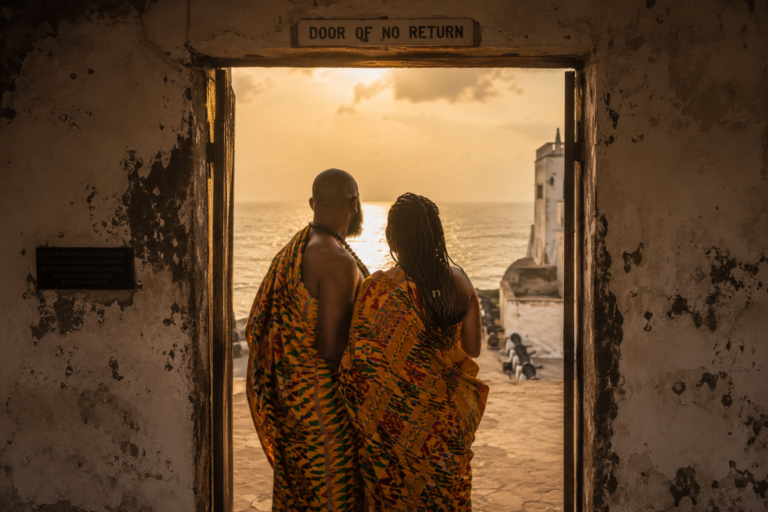
There’s a particular kind of vertigo that comes from realizing the African diaspora is bigger and older and stranger than the version most of us were taught — that the forced and voluntary movement of African people reshaped not just the Americas but South Asia, the Arabian Peninsula, and beyond, centuries before the transatlantic trade even began. Standing in a Uttara Kannada village, listening to a Dhamaal performance built on drums whose names trace straight back to Tanzania and Kenya, hearing a grandmother speaking fluent Kannada with a face that looks like it belongs at your family reunion — that’s not a coincidence to gawk at. It’s a reminder that “the diaspora” was never one story moving in one direction. It was — and still is — an ocean of stories, and some of your unexpected cousins have been standing on the other side of it, right where they’ve always been, for longer than anyone thought to ask.