A Village Built by the Last of the Stolen
In July of 1860 — fifty-two years after the United States officially banned the importation of enslaved people, and less than a year before the Civil War began — a schooner called the Clotilda slipped into Mobile Bay, Alabama, under cover of night. Aboard were 110 men, women, and children kidnapped from the Kingdom of Dahomey, in present-day Benin, and smuggled across the Atlantic on a bet placed by a wealthy Mobile businessman named Timothy Meaher, who wagered he could illegally import a shipload of enslaved Africans without being caught by federal authorities. He won the bet. The Clotilda remains the last documented slave ship to bring captive Africans to American shores.
What makes this story matter today — what makes Africatown one of the most important and least-visited historic sites in the entire African American story — is what happened after emancipation, five years later. Freed but with no way home, no money, and no land, the Clotilda survivors pooled what little they had, purchased land from the very man who had enslaved them, and built their own town on the northern edge of Mobile. They named it Africatown. They kept their African names, their language, their customs, their spiritual practices. They built it to remember, deliberately and defiantly, exactly who they were before they were stolen.
Cudjo Lewis, Matilda McCrear, and Setting the Record Straight
For most of the twentieth century, Cudjo Lewis (born Oluale Kossola) was celebrated as the last living survivor of the Clotilda, largely because Zora Neale Hurston interviewed him extensively in the 1920s, producing the manuscript later published as “Barracoon: The Story of the Last Black Cargo.” Kossola’s account remains one of the only first-person narratives of the Middle Passage ever recorded in an enslaved person’s own words, and it is essential reading for understanding what these 110 people endured.
But history has since corrected an important detail: Kossola was not actually the last survivor. That distinction belongs to Matilda McCrear, who was a small child when she was kidnapped alongside her mother and sisters, and who lived until 1940 — outliving Kossola by three years. McCrear reportedly never fully assimilated to American dress or customs, kept her African name conventions, and is remembered by relatives as fiercely independent well into old age. Her story went largely untold for decades, and BTN believes it deserves to be told alongside Kossola’s, not replaced by it — both were witnesses to the same unimaginable crime, and both chose survival, community, and memory over erasure.
A Living Community, Not a Ruin
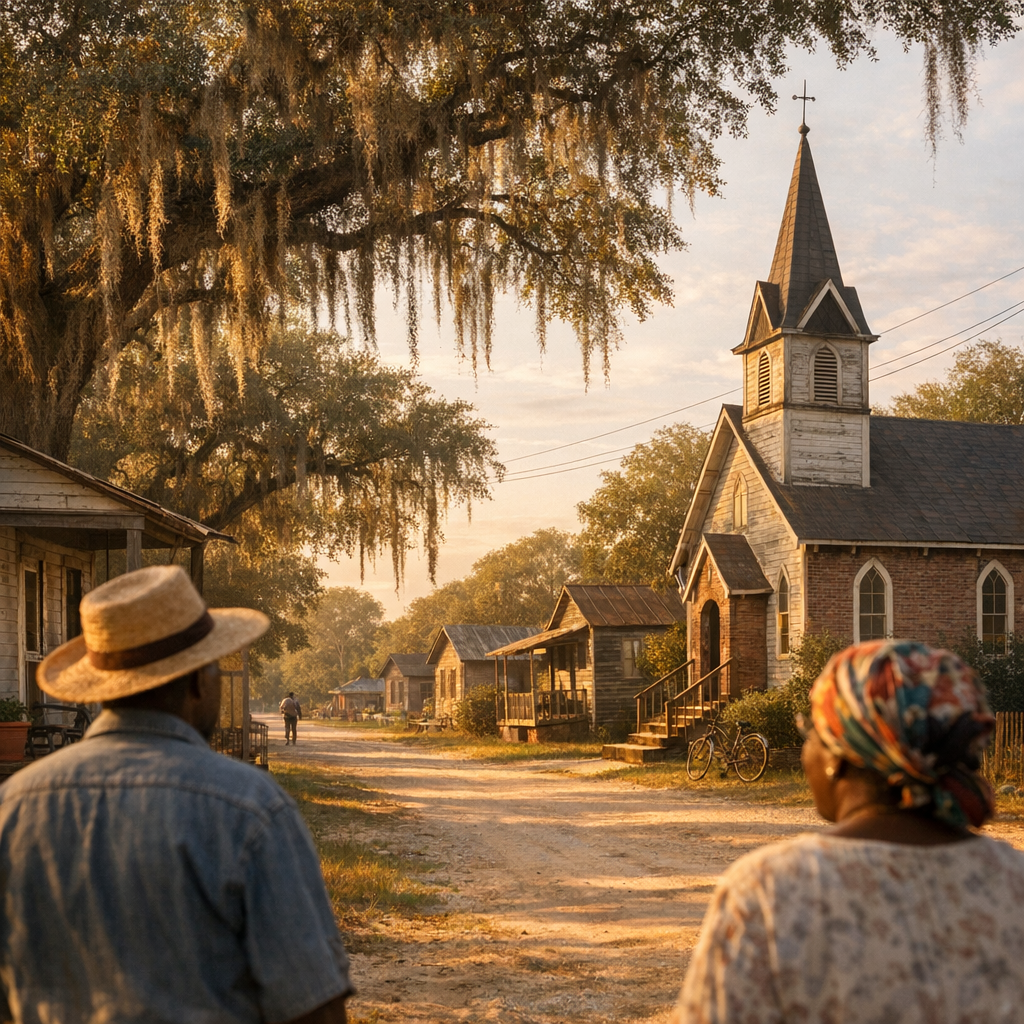
Here is the most important thing to understand before you visit Africatown: this is not an abandoned historical site or a recreated village for tourists. Africatown is a real, living neighborhood in Mobile, with real residents — many of them direct descendants of the original Clotilda survivors, carrying the same family names (Lewis, Dennison, Keeby, and others) five and six generations later. Visiting Africatown means visiting someone’s home, not a museum diorama, and that distinction shapes everything about how a respectful visit should go.
The community has faced real and ongoing hardship — decades of industrial pollution from neighboring paper mills and chemical plants, population decline, and disinvestment that mirrors what happened to Black communities across the industrial South. But describing Africatown only through that lens of struggle misses the point entirely. This is a community that has spent 160 years actively protecting its own history, its own land, and its own story, often with little outside help and against real institutional indifference. The renewed national attention Africatown has received since the 2019 discovery of the Clotilda’s wreckage in the Mobile River has finally started to bring resources and recognition its residents have long fought for on their own.
What to See
The Africatown Heritage House — Opened in 2023, this is the centerpiece of any visit: a purpose-built museum housing artifacts recovered from the Clotilda wreck itself, alongside deep oral history exhibits built in direct partnership with descendant families. This is the single best starting point for understanding the full story, told by the people who lived it.
Old Plateau Cemetery — The final resting place of many original Clotilda survivors, including Cudjo Lewis. A quiet, sacred site — approach it the way you would any cemetery holding your own ancestors, with silence and respect rather than as a photo backdrop.
Union Missionary Baptist Church — Founded by the Clotilda survivors themselves and still an active congregation today, this church has been the spiritual anchor of Africatown for over a century. Visitors are welcome at Sunday services with the same courtesy expected of any guest joining a worship community.
The Clotilda Wreck Site (Mobile River) — The actual wreckage, discovered in 2019 by marine archaeologists and confirmed through years of forensic analysis, remains submerged and is not open for public visits, but the story of its discovery is covered extensively at the Heritage House and worth understanding before your visit.
How to Visit Respectfully
Book your Heritage House visit through the official Africatown Heritage House website or the History Museum of Mobile, which directly supports the site and the descendant community’s ongoing preservation work. Consider booking a guided tour led by a descendant family member or community-affiliated guide rather than exploring independently — several local guides, many of them descendants themselves, offer walking tours that go far deeper than a self-guided visit ever could. Spend money in the community: local Africatown-owned businesses and the Heritage House gift shop directly support residents rather than outside operators.
Do not treat residential streets as a photo opportunity. This is where people live, raise families, and go to work — the same courtesy you’d want extended to your own neighborhood is the baseline expectation here.
Where to Stay & Eat
Africatown sits just fifteen minutes from downtown Mobile, which offers a full range of hotels from budget to boutique, including the historic Battle House Renaissance Mobile Hotel & Spa in the heart of downtown. For food, Mobile’s broader Black-owned restaurant scene — including soul food institutions like Bob’s Downtown and Southern-Caribbean fusion spots along Dauphin Street — makes an excellent complement to an Africatown visit, letting your tourism dollars circulate through the wider Black Mobile community.
Why This Story Matters Now
Africatown is, in the most literal sense possible, the origin story of an entire American Black lineage — a group of people who were free in West Africa, stolen and enslaved in America, freed again by war, and who then chose, deliberately, to build something permanent out of the wreckage of that theft. Six generations later, their descendants are still there, still telling the story on their own terms. Visiting Africatown isn’t an act of charity or curiosity. It’s an act of witness — and one of the most direct ways any traveler, diaspora or otherwise, can stand inside the actual, physical, unbroken continuity of the Middle Passage’s aftermath.
Come to learn. Come to spend money in the community. Come to sit in Old Plateau Cemetery for a few quiet minutes. And then go home and tell someone else the name Africatown, and the name Matilda McCrear, and make sure both keep being spoken.