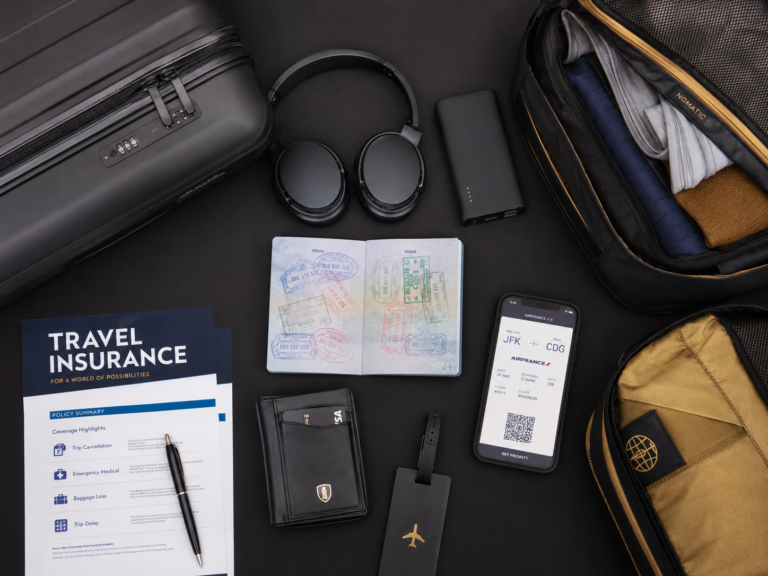
The wheels hit the tarmac at Kotoka just after nine at night, and the whole cabin broke into applause. I had never heard people clap for a landing before, but there it was — a spontaneous, full-throated round of joy from strangers who suddenly felt like family. I sat frozen in seat 34C with my forehead pressed to the little oval window, watching the runway lights blur through tears I hadn’t planned on crying. I had booked a one-way ticket. No return date. No plan beyond a name scribbled on a piece of paper and a feeling I couldn’t explain to anyone back home in Atlanta, least of all myself.
When the doors opened, the air came in thick and warm and smelling of woodsmoke and rain and something green I didn’t have a word for yet. A man in a customs uniform looked at my passport, then looked at me, and said, “Akwaaba. Welcome home.” Not welcome to Ghana. Welcome home. I had to stop walking for a second. Thirty-four years old, and it was the first time a country had ever said that to me and meant it.
The One-Way Ticket
People ask me how I decided, like there was a single moment. The truth is messier. It was a slow accumulation of exhaustion — the code-switching, the bracing, the low hum of never quite belonging to the only country I had ever called mine. I grew up on stories that started in the middle, cut off at the water’s edge. Ancestry tests gave me percentages and a map with a shaded region over West Africa but no names, no village, no grandmother’s face. “Home” had always been an abstraction for me, a wound dressed up as a word.
Then a friend came back from Accra during the Year of Return in 2019 and couldn’t stop talking. She didn’t describe monuments. She described a feeling — of walking down a street and being unremarkable, of blending into a sea of Black faces and having her shoulders drop for the first time in her life. I filed it away. Four years, one burnout, and a lot of savings later, I opened my laptop at 2 a.m. and booked the flight before I could talk myself out of it. One way. I told my mother it was for a month. I honestly wasn’t sure.
Finding a Base in East Legon
I spent my first three nights in a hotel in Osu, jet-lagged and overwhelmed, before a woman in the diaspora Facebook group offered to show me apartments. I ended up in East Legon, a leafy, upscale neighborhood full of returnees, expats, and Ghanaian professionals, in a one-bedroom with tile floors and a balcony where I drank my coffee every morning watching the neighborhood wake up. It cost me a fraction of my Atlanta rent.
A few practical things I learned the hard way, so you don’t have to. Get a MTN SIM card at the airport or a kiosk your first day — data is cheap and you will live on it. Download Uber and Bolt; both work well in Accra and will save you from the exhausting daily negotiation with taxi drivers, though you should still learn to haggle because you will need it at the markets. If you’re staying a while, East Legon, Osu, Cantonments, and Airport Residential are the neighborhoods most returnees gravitate toward — walkable-ish, safe, close to good food and community. And know going in that traffic in Accra is a living, breathing thing. What looks like twenty minutes on a map is an hour. You learn to build your day around it, to stop rushing. That was my first lesson: the city was going to teach me patience whether I wanted it or not.
The Food That Undid Me
I want to talk about the food because the food is where Ghana first got inside me. My second night, a neighbor named Ama knocked on my door with a bowl of waakye — rice and beans cooked with dried millet leaves that turn it a deep reddish brown, topped with shito, spaghetti, boiled egg, and a fried fish. “You can’t sit in there eating crackers,” she said, and pushed the bowl into my hands. I ate it standing on my balcony and something in my chest cracked open.
Over thirty days I ate my way through the whole vocabulary. Jollof rice so good it ended the eternal Ghana-Nigeria argument for me on the spot (I know, I know — I’ll take the smoke). Kelewele, those spicy fried plantains dusted with ginger and pepper, bought in a twist of paper from a woman at a roadside stand who laughed at how many I ordered. Banku with tilapia and a pepper sauce that made my eyes water and my soul sing. Groundnut soup — peanut soup, rich and orange and deep — ladled over rice balls on a Sunday. Fresh grilled tilapia at a chop bar in Osu with my fingers, no fork in sight, the way it’s meant to be eaten.
I came to Ghana thinking I was hungry for a place. It turned out I was hungry for a table — for the particular grace of being fed by people who saw me as one of their own.
I learned to buy from the women at Makola Market, that glorious, chaotic sprawl in the heart of Accra where you can find anything from yams to fabric to a stern auntie who will correct your Twi pronunciation and then bless you anyway. Bring cash, bring patience, and bring your appetite for being gently ripped off the first few times until you learn the rhythm of the bargaining.
The People, and Being Called Obroni
Here is the thing nobody prepares you for. You go to Ghana expecting to finally be seen as simply Black, unmarked, home. And you are — and you aren’t. Children on the street would point at me, delighted, and shout “Obroni!” — which I’d understood to mean white person, and which stung the first time. But a shopkeeper explained, laughing, that for many it just means foreigner now, someone from across the water. My skin was the same as theirs, but my walk, my clothes, my hesitant Twi gave me away instantly. I was family who had been gone so long I’d forgotten the house rules.
And yet the welcome never wavered. When people learned I was African American, the whole energy would shift. Faces would soften. “Ah, you have come back,” a taxi driver told me, gripping my hand at a red light. “You are welcome. This is your home too. We have been waiting.” I heard versions of that sentence a dozen times over the month and it undid me every single time. There is a specific ache in being told you were missed by people you never knew were mourning your absence.
Cape Coast, and the Door of No Return
Halfway through the month, I took the road west to Cape Coast. I knew what was there. I thought I was ready. I was not.
Cape Coast Castle sits white and beautiful on the shore, the Atlantic crashing against its base, fishing boats bright in the harbor below. It is obscene how beautiful it is. Beneath that beauty are the dungeons — dark, low-ceilinged stone chambers where my ancestors, and maybe literally mine, were held in their own filth for weeks and months, hundreds of human beings crammed into a space meant for a fraction of that number. The guide asked us to stand in silence in the men’s dungeon. He turned off the single bulb. The darkness was total. The walls still hold the smell, he said, after all these centuries. I put my hand flat against the stone and I felt the temperature of it and I thought: someone survived this so that I could stand here.
Then he led us to a small doorway that opens directly onto the sea. The Door of No Return. This is the threshold through which the captured were marched onto the ships, the last of Africa they would ever touch. I stood in that doorframe with the ocean wind on my face and I understood, in my body and not just my mind, the exact geography of my loss. This is where the line was cut. This is where “home” became a question my whole family has been trying to answer for four hundred years.
On the other side of that door, facing inland, someone had hung a second sign. It reads: The Door of Return. Because we came back. Because I came back. That is the whole story of my people in a single doorway, and I sobbed like a child standing in it.
I walked back through it, from the sea toward the land. Deliberately. The guide watched me do it and nodded like he’d seen it a thousand times and it still mattered. Go to Cape Coast. Do not skip it because it is heavy. The heaviness is the point. Bring water and bring someone who will hold your hand, because you will need both.
The Returnees and the Year of Return
Back in Accra, I found my people — the other returnees. Ghana opened this door on purpose. In 2019, the government declared the Year of Return, marking four hundred years since the first enslaved Africans arrived in Virginia, and invited the diaspora to come home. Hundreds of thousands did. Some, like the friends I made, never left. There is now a whole community of African Americans, Black Brits, Afro-Caribbeans, and Afro-Latinos who have relocated, bought land, opened restaurants and beach bars and coworking spaces, and are building something that looks a lot like belonging.
I spent evenings at rooftop bars in Osu with people who had traded Houston and London and Kingston for Accra, all of us circling the same conversation: the relief of it, the complications of it, the strange grief of loving a place that also has to teach you it isn’t automatically yours. We paid our dues to Ghana and Ghana was teaching us, patiently, how to be from somewhere. I visited the W.E.B. Du Bois Memorial Centre, where the great scholar spent his final years and is buried, having become a Ghanaian citizen, and I stood at the Kwame Nkrumah Mausoleum reading the words of the man who dreamed of a united Africa and a homecoming for all of us. I realized I was not the first to feel this pull. I was walking a path worn smooth by a century of us.
Detty December Energy
I extended my ticket — of course I did — and stayed into December, and I have to tell you about Detty December. If you have never experienced it, put it on your list right now. Every December, Accra becomes the beating heart of the global Black world. The diaspora floods in. Afrobeats pours out of every car and bar and open window. There are concerts and festivals and beach parties and afterparties to the afterparties.
I danced barefoot in the sand at Labadi Beach as a live band played and the whole crowd — Ghanaians and returnees, indistinguishable in the dark — moved as one body under the stars. I wandered the historic streets of Jamestown, the old fishing quarter with its lighthouse and its street murals and its boxing gyms, camera in hand, welcomed into someone’s spontaneous rooftop function. I laughed until my stomach hurt. I had not danced like that, without watching myself, without the armor, in years. Maybe ever. The best months to come, if you want this energy, are November through early January for Detty December, or the drier, cooler window around the holidays — though honestly Accra gives you something in every season.
What Changed in Me
Thirty days became more. I am not going to pretend it was all seamless — there were power cuts and stomach bugs and days the traffic and the heat and the newness ground me down, days I missed the frictionless convenience of America and felt guilty for missing it. Ghana is not a fantasy and it does not exist to heal you. It is a real place with real struggles and it asks something of you in return for what it gives.
But what it gave me, I will spend the rest of my life unpacking. I came looking for a home I could point to on a map and I found something harder and better: the understanding that home was never a place I lost. It was a thing my ancestors carried through that door, through the water, through the fields and the fire, and handed down to me without my ever knowing I was holding it. Ghana didn’t give me home. Ghana reminded me I had been carrying it the whole time.
I think about the man at customs, that first night. Welcome home. I understand now that he was right and he was early, both at once. Home wasn’t waiting for me in Accra like a house with the lights left on. Home was the walking back through the door. Home was the choosing. Home is a thing my people have been building, brick by brick, ocean by ocean, generation by generation, for four hundred years — and for thirty days and counting, in a warm city on the far shore of a terrible sea, I finally, finally put my hands on the wall and helped build it too.
I still haven’t booked the ticket back. Some part of me suspects I never truly will. And for the first time in my life, that doesn’t feel like being lost. It feels like being found.