Cheap Flights, Cheaper Living, and a Crew Already Posted Up
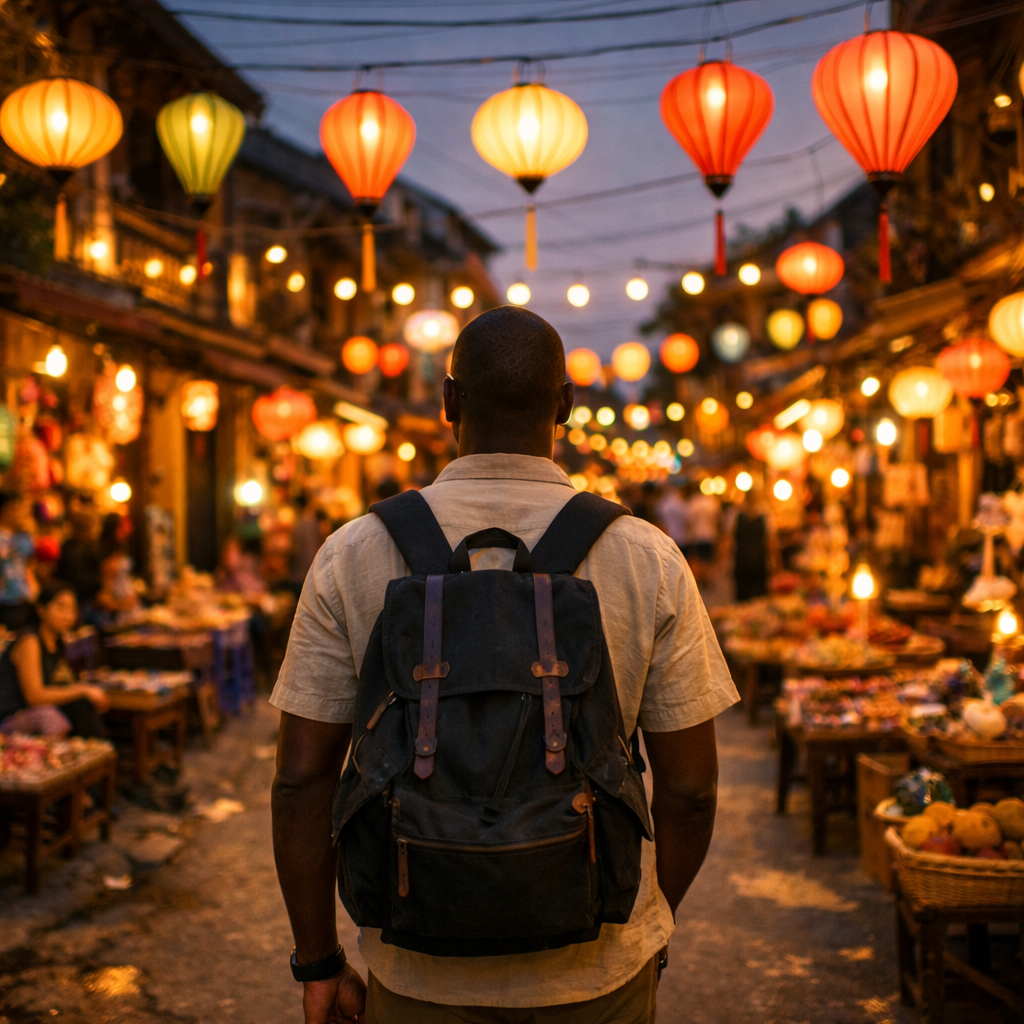
Somewhere between a viral TikTok of a rooftop bar in Da Nang and a group chat full of flight deals to Bangkok, a quiet migration has been happening. Black solo travelers — the same crowd that made Cape Town and Medellín household names in diaspora travel circles — have been steadily discovering that Vietnam and Thailand offer something hard to find anywhere else right now: rock-bottom costs, decades of backpacker infrastructure, and a growing, visible community of Black expats already posted up in Chiang Mai and Da Nang. Episode 3 of Solo and Free heads to Southeast Asia to break down why.
The Value Proposition Nowhere Else Can Match
Southeast Asia has been the backpacker world's value leader for a generation, but the gap has widened as costs in Western Europe, the Caribbean, and even parts of Latin America have climbed. In Vietnam and Thailand, a solo traveler can realistically run an all-in daily budget of $40 to $60 — covering a private guesthouse or boutique hostel room, three real meals (often incredible ones), local transport, and a activity or two — without hunting for the cheapest possible option at every turn. Push that budget up to $80-100 a day and you're in comfortable three-star territory with the occasional splurge dinner or day trip built in.
That value shows up everywhere: a bowl of phở or bun cha in Hanoi runs $2-3, a private room in a well-reviewed Chiang Mai guesthouse can go for $15-20 a night, and a full-day motorbike or scooter tour with a guide rarely tops $25. Massages, tailored clothing, coworking day passes, and airport transfers all land at a fraction of US or European pricing. For travelers stretching a savings account across months rather than a single vacation week, that math changes what's possible.
Backpacker Infrastructure Built Over Decades
Unlike destinations where solo and budget travel infrastructure is still catching up to demand, Vietnam and Thailand have had thirty-plus years of backpacker traffic to build around. That means reliable overnight buses and trains connecting every major city, an enormous range of hostels and guesthouses specifically built for solo travelers (many with women-only dorms and built-in social common areas), well-trodden circuits that make solo logistics almost foolproof, and a mature tourism economy that's used to independent travelers showing up without a group or a guide booked in advance.
Thailand's "banana pancake trail" and Vietnam's north-to-south route (Hanoi → Hoi An → Da Nang → Ho Chi Minh City) are so well established that solo travelers, including plenty of first-timers, move through them constantly. SIM cards, ATMs, English-speaking staff at tourist-facing businesses, and grab-and-go rideshare apps (Grab operates across both countries) mean the logistical friction that makes solo travel intimidating elsewhere is largely engineered out here.
Where the Community Actually Is: Chiang Mai and Da Nang
The headline shift for Black travelers specifically is visibility. Chiang Mai, Thailand's laid-back northern hub, has become a genuine long-stay base for a growing number of Black American and diaspora digital nomads and expats — drawn by the coworking cafe culture, the low cost of long-term housing, and a temple-and-mountain scenery that makes months-long stays feel restorative rather than transient. Facebook groups and Instagram accounts documenting "Black in Chiang Mai" life have multiplied over the past few years, and meetups, dinners, and informal newcomer welcome groups happen regularly enough that landing solo doesn't mean staying friendless.
Da Nang, meanwhile, has emerged as Vietnam's answer — a mid-sized coastal city with genuinely excellent beaches, a manageable size compared to Ho Chi Minh City's sprawl, and a small but visible community of Black expats and long-term travelers who've started showing up in each other's travel content. It sits conveniently between Hoi An's lantern-lit old town and Hue's imperial history, making it a natural base for exploring central Vietnam without constantly repacking.
Neither city has the scale of a Cape Town or a Medellín yet in terms of dedicated Black travel infrastructure — there's no equivalent density of Black-owned tour operators or curated meetup circuits. But the trajectory is clear: search "Black expats Chiang Mai" or "Black travelers Da Nang" and you'll find a real, if still-forming, community documenting the exact trip you're considering.
Know Before You Go: Visas (This Is Changing — Read Carefully)
Southeast Asian visa policy has been genuinely unstable over the past couple of years, and this is one destination pairing where you cannot rely on last year's blog post. Here's what's actually true as of this writing:
Vietnam: US passport holders and travelers from many other nationalities can apply for Vietnam's official e-visa online through the government portal (evisa.gov.vn), with approval typically valid for up to 90 days and available as either single-entry or multiple-entry. Processing usually takes a few business days, so apply at least a week before departure. Always apply directly through the official government site rather than third-party resellers charging inflated "service fees."
Thailand: As of this writing, US citizens still receive Thailand's standard 60-day visa exemption on arrival for tourism purposes. That is changing: Thailand's Cabinet approved a major overhaul in May 2026 that replaces the blanket 60-day exemption with a tiered system — most Western countries, expected to include the US, would drop to a 30-day exemption, while a smaller number of countries shift to 15-day exemptions or visa-on-arrival status. As of this writing, that overhaul had not yet taken effect; it's set to kick in 15 days after formal publication in Thailand's Royal Gazette, which had not yet happened. Translation: check the current rule immediately before booking — this could realistically be 60 days or 30 days depending on exactly when you read this. Regardless of exemption length, every traveler entering Thailand must now complete the mandatory Thailand Digital Arrival Card (TDAC) online within 72 hours of arrival; airlines check for it at boarding, so don't leave it for the immigration line.
Cost of Living: The Real Numbers
Beyond the daily travel budget, both countries have become genuine long-stay destinations because the math works even better the longer you commit. A private one-bedroom apartment in Chiang Mai or Da Nang typically runs $300-500 a month outside peak tourist zones. Local SIM data plans or regional eSIMs cost $10-20 for weeks of coverage. Motorbike rentals run $40-60 monthly for those staying put, and coworking spaces with reliable wifi and AC run $50-100 a month for travelers working remotely between excursions. None of this requires luxury sacrifices — it's simply what a dollar (or a baht, or a dong) buys in this part of the world right now.
Best Time to Go
Both countries share a broadly similar rhythm: November through March brings the driest, coolest, most comfortable stretch across most of Thailand and northern and central Vietnam, making it the highest-demand (and slightly pricier) season for flights and popular guesthouses. April through May turns hot and humid before monsoon season settles in from roughly June through October in much of the region — though Vietnam's long north-south geography means rain patterns vary significantly by region, so check conditions for your specific route rather than assuming one season fits the whole country.
Safety and Practical Tips
Book your first few nights before you land. Arriving with lodging sorted removes the single biggest source of solo-travel stress and gives you a home base to orient from.
Use Grab, not street taxis. Grab operates reliably across both countries and removes the negotiation and overcharging risk that comes with hailing a cab on the street.
Get a regional eSIM before you land. Staying connected from the moment you land makes navigation, translation apps, and rideshare booking dramatically easier — and it means you're never truly out of touch.
Join the Facebook and Reddit communities for your specific city before you go. "Black in Chiang Mai," "Black in Vietnam," and general expat/digital nomad groups for both cities are active and genuinely helpful for real-time, on-the-ground advice.
Dress modestly at temples (shoulders and knees covered) in both countries, and always remove shoes before entering homes, some guesthouses, and all temples.
Keep both a digital and physical copy of your visa approval and passport — Vietnam's e-visa approval letter in particular should be printed, not just saved as a screenshot, since some border checkpoints still expect a paper copy.
Getting There
Most US travelers route through a major Asian or Gulf hub — Seoul, Tokyo, Doha, or Singapore — connecting into Hanoi (HAN), Ho Chi Minh City (SGN), Da Nang (DAD), or Bangkok (BKK). Total travel time from the US typically runs 20-24 hours door to door. Flying into Bangkok and taking a short regional flight or overnight train into Vietnam (or vice versa) is often cheaper than booking each country as a separate round trip from the US, and it's a natural way to combine both stops into a single extended solo trip.
Coming Up Next Episode
Solo and Free continues tracking the destinations where Black solo travelers are actually showing up right now. Subscribe to the BTN podcast so you don't miss the next stop.
Listen & Follow
Catch the full audio conversation on the BTN podcast, and follow Black Travel Now across social media for the rest of the Solo and Free series as it drops.