The Hardest Part of Solo Travel Isn't the Flight
It's not the visa paperwork. It's not the language barrier. It's not even the fear of getting lost. Ask enough solo travelers what actually made their palms sweat on their first trip alone, and the answer is almost always the same tiny, ordinary thing: walking into a restaurant, being asked "just one?", and not flinching.
Episode 5 of Solo and Free is dedicated entirely to that moment — because it turns out it's one of the most universal hurdles in solo travel, and also one of the easiest to clear once you know a few tricks.
You're Not Imagining the Anxiety — It's Real and It's Common
Solo travel surveys keep landing on the same finding year after year: dining alone consistently ranks among the top reported anxieties for first-time solo travelers, trailing only bigger-picture worries like personal safety, cost, and getting lost. It's not a fringe fear. It's one of the most commonly named "what if" moments people rehearse in their heads before a solo trip — right up there with worrying whether anyone will notice or judge them for showing up to a table for one.
Here's the twist travel psychologists point to again and again: the anxiety is almost entirely one-sided. Solo diners assume every other table is watching and judging them, but in reality, other diners are wrapped up in their own conversations, their own plates, their own lives. Nobody is running a mental scorecard on the person eating alone by the window. The discomfort lives entirely in your own head, which is actually great news — it means the fix isn't about changing the restaurant, it's about changing the story you're telling yourself while you're in it.
And like most anxieties built on assumption rather than evidence, it fades fast with a little repeated exposure. The first solo meal is the hard one. By the third or fourth, it barely registers as a "thing" at all.
Strategy One: Let the Bar Do the Work
If there's one single tip that changes the solo dining game more than any other, it's this: sit at the bar or the counter, not a table.
Bar and counter seating solves almost every problem a solo diner worries about in one move. It's typically walk-in friendly, since most restaurants don't take reservations for bar seats, so there's no awkward "table for one?" moment at the host stand. It puts you shoulder-to-shoulder with the action — watching the kitchen, the bartender working, other regulars coming and going — so you're never just sitting in silence facing an empty chair. And it's the seating configuration solo diners have quietly used for decades precisely because it removes the visual signal of "empty seat across from me" that makes solo tables feel exposed.
Counter seats also tend to come with built-in conversation. Bartenders talk to solo diners more than servers talk to full tables, simply because there's more downtime between orders. A five-minute exchange with the person pouring your wine can turn an anxious meal into the most memorable interaction of your day.
Strategy Two: Bring a Prop
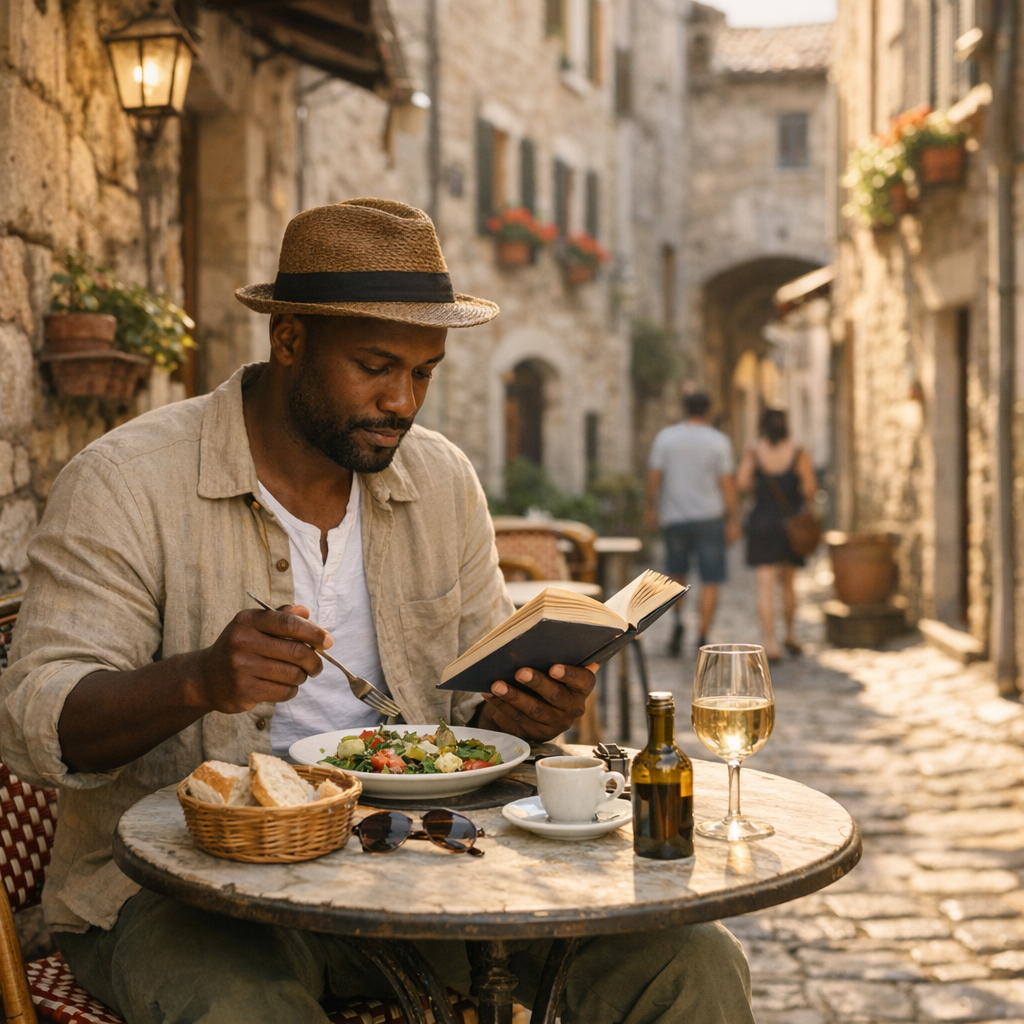
A book, a journal, or even just your phone propped against the water glass does double duty. Practically, it gives you something to do with your eyes and hands during the inevitable lulls between courses. Socially, it sends a clear, low-key signal to everyone around you: I am here on purpose, I am content, and I am not looking for company. That signal matters more than people expect — it shuts down the pitying glances before they start, because you look settled rather than stranded.
A physical travel journal has an extra advantage over a phone: it doubles as a way to actually process your trip in real time. Solo meals are, unexpectedly, some of the best writing time you'll get all trip — no one to talk to means no one interrupting your train of thought. A lot of frequent solo travelers keep a dedicated travel journal specifically for this reason, jotting notes over appetizers that turn into the best parts of their trip recaps later. (If you don't already have one you love, a slim, durable travel journal is a genuinely useful thing to toss in your daypack — more on that below.)
Strategy Three: People-Watch Like It's the Entertainment
Reframe the meal itself. You're not "eating alone" — you have the best seat in the house for the most interesting show in town: everyone else's evening. Solo dining gives you a front-row view of a place that group travel simply doesn't. You notice things — the couple having their first fight of the trip two tables over, the regulars who clearly come every Tuesday, the way the staff banter with each other when they think no one's watching. That kind of noticing is the raw material of great travel stories, and you only get it when you're not busy managing a conversation of your own.
Strategy Four: Start Small, Then Level Up
If a full sit-down dinner feels like too big a leap on day one, ease in. Grab a solo coffee and pastry the first morning. Do a casual lunch counter the first afternoon. By dinner, the "table for one" muscle is already warmed up, and a proper restaurant feels like a natural next step rather than a cold plunge. Off-peak dining times — slightly earlier than the dinner rush — also tend to feel less exposed, since the room isn't as full and the energy is calmer.
The Turn: When It Becomes the Best Part of the Trip
Almost every solo traveler describes the same arc. The first solo meal is nerve-wracking. The second is manageable. By some point — usually faster than people expect — solo meals stop being something to survive and start being something to look forward to. No negotiating where to eat. No compromising on what to order. No rushing because someone else is bored. Just you, a good meal, and total control over how long you linger.
Plenty of seasoned solo travelers will tell you a candlelit solo dinner people-watching in a foreign city, journal open, glass of something good in hand, ends up being one of the specific memories they replay months later — often more vividly than the group activities from the same trip.
A Few More Practical Notes
Restaurant reservation apps have made solo dining logistics easier than ever — you can browse menus, check reviews, and in many cities book a bar seat in advance so you're not standing awkwardly deciding where to go once you're hungry and tired. It's worth having one installed before you land.
If dining alone is the last domino before you're comfortable with the rest of solo sightseeing, that tracks — conquering the restaurant fear tends to unlock everything else, from solo museum visits to solo beach days. And if you want backup for the first few meals of a trip without fully abandoning the "solo" part, solo-travel meetup apps and communities can connect you with other travelers nearby for a casual dinner date that's low-pressure and easy to opt out of the next night.
Closing Note: This One's Made for Reels
This episode is intentionally lighter than some of BTN's heavier destination deep-dives — and that's on purpose. "Table for one" moments, the bar-seat trick, the journal-as-social-shield move — this is exactly the kind of bite-sized, universally relatable content that translates beautifully into a quick reel or short-form video. Keep an eye on BTN's social channels for a short-form cut of this episode, and if you've got your own favorite solo dining trick, drop it in the comments — the next version of this list should be crowd-sourced.
Coming Up Next Episode
Solo and Free continues with more destination- and confidence-focused episodes for Black travelers exploring the world on their own terms. Catch up on the full series hub, and subscribe to the BTN podcast so you don't miss what's next.
Listen & Follow
Catch the full audio conversation on the BTN podcast, and follow Black Travel Now across social media for the rest of the Solo and Free series as it drops.