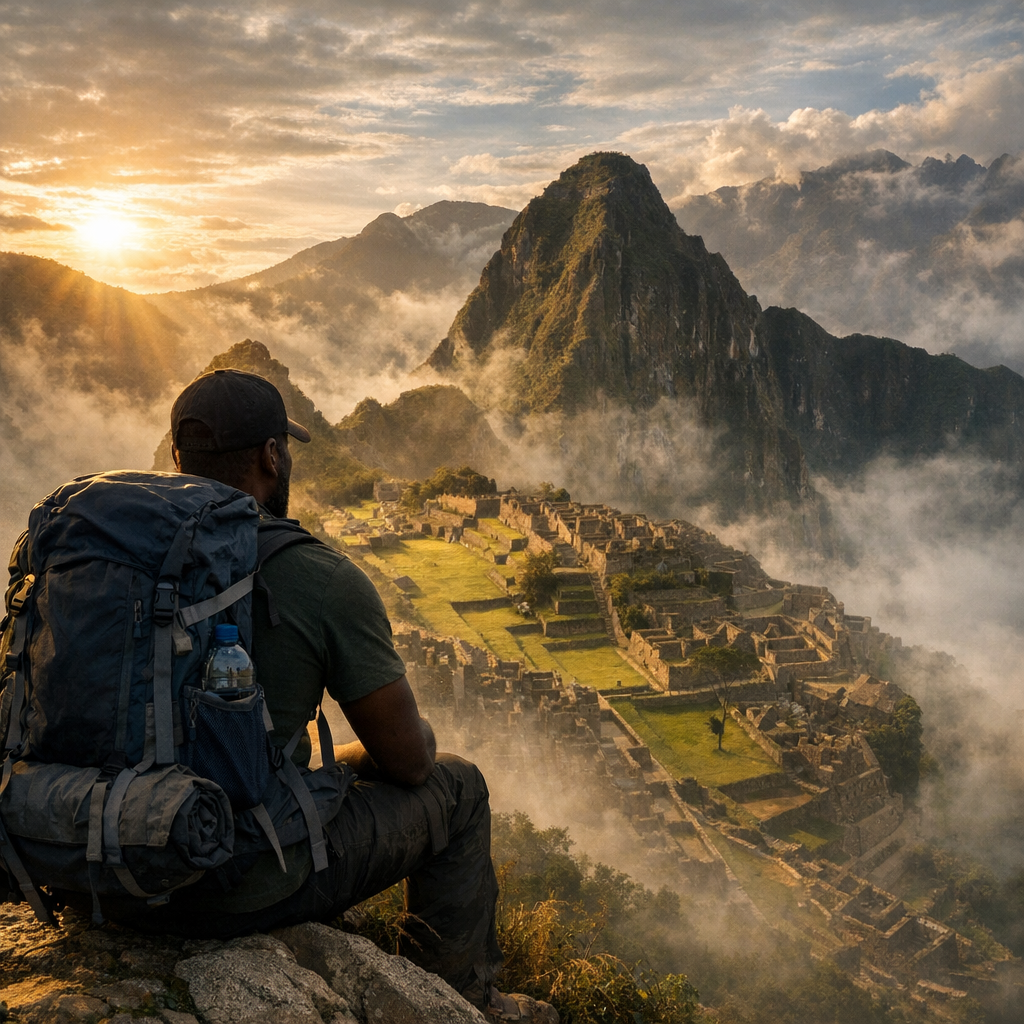
A Continent, One Backpack, Less Than Your Rent
Here's the pitch that gets solo travelers off the couch and onto a flight: a full month bouncing between Colombia, Ecuador, and Peru — three countries, a half-dozen cities, cloud forests, colonial old towns, and one of the Seven Wonders of the World — can cost less than a month's rent back home. Episode 6 of Solo and Free is the route map. This is the backpacker-budget, do-it-yourself version of South America, built for travelers who want the freedom of moving alone through a continent that rewards exactly that kind of curiosity.
South America's northern Andean corridor — Colombia down through Ecuador into Peru — is the classic backpacker spine for a reason. The countries border each other, overland transport between them is cheap and frequent, the time zones barely shift, and the terrain swings from Caribbean coastline to cloud forest to 14,000-foot mountain passes without ever requiring a long-haul flight. It's also increasingly a Black-traveler-friendly circuit, with growing expat and digital nomad communities in Medellín, Cuenca, and Cusco who host meetups, run walking tours, and make solo arrival days a lot less lonely.
The Route: Colombia → Ecuador → Peru
The most efficient sequencing runs north to south, following the spine of the Andes rather than zigzagging across borders. A four-week version looks like this:
Week 1 — Colombia: Land in Bogotá or Medellín. Spend 3-4 days in Medellín (Comuna 13, the Metrocable, day trip to Guatapé) and 2-3 days in Cartagena or Santa Marta on the coast if time allows, or skip straight to the coffee region (Salento, Valle de Cocora) for a slower, greener few days.
Week 2 — Ecuador: Cross into Ecuador by air (Medellín or Bogotá to Quito is a short, often cheap flight) or by a longer overland route through the southern Colombian border at Ipiales. Quito's colonial old town, the Mitad del Mundo equator line, and a side trip to Cotopaxi or Mindo cloud forest fill 5-6 days well. Cuenca, a smaller colonial city with a large expat community, is a worthwhile add if you have extra days.
Week 3-4 — Peru: Fly or bus into northern Peru, working toward Cusco. This is where the trip's centerpiece sits: acclimatizing in Cusco for 2-3 days before trekking to Machu Picchu, then a few final days in Lima before flying home. Lima's food scene alone is worth two or three days on its own.
Reverse the order if flights are cheaper starting in Lima — the logic holds either direction. What matters more than the exact sequence is building in slack: South American buses run late, mountain weather changes plans, and rigid day-by-day itineraries are the first thing solo backpackers regret.
Best Season for the Trip
Timing this route around Peru is the smart move, since Machu Picchu and the Inca Trail are the itinerary's hardest deadline. The Andean dry season — roughly May through September — is the widely recommended window for trekking to Machu Picchu, with clearer skies, minimal rainfall, and far more stable trail conditions than the wet season (November through March, when the Inca Trail itself closes entirely in February for maintenance). July and August are the busiest and most popular months; May, June, and September offer a similar dry-season payoff with noticeably thinner crowds. If your route includes the classic four-day Inca Trail permit (not just Machu Picchu itself), book six or more months out — permits are capped daily and sell out well in advance during dry season.
Colombia and Ecuador don't have as sharp a seasonal cutoff — both sit closer to the equator with less dramatic wet/dry swings — so plan their legs around the Peru timing rather than the other way around.
Budget Breakdown: $30-$45/Day
This route is genuinely doable on a backpacker budget of $30 to $45 a day per person, excluding international flights in and out. Here's roughly where it goes:
- Accommodation: $10-18/night for a hostel dorm bed with decent reviews and good security (private rooms in budget guesthouses run $20-35 if you want your own space some nights).
- Food: $8-15/day eating mostly at local menu del día lunch spots ($3-6 for a full set meal), street food, and self-catering breakfasts, saving splurges for one nicer dinner a week.
- Local transport: $2-5/day for city buses, metro, and short taxis/rideshares.
- Intercity transport: Budget $150-300 total across the trip for long-distance buses and a few short regional flights (see below) — this is the one category worth overspending on for safety and time.
- Activities: Machu Picchu entry and transport, guided tours, and one or two splurge experiences (a coffee farm tour, a cooking class) will be your biggest single-day expenses — budget $150-250 total for the Machu Picchu leg alone including train/bus access.
- Travel insurance: Non-negotiable for this route given altitude, remote trekking, and the general unpredictability of a three-country trip — budget $60-120 for a full month of solid coverage.
Getting Between the Three Countries
Overland buses connect all three countries and are the backpacker default for cost — a Bogotá-to-Quito style long-haul route is technically possible but eats two full days and crosses a border overland that requires more logistical patience than most solo travelers on a tight itinerary want to spend. The more common real-world approach: take budget carriers (Avianca, LATAM, Wingo, Viva) for the longer international hops between capital cities, where a one-way flight can run $60-150 if booked a few weeks out, and reserve overland buses for shorter, scenic in-country legs — Medellín to the coffee region, Quito to Cuenca, Cusco to Lima's Sacred Valley towns. This hybrid approach keeps costs down without sacrificing entire days to a border crossing on a bus with erratic schedules.
Within Peru specifically, the train or bus-plus-hike combination to Machu Picchu (via Ollantaytambo and Aguas Calientes) is its own logistics puzzle worth booking at least a month ahead in dry season — trains sell out, and permits for the trail itself go faster than that.
Safety Context: What to Actually Know
The honest safety picture for this route is regional and specific, not a blanket "it's dangerous" or "it's fine." The U.S. State Department currently rates Colombia at Level 3 (Reconsider Travel), with specific Level 4 "Do Not Travel" guidance for the Colombia-Venezuela border region and the departments of Arauca, Cauca (outside Popayán), and Norte de Santander — none of which sit on this backpacker route through Medellín, the coffee region, or Cartagena. The advisory's core concerns are violent crime, armed robbery, and organized crime risk concentrated in specific areas, not the tourist-trafficked cities and towns most solo backpackers actually visit.
Separately, the U.S. Embassy in Colombia has issued specific security alerts around drink-spiking incidents connected to dating apps and nightlife in Bogotá and Medellín — a real and specific risk pattern worth taking seriously if a night out is part of your plans. BTN covers this in far more depth, including the specific incident pattern and concrete precautions, in the Solo Sisters Medellín episode of this series — read that one before any Medellín nightlife plans, rather than treating this overview as the full picture.
The general backpacker-safety basics apply across all three countries: use registered taxi apps (Uber works in most cities; use local equivalents like inDriver where it doesn't) rather than hailing on the street, keep valuables split between bags rather than in one pack, avoid ATMs after dark, register your trip with the State Department's STEP program before departure, and lean on the well-established hostel and backpacker network — front desk staff in tourist-heavy hostels are usually the fastest, most current source of "which neighborhoods are fine right now" information, more current than any guidebook.
Closing Tips Before You Book
Buy a physical guidebook or download offline maps for each country — cell signal in Andean mountain towns and cloud forest routes is unreliable at best. Pack for genuine temperature swings: coastal Cartagena heat and Cusco's near-freezing pre-dawn trekking starts can both be on the same trip. Get travel insurance that explicitly covers high-altitude trekking (not all basic policies do, and Cusco and the Inca Trail both sit above 11,000 feet). And build at least two full unscheduled days into the month — for weather delays, for a city that turns out to deserve more time than planned, or simply for the rest a solo backpacker on a budget itinerary will eventually need.
Coming Up Next Episode
Subscribe to the BTN podcast to catch the rest of the Solo and Free series as new episodes drop.
Listen & Follow
Catch the full audio conversation on the BTN podcast, and follow Black Travel Now across social media for the rest of the Solo and Free series as it continues.