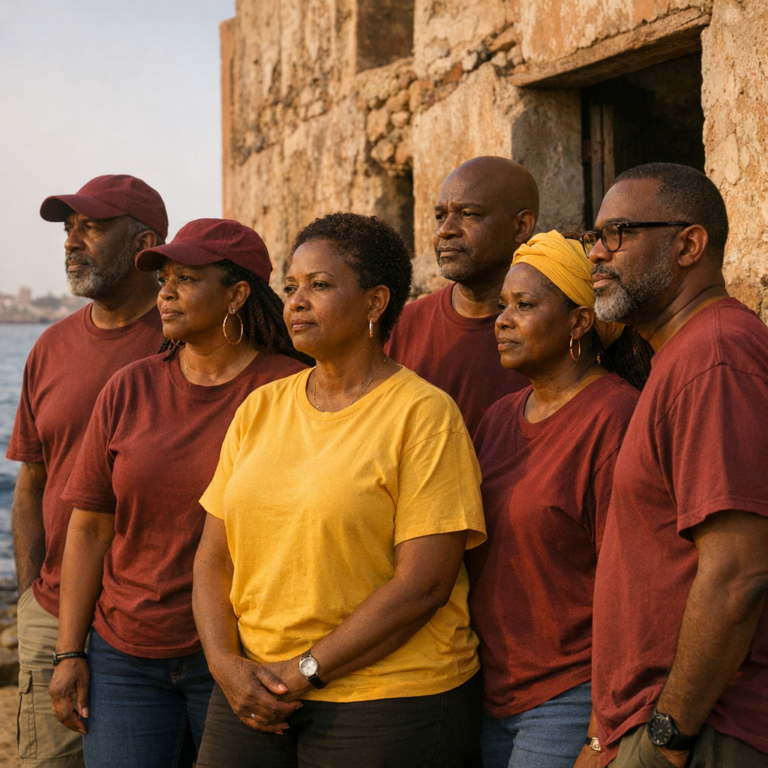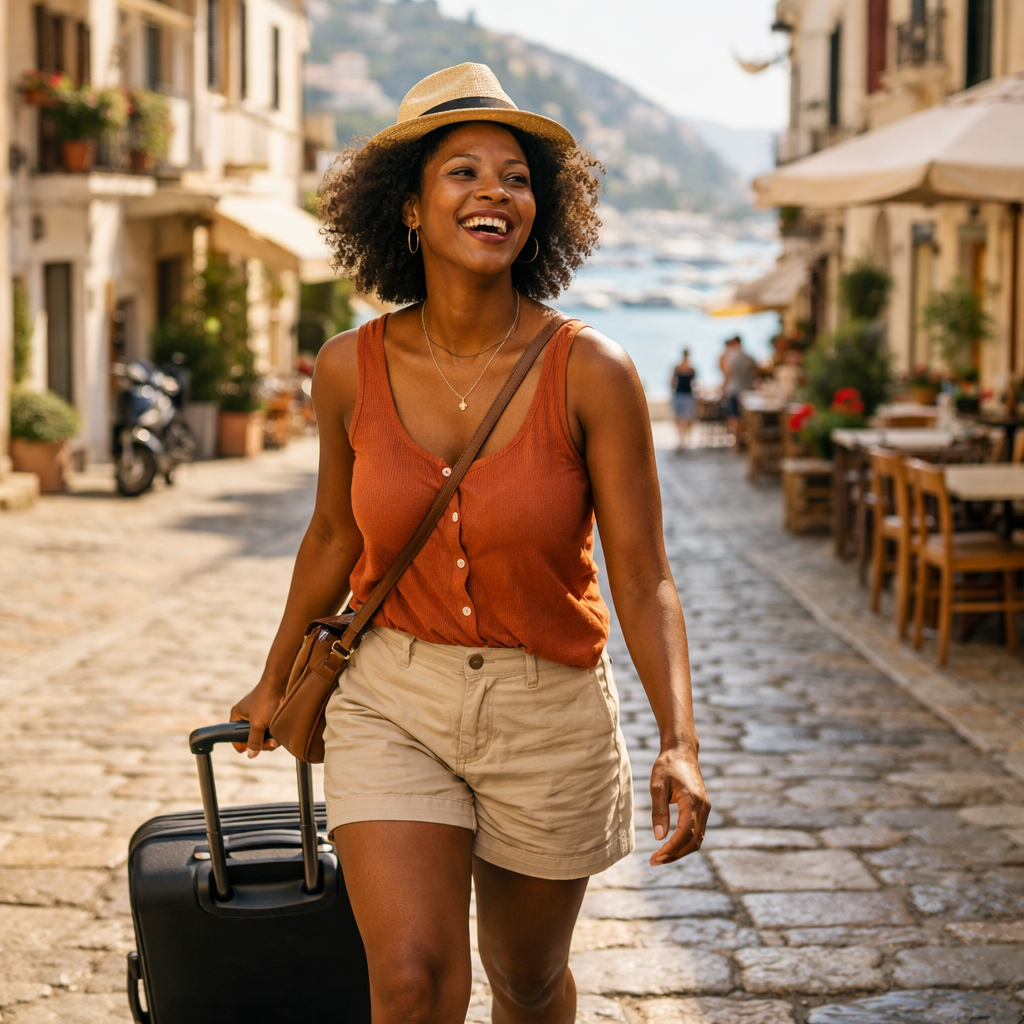
A New Thread: Welcome to Solo Sisters Abroad
Seven episodes into Solo and Free, we've walked the Sea Point Promenade in Cape Town, priced out backpacking routes through South America, and cracked open the passport rules that make solo travel possible in the first place. Starting with this episode, we're opening a companion thread inside the series called Solo Sisters Abroad — still the same Solo and Free home, still the same mission, but zoomed in specifically on the safety questions that come up first, loudest, and most often whenever a Black woman says out loud that she's thinking about traveling alone.
And the reason this thread needed to exist is simple: the "safest countries" listicles that flood search results every January were never written with a Black woman's actual experience in mind. Most of them are built from global crime statistics and government travel advisories — useful, but incomplete. They don't account for how a destination treats a Black woman specifically, whether she'll find community when she lands, or whether "safe" on paper translates to "welcomed" in practice. This episode is our attempt at the list those other lists forgot to write — built from real reported experiences of Black solo female travelers, cross-checked against the data, and honest about the caveats other outlets tend to skip.
How We Built This List
Every destination below shows up repeatedly across independent Black women's travel outlets — Travel Noire, Essence, and the broader Black solo-travel community — not just once, in one blogger's opinion. We cross-referenced those firsthand accounts against harder safety data: crime indexes, the Global Peace Index, and government safety assessments. Where a destination looked great in the data but thin in lived Black-traveler testimony, we left it off. Where it showed up in both, it made the cut.
One caveat before we start, and it matters: "safe" is relative, not absolute. It varies by neighborhood, by season, by time of day, and by how much local research you did before you landed. Every country on this list has areas and moments where the general safety picture doesn't hold. Treat this as a strong starting point for research, not a substitute for it.
Portugal: The Community Answer
Portugal shows up on nearly every serious list of safe destinations for Black women, and the reason isn't just crime statistics — though Portugal does rank consistently high on the Global Peace Index and near the top of European safety rankings. It's community. Writers covering Porto for Essence have described the specific, visceral relief of walking down a street and, as one put it, seeing herself everywhere — a real, visible Black Portuguese and African diaspora community woven into daily life, not a novelty. Lisbon and Porto both offer that same texture: an established Black presence, walkable historic centers, reliable public transit, and a level of general openness toward foreigners that shows up again and again in traveler accounts collected by Travel Noire.
The caveat: Portugal's safety reputation is strongest in its major cities and well-touristed regions. Like any European capital, Lisbon has pickpocketing hotspots (Tram 28 is a famous one), and solo travelers should still apply normal city-smarts after dark. It's also worth knowing that anti-immigrant political rhetoric has been rising in parts of Portugal in recent years, even as day-to-day traveler experiences remain overwhelmingly positive — a good reminder that a country's welcome to visitors and its internal politics aren't always the same story.
Rwanda: The Data Backs the Reputation
Rwanda is the destination on this list where the hard numbers and the lived testimony line up almost perfectly. Multiple independent safety indexes have named Kigali the safest capital in Africa for solo travelers, and Rwanda has been ranked as the only African nation to crack the global top ten on at least one widely cited solo-travel safety ranking. Its crime index sits meaningfully below the regional average, and a Gallup study found roughly 88 percent of Rwandans report feeling safe walking alone at night in Kigali — a number that puts the capital in the same company as places like Helsinki. Rwanda also posts genuinely rare numbers on gender equality: it leads the world in women's representation in a national legislature, at well over half its parliamentary seats, and a strong showing on the Women, Peace and Security global index. Black women writers covering Kigali describe a city that's clean, orderly, well-lit, and easy to navigate solo, with a visible security presence that reads as reassuring rather than oppressive.
The honest caveat: Rwanda's safety numbers are strongest in Kigali and the established tourist circuit around gorilla trekking in Volcanoes National Park. Rural border regions can carry more risk, and it's worth checking current government travel advisories for any specific area before you finalize an itinerary, since regional conditions in the Great Lakes area can shift. None of that undercuts Rwanda's standing — it just means the usual rule applies: research the specific region, not just the country name.
Japan: Safety Without a Roadmap
Japan is a slightly different case on this list, because it doesn't show up as often in Black-women-specific travel roundups the way Portugal and Rwanda do — but it belongs here on the strength of its data and a growing body of firsthand accounts from Black women travelers and expats. Japan lands in the global top ten on the 2026 Global Peace Index almost every year, and violent crime against tourists is exceptionally rare. Travelers routinely describe leaving bags at cafe tables to hold a seat, using public transit alone late at night, and generally moving through cities like Tokyo and Osaka with a level of physical ease that's hard to find almost anywhere else in the world.
The caveat here is less about crime and more about experience. Black women travelers and residents documenting their time in Japan describe real curiosity and occasional staring, particularly outside major cities, along with a culture that can feel isolating for solo travelers of any background if you don't speak Japanese and don't seek out community. It is not, by most firsthand accounts, a hostile place — it's a physically very safe place that asks a little more of you socially. Building in time with English-friendly tour groups, expat meetup communities, or Black-traveler Facebook groups focused on Japan tends to close that gap fast.
Costa Rica: Strong, With a Real Asterisk
Costa Rica earns its spot for a mix of reasons: no standing military since 1948, a stable democracy, a tourism economy built around the "Pura Vida" ethos, and a well-worn, safety-conscious solo-travel corridor running through the Central Valley, the Pacific coast towns, and adventure hubs like La Fortuna. Black women writers covering La Fortuna specifically have described feeling secure and welcomed throughout their stay, and Costa Rica shows up regularly in Black solo-travel roundups as one of the more comfortable Latin American entry points for a first international solo trip.
Here's the asterisk that matters, and we're not going to soften it: San José, the capital, gets meaningfully different reviews than the rest of the country. Multiple solo female travelers report more catcalling and a less comfortable atmosphere in San José specifically than in beach and rainforest towns, and Costa Rica has seen a real rise in violent crime, including femicides, in recent years — a trend worth knowing about rather than glossing over. The practical read: Costa Rica remains a strong solo destination if you lean into the tourist corridor, avoid walking alone at night (even in nice areas), skip isolated beaches after dark, and treat San José as a layover rather than a destination to wander solo after sunset.
Barbados: The Bonus Pick With Deep Roots
We're adding one more, because it comes up so often in Black women's own trip reports that leaving it off would feel dishonest. Barbados posts low crime rates relative to much of the Caribbean, backed by real government investment in tourist safety infrastructure, and English is the official language, which removes an entire layer of solo-travel friction. But the bigger draw, according to Black travelers writing about their own trips, is the feeling: warm, generous, unmistakably Caribbean hospitality, paired with beaches and a cultural calendar (Crop Over among them) that make it an easy, joyful place to be alone without ever feeling lonely.
The caveat is the same one that applies to any island economy built on tourism: resort zones and the main tourist corridor are consistently the safest, and petty theft targeting visitors ticks up seasonally around major festivals. Standard precautions — secured accommodations, trusted transportation, awareness in crowds during Crop Over — go a long way.
How to Evaluate Any Destination Yourself
Lists like this one are a starting point, not a substitute for your own research, and BTN would rather hand you a method than just a map. Before booking any solo trip, run a destination through these five questions:
1. Does it show up in multiple independent Black women's trip reports, not just one? A single glowing blog post is a data point, not a pattern. Look for repetition across different writers and different trips.
2. What do the hard numbers say? Check the destination's standing on the Global Peace Index, a national crime index, and your government's current travel advisory level — and note the date on that advisory, since conditions shift.
3. Is the safety concentrated in one region, or spread across the country? Almost every country on this list (and off it) has a safer tourist corridor and a riskier margin. Know which zone your itinerary actually sits in.
4. Is there a community waiting for you when you land? Facebook groups, Black expat networks, and women's travel meetups turn "safe" into "welcomed" — and they're often where the most current, on-the-ground safety intel lives, updated far more recently than any published list.
5. What does the season and the calendar look like? Festival weekends, political anniversaries, and peak tourist season can all shift a destination's risk profile temporarily, in either direction. Check what's happening during your actual travel dates, not just the country's average.
Coming Up Next in Solo Sisters Abroad
This episode opens the door; the next installments in the Solo Sisters Abroad thread will go deeper on individual destinations from this list — starting with a closer look at building a full itinerary around Kigali's safety and hospitality. Until then, this episode lives alongside the rest of Solo and Free's growing library, all built on the same premise: solo travel is safer, richer, and more joyful when you do the research a Black woman's actual experience requires — not the research everyone else assumed was good enough.
Listen & Follow
Catch the full audio conversation on the BTN podcast, and follow Black Travel Now across social media for the rest of the Solo and Free series — including the new Solo Sisters Abroad thread — as it drops.