Two Truths That Both Belong in This Story
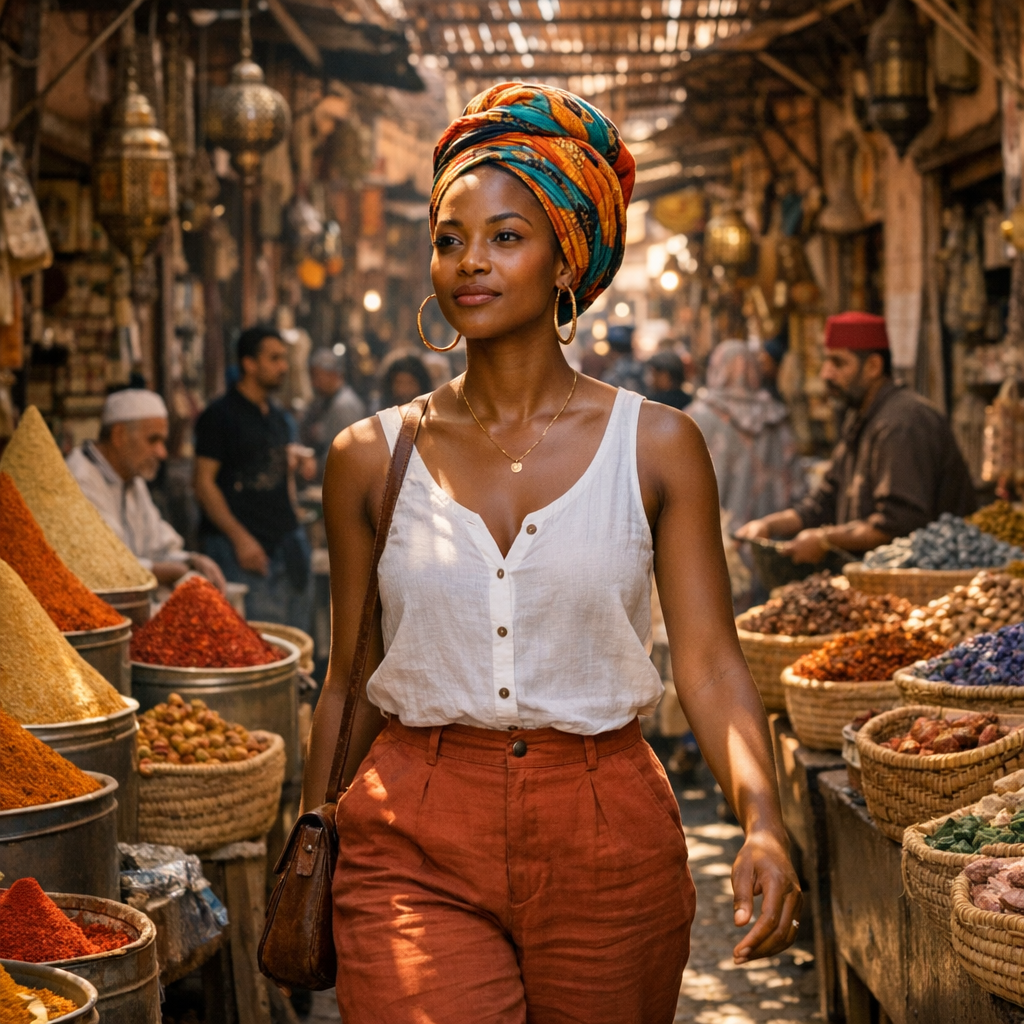
The medina will make you fall in love with Morocco and test your patience with catcalling in the same afternoon. That's not a contradiction — it's just the honest shape of solo female travel here, and Episode 11 of Solo and Free is going to sit with both halves of it instead of picking one. Too many guides flatten Morocco into either a fear-mongering warning label or an Instagram highlight reel. Solo Sisters Abroad wants to give you the real, textured middle: the mint tea offered by a stranger who wants nothing but conversation, and the guy who won't take "no thank you" for an answer three blocks later. Both happen. Neither cancels the other out.
The Genuine Warmth Is Real
Start here, because it's the part that gets buried under safety headlines: Moroccan hospitality is one of the most consistently praised experiences solo female travelers report, across blogs, forums, and firsthand accounts from Black women specifically. Spontaneous invitations for mint tea from shopkeepers who expect nothing in return, animated conversations with merchants who light up when you show genuine interest in their craft, and the kind of generosity that turns a wrong turn in the medina into an impromptu conversation with a family cooking dinner on their doorstep — these are not rare anomalies. They're a defining feature of how many travelers describe Morocco, especially once they get past the tourist-facing commercial strip of any souk. Riad owners in particular tend to become informal hosts and advisors, offering local advice, restaurant recommendations, and a level of personal care that budget hotel chains rarely match.
The Harassment Pattern Is Also Real
Here's the part that also needs to be said plainly: persistent street harassment of solo female travelers — catcalling, being followed, unsolicited comments, and repeated unwanted approaches from vendors and self-appointed "guides" — is a widely and consistently reported experience across Black women's travel blogs covering Morocco, particularly in the dense medina areas of Marrakech and, to a lesser but still present degree, Fez. Multiple firsthand accounts describe the same specific pattern: a man approaches, strikes up conversation, doesn't take a polite decline as an answer, and continues following at a distance even after being firmly rejected. Some travelers report this happens regardless of how conservatively they're dressed, which is an important corrective to the common (and not fully accurate) assumption that dress alone determines how much attention you draw.
In the souks specifically, the harassment often takes a commercial form: unofficial "guides" (sometimes called faux guides) attach themselves to solo women near medina entrances, offer unsolicited directions, and then pressure for a tip or attempt to steer you toward a specific shop that pays them commission. This isn't random opportunism — it's a well-documented pattern specific to Marrakech's and Fez's old-city tourist zones, and knowing it exists in advance takes most of its power away.
Reading the Room: Marrakech vs. Fez
The two medinas covered in this episode have slightly different textures. Marrakech's Djemaa el-Fna square and the surrounding souks are Morocco's most touristed commercial zone, which means both the hospitality and the hustle are turned up — more merchants competing for attention, more faux guides working the crowds, more overall noise and energy. Fez's medina, Fes el-Bali, is older, more labyrinthine, and somewhat less saturated with tourist-specific hustling, though it comes with its own navigation challenge: it's genuinely easy to get lost in a UNESCO World Heritage medina with over 9,000 narrow alleys and almost no motor vehicle access, which is part of its charm and part of why a guide (the licensed kind) earns their fee there more than almost anywhere else in the country.
Practical Strategies That Actually Work
Dress with intention, but don't over-rely on it. Loose, lightweight clothing that covers shoulders and knees is culturally respectful and genuinely more comfortable in medina heat, and many travelers report it modestly reduces (without eliminating) unwanted attention. Pack a scarf or shawl you can use to cover your head or shoulders when entering more conservative spaces like mosques (most of which are not open to non-Muslim visitors in Morocco, but courtyards and exteriors still warrant respectful dress).
Decline unwanted guide offers early, clearly, and without lingering. A firm "la, shukran" (no, thank you) delivered while continuing to walk works better than a polite pause that invites more conversation. If someone continues following after a clear decline, walking directly into a shop, café, or toward a group of other tourists breaks the pattern more effectively than continuing to engage.
Book riad-based lodging. Traditional riads — courtyard guesthouses tucked inside the medina walls — offer a level of security and hospitality that hotels on the medina's edge often can't match: a locked door between you and the street, an owner who knows the neighborhood and will walk you to dinner if you ask, and an immersive architectural experience that's reason enough on its own to book one. Many riad hosts will also arrange a trusted, vetted guide on request, which solves two problems at once.
Hire a licensed female guide if you want a local companion in the medina. Morocco has a growing number of officially licensed guides, including women, who can be booked in advance through riads, tour operators, or verified platforms rather than accepted from someone who approaches you on the street. A licensed guide (identifiable by an official badge) eliminates the faux-guide hassle entirely and often unlocks a richer, more informed version of the medina than you'd get wandering solo — workshops, family-run stalls, and historical context you'd otherwise walk past.
Travel with backup contacts and travel insurance. Share your riad's address and your daily plan with someone at home, and carry a travel insurance policy that covers both medical issues and trip interruption. It's a low-cost safeguard that matters more in a country where English is not the primary language and rural medical infrastructure varies significantly by region.
Best Time to Visit
Skip the extremes. Morocco's shoulder seasons — March through May and September through November — offer markedly milder temperatures than the intense summer heat that regularly pushes past 100°F in interior cities like Marrakech and Fez during July and August, when extensive medina walking becomes genuinely taxing rather than enjoyable. Spring and fall bring comfortable daytime temperatures in the high 60s to high 70s Fahrenheit, ideal for the kind of extensive on-foot exploring the medinas demand, along with noticeably thinner crowds than peak winter holiday weeks. September in particular is frequently cited as a sweet spot: excellent weather paired with a lighter tourist presence.
Budgeting the Trip
A mid-range solo budget of roughly $50 to $80 per day comfortably covers a well-located riad room, taxi or ride-hail transport, meals at both street stalls and sit-down restaurants, and entrance fees to major sites, without requiring hostel-level frugality. That range typically doesn't include a private guided day trip (to the Atlas Mountains or Sahara edge, for instance) or splurge dining, both of which are easy to layer in as optional add-ons once you've got the daily baseline covered.
Where to Stay
Marrakech: Riads clustered in the medina near Bab Doukkala or the Kasbah district offer a quieter home base within easy walking distance of Jemaa el-Fnaa, without sitting directly on the square's loudest edge.
Fez: Riads inside Fes el-Bali near the Blue Gate (Bab Boujloud) put you steps from the medina's main artery while still being easy to relocate to and from by taxi, since cars can't enter the old city itself.
The Honest Closing Note
Morocco is not a country to be afraid of, and it's not a country to romanticize into a risk-free postcard either. Solo women — including a large and growing number of Black women — travel Marrakech and Fez every year and come home describing it as one of their favorite trips, full of the kind of hospitality that makes you want to go back. The harassment pattern is real, well-documented, and worth preparing for specifically rather than vaguely worrying about. Prepared for, it becomes a manageable, occasionally annoying part of a day rather than a reason to avoid the medina altogether. Go with a plan, book a riad, decline the faux guides, say yes to the tea, and let both truths sit exactly where they belong.
Coming Up Next Episode
The next stop in Solo and Free heads deeper into the Solo Sisters Abroad thread — subscribe to the BTN podcast so you don't miss it.
Listen & Follow
Catch the full audio conversation on the BTN podcast, and follow Black Travel Now across social media for the rest of the Solo and Free series as it drops.