They Didn't Just Visit — They Built a Life
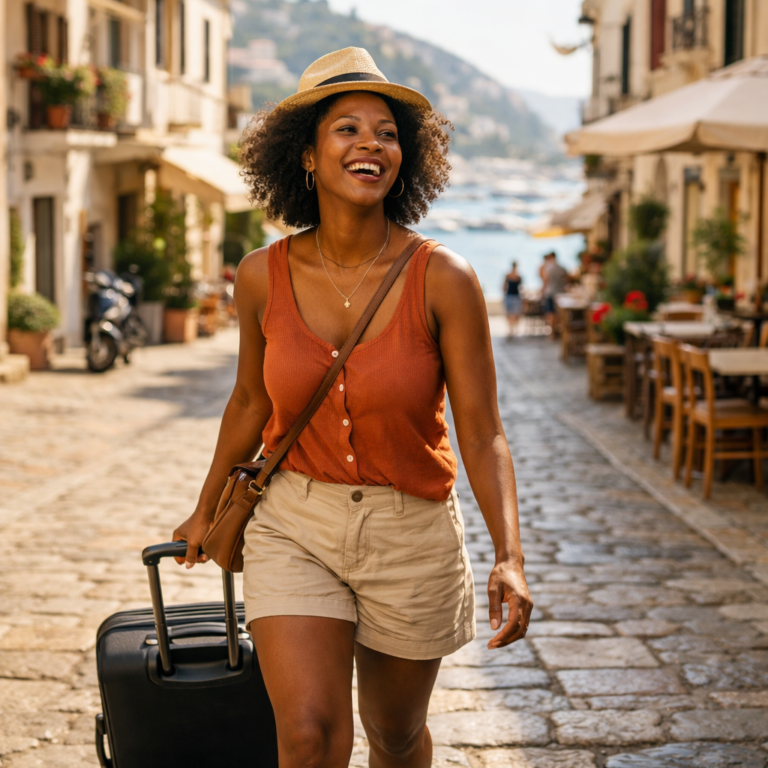
There's a particular photo that keeps showing up on Black women's Instagram feeds: a laptop open on a café table, rice paddies or turquoise water in the background, a caption that reads some version of "girl, bye" to whatever she left behind in the States. It looks like a vacation. It isn't. Scroll the comments and you'll find women who moved their entire lives — not for two weeks, but for good — to Ubud, Bali, or to Mexico City and Playa del Carmen, and built something durable: a business, a rent-controlled apartment, a group chat that became a chosen family. Episode 12 of Solo and Free profiles that movement: the women who didn't just take the trip, but stayed 6,000 miles from home and made it work.
Why Bali and Why Mexico
Bali and Mexico sit at opposite ends of the globe but occupy the same spot in the solo Black woman expat conversation, for overlapping reasons. Both offer a genuinely lower cost of living than most U.S. metros without sacrificing walkable infrastructure, decent healthcare, and reliable Wi-Fi. Both have deep, established remote-work ecosystems — Bali built around Canggu and Ubud's coworking scene, Mexico City and the Riviera Maya built around a decade of digital nomad migration that predates the pandemic boom. And critically for the women profiled in this episode, both have visible, organized Black expat communities that didn't exist a decade ago and now actively recruit newcomers rather than leaving them to figure it out alone.
Mexico offers proximity — a three-to-five-hour flight and no more than a two-hour time difference from most of the U.S., which matters enormously for anyone still managing family obligations, a business with U.S. clients, or simple homesickness. Bali offers distance as a feature, not a bug: a full reset, a 12-to-15-hour time difference that forces boundaries around U.S. work demands, and a spiritual-wellness culture that draws women specifically seeking to slow down and rebuild.
Meet the Women Building It
In Playa del Carmen, Karina Henry booked a one-way ticket to Cancún in January 2021 after a previous life abroad in Thailand and China, and built a virtual ESL academy and a self-published children's book business while volunteering with Mexico's Department of Education on free English programs. CeCe Cleveland founded High Vibez Global, a network connecting Black immigrants to Mexico, and partners with a local real estate firm to help Black buyers invest in property rather than just rent. In Mérida, Nicole Carmier-Hatch built the Black Mérida Experience, a monthly meetup series, alongside a rental event venue and a wellness nonprofit called Self Care Sundays. And Ashleigh Esprit-Barr, an Atlanta native now based in the Riviera Maya, runs Flotante Mexico's floating dinner experiences and co-owns a destination wedding planning company — proof that "relocating" and "building a real business" aren't separate decisions for this cohort, they're the same decision.
In Bali, the community has a name and a founding story: Black in Bali, started by Antoine Clinton, Dharma Martin, and Jana Williams after the three connected at a social gathering and recognized there was no dedicated support network for Black travelers and expats on the island. What began as informal meetups has grown into monthly Sunday brunches, professional development seminars, yoga and Qi Gong sessions, and community service projects, organized through dedicated committees — including one focused specifically on women's empowerment. The founders describe the mission plainly: having a community to plug into isn't a nice-to-have for a successful relocation, it's the difference between staying and going home after three months.
Know Before You Go: The Visa Picture
This is the part every Solo and Free reader asks about first, and the answer looks different in each country.
Mexico's Temporary Resident Visa is the workhorse pathway for the women profiled here. It's issued for one year and renewable annually up to four years total, after which residents typically convert to permanent status — no separate "digital nomad visa" required, which is part of why it's become the default choice for remote workers. As of 2026, applicants qualify through one of two financial routes at the Mexican consulate in their home jurisdiction: a monthly income of roughly US$4,400 (verified via the past six to twelve months of bank statements), or savings/investment account balances totaling roughly US$72,000–74,000 maintained over the preceding twelve months. You only need to satisfy one route, not both, and exact thresholds vary slightly by consulate since they're recalculated against Mexico's UMA index — so confirm current figures with your specific consulate before applying, not from a blog post, including this one.
Indonesia's visa picture is more layered, and this is where a lot of secondhand advice gets it wrong. Indonesia did introduce a genuine long-term option, the Second Home Visa, granting five or ten years of residency — but it requires a deposit of roughly IDR 2 billion (about US$130,000) parked in a state-owned Indonesian bank, or alternatively about US$1 million in qualifying property. That's simply out of reach for most of the remote-working women this episode profiles, and it's not actually the pathway most of them use. In practice, the everyday route into Bali is a renewable tourist or business visa (extended in 30-to-60-day increments, often through a visa agent) or Indonesia's newer, dramatically cheaper E33G remote worker KITAS aimed specifically at foreign nationals earning income from outside Indonesia. Anyone telling you the Second Home Visa is "the Bali digital nomad visa" hasn't read the fine print — verify current deposit figures and category names directly with an Indonesian immigration consultant before committing, since this is one of the fastest-moving visa categories in Southeast Asia right now.
Cost of Living: What the Number Actually Buys
Both destinations land in a similar band: roughly $1,000 to $1,800 a month covers a comfortable, non-luxury solo life, including housing, food, transportation, and a reasonable social budget — though where that money goes differs. In Bali, that range typically buys a private villa or one-bedroom in Ubud or Canggu, a scooter, daily meals at warungs supplemented by occasional Western-style café spending, and a coworking day pass. In Mexico City or Playa del Carmen, the same range covers a one-bedroom apartment in a walkable neighborhood, groceries and regular restaurant meals, rideshare or public transit, and often a gym or wellness membership. Karina Henry, in Playa del Carmen, puts her own monthly spend — rent, food, utilities, transportation, and leisure combined — at $1,200 to $1,600. That's the number that turns "I want to move abroad" into "I can actually afford to move abroad," and it's the number that shows up most often in the Facebook groups where this decision actually gets made.
How Community Makes Solo Sustainable
The unglamorous truth about solo relocation is that the visa is the easy part; the loneliness is the hard part, and it's the reason most attempts quietly fail within the first six months. What separates the women profiled here from that statistic is that none of them actually did this alone. Facebook groups like Black in Bali and Mexico-specific expat communities function as the real infrastructure of relocation — the place where you find a trustworthy visa agent, an apartment that isn't a scam, a hairstylist who knows textured hair, and a Sunday brunch where nobody has to explain the reference. Coworking spaces do double duty as workspace and social infrastructure, turning "working remotely" from an isolating grind into a built-in reason to leave the apartment and see the same faces every week. And the in-person meetups, wellness sessions, and community service projects that groups like Black in Bali organize are what convert an online community into an actual support system — the kind that shows up when you're sick, celebrates when your business lands a client, and makes 6,000 miles start to feel like a normal commute.
BTN Insider Tips
Do the visa math before you book a one-way ticket. Confirm current income/savings thresholds (Mexico) or deposit and category rules (Indonesia) directly with a consulate or a licensed immigration consultant — both countries adjust these figures more often than most travel content accounts for.
Join the community before you land, not after. Black in Bali and Mexico's Black expat Facebook groups actively welcome newcomers researching the move, and members routinely answer visa, housing, and safety questions months before anyone books a flight.
Budget for a coworking membership as infrastructure, not a luxury. It's often the fastest way to build a local social circle and a reliable Wi-Fi backup in one line item.
Talk to a relocation consultant or visa service before signing a lease. A one-time consulting fee is far cheaper than discovering a visa problem after you've already shipped your life overseas.
Start with a three-month trial, not a one-way ticket you can't undo. Nearly every woman profiled in this episode extended a shorter stay into a permanent one — very few decided from a single visit alone.
Getting There
Mexico City and Cancún (the gateway to Playa del Carmen) are both direct flights from most major U.S. hubs, typically three to five hours in the air. Bali's Denpasar (DPS) airport usually requires one or two connections from the U.S. West Coast, with total travel time in the 20-to-24-hour range — budget a recovery day on arrival before diving into any coworking or meetup schedule.
Coming Up Next Episode
Solo and Free keeps following Black women building lives on their own terms across the globe. Subscribe to the BTN podcast so you don't miss the next stop, and check the Solo and Free series hub for every episode released so far.
Listen & Follow
Catch the full audio conversation on the BTN podcast, and follow Black Travel Now across social media for the rest of the Solo and Free series as it drops.