The City That Teaches You How to Travel Alone
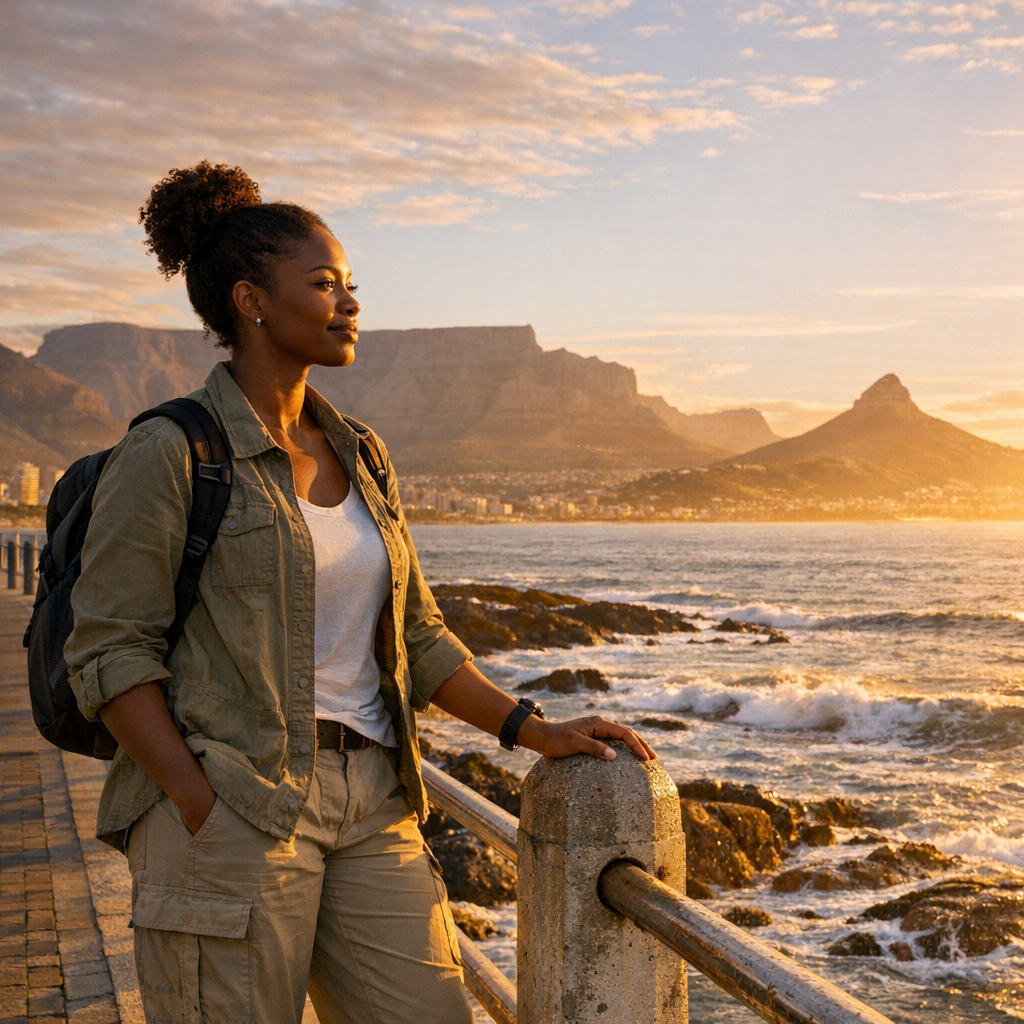
There's a particular kind of confidence that comes from watching Table Mountain change color at sunset from a bench on the Sea Point Promenade, alone, with nowhere you need to be and no one you need to answer to. Cape Town has a way of teaching solo travelers — especially Black women who've been told for years that traveling alone is unsafe, impractical, or simply not for them — exactly how good independent travel can feel. Episode 1 of BTN's Solo and Free series starts here, in the city that consistently tops Black women's solo-travel lists worldwide.
Why Cape Town Leads the Solo Travel Conversation
Cape Town offers a rare combination: dramatic, world-class natural beauty (Table Mountain, the Cape Peninsula, wine country twenty minutes away), a well-developed tourism infrastructure built around walkability and safety-conscious neighborhoods, English as a primary language, and — critically for Black travelers specifically — a Black-majority country with deep, complicated, essential history that rewards travelers who come to learn, not just to relax.
A large and active online community of Black solo travelers documents Cape Town trips constantly, which means new visitors arrive with an unusually rich base of real, recent, peer-sourced advice — which neighborhoods to book, which tour operators are Black-owned, which areas to avoid after dark. Few destinations offer this depth of crowd-sourced solo-travel confidence.
Know Before You Go: The Visa Picture
Here's good news worth stating plainly, since so many African destinations have changed their entry rules recently: as of 2026, South Africa remains visa-free for US citizens for stays of up to 90 days. There is no ETA (Electronic Travel Authorization) requirement for Americans, unlike a number of other countries that have introduced new pre-travel authorization systems. Just a passport valid for at least 30 days beyond your stay and proof of onward travel. Always double-check current requirements at the nearest South African consulate or on the Department of Home Affairs website before booking, since policy can shift, but as of this writing, Americans face one of the simplest entry processes in Southern Africa.
Essential History: District Six & Robben Island
District Six Museum — A powerful, unflinching memorial to the vibrant, multiracial inner-city neighborhood the apartheid government bulldozed in the 1970s, forcibly removing 60,000 residents under the Group Areas Act. The museum, staffed largely by former residents, turns personal testimony into one of the most moving history experiences in South Africa. Budget at least two hours and go with tissues.
Robben Island — The prison island where Nelson Mandela spent 18 of his 27 years of incarceration, now a UNESCO World Heritage Site and museum, tours are frequently led by former political prisoners themselves. Ferry tickets sell out days in advance in peak season — book online before you land, not on arrival.
Township Tourism, Done Right
Langa (Cape Town's oldest township) and the larger Khayelitsha township offer guided tours that, when booked through Black-owned, community-embedded operators, channel tourism revenue directly into local businesses, artists, and homestays rather than extracting from the community for outside profit. BTN's guidance: book only through operators explicitly run by township residents (Andulela Experience and Vamos Township Tours are two well-regarded, community-rooted options), never show up unguided, and approach the experience as a chance to learn from people living their actual lives — not as a photo backdrop.
Solo-Friendly Neighborhoods
Sea Point: A long, walkable promenade along the Atlantic coast, dense with cafes, gyms, and a strong evening walking culture that makes solo strolls feel entirely normal, even after dinner.
De Waterkant & Green Point: Colorful, compact, and centrally located near the V&A Waterfront, with a high concentration of boutique guesthouses favored by solo travelers and a strong LGBTQ+-friendly scene.
Bo-Kaap: The historic Cape Malay quarter, famous for brightly colored houses and cobblestone streets, walkable by day with excellent halal food — go with a local guide to understand the neighborhood's Muslim heritage properly rather than just photographing the doors.
Where to Eat Solo Without Feeling Out of Place
Gold Restaurant — A communal-table African tasting menu experience with live drumming, specifically designed for travelers dining without a group; solo diners are seated at shared tables and often leave with new friends.
Mzansi Restaurant, Khayelitsha — Traditional South African dishes (pap, chakalaka, boerewors) served in the heart of the township, best visited as part of a guided tour for both context and safety.
The Test Kitchen / Root 44 Market — For solo travelers wanting a lively, casual atmosphere without needing a reservation or a companion, weekend food markets in the Winelands offer easy solo-friendly grazing.
Where to Stay
Luxury: The Silo Hotel and Ellerman House both offer five-star service with exceptional security and concierge teams well-versed in solo-traveler needs.
Mid-Range: Guesthouses in De Waterkant and Sea Point in the $80-150/night range routinely rank highest in Black solo traveler reviews for both safety and hospitality.
Budget: Backpacker hostels like The Backpack in Tamboerskloof offer women-only dorm options and a built-in social scene for solo travelers wanting easy connection.
BTN Insider Tips for Solo Safety
Use Uber or Bolt exclusively. Never hail a taxi off the street; rideshare apps are reliable, affordable, and trackable.
Avoid walking alone after dark outside well-trafficked tourist areas. Sea Point promenade, the V&A Waterfront, and central De Waterkant are generally fine in early evening; err toward rideshare once it's fully dark.
Register with the US Consulate's STEP program before you travel — it's free, takes five minutes, and ensures you receive safety alerts and can be located in an emergency.
Join the Black solo traveler Facebook and Instagram groups focused on Cape Town before you go — there is an active, generous community sharing real-time advice, and many travelers link up for day trips once on the ground.
Don't leave valuables visible in parked rental cars, particularly at trailheads and beach parking areas — smash-and-grab theft from cars is the most common tourist crime, not violent crime against pedestrians.
Getting There
Cape Town International Airport (CPT) connects via one-stop itineraries from most US hubs, typically routing through Johannesburg, Doha, or Amsterdam on United, Qatar Airways, Delta, or KLM. Total travel time from the US East Coast runs 18-20 hours. Consider flying into Johannesburg and taking a short domestic flight to Cape Town if fares are significantly cheaper on that routing.
Best Time to Visit
November through March (Southern Hemisphere summer) offers Cape Town's best weather — warm, dry, long days perfect for hiking Table Mountain and beach time. April through May and September through October offer a quieter shoulder season with lower prices and fewer crowds at major sites.
Coming Up Next Episode
Episode 2 of Solo and Free heads to Lisbon, Portugal — exploring Europe's most walkable solo-travel city for the diaspora. Subscribe to the BTN podcast so you don't miss it.
Listen & Follow
Catch the full audio conversation on the BTN podcast, and follow Black Travel Now across social media for the rest of the Solo and Free series as it drops.