A note on this story: BTN was not able to shadow a single named patient through this exact trip for this episode. Rather than invent a specific person's private medical details and present them as fact, what follows is a composite account — a day-by-day walkthrough built from patterns reported again and again by real dental tourism patients, clinic case studies, and the agencies that coordinate these trips between Istanbul's dental districts and the airport. Think of it as a realistic preview of what a typical all-inclusive implant trip to Istanbul looks like, not a verbatim diary of one traveler's chart.
Medical disclaimer: This article is for general informational and travel-planning purposes only and is not medical advice. Dental implant surgery is a real surgical procedure with real risks, and outcomes vary by patient, bone health, and case complexity. Always get an in-person evaluation (including current X-rays or a CBCT scan) from a licensed dentist or oral surgeon — both at home and abroad — before committing to any procedure, and consult your own dentist about follow-up care once you're back in the US. BTN receives no compensation for medical outcomes and cannot vouch for any individual clinic; vet credentials, reviews, and licensing independently.
The Hook: A New Smile for Less Than One US Implant
Here's the number that starts most of these trips: a single dental implant in the United States commonly runs $3,000 to $5,000 or more once you add the post, abutment, and crown — before you've even dealt with bone grafts or extractions if you need them. In Istanbul, clinics that specialize in dental tourism routinely advertise full implant packages, consultation included, starting around $390 to $500 per implant. For patients who need a full-mouth case — six, eight, ten implants — that gap isn't incremental, it's the difference between a procedure that's financially out of reach and one that's suddenly possible, with a Turkish vacation attached. This composite diary walks through what that week actually looks like, hour by hour, so you can decide if it's right for you.
Day 1: Landing in Istanbul
Most dental tourism packages start the moment you clear customs at Istanbul Airport (IST). A driver from the clinic is waiting with a printed name sign — ground transportation to and from the airport is almost always bundled into the package price, along with hotel pickup for every appointment during the stay. The hotel itself is typically a 3- or 4-star property in Şişli or Taksim, walking distance to restaurants and, more importantly, close enough to the clinic that a bad recovery day doesn't mean a long taxi ride. Check-in, unpack, and an early night — jet lag from the US is real, and clinics generally schedule the first consultation for the next morning specifically so patients arrive rested.
Day 2: The Consultation and the Real Treatment Plan
This is the appointment that turns an estimate into an actual plan. A 3D CBCT scan (cone-beam computed tomography) maps bone density and volume in a way a flat X-ray can't, and it's standard at any legitimate Istanbul implant clinic — if a clinic skips it, that's a red flag, not a shortcut. The oral surgeon reviews the scan, confirms exactly how many implants are needed, flags whether a bone graft or sinus lift is required (both add cost and healing time), and walks through the crown material options — zirconia versus porcelain-fused-metal, with zirconia usually the pricier, more natural-looking upsell. This is also the moment to ask the blunt questions: What brand of implant is being used (Straumann and Nobel Biocare are the internationally recognized names; ask specifically)? What's the warranty? What happens if something goes wrong after you've flown home? A composite account can't answer those for you — a specific written treatment plan, in your hands before surgery day, can.
Day 3: Surgery Day (Implant Placement)
Implant placement itself is typically a same-day outpatient procedure done under local anesthesia, often finished in two to four hours depending on how many implants are being placed. Patients describe the sensation as pressure rather than pain, and most clinics send patients back to the hotel the same afternoon with a prescription for antibiotics and pain management, plus a strict list of soft-food-only instructions. This is the day the "diary" format usually gets honest about the parts nobody puts on Instagram: swelling, a puffy jaw, and a strong recommendation to just rest, ice the area in intervals, and skip the sightseeing entirely.
Day 4: Recovery, and Why the Itinerary Builds in a Buffer
Good clinics build a full rest day into every package precisely because implant placement needs time before the site is disturbed by chewing, talking a lot, or heat exposure. This is soup-and-smoothie territory. It's also, practically, the day many patients say they're grateful the hotel has decent room service and a quiet room, because the swelling typically peaks around 48 hours post-procedure before it starts to visibly improve.
Day 5: Follow-Up Check and Hagia Sophia at Golden Hour
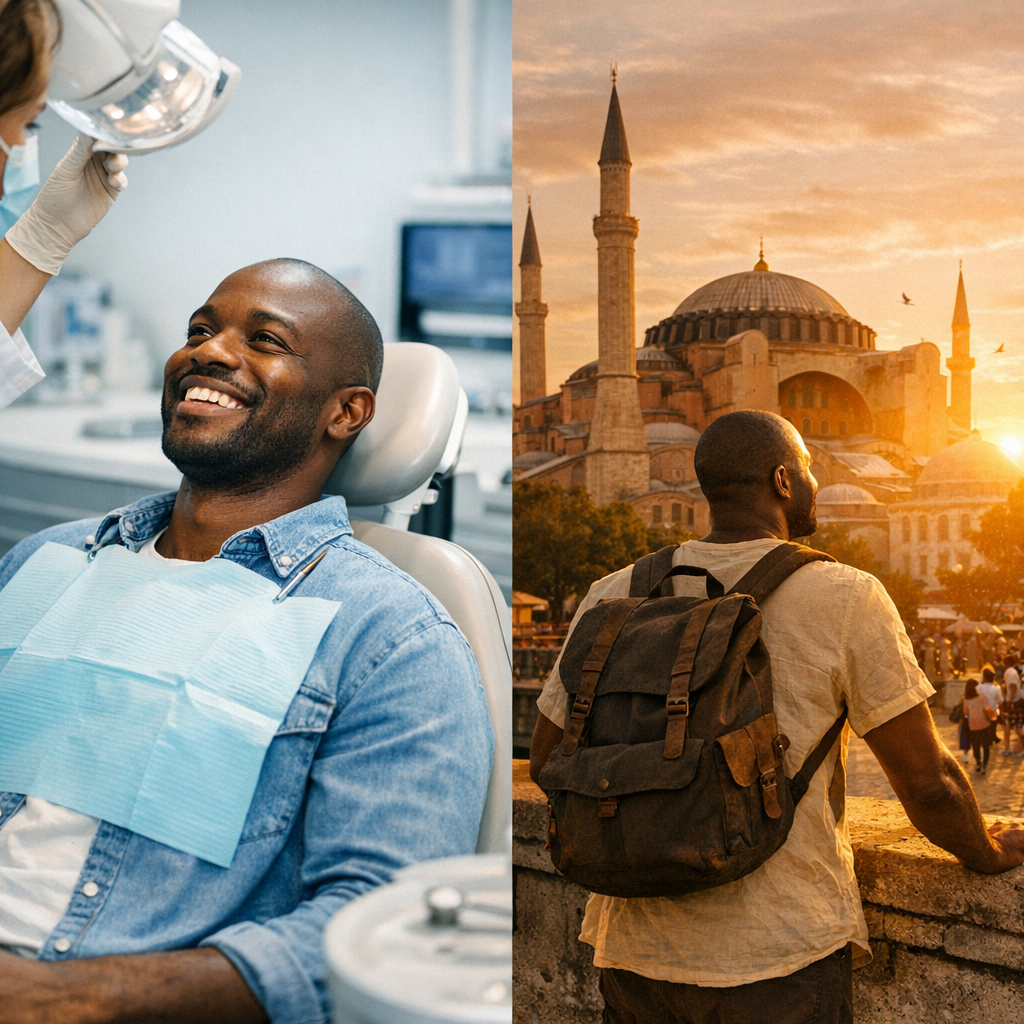
By day five, most patients are cleared for a follow-up check — the surgeon confirms the implant sites are healing as expected and there's no sign of infection — and cleared to get out of the hotel. This is where the trip earns its "medical tourism" label rather than just "medical treatment abroad": a slow, unhurried visit to the Hagia Sophia at sunset, the call to prayer echoing off nearly 1,500 years of Byzantine and Ottoman history while the swelling finally starts to go down. Patients consistently describe this as the moment the trip stops feeling like a medical errand and starts feeling like the vacation it also is. Keep it low-key — a seated ferry ride across the Bosphorus, a slow walk through the Sultanahmet district, coffee instead of anything that requires real chewing.
Day 6: The Waiting Game — Healing Time vs. Crown Placement
Here's the part every prospective patient needs to understand clearly before booking: implants need time to fuse with the jawbone (a process called osseointegration) before a permanent crown can go on top — typically three to six months, sometimes longer. That means a single one-week trip almost never covers implant placement and final crown placement in the same visit. Most reputable Istanbul clinics handle this one of two ways: a temporary crown or denture is fitted before you fly home, with a second, shorter trip booked months later for the permanent crown once healing is confirmed by X-ray; or, for cases using immediate-load implants on sufficiently strong bone, a same-trip provisional restoration is possible with the final crown following later regardless. Any clinic that promises a fully finished, permanent result in a single week for a standard implant case is a claim worth double-checking rather than accepting at face value.
Day 7: Departure Day and the Paperwork That Matters
The last appointment is typically a final check plus a full documentation handoff: implant brand and model, surgical notes, X-rays or scans, and written aftercare instructions to bring home to a US dentist. This packet matters more than almost anything else in the entire trip — it's what lets a stateside dentist monitor healing, handle the eventual crown fitting locally if needed, or manage any complication without starting from zero. Ask for it in writing before you leave, not "on request" after you've landed back in the US.
The Total Cost Breakdown
- Per-implant package (consultation + CBCT scan + placement): roughly $390–$500 per implant at competitively priced Istanbul clinics, versus $3,000–$5,000+ per implant commonly quoted in the US.
- Crown (zirconia, per tooth): often bundled into full-package pricing; à la carte, zirconia crowns typically add a few hundred dollars per tooth.
- Round-trip flights (US to Istanbul): commonly $600–$1,200 depending on season and origin city.
- Hotel (6–7 nights, mid-range): often included in all-inclusive packages; booked separately, budget roughly $50–$100/night.
- Airport and appointment transfers: typically included in all-inclusive dental tourism packages.
- Bone graft or sinus lift (if needed): an add-on cost that varies by case — ask for this in writing during the consultation, not after surgery is scheduled.
Even accounting for flights and a week of hotel stays, multi-implant cases frequently land at a fraction of the equivalent US bill — a big part of why Turkey dental tourism providers advertise savings of up to 70% compared to US and UK pricing. For a single implant, the math is closer; for a full-mouth case, it usually isn't close at all.
Is Istanbul Dental Tourism Right for You?
The savings are real and well documented, but so are the tradeoffs: you're managing a surgical recovery away from your regular dentist, in a different healthcare system, with a follow-up visit sometimes required months later. It works best for patients who can build in real recovery time (don't schedule sightseeing on top of surgery days), who verify clinic accreditation and surgeon credentials independently before booking, who get every quote and warranty in writing, and who loop in a US-based dentist before and after the trip so there's continuity of care on both ends.
BTN Insider Tips
Insist on the CBCT scan. If a clinic offers you a treatment plan without one, get a second opinion.
Get the implant brand in writing. Straumann and Nobel Biocare are internationally recognized names with track records and available replacement parts almost anywhere in the world if something needs adjusting later.
Budget a real rest day after surgery. The itinerary that skips it is the itinerary that turns a smooth recovery into a rough one.
Ask specifically about the crown timeline. A single trip usually covers placement, not the final crown — plan for a possible second visit.
Bring your full dental and medical history, including any current X-rays, rather than relying on a scan taken cold on day two.
Plan the Trip
Comparing accredited Istanbul dental tourism packages side by side — and seeing verified patient reviews before you commit — is worth the extra hour of research before you book anything. Same goes for flights: Istanbul is served by frequent, competitively priced routes from most major US hubs, and booking a few weeks out generally beats last-minute fares.
Related Episode: The Other Side of Istanbul Medical Tourism
This isn't the only reason Black travelers are booking Istanbul for medical care. Our companion episode in this series digs into Istanbul's other massive medical tourism draw — hair transplants — covering a different clinic district, a different recovery timeline, and its own cost breakdown against US pricing. Look for it in the Medical Tourism series lineup as it publishes.
Coming Up Next Episode
Episode 6 of Medical Tourism is in development. Until then, catch up on Episode 4's bariatric surgery trip to Mexico, and browse the full Medical Tourism series hub for every destination covered so far.
Listen & Follow
Catch the full audio conversation on the BTN podcast, and follow Black Travel Now across social media for the rest of the Medical Tourism series as it drops.