Welcome to Black Greek and Gone, Episode 1
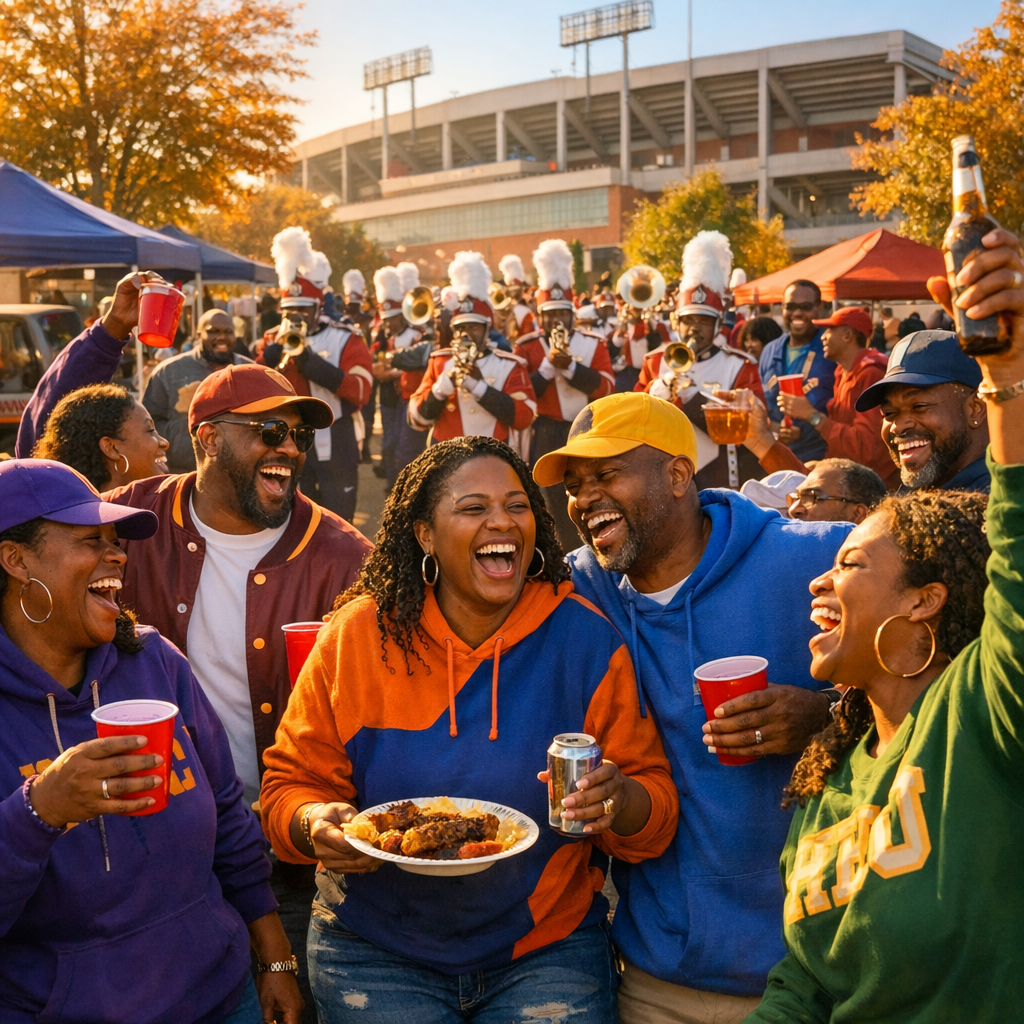
Some alumni don't pick one homecoming — they build a whole fall circuit and pack a bag every other weekend. This is where Black Greek and Gone begins: BTN's new series tracking Divine Nine life on the road, from step show weekends to island trips to the single biggest travel tradition in Black culture — HBCU homecoming. Episode 1 isn't about one school. It's about the alumni who treat September through November like a road trip with a football schedule attached, hitting two, three, sometimes four campuses in a single season.
If you've ever scrolled a homecoming group chat in August and watched people argue about whether Atlanta or Nashville comes first, this episode is for you. We're breaking down how to actually sequence a multi-city HBCU homecoming circuit, why the booking window matters more than people think, and what it realistically costs to do this right.
What "The Circuit" Actually Means
For a certain kind of HBCU alum — Divine Nine members especially, but far from exclusively — homecoming isn't a once-a-year hometown trip. It's a recurring fall ritual that follows a loose but recognizable route: Atlanta (home to multiple HBCUs and the unofficial gathering point for the whole culture), Nashville (Tennessee State and Fisk), Washington, D.C. (Howard), and New Orleans (Southern, Xavier, Dillard) are among the most common circuit stops, alongside campus towns like Hampton, Virginia and Grambling, Louisiana that pull in tens of thousands of visitors for a single weekend.
HBCU homecoming season runs primarily from September through November, with most schools locking in their exact weekend somewhere in that window. That's both the opportunity and the challenge of building a circuit: the season is long enough to hit multiple schools, but the exact dates for any given school aren't usually announced until six to twelve months ahead. That means a real circuit plan has to be built in layers — book the trips you're certain about first, and hold flexible dates for the ones still to be confirmed.
Sequencing a Multi-City Fall Tour
The alumni who do this well treat it less like a series of one-off trips and more like a single season-long itinerary. A few principles show up again and again in how the circuit gets planned:
Anchor around the schools you're most connected to first. Your own alma mater, your line sister's school, the campus where your chapter has the deepest roots — these are the trips you commit to the moment dates drop, because they're non-negotiable and because early commitment is what makes early booking possible.
Build outward from geography, not just affinity. If Atlanta is your home base or your first stop, look at what else is realistically reachable in the same general stretch of the season without requiring back-to-back cross-country flights. A Nashville-to-Atlanta run, for example, is a far more sustainable circuit leg than trying to bounce between the West Coast and the Gulf Coast in consecutive weekends.
Leave breathing room between stops. Back-to-back homecoming weekends sound fun in a group chat and feel brutal in practice — between the travel, the late nights, and the cost, most seasoned circuit-runners space their trips out by at least two to three weeks. That spacing also gives you room to adjust once exact dates for later-season schools are finally announced.
Treat the biggest weekends as their own category. Howard, Hampton, Southern, and Grambling are consistently among the most attended HBCU homecomings in the country, drawing tens of thousands of visitors and a corresponding surge in host-city hotel and flight demand. If one of these is on your circuit, it deserves to be planned first and booked earliest — not squeezed in as an afterthought once the rest of your season is already set.
Why the Six-Month Booking Window Actually Matters
This is the part of circuit planning that trips up first-timers: by the time a school's homecoming dates are officially confirmed, hotel inventory in that campus city is often already thinning out. Local coverage of major homecoming weekends consistently describes nearby hotels and short-term rentals filling up fast, with host-city rates climbing well above normal weekend pricing as the date approaches — travelers who wait report price spikes and, in the biggest markets, properties selling out completely within a few miles of campus.
Large homecomings like Howard's, Hampton's, and Southern's routinely require booking hotels six or more months ahead if you want anything close to campus at a reasonable rate. Hampton's homecoming alone regularly pulls in tens of thousands of visitors and generates millions in local economic impact for the Coastal Virginia region in a single weekend — that's the scale of demand hitting a limited supply of nearby rooms.
The practical takeaway for circuit planners: don't wait for every school's dates to be locked before you start booking. As soon as a school confirms or even signals a likely weekend based on prior-year patterns, that's your cue to get a flexible-rate hotel hold and a refundable flight on the calendar. You can always adjust by a few days once the official date drops; you can't always find a hotel room three weeks out.
Budgeting for the Full Season
A single homecoming weekend — flight plus hotel — typically runs somewhere between $400 and $700 per person, depending on the city, how far in advance you book, and whether you're splitting a room. Multiply that across a three- or four-stop circuit and you're realistically looking at a fall season that costs anywhere from $1,200 to $2,800 all-in before you factor in tickets, tailgate contributions, and the inevitable step show or concert add-on.
That number sounds steep until you break it down by booking timeline. Alumni who lock in flights and hotels six-plus months ahead consistently pay less per trip than those booking six weeks out, sometimes by a significant margin once host-city rates have spiked. A circuit budget works best when it's built the way the itinerary is: in layers, starting with your most certain trips and adjusting the rest as dates and prices firm up.
A few budgeting habits worth building into your circuit plan:
Set a per-weekend ceiling before you start looking. Knowing your $400-$700 range going in keeps you from overspending on the first stop and running short by the third.
Book flights and hotels as separate line items, not a bundle. Separating the two lets you lock in the harder-to-replace piece — usually the hotel, in a market that's about to sell out — even before your flight dates are fully settled.
Budget for tickets and tailgate costs separately from travel. Game tickets, step show and concert admission, and group tailgate contributions are their own category and tend to get underestimated when travelers focus only on flight-and-hotel math.
Which Schools Anchor the Biggest Weekends
Every HBCU homecoming has its own devoted following, but a handful of schools consistently draw circuit-level crowds and deserve a spot near the front of any fall touring plan: Howard University in Washington, D.C., Hampton University in Virginia, Southern University in Baton Rouge, and Grambling State University in Louisiana are widely regarded among the most attended homecomings in the country, alongside strong regional draws in Atlanta and Nashville's HBCU cluster. Exact dates for any given year are set by each university, usually announced somewhere between six and twelve months out, so treat any specific weekend you hear cited as a starting point for research rather than a locked date — always confirm directly with the school before booking.
If you're circuit-planning around one of BTN's individual HBCU homecoming event write-ups, use those pages for the ground-level details — parking, tailgate spots, campus-specific tips — and come back to this episode for the season-level strategy of stitching multiple weekends together.
BTN Insider Tips
Start your circuit calendar in late spring. Prior-year dates are usually a reliable guide to the general weekend even before official confirmation, giving you a head start on hotel holds.
Use refundable or flexible-rate bookings for anything more than four months out. It costs a little more per booking but protects you if a school shifts its date.
Split hotel costs with your line or crew early. Group room blocks near campus disappear first, and splitting a block is almost always cheaper than four separate solo bookings.
Don't sleep on flight booking affiliates and hotel booking platforms that specialize in event travel — they often surface host-city inventory that doesn't show up on a general search until it's already marked up.
Budget your ticket and tailgate money separately from travel so a great flight deal doesn't quietly get eaten by game-day and step show costs.
Coming Up Next Episode
Episode 2 of Black Greek and Gone stays on the road with the Divine Nine — subscribe to the BTN podcast and follow Black Travel Now across social media so you don't miss it.
Listen & Follow
Catch the full audio conversation on the BTN podcast, and follow Black Travel Now across social media for the rest of the Black Greek and Gone series as it drops.