The Homecoming Spirit Doesn't Stop at the Yard
Every HBCU alumnus knows the pull of homecoming weekend — the yard packed with reunited line brothers and soul sisters, the step show under the lights, the sense that some invisible thread still connects you to the person you were the day you crossed. What a growing number of alumni chapters have realized is that the thread doesn't have to stop at the campus gates. Some chapters are taking the whole spirit of homecoming — the fellowship, the pride, the ritual of showing up together — and carrying it across the Atlantic to Ghana and Senegal, tracing the history that made the yard possible in the first place. This is Episode 6 of Black Greek and Gone, and it closes out our current run on HBCU Alumni Travel Crews with the trip that asks the biggest question of the bunch: what does it mean to homecome to the continent itself?
Not a Family Reunion, Not a Mission Trip — A Chapter Trip
BTN readers who've followed our Black Family Travel series know the heritage-trip terrain already: multigenerational families are increasingly trading the domestic reunion ballroom for Ghana and South Africa, standing together at Cape Coast Castle as grandparents, parents, and kids. And Pastor Bros readers know the version where a Ghana trip is built around six days of ministry partnership before three days of leisure. This episode is neither of those trips, and the difference is worth being precise about, because it changes how the whole thing gets planned.
An HBCU alumni chapter trip is organized the way a chapter organizes anything — through the structure that already exists. A graduate chapter's executive board plans it the way it plans a scholarship gala or a founders'-day program: a trip committee, a budget line, a timeline tied to the chapter's existing meeting calendar, and a group that isn't bound by blood or by a congregation but by a shared line of pledgeship, a shared campus, a shared organizational history. Divine Nine graduate chapters, campus-specific alumni associations, and multi-school HBCU alumni alliances (groups that pool members across several historically Black colleges in one metro area) are the organizing bodies here, and that structure matters. It means dues-paying members, an existing communication pipeline, and often a nonprofit or 501(c)(3) arm that can legally run a scholarship or fundraising component alongside the travel itself — something neither a family reunion committee nor a church mission board is typically built to do in the same way.
That organizational muscle is exactly what's shown up in real HBCU-to-West-Africa programming in recent years. The HBCU Alumni Alliance in Atlanta, for example, has partnered with the HBCU Africa Education Coalition to run an Accra-based program connecting Black male scholars from six HBCU institutions to funded study and cultural immersion time in Ghana, underwritten in part by proceeds from the Alliance's own annual scholarship fundraiser. Around the region, HBCU Green Fund Fellows — a cohort drawing from schools including Spelman, Clark Atlanta, and Morehouse — have run spring expeditions to Senegal built around sustainability and cultural exchange. Neither is exactly a step-show-and-suitcase alumni vacation, but both prove the same pattern: HBCU-affiliated organizations, not individual travelers, are increasingly building the pipeline between historically Black campuses and West Africa — and alumni chapters are following that same organizing logic for trips built around heritage and fellowship rather than academic credit.
Why Ghana and Senegal, Together
Where a family reunion or a solo heritage trip often picks one country, chapter-organized trips increasingly link Accra and Dakar into a single itinerary. Ghana's Year of Return infrastructure — hotels, tour operators, and a government tourism apparatus built to receive diaspora visitors — makes Accra a reliable home base, with Cape Coast and Elmina Castles a few hours west. Dakar adds a second country, a second colonial history (French rather than British and Dutch), and Gorée Island, a short ferry ride offshore, as its own singular stop. Framing the trip as "West Africa" rather than one country lets a chapter build a single eight-day itinerary that moves through two distinct national chapters of the same transatlantic story — a comparative, layered experience that a single-country trip usually isn't built to deliver.
Gorée Island: What the House of Slaves Actually Asks of You
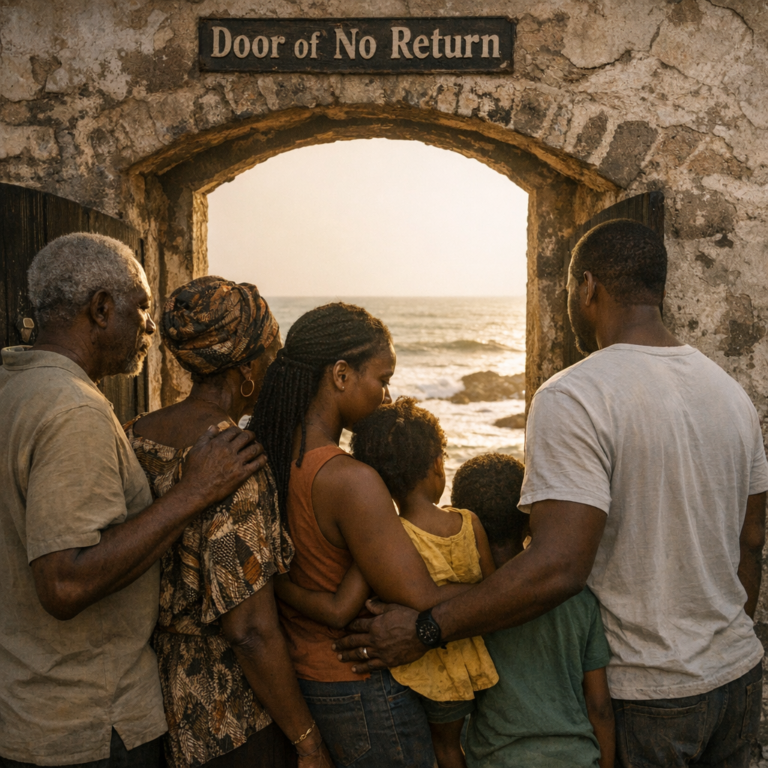
Gorée Island sits a short ferry crossing off the coast of Dakar, and UNESCO inscribed it as a World Heritage Site in 1978, one of the earliest sites recognized under that program anywhere in the world. UNESCO's own listing describes Gorée plainly: from the 15th through the 19th centuries it functioned as one of the largest slave-trading centers on the West African coast, passing through the hands of Portuguese, Dutch, English, and French traders in succession. The island's House of Slaves — the Maison des Esclaves — is the site most visitors come to see, its narrow holding cells and the low, arched doorway to the sea known as the Door of No Return standing today much as they stood centuries ago. Historians debate the precise volume that passed through this specific house versus other departure points along the coast, but there is no debate about what the building represents: a physical, still-standing witness to the slave trade, and today, in UNESCO's words, both a reminder of that exploitation and a pilgrimage site for reconciliation.
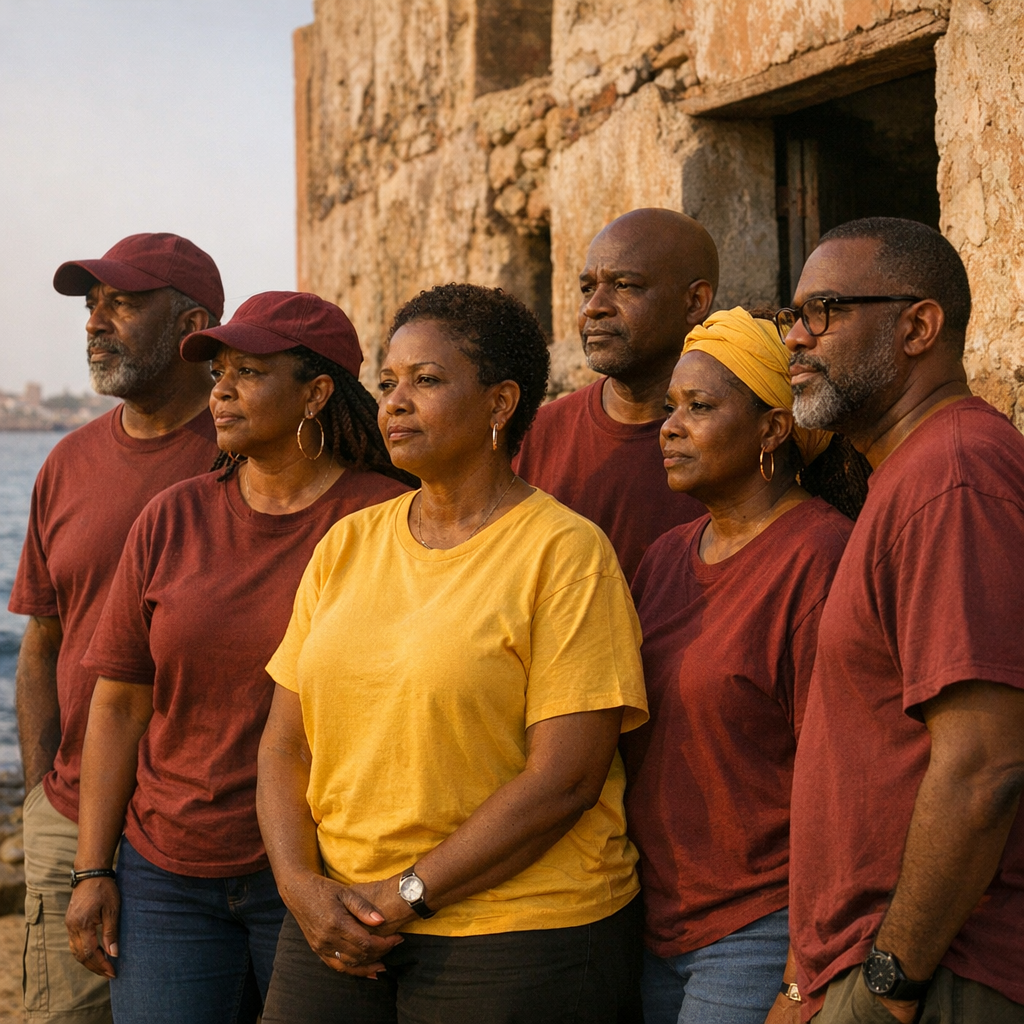
BTN has already given Cape Coast Castle and Elmina Castle — Ghana's own UNESCO-listed slave-trade fortresses, and their own Door of No Return — the space they deserve in our Black Family Travel episode on heritage reunions, and we won't repeat that ground here. What's worth saying specifically for a chapter trip is this: touring Gorée or Cape Coast with your fraternity brothers, sorority sisters, or a mixed alumni group is a different emotional register than touring it with your own blood relatives, and chapter trip organizers who've done this well plan for that difference rather than assuming the moment will simply take care of itself. There's no grandmother in the group whose own lived memory anchors the visit the way an elder's presence does on a family trip. What there is instead is a shared organizational bond — the same line, the same crossing, the same campus — standing together in a place built to erase exactly that kind of belonging. Chapter leaders who've organized these trips describe building in a deliberate quiet period after the House of Slaves and Cape Coast visits, resisting the instinct to move straight into the next stop on the itinerary, and giving members room to process alone before regrouping. A few chapters have started closing the visit with a short, voluntary circle — not a program, not a speech, just space for whoever wants to say something to say it. That small structural choice, organizers report, does more than any planned itinerary item to turn a heritage stop into something the chapter actually carries home together.
Structuring the Trip: Education First, Bonding Built In
The chapter trips that work best treat the West Africa itinerary as having two equally real purposes rather than trying to disguise one as the other. The educational spine usually includes a local historian or guide briefing the group before Gorée and Cape Coast — not just narrating the sites, but giving members historical context on the specific European trading powers involved, the economics of the triangular trade, and the post-independence history of both Ghana and Senegal since the sites were preserved as memorials rather than left to decay. Some chapters bring in a campus historian or a Divine Nine national archivist as a trip scholar, tying the visit back to the organization's own founding-era history of Black institution-building in the Jim Crow South.
The bonding side runs alongside that, not after it. Evenings in Accra and Dakar are typically built around chapter business folded into the trip — a founders'-day-style program held overseas instead of at the usual banquet hall, informal step and stroll sessions at a hotel courtyard or beach that let the group's culture travel with them, and communal meals that function the way a chapter meeting dinner does at home. Several alumni associations have started scheduling their trip to overlap with a founders' or anniversary date specifically so the celebration and the heritage journey reinforce each other rather than competing for calendar space. The result, when it's planned well, is a trip that doesn't ask members to choose between reckoning with history and celebrating who they are as an organization — both happen in the same eight days, often in the same day.
What It Costs and How Chapters Book It
An eight-day West Africa group package covering both Ghana and Senegal typically runs $2,000 to $3,200 per person, covering international and intra-region flights, ground transportation, guided touring at Gorée, Cape Coast, and Elmina, and most lodging. Chapters booking as an organization rather than an informal friend group have real leverage here: heritage tour operators who specialize in diaspora group travel routinely offer better per-person rates and a dedicated group coordinator once a chapter clears 20 to 25 confirmed travelers, and group flight consolidators can meaningfully cut airfare on the Accra-to-Dakar leg specifically, a route that's otherwise pricier and less frequent than either country's US-bound flights. Chapters that book earliest tend to structure payment the way they'd structure dues — a tiered deposit schedule tied to chapter meeting dates, so the trip fund grows the same predictable way chapter finances already do.
BTN Insider Tips for Chapter Trip Organizers
Put a historian on the itinerary, not just a tour guide. A guide narrates the site; a historian connects it to your organization's own founding-era history, and members notice the difference.
Build the Gorée and Cape Coast visits into the morning, with nothing scheduled directly after. Give the group room to sit with it before the itinerary moves on.
Time the trip around a founders' or anniversary date if your chapter's calendar allows it. It turns the celebration and the heritage journey into one continuous experience instead of two competing agendas.
Book the Accra-Dakar leg as its own line item. It's a smaller, pricier route than either country's US connections, and a specialized consolidator can save real money here specifically.
Assign a trip scribe. Several chapters that have made this trip say a designated member journaling or recording short reflections throughout becomes the thing the chapter treasures most once everyone's home — more than any photo from the beach afternoon.
Closing Out This Thread: What's Next for Black Greek and Gone
This episode closes the current run on HBCU Alumni Travel Crews. We started this batch on the homecoming circuit itself, moved through Divine Nine chapters taking their organizational structure abroad, alumni squads choosing off-season trips just for the fellowship, and now a chapter tracing its own history back to the source. The throughline: HBCU alumni life doesn't stop being organized, communal, and rooted in history just because it crosses an ocean — if anything, it gets more of all three. Black Greek and Gone will keep running as a series, and we'll be back with new episodes as fresh stories come in. For now, head back to the series hub for the full run of HBCU Alumni Travel Crews episodes.
Listen & Follow
Catch the full audio conversation on the BTN podcast, and follow Black Travel Now across social media for more of the Black Greek and Gone series.