Welcome to Black Greek and Gone, Episode 2
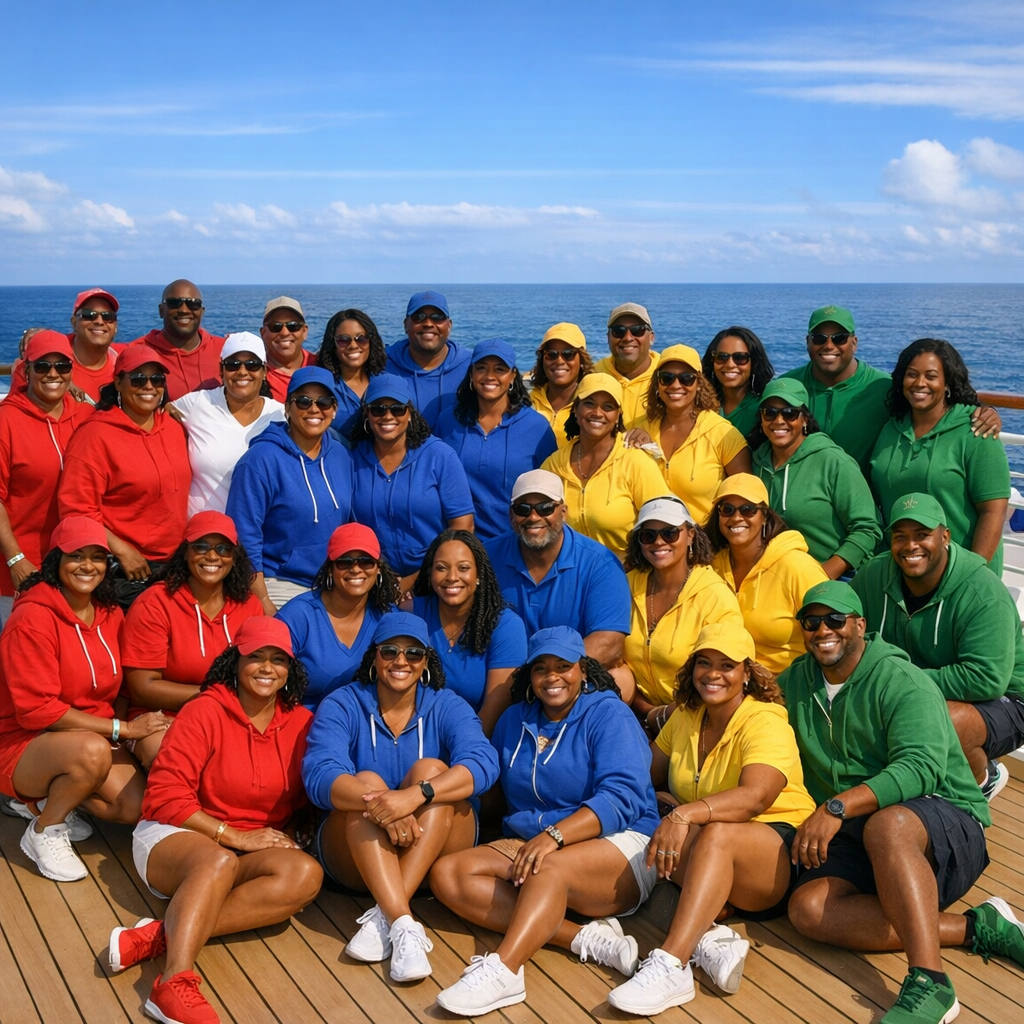
Your chapter already throws the best homecoming tailgate on campus. The cooler is stocked, the steps are rehearsed, the neighboring chapters know better than to show up unprepared, and somebody's aunt is running the grill like a four-star kitchen. Now imagine that exact energy, minus the parking lot and plus an ocean view, running for four straight days with nowhere to go and nothing to rush back to. That's the pitch behind the fastest-growing trend in HBCU alumni programming: the chapter group cruise. Welcome to Episode 2 of BTN's Black Greek and Gone, where we're moving the yard from campus to the high seas.
This episode is a planning guide for chapter presidents, alumni association social chairs, and anyone who's ever been the one texting forty people "has everybody Venmo'd the deposit yet?" We're covering how the existing HBCU alumni cruise market actually works, how to negotiate a real group rate instead of just splitting a public sailing, how to structure chapter-branded programming onboard so your crew doesn't just blend into the buffet line, and the planning details that make the difference between a smooth sailing and a logistics headache.
This Market Already Exists — You're Not Inventing Anything
Here's the good news for any chapter thinking about this for the first time: you don't have to build this from scratch. A whole cottage industry of HBCU-and-Divine-Nine-focused cruise programming has been running for years, and it's only gotten more organized. Homecoming: The Cruise has grown into one of the most visible examples — it's partnered directly with the National Pan-Hellenic Council as an official sponsor of its leadership conference programming, and its 2026 edition (branded in association with the National HBCU Alumni Alliance) sails over MLK weekend, January 15-20. Longer-running operators like HBCUCruise.com and the HBCU Alumni Getaway Cruise (run through group travel agencies) have built annual sailings specifically around HBCU and Divine Nine alumni audiences, and regional alumni chapters — like the Philadelphia HBCU Alumni Alliance's own moonlight cruise programming — run their own smaller-scale versions of the same idea.
A word of caution before you book anything based on a name you've heard: these are third-party programs, run by independent promoters and travel agencies, and their operators, sailing dates, ships, and pricing change from year to year — sometimes year to year for the same event name. Before your chapter commits a deposit to any specific branded HBCU cruise, verify the current operator, sailing date, ship, and price directly with that program's own booking channel rather than relying on last year's flyer or a screenshot making the rounds on group chat. What doesn't change is the underlying model, and that's what this episode is really about: how these trips are built, so your chapter can either book into an existing one intelligently or run its own version independently.
How These Group Cruises Actually Work
Almost none of these HBCU-branded sailings involve a chapter or promoter chartering an entire ship. That's expensive and logistically enormous. Instead, the standard model is a layered one: a promoter or alumni organization books a large block of cabins on a standard, publicly-sailing Caribbean itinerary — the same ship other paying passengers who have nothing to do with your event are also sailing on — and then builds its own private, branded programming on top of that public sailing. Think of it less like renting the whole hotel and more like block-booking a wing of it and throwing your own private party in the ballroom every night.
That layered structure is exactly why multiple different HBCU-alumni programs can exist around the same sailing dates or even the same ship without being duplicates of each other — it's normal for more than one promoter to run parallel programming on the same underlying public cruise. For your chapter, this matters practically: whether you buy into an existing branded sailing or organize your own chapter-only cruise, the ship itself runs its regular schedule, meals, and entertainment, and your group's identity gets built through private events layered on top, not through owning the boat.
Group Rate Negotiation Basics
Whether you're negotiating with a cruise line's group sales desk directly or working through a travel agent who specializes in group and affinity cruises, the mechanics are consistent across the industry:
Book through the group desk, not the retail booking page. Every major cruise line — Royal Caribbean, Carnival, Norwegian, Celebrity, Virgin Voyages — maintains a dedicated group sales channel separate from individual bookings, and most assign an actual group coordinator to manage your chapter's roster, payments, and cabin assignments as a single unit rather than dozens of individual reservations.
Cabin count drives your leverage. Group perks typically kick in once you commit to a meaningful block of cabins — thresholds vary by line, but a common industry pattern lands somewhere in the range of five to eight cabins to unlock preferred group pricing, with better perks (free or discounted berths for organizers, deeper onboard credit) scaling up as your chapter's headcount grows. A chapter of 40-50 alumni booking double-occupancy cabins clears these thresholds easily.
Negotiate the perks, not just the fare. Group rates commonly bundle in reduced or waived deposits (crucial when you're asking dozens of members to commit money at once), per-cabin or per-person onboard credit that can offset drink packages or specialty dining, a complimentary or deeply discounted berth for the organizer once enough cabins are booked, and locked-in pricing that protects your chapter if public fares rise after you book.
Book early — 9 to 12 months out is standard. This isn't just about price. Ships have a limited supply of cabins clustered on the same deck or hallway, and chapters that wait until a few months before sailing often end up scattered across the ship, which undercuts the entire point of a group trip.
Get one point of contact. Whether that's your social chair, a member with travel-industry experience, or a travel agent who books group and affinity cruises for a living, one person managing the roster and payments with the cruise line prevents the chaos of forty people calling in separately with forty different questions.
Structuring Chapter-Branded Onboard Events
This is where the "beyond the yard" part comes alive. A cruise cabin block gets your chapter onto the ship together — chapter-branded programming is what actually recreates the tailgate energy once you're there. A few structures that work:
Reserve a private lounge or venue for your signature event. Ships have bookable private spaces — a nightclub before public hours, a specialty restaurant's private room, an outdoor deck space — that group organizers can reserve for a chapter meet-and-greet, a step show or strolling competition, or a themed "yard show" night. Book this through the group coordinator alongside your cabin block, not as an afterthought once you're already sailing.
Plan a step show or stroll competition as the marquee night. If your chapter is sailing alongside other NPHC organizations — either because you booked into an established multi-chapter program or because several chapters coordinated their own joint sailing — a scheduled, judged step show or stroll-off recreates exactly the homecoming-weekend energy this trip is selling. Give it a real time slot, real judges (alumni from unaffiliated chapters work well), and treat it as the trip's headline event rather than a spontaneous hallway moment.
Build in a chapter meetup separate from the big show. Not every gathering needs to be a full production. A daily or twice-during-the-cruise "chapter hour" — same time, same casual meeting spot, no agenda beyond being together — gives your crew a guaranteed touchpoint without requiring a reserved venue every single day.
Coordinate branded gear ahead of time. Matching chapter or line jackets, cruise-specific event shirts, or accessories in organizational colors do double duty: they build group identity in photos (a huge part of how these trips get marketed and remembered afterward) and make it easy to spot your people in a crowd of a few thousand other passengers.
Loop in the ship's group services team on entertainment requests. Cruise lines are increasingly familiar with Divine Nine and HBCU group programming given how established this niche has become — ask the group coordinator directly what other chapters or promoters have successfully booked (private DJ sets, reserved pool deck time, group photo sessions with ship photographers) rather than assuming you're the first to ask.
What This Actually Costs
For budgeting purposes, a standard 4-5 night Caribbean sailing for a chapter group typically runs $550-$800 per person, before group perks, onboard credit, and any private-venue reservation fees. Interior cabins land at the lower end; balconies and larger cabins for members traveling with family push toward the top. Group rates, early booking, and a strong per-cabin negotiation can meaningfully reduce the per-person number — which is exactly why the group-desk strategy above isn't just red tape, it's real savings for your members.
BTN Insider Tips
Verify any named third-party HBCU cruise brand directly before your chapter commits money. Operators, ships, and prices in this space change year to year — confirm current details through the program's own official booking channel, not a repost.
Reserve your marquee onboard venue at the same time you book cabins. Private spaces for a step show or chapter party get claimed early by other groups sailing the same week.
Assign one point of contact for the whole roster. One person managing payments and cabin assignments with the cruise line (or agent) saves your chapter dozens of duplicate conversations.
Order chapter gear with enough lead time. Branded shirts and jackets take weeks to produce and ship — order at least two months before sailing, not two weeks.
Confirm documentation early. Most Caribbean sailings from US ports are closed-loop, meaning a passport card or equivalent ID often suffices for the cruise itself — but any member flying international to meet the ship, or needing to fly home in an emergency, needs a full passport book. Confirm each member's individual travel plan rather than assuming one document policy covers the whole chapter.
Coming Up Next Episode
Black Greek and Gone continues with more of what makes HBCU Greek life travel its own category — step show weekends, homecoming circuits, and the destinations Divine Nine members and HBCU alumni groups are choosing next. Subscribe to the BTN podcast so you don't miss it.
Listen & Follow
Catch the full audio conversation on the BTN podcast, and follow Black Travel Now across social media for the rest of the Black Greek and Gone series as it drops.