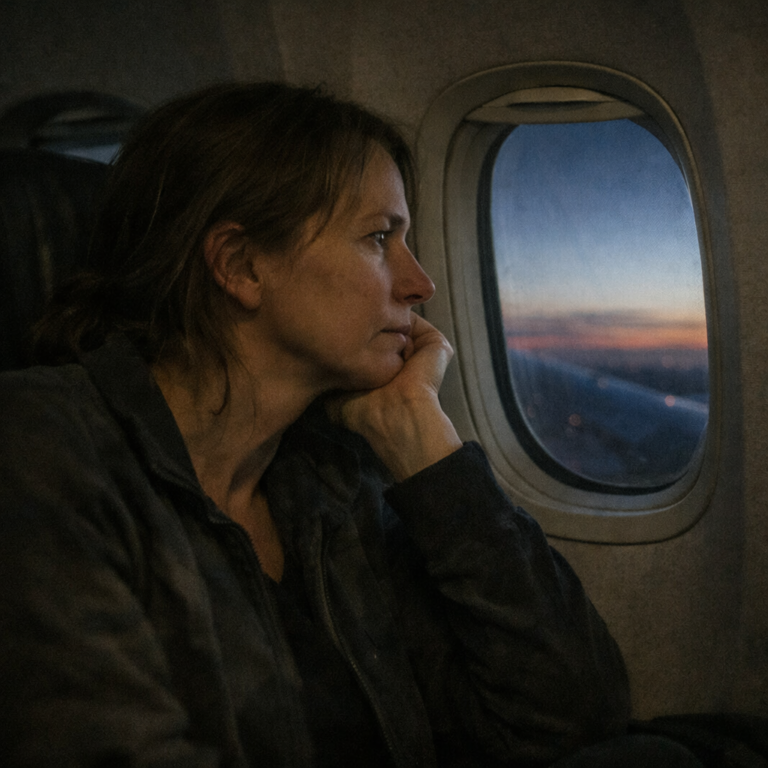
The Reunion That Left the Ballroom Behind
Every family reunion planning committee knows the usual fight: which hotel ballroom, which city, whose cousin is in charge of the T-shirts this year. But a growing number of Black families are skipping that fight entirely by asking a bigger question first — what if the reunion wasn't in a ballroom at all, but in Accra, or Cape Town, or standing together at the edge of the Atlantic where the story actually started? Instead of the same conference-center banquet hall, some families are taking the whole reunion to the motherland, and the shift says as much about where Black American identity is heading in 2026 as it does about travel trends.
This isn't a fringe idea anymore. Family reunion committees — the aunts, cousins, and self-appointed logistics captains who run these gatherings like small nonprofits — are increasingly fielding a version of the same question every planning cycle: should this be the year we go to Ghana? Or South Africa? The answer, for a rising number of multigenerational families, is yes.
Why Families Are Trading the Ballroom for the Motherland
The domestic family reunion has never really been about the ballroom itself — it's about gathering scattered relatives in one place, feeding everyone, and making sure the youngest generation knows the oldest one before it's too late. A heritage-trip reunion does all of that, plus something a hotel conference room never can: it puts the family's story inside a much larger one. Grandparents who grew up hearing fragments of ancestry get to stand on the continent those fragments came from. Kids who've only encountered slavery and colonialism as chapters in a textbook get to encounter it as a place, with their own great-grandmother beside them. That combination — family time plus reckoning plus genuine celebration — is proving hard for a rented banquet hall to compete with.
There's also a practical undercurrent. Reunion committees report that once a family commits to traveling internationally together, attendance from the "we'll try to make it" branch of the family tree often goes up, not down — a heritage trip becomes an event people build vacation time and savings around a year in advance, rather than a Saturday they might skip. And for families with roots that were deliberately severed by the transatlantic slave trade, a domestic reunion can only ever gather the branches; a Ghana or South Africa trip is the closest most families can get to visiting the trunk.
Ghana or South Africa: Two Very Different Heritage Reunions
The two destinations dominating this trend offer genuinely different experiences, and reunion committees should choose based on which story they want the family to walk through together, not just which flights are cheapest.
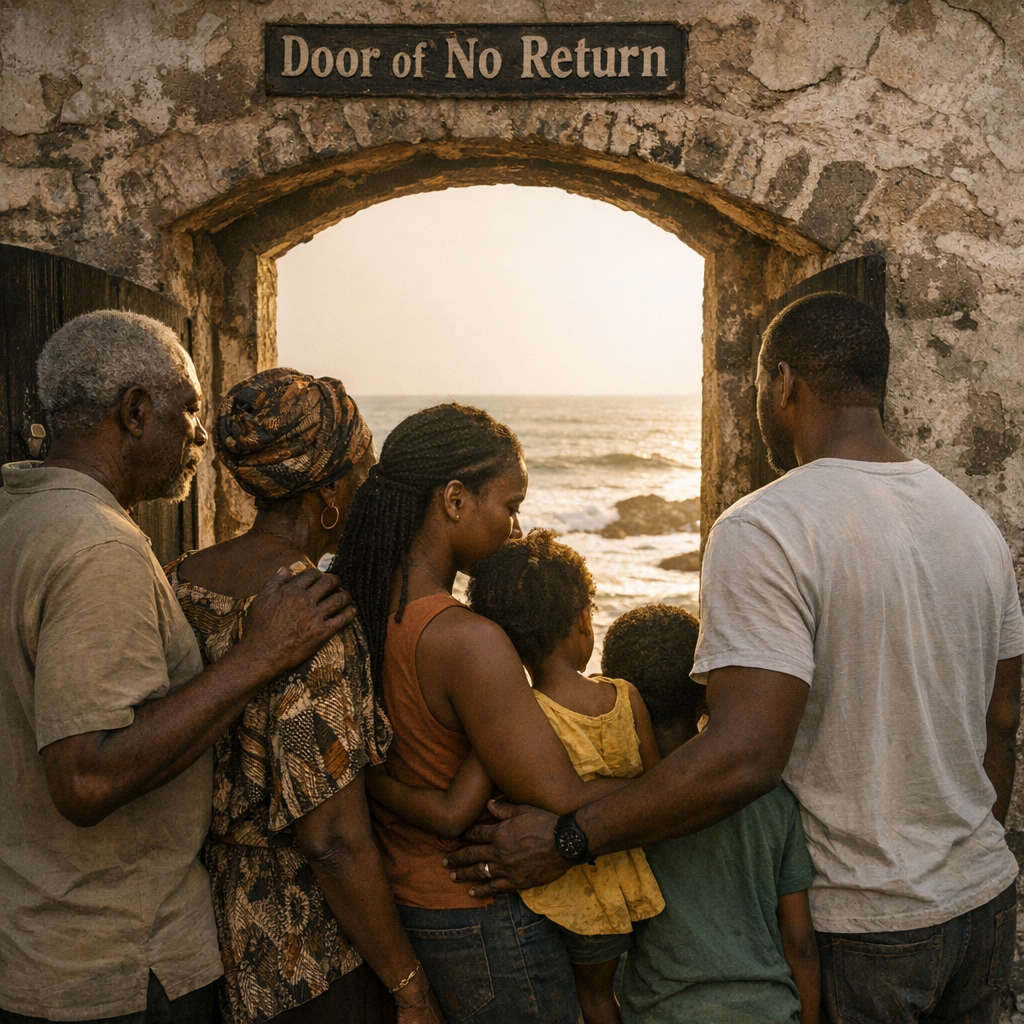
Ghana centers the reunion on the transatlantic slave trade itself. Accra is the arrival city and the base for markets, food, and diaspora culture (Ghana's ongoing "Year of Return" infrastructure means tour operators, hotels, and government tourism offices are genuinely built to receive African American family groups). Cape Coast, about two and a half hours west, is where the trip's emotional center of gravity sits — Cape Coast Castle and nearby Elmina Castle, the two most-visited transatlantic slave-trade heritage sites on Ghana's coast, both built centuries ago as fortified trading posts and both still standing as UNESCO World Heritage sites. Both castles preserve a passage known as the Door of No Return, the last point of contact enslaved Africans had with the continent before being marched onto ships. Many Ghanaian guides and diaspora organizations now also call it the "Door of Return" for the descendants who walk back through it.
South Africa tells a more recent, different story — not the transatlantic slave trade, but apartheid and its dismantling within living memory. Cape Town anchors the trip with Robben Island, where Nelson Mandela was imprisoned for 18 of his 27 years of incarceration, and the District Six Museum, which documents a multiracial neighborhood forcibly demolished under apartheid's forced-removal laws. Johannesburg adds the Apartheid Museum and a guided tour of Soweto, including Vilakazi Street, the only street in the world that was once home to two Nobel Peace Prize winners (Mandela and Archbishop Desmond Tutu). For families with grandparents who lived through the American civil rights era, South Africa's apartheid history often lands with a specific, personal resonance — it's history close enough in time that elders recognize the shape of the struggle, even from an ocean away.
Some reunions solve the "which one" debate by simply doing both across two reunion cycles, treating Ghana and South Africa as companion chapters in the same larger family story rather than competing vacation options.
The Door of No Return: Visiting as a Family, With Elders in the Room
This is the part of the trip that reunion organizers say no brochure prepares you for, and it deserves to be written about with the weight it actually carries rather than folded into a bullet-point itinerary.
Walking through Cape Coast Castle's dungeons and out through the Door of No Return is not a photo-op stop between the market and lunch. It is a narrow, low-ceilinged, physically uncomfortable space that held hundreds of people in conditions designed to break them, and standing in it as a family — with an 80-year-old grandmother on one side and an 8-year-old great-grandchild on the other — tends to produce a kind of silence that reunion committees say they didn't fully anticipate the first time. Families who have made this trip describe elders needing to sit down afterward, needing time alone before rejoining the group, or in some cases choosing not to enter the lower dungeons at all and waiting instead in the courtyard — and every reunion planner interviewed for pieces like this one is clear that this is not a failure of the trip. It's the point of it. A heritage reunion isn't measured by whether everyone had a good time in the Western vacation sense; it's measured by whether the family got to carry something together that they couldn't carry apart.
Practically, this means building real space into the itinerary: a guide who is prepared to let a group linger rather than rush to the next stop, a quiet hour built in afterward rather than an immediate transition to a market or beach, and an honest heads-up to every family member before the trip about what the castle visit will involve, so no one walks in unprepared. Several tour operators who specialize in African American heritage trips now offer a private, family-only version of the Cape Coast tour specifically so a reunion group isn't processing this moment shoulder-to-shoulder with strangers on a general admission tour.
Group Tour Logistics: How Reunion Committees Actually Book This
Booking a 20-, 40-, or 80-person family reunion for an international heritage trip is a genuinely different exercise than booking a domestic one, and reunion committees who've done it successfully tend to follow a similar playbook. Tour operators who specialize in Ghana and South Africa heritage trips for the diaspora typically build 8-to-10 day group packages that combine the historical sites with culture and leisure — a Ghana itinerary might pair Cape Coast Castle and Kakum National Park's canopy walk with a day of Accra market shopping and a closing beach afternoon; a South Africa itinerary might pair Robben Island and Soweto with a Cape Town wine-country day and a game drive.
The logistics that matter most for a family group specifically: a single point-of-contact group coordinator on the operator's side (not just a booking portal), a tiered deposit schedule that lets branches of the family commit gradually rather than all at once, and a firm final headcount deadline that's communicated early and often, since group tour pricing and room-block holds depend on locked numbers months in advance. Committees also strongly recommend a family-only WhatsApp or group chat dedicated purely to trip logistics, separate from the general reunion planning chat, once flights and rooming lists get involved.
The Cost Comparison: Domestic Reunion vs. Heritage Trip
The honest number: a Ghana or South Africa heritage group package typically runs $2,200 to $3,500 per person for an 8-to-10 day trip, covering flights, ground transportation, guided touring, and most lodging. That's a real jump from a domestic reunion, where a hotel room block and a rented event space might run a fraction of that per person — and reunion committees should budget and communicate accordingly, ideally 12-18 months out rather than the usual 4-6 month domestic runway.
Where the math improves: group flight consolidators who specialize in booking large parties together can meaningfully reduce per-person airfare once a reunion clears roughly 15-20 confirmed travelers, and heritage tour operators frequently offer a free or discounted spot for the group organizer once a minimum headcount books. Families also report that the "reunion fund" model — a standing family account that collects smaller monthly contributions year-round rather than one large ask before the trip — makes the per-person price far less daunting when it's spread across 12-18 months instead of landing as a single bill.
Not a Mission Trip: How This Differs From Pastor Bros' Ghana Episode
BTN readers who caught Pastor Bros Take Ghana, Episode 1 of our Pastor Bros series, will recognize some of the same geography here — Accra, Cape Coast Castle, the Door of No Return. It's worth being direct about how these two episodes differ, because the overlap is real but the framing is not the same trip.
Pastor Bros Episode 1 follows a crew of clergy whose trip is organized around ministry: six days of structured church partnership work in Accra before three days of leisure. This episode is about something else entirely — a multigenerational family reunion where the entire purpose of the trip, from day one, is the family itself: grandparents, parents, and kids traveling together to stand in a shared history, not to perform ministry work or partner with a host congregation. There's no youth workshop, no roof repair project, no sermon. There's a reunion committee, a rooming list, and three generations figuring out how to process Cape Coast Castle together as relatives rather than as a mission team. If you're weighing which version of a Ghana trip fits your group, Pastor Bros is the guide for a faith-and-service itinerary; this episode is the guide for a family-first heritage reunion. Read both, since the practical logistics (flights, visas, castle-visit pacing) overlap even where the purpose doesn't.
BTN Insider Tips for Planning a Multigenerational Heritage Reunion
Book the castle visit for the morning, not the afternoon. Families report elders handle the emotional weight of Cape Coast or Elmina better before fatigue and heat set in, with the rest of the day left open to decompress.
Assign a family historian before you leave, not after. Whatever oral history or documented ancestry your family has, however incomplete, gathering it before the trip gives everyone something specific to look for rather than encountering the history only in the abstract.
Budget travel insurance and mobility support for elders specifically. Castle floors are uneven stone, Robben Island requires a ferry crossing, and Soweto touring involves real walking — confirm with your tour operator what accommodations exist for grandparents with mobility limitations before booking.
Let the youngest generation ask questions out loud. Reunion organizers consistently say the most powerful moments come when a child asks something unscripted in front of the whole family at a heritage site — don't rush past it to stay on schedule.
Separate the "reunion fund" from the "trip fund" if you're doing both destinations over time. Families who've done Ghana one cycle and South Africa the next recommend two clearly labeled savings tracks so contributions don't get confused mid-cycle.
Coming Up Next Episode
This episode continues the thread from earlier in the Black Family Travel series on multigenerational trip logistics — passports, kids, and grandparents all traveling together. Up next, we head back to the hub for what's coming in Episode 6. Subscribe to the BTN podcast so you don't miss it.
Listen & Follow
Catch the full audio conversation on the BTN podcast, and follow Black Travel Now across social media for the rest of the Black Family Travel series as it drops.