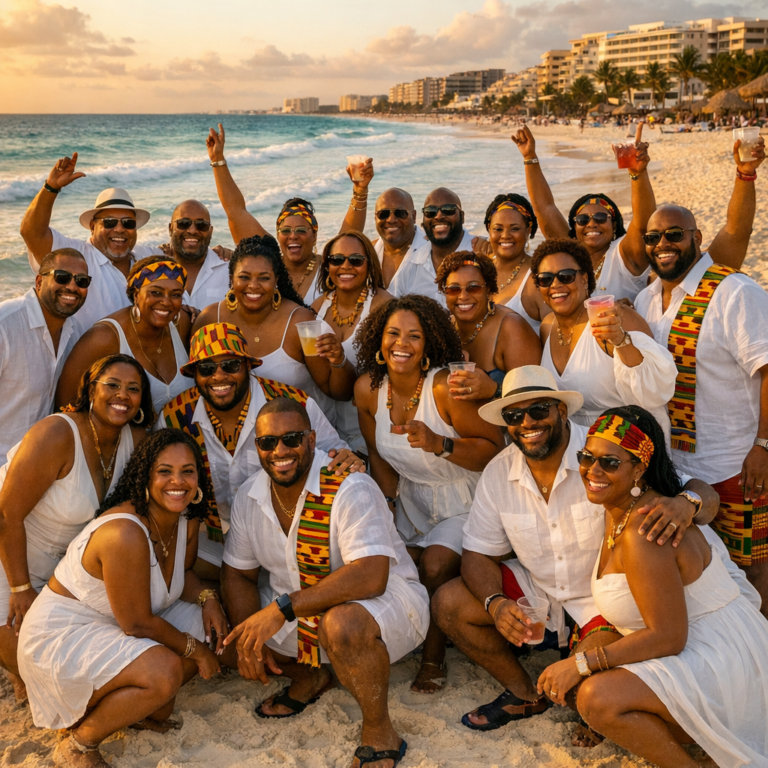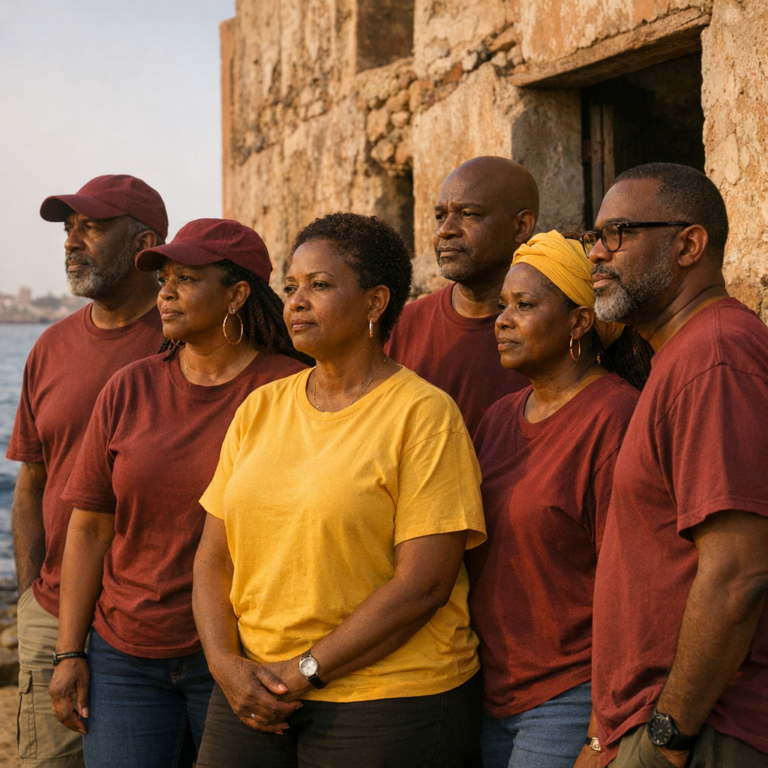
Welcome to Black Family Travel, Episode 1
Getting Grandma, your cousins, and a toddler to agree on a vacation is basically a diplomatic summit. Somebody wants an all-inclusive resort. Somebody else swears they're "not doing another beach trip." Auntie needs a nap by 2pm. The teenagers need Wi-Fi or they riot. And the toddler needs a nap schedule that apparently governs the entire itinerary. A cruise ship might be the only venue on Earth big enough — and flexible enough — to hold all of that under one roof. Welcome to Episode 1 of BTN's new Black Family Travel series, where we're kicking things off with the trip that tests every family's logistics skills at once: the multigenerational family reunion cruise.
This episode is a full planning guide, not a destination review, because the real work of a family reunion cruise happens months before anyone steps on a gangway. We're covering how to book cabin blocks the smart way, which activities actually bridge a four-generation age gap, how to split costs so nobody's stuck holding the bill, and the documentation differences between cruising and flying that trip up more families than you'd think.
Why a Cruise Ship Solves the Family Reunion Puzzle
A land-based reunion means everyone commutes to shared activities, meals get scattered across different restaurants and price points, and someone inevitably becomes the unofficial concierge fielding "what are we doing today" texts. A cruise collapses all of that into one contained environment: lodging, food, entertainment, and childcare options are all a short walk away, already paid for in the base fare, and available around the clock. Grandma can go to bed at 9pm without missing anything the rest of the family does at midnight, because the ship is set up to run multiple parallel vacations simultaneously. That's the entire appeal for a reunion crowd spanning toddlers to elders: everyone is together, but nobody has to be together every single minute.
The Cabin-Block Booking Strategy
The single biggest mistake families make is having each household book their cabin individually, on their own timeline, through whatever app is convenient. Do this instead: designate one person (or better, a travel agent who specializes in group cruises) to book the whole family as a single group reservation, called a cabin block, directly through the cruise line's group desk.
Most major cruise lines have a dedicated group sales department built exactly for this. The thresholds and perks vary by line, but the pattern is consistent industry-wide: booking around eight cabins is a common minimum to unlock group-rate perks (Holland America's Family Reunion program, for example, uses an eight-cabin minimum), while lines like Costa extend vouchers and onboard credit starting around five cabins, and several lines offer a free or heavily discounted berth once a group hits a higher passenger threshold. Typical group perks include:
Reduced or waived deposits per cabin, which matters enormously when you're asking eight or ten households to commit money at once.
Onboard credit per stateroom or per person, which can offset drink packages, specialty dining, or excursions.
A free or discounted berth for the group organizer once enough paid cabins are booked — some lines apply this after a set passenger count, others structure it per cabin.
Locked-in group pricing, so if public fares rise after you book, your family's rate doesn't move.
Priority for connecting or nearby cabins, which is the perk multigenerational families care about most.
On timing: book your cabin block 9 to 12 months before sailing. This is standard advice across the group-cruise industry, and it's not just about price — it's about geography. Cruise ships don't have unlimited connecting or adjacent staterooms, and family blocks of eight-plus cabins get first access to those clustered locations when they book early. Wait until three or four months out and you'll likely find your family scattered across four different decks, which defeats half the purpose of cruising together in the first place.
Activities That Bridge Every Generation
The real planning challenge isn't the cabins — it's the itinerary. A reunion that only plans group activities will burn out the elders and bore the teenagers by day two. A reunion that plans nothing will scatter into four separate vacations. The fix is a loose structure with built-in age-appropriate off-ramps:
Kids' clubs and youth programs. Nearly every major cruise line runs supervised, age-segmented kids' clubs (toddler play areas, school-age clubs, teen lounges) included in the base fare. This is the single best tool for multigenerational trips — it gives parents a few genuinely free hours, gives kids same-age peers to bond with, and gives grandparents a break from wrangling grandchildren without anyone feeling like they've been "handed off."
Quiet zones and adults-only lounges. Most ships have an adults-only sun deck, a spa relaxation lounge, or a quiet library-style space. Point the elders and any adult who needs a breather here during peak pool-deck chaos hours.
One planned shared excursion per port, not five. Pick a single group activity at each stop that genuinely works across ages — a catamaran snorkel-and-beach day, a cultural walking tour, a private beach day buyout — and let it be optional. Book it through the group desk when possible; many excursion operators offer group rates at the same eight-to-ten-person thresholds cruise lines do.
A dedicated "family hour." Block one hour a day, same time daily, for the whole family to be in one place — dinner, a group photo, a game night in a reserved lounge space. Everything else stays optional. This single rule prevents both the "we never see each other" complaint and the "I'm exhausted from mandatory togetherness" complaint.
Building a Fair Group-Deposit and Cost-Split System
Money is where family reunions actually fall apart, so put a system in place before anyone books. A few approaches that work:
Per-cabin deposits, collected upfront. Each household pays its own cabin deposit directly to the group organizer or travel agent by a hard deadline. No fronting money for relatives who "will pay you back."
A shared reunion fund for group costs only. Group excursions, a reserved dining venue, a private cocktail hour, decorations for the family gathering — these get split evenly and collected into one pool, managed transparently (a shared spreadsheet everyone can see works fine).
Payment plan installments. Cruise lines typically allow final payment 60-90 days before sailing, which means families can spread cost over many months. Set installment reminders rather than one lump-sum ask.
One point of contact with the cruise line or agent. Group bookings run more smoothly when one person handles all payments and roster changes with the cruise line, rather than ten people calling in separately. This is also exactly where working with a travel agent who specializes in group cruise bookings pays for itself — agents who handle group reunions regularly can often negotiate additional perks beyond the cruise line's standard group offer, and their commission is built into the fare, not an added cost to your family.
Documentation: Passport Card vs. Full Passport
This trips up more reunion groups than anything else on this list, so read it twice before you book. If your cruise is a closed-loop sailing — meaning it departs from and returns to the same U.S. port, even if it stops in the Caribbean or Mexico along the way — U.S. citizens do not need a full passport book. A passport card, an enhanced driver's license, or (for adults) a government-issued birth certificate plus photo ID is generally sufficient.
Two important caveats. First, if anything goes wrong mid-cruise and someone has to fly home internationally instead of sailing back, a passport card will not work for air travel — only a full passport book does. Second, if any part of your reunion involves flying internationally to meet the ship (rather than driving to the departure port), everyone on that flight needs a full passport, not a card. Mixed itineraries are common in big reunions — some relatives fly in from out of state to meet the ship, others drive — so confirm each household's travel plan individually rather than assuming one document policy covers everyone. BTN's advice: even on a closed-loop cruise, encourage every adult to travel with a full passport book if they have one. It costs nothing extra to bring it, and it removes the single biggest risk factor in the entire trip.
What This Actually Costs
For budgeting purposes, a 4-5 night Caribbean sailing typically runs $600-$900 per person, before group perks, onboard credit, and any excursions. Interior cabins sit at the low end of that range; balcony cabins and larger family suites push toward the top. Group rates and early booking can meaningfully reduce this per-person cost, which is one more reason the cabin-block strategy above isn't just about logistics — it's real money back in your family's pocket.
BTN Insider Tips
Book through a group cruise specialist, not a general booking site. Agents who work group reunions daily know which lines currently offer the strongest deposit and onboard-credit perks, and their fee is baked into the cruise line's commission, not billed to your family.
Request connecting or adjacent cabins by name early. Ask specifically for staterooms with connecting interior doors if traveling with young children, not just "nearby."
Assign one point of contact for the whole group. One person managing the roster and payments with the cruise line saves everyone headaches later.
Print physical copies of every document. Passport cards, IDs, and cruise documents — paper backups matter when a phone battery dies at the terminal.
Set the "family hour" and let the rest stay optional. One guaranteed shared moment a day beats a rigid itinerary nobody follows.
Coming Up Next Episode
Episode 2 of Black Family Travel heads to land, diving into the all-inclusive family resorts across the Caribbean and Mexico that handle multigenerational groups just as well as any ship — kids' clubs, swim-up suites for grandparents, and group-block booking strategies for resorts instead of staterooms. Subscribe to the BTN podcast so you don't miss it.
Listen & Follow
Catch the full audio conversation on the BTN podcast, and follow Black Travel Now across social media for the rest of the Black Family Travel series as it drops.