Episode 1: Welcome to Black Expat Files
Every relocation story starts with a dream, and the Ghana dream is a specific one: a country where your face isn't a hypothesis anyone has to test, where the cost of a decent apartment is a fraction of what you'd pay in Atlanta or D.C., and where "returning" carries the emotional weight of an ancestral homecoming rather than just another move. That dream is real, and thousands of Black Americans have acted on it. But the dream doesn't mention the printed schedule taped to a neighbor's gate telling you which twelve hours this week your block will have no power. Welcome to the first episode of BTN's Black Expat Files, a new series built to sit in that gap — between the dream and the dumsor — and give you the real cost-of-living, visa, healthcare, and lifestyle math behind relocating to Accra as a Black American expat.
What a Blaxit to Accra Actually Costs
Housing is where the budget conversation starts, and Accra's neighborhoods sort themselves clearly by price. In premium, expat-heavy areas like Airport Residential, East Legon, and Cantonments, a furnished apartment with 24-hour security, a backup generator, and a reliable water supply runs roughly $370–$860 a month. Drop into mid-range neighborhoods like Dzorwulu, Haatso, or Achimota — popular with remote workers and young professionals who want proximity without premium prices — and rent falls to roughly $125–$370. Local, non-expat neighborhoods like Dome, Kwashieman, and Ablekuma can run as low as $43–$125, though that comes with a genuinely local living experience and fewer of the conveniences newcomers lean on early. One landlord practice catches almost every first-time relocator off guard: many require one to two years of rent paid upfront before handing over keys, so budget for that lump sum well before your flight, not after you land.
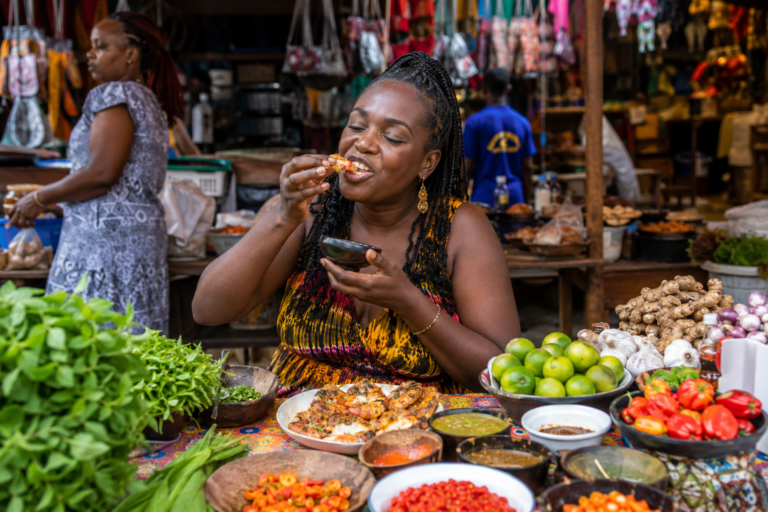
Food follows a similar split. Shopping local markets and cooking at home runs about $55–$92 a month, with street food meals in the $2–$3 range. Lean toward imported groceries and Western-style restaurants — which most first-year expats do, at least part of the time — and that figure climbs to $370–$615 a month. Put housing, food, transportation, and a reasonable social life together, and a single expat living comfortably but not lavishly lands around $1,000–$1,300 a month, with $1,000–$2,000 covering everyone from a modest one-bedroom in Dzorwulu to a genuinely upscale life in East Legon. The number climbs fastest in two categories: imported goods (anything you can't easily substitute with a local equivalent) and enterprise-grade internet, both of which we'll come back to.
Visas, Right of Abode, and the Citizenship Pathway
This is the part of the Blaxit conversation that gets flattened into a single hopeful headline, so let's slow down and separate three real things that are often talked about as if they're one.
First, the tourist and renewable residence permit route: most Black Americans arrive on a visa, then extend into a renewable residence permit while they establish work, housing, and community — the practical, day-one pathway for anyone still deciding how long "relocation" actually means.
Second, Right of Abode — Ghana's status specifically for people of African descent in the diaspora, granting the right to live in Ghana permanently, enter without a visa, and work without a separate work permit. It sounds like a simple diaspora birthright, and emotionally it is, but the paperwork is not casual: applicants need a sponsor letter, written attestations from two prominent Ghanaians, a Ghana police report, a medical clearance from the Ghana Immigration Service clinic, and documented evidence of economic contribution to Ghana. It's a real and valuable status, but it's built more for established professionals and investors than for someone six months into their first lease.
Third — and this is the pathway that's actually made headlines — Ghanaian citizenship itself. In a single ceremony at the Accra International Conference Centre on November 19, 2024, Ghana granted citizenship to 524 members of the African diaspora, the third such ceremony under the Akufo-Addo administration and a direct continuation of the momentum built by 2019's Year of Return. President Akufo-Addo told the new citizens, "Your ancestors left these shores in circumstances that were tragic and inhumane. Today, we embrace you as our own." That ceremony is the clearest evidence that Ghana's government is actively building diaspora-friendly pathways to permanent belonging — but it's a formal citizenship application process with its own documentation and timeline, not an automatic grant for anyone who books a flight.
Bottom line for Episode 1: know which of these three lanes you're actually in before you tell people you have "residency." We're dedicating a full future episode of Black Expat Files to walking through the Right of Abode application step-by-step, so if that's your specific goal, stay subscribed for the deeper explainer.
Healthcare: Accessible, Uneven, and Worth Insuring Properly
Healthcare access in Accra is genuinely better than most Americans expect walking in — and genuinely more variable than most Americans expect once they're actually using it. Private clinic consultations typically run $12–$31 out of pocket, and Accra has several private hospitals that expats rely on for day-to-day care, with quality that ranges from excellent to inconsistent depending on the facility and specialty. The gap most people don't anticipate is in specialist care and emergency response for serious conditions, where the honest advice from established expats is consistent: don't wing it. International health insurance built for expats runs roughly $92–$307 a month depending on coverage level and age, and it's the single most common piece of advice that shows up across expat forums and interviews — treat it as a fixed cost of the move, not an optional add-on, and understand what your specific plan covers for medical evacuation before you need it, not after.
The Honest Downside: Dumsor and the Infrastructure Reality
Here's the part of the dream nobody puts in the Instagram caption. Ghana has a real, recurring, and currently ongoing power reliability problem that locals call "dumsor" — literally "off-on" in Twi — and it is not a relic of the 2010s crisis; it's an active 2026 issue. Ghana's electricity utility, ECG, regularly publishes rolling outage schedules for specific Accra neighborhoods, and as recently as this spring, opposition lawmakers were publicly demanding the utility release a clear, predictable timetable amid what they described as persistent, worsening outages. Nicole Updegraff, who relocated to Ghana in 2015, describes exactly this kind of friction in her own adjustment — power outages, mosquitoes finding their way past a bed net, the small physical annoyances that pile up before they smooth out. It's a real cost of living in Ghana, not a rare inconvenience, and the honest workaround is the same one wealthier Accra neighborhoods have already built into their rent: a backup generator or solar-battery setup, budgeted in from day one rather than treated as an emergency purchase after your first blackout week.
Internet tells a similar mixed story. Standard fiber plans (20–50 Mbps) run a genuinely affordable $12–$31 a month, which sounds like great news for remote workers — until you factor in that "available" and "reliable" aren't the same word in a city where the power behind your router can drop without warning. Most serious remote workers in Accra budget for a mobile data backup plan and, where possible, a small backup power source for their router and laptop, treating connectivity resilience as part of the setup cost, not an afterthought.
The First-Year Reflection: What Expats Actually Say
Ask Black Americans a year or more into their Accra relocation how it's going, and the answers are consistently, refreshingly two-sided. Deijha Gordon, who moved in 2019, describes the pace shift bluntly: "In New York City, everything felt so fast-paced, and there was so much pressure to have life figured out. In Ghana, life is more laid back, peaceful, and slower-paced." She's equally direct about the flip side — Ghana is still a developing economy with real growing pains, and she cautions newcomers against romanticizing the move before they've actually lived through a full year of it, dumsor schedule and all.
For Nicole Updegraff, the calculus that made the friction worth it wasn't financial at all — it was psychological. Describing life without the constant hum of racial anxiety she'd carried in the U.S., she put it simply: "I imagine this is what white people feel in the United States." That's the piece of the Blaxit story that doesn't show up in a cost-of-living spreadsheet, and for a lot of the Black Americans who've made this move permanent, it's the actual bottom line the spreadsheet was always in service of.
BTN Insider Tips
Insure before you land, not after your first clinic visit. Lock in international health coverage before departure and read the medical evacuation terms specifically.
Budget dumsor into your rent decision, not around it. A slightly higher rent in a building with its own generator or inverter often costs less, in aggravation and lost work hours, than the cheaper unit without one.
Know your lane before you say the word "residency." Tourist extension, Right of Abode, and citizenship are three different processes with three different timelines — confirm which one you're actually pursuing with a licensed Ghanaian immigration consultant.
Visit for at least a month before you sign a year of rent upfront. Most landlords want one to two years paid in advance; that's not a decision to make from a one-week vacation.
Build your community before you need it. The expats who talk about their first year with the most peace are the ones who found their people — church, professional networks, fellow diaspora returnees — within the first few months, not after a year of isolation.
Getting There
Kotoka International Airport (ACC) in Accra connects directly to several U.S. hubs, including New York (JFK) and Washington, D.C. (IAD), via Delta and United, with flight times of roughly 10–11 hours. U.S. passport holders can generally arrange a visa on arrival or through Ghana's e-visa system in advance — confirm current requirements before you book, since Ghana's visa policy for U.S. citizens has shifted more than once in recent years.
Coming Up Next Episode
Black Expat Files continues with a deeper dive into Ghana's Right of Abode application process, step by step — plus a second-destination episode profiling another country where Black Americans are building permanent lives abroad. Subscribe to the BTN podcast, and check the Black Expat Files series hub for every episode as it drops.
Listen & Follow
Catch the full audio conversation on the BTN podcast, and follow Black Travel Now across social media for the rest of the Black Expat Files series as it drops.