Getting a Ghanaian Passport Is a Real, Documented Process Now
Scroll TikTok or Instagram long enough and you'll see the clip: a diaspora traveler in Accra, certificate in hand, captioned "I got my Ghanaian citizenship!" It's an emotional, legitimate moment for the people living it. But the caption almost never tells you which status they actually received, what it took to get there, or what it does and doesn't unlock once the ceremony ends. Ghana genuinely has become one of the most accessible countries on the continent for diaspora Africans seeking legal status — but "accessible" doesn't mean "instant," and it definitely doesn't mean every pathway leads to the same rights. This episode of Black Expat Files breaks down what's real, what's documented, and where the hype gets ahead of the paperwork.
The November 2024 Ceremony, Verified
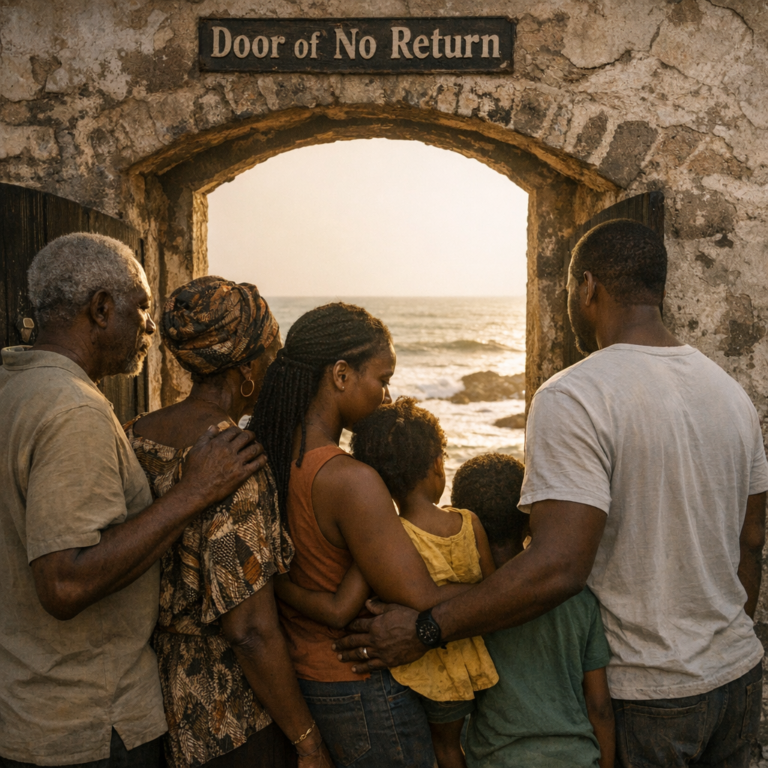
The single most-cited data point in this conversation is real: on November 19, 2024, at the Accra International Conference Centre, the Ghanaian government formally granted citizenship to 524 people of African descent from the diaspora in a single ceremony. It was the third such mass naturalization ceremony held under then-President Nana Akufo-Addo, continuing an outreach effort that traces back to Ghana's 2019 "Year of Return" campaign marking 400 years since the first enslaved Africans were forcibly transported to the Americas. Akufo-Addo told the new citizens their ancestors "left these shores in circumstances that were tragic and inhumane," framing the ceremony as a formal act of welcome home rather than a routine bureaucratic filing.
That ceremony is real, well-documented, and worth taking seriously as evidence that Ghana's diaspora citizenship pipeline functions at scale. What it doesn't tell you is how those 524 individual applications actually moved through the system, how long each took, or how many other applicants are still waiting behind them. For that, you need to separate two statuses that get flattened into one "I'm Ghanaian now" narrative online: Right of Abode and full citizenship.
These Are Two Different Statuses — Not Two Names for the Same Thing
This is the conflation BTN sees most often in Blaxit and Passport Bros-adjacent Facebook groups, and it's worth stating plainly: Right of Abode and Ghanaian citizenship are not interchangeable. They're governed differently, they require different documentation, and critically, they grant different rights.
Right of Abode, administered jointly by Ghana's Ministry of the Interior and the Ghana Immigration Service (GIS), is a distinct, longer-standing legal status separate from citizenship. Per the Ministry of the Interior's own description, it's available to two groups: Ghanaians who lost their citizenship by acquiring a foreign nationality, and, separately, "a person of African descent in the Diaspora." For most Blaxit applicants without a documented Ghanaian parent or grandparent, this second track — diaspora African descent — is the relevant one. Right of Abode grants the holder the right to reside in Ghana permanently, enter the country without a visa, and work without needing a separate work permit. It is, functionally, an indefinite residency status with none of the visa-renewal treadmill that trips up so many long-term expats elsewhere on the continent.
Full citizenship (via naturalization, or via descent for those with a Ghanaian parent or grandparent) is a completely different legal category. It confers everything Right of Abode does not: a Ghanaian passport, the Ghana Card, the right to vote, fuller land and property ownership rights, and the ability to operate a business without the restrictions some non-citizens face. Citizenship is what actually makes someone Ghanaian on paper, in the way the 524 people at that November 2024 ceremony became Ghanaian. Right of Abode does not.
What Right of Abode Does NOT Guarantee
This is the part social media tends to skip. Right of Abode does not grant you a Ghanaian passport. You cannot vote in Ghanaian elections. Land ownership remains limited to specific categories rather than the fuller rights citizens hold. And Right of Abode is discretionary from the start — the Minister for the Interior grants it "on an application and with the approval of the President," which means there's no automatic entitlement even for applicants who check every box.
Required documentation for the diaspora African-descent track includes a formal application letter to the Minister, attestation letters from two Ghanaians of good standing (a notary public, lawyer, or senior public officer), evidence of economic contribution to Ghana (investment records, employment history, bank statements), a police clearance report from Ghana, relevant company or tax documents if applicable, and a medical report from a GIS-approved clinic. The Ministry's published timeline is roughly six months after Ghana Immigration Service completes its due-diligence review — but that clock starts only once a complete file lands on the right desk, and due-diligence backlogs routinely push real-world cases longer.
What Full Citizenship Actually Requires
For diaspora applicants without documented Ghanaian ancestry, the relevant path is naturalization, and it is genuinely more demanding than Right of Abode — by design. The residency bar alone rules out a "vacation and vibes" approach: applicants need 12 continuous months of Ghanaian residence immediately before filing, plus a cumulative five years of residence within the prior seven years. That means naturalization is realistically a multi-year commitment before you even submit paperwork, not a one-trip process.
Once residency is established, applicants file Form 5 (the naturalization application) and Form 14 (a sponsor declaration), secure two Ghanaian sponsors, and submit a full documentation package: passport, residence permit history, police clearances, and evidence of genuine integration into Ghanaian life. GIS then runs its background and due-diligence checks. Approved applicants take the Oath of Allegiance and receive a Certificate of Naturalization — the credential that was handed out, 524 times over, at that Accra ceremony.
The Ministry's official processing window is eight months once a complete file is received, though real-world timelines commonly run 8-12 months depending on GIS workload and the complexity of the due-diligence check. Fees for diaspora and African applicants run in the neighborhood of GHS 25,000 (roughly USD 2,150 as of early 2026) — always confirm the current figure directly with the Ministry before paying anything, since fee schedules move. And here's the line every applicant needs to internalize: meeting every baseline requirement does not guarantee naturalization will be granted. The Minister retains discretion based on the final due-diligence report, full stop.
Separately, diaspora members with a documented Ghanaian parent or grandparent can pursue citizenship by descent (commonly discussed as "dual citizenship"), which moves considerably faster than naturalization when the supporting birth and family records are already in hand — but it isn't available to applicants without that documented lineage, no matter how strong their cultural or ancestral connection to Ghana feels.
Cutting Through the Hype, One More Time
None of this is a knock on Ghana's outreach — the country has built a genuinely rare, functioning legal pipeline for diaspora Africans to formalize their place there, and that deserves real credit. The correction BTN wants to make is narrower: Right of Abode is not citizenship, citizenship is not automatic, and "I'm Ghanaian now" videos rarely specify which of these two very different statuses the person actually holds. If your goal is simply to live and work in Ghana indefinitely without visa renewals, Right of Abode is the faster, lower-barrier option. If your goal is a Ghanaian passport, voting rights, and full legal standing as a citizen, you're looking at naturalization's residency clock and multi-year timeline, or descent-based citizenship if you have the documented ancestry to support it.
Related: What It Actually Costs to Live There
This episode intentionally didn't re-run the cost-of-living numbers — rent ranges, monthly budgets, and the practical Accra expat math are already covered elsewhere in BTN's Black Expat Files series. If you're weighing a Blaxit move and want the day-to-day dollars-and-cedis picture before you tackle the legal status question covered here, start there and come back to this episode when you're ready to talk paperwork.
BTN Insider Tips
Start with the status that matches your actual goal. Want to live and work in Ghana long-term without a visa headache? Right of Abode is the more direct route. Want a Ghanaian passport and the vote? You're committing to naturalization's residency requirement or proving descent.
Get your paperwork verified before you travel, not after. Police clearances, attestation letters, and financial documentation all have to meet specific standards — a consultation with a Ghana-based immigration attorney or accredited relocation consultant before you file can save months of back-and-forth.
Budget for the real fee, not the rumored one. Naturalization fees for diaspora applicants have run around GHS 25,000; always verify the current schedule directly with the Ministry of the Interior rather than relying on a number you saw in a Facebook group.
Track your residency days like it's a tax filing. The 12-months-immediate-plus-5-of-7-years rule for naturalization is specific and unforgiving. Keep dated records (leases, utility bills, flight stamps) from day one if citizenship is the actual end goal.
Treat the six-to-eight-month official timelines as the floor, not the ceiling. Due-diligence backlogs are common on both tracks. Build slack into any life plans — job start dates, housing decisions, family moves — that depend on approval landing by a specific date.
Coming Up Next Episode
Black Expat Files continues with more ground-level reporting on what it actually takes to build a life abroad — subscribe to the BTN podcast so you don't miss the next installment.
Listen & Follow
Catch the full audio conversation on the BTN podcast, and follow Black Travel Now across social media for the rest of the Black Expat Files series as it drops.