The Mother of All Caribbean Carnivals
If Caribbean carnival culture has an origin story, it's written in Port of Spain. Trinidad Carnival is the festival every other mas-and-soca celebration in the world — Notting Hill, Miami Carnival, Crop Over, Toronto's Caribana — traces its DNA back to. It's the biggest, loudest, and most culturally layered pre-Lenten carnival in the Caribbean, built from more than two centuries of history, resistance, and reinvention. For Black travelers building a carnival circuit or chasing one bucket-list Caribbean trip, Trinidad is the one people call "going to the source."
Event at a Glance
- Event: Trinidad and Tobago Carnival 2027
- Location: Port of Spain, Trinidad and Tobago (island-wide festivities, with Port of Spain as the epicenter)
- When: Carnival Monday and Tuesday, February 8-9, 2027, with J'ouvert launching before dawn on the Monday. Fetes, Panorama semifinals, and other events run for weeks beforehand.
- Price: Fetes and J'ouvert bands generally start in the $50-$150 range; mas costume/band packages commonly start around $300-$600 for a basic section and climb well past $1,500 for premium frontline costumes with full inclusions
- Main Audience: Carnival and soca devotees, steelpan and calypso fans, diaspora travelers, mas band trip groups
- Travel Vibe: High-energy, historic, musically rich, road-march culture at its most authentic
Where It All Began
Trinidad's carnival tradition dates back to the 1780s, when French colonial planters arrived in large numbers following the Spanish crown's Cedula de Poblacion, bringing masquerade balls held before the start of Lent. Enslaved Africans, excluded from those balls, built their own parallel celebration called Canboulay (from the French "cannes brulees," or burnt cane) — a commemoration rooted in the sugarcane harvest that combined drumming, stick-fighting, calinda dancing, and call-and-response chanting. That fusion of French masquerade tradition and African resistance culture is the real root of modern Trinidad Carnival.
Colonial authorities tried repeatedly to suppress it. The 1881 and 1884 Canboulay Riots broke out after police attempted to ban drumming, torch processions, and stick-fighting; the resulting 1884 Peace Preservation Act restricted drums and set Carnival's official start at 6:00 a.m. on the Monday — the same early-morning launch J'ouvert still honors today.
J'ouvert: Carnival's True Start
"J'ouvert" — French Creole for "daybreak" — is how Carnival officially opens, in the pre-dawn hours of Carnival Monday. Bands of revelers cover themselves in mud, oil, paint, and powder and dance through the streets in homemade or satirical costumes to calypso and soca, a raw, unpolished counterpoint to the elaborate, sequined mas costumes that take over later that same Monday and on Carnival Tuesday. If pretty mas is the finished performance, J'ouvert is the unfiltered soul of the festival — and for many repeat visitors, it's the single most essential Trinidad Carnival experience.
Mas Bands and Traditional Characters
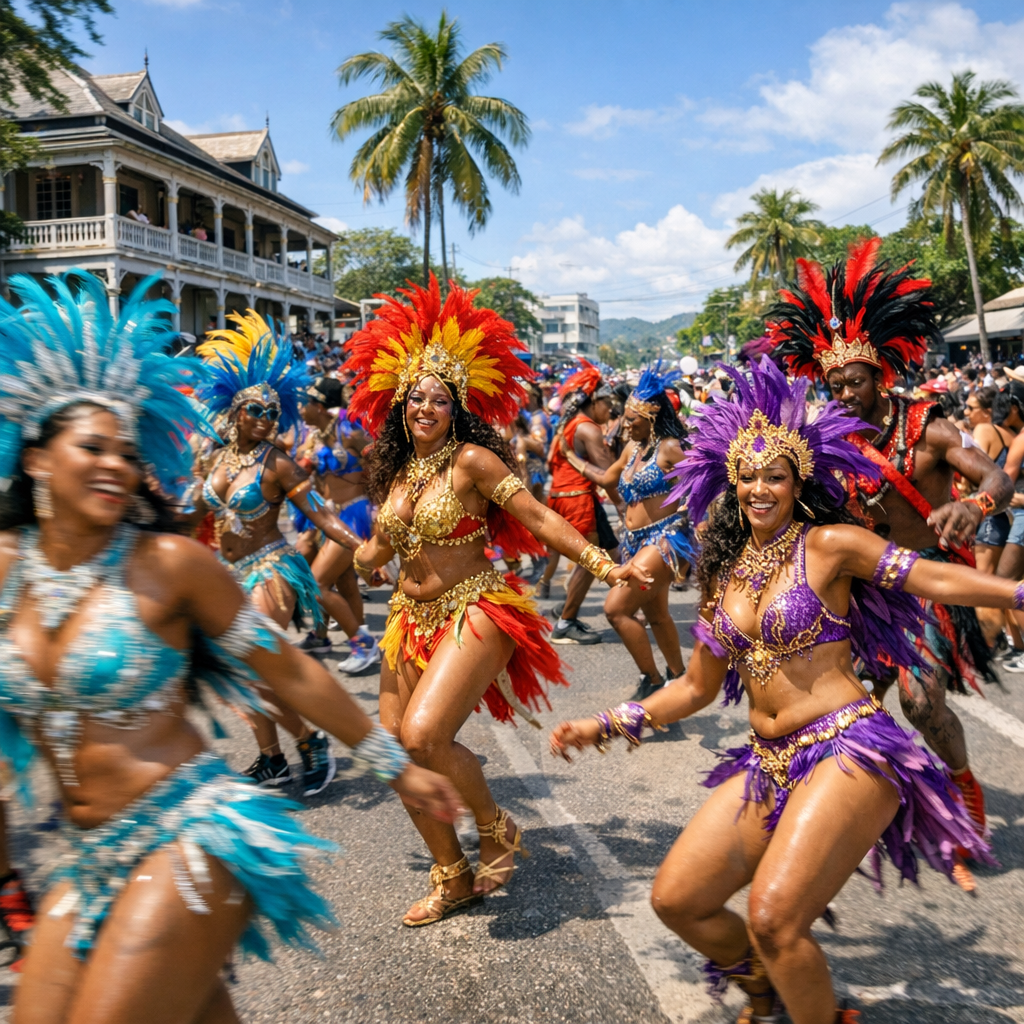
By Carnival Monday and Tuesday, the streets belong to the mas bands — large costumed troupes that parade for miles behind sound trucks blasting soca. Choosing and joining a band (Harts, Tribe, and Bliss are among the most recognized) is the central planning decision for any first-time visitor, since sections, costume styles, and included perks vary widely and popular bands sell out well ahead of the season.
Trinidad Carnival also keeps alive a set of traditional masquerade characters that predate the modern glitter-and-feathers bands: the stilt-walking Moko Jumbie (of African origin), the storytelling, boastful Midnight Robber, the oil-covered devil figure Jab Molassie, the donkey-riding Burrokeet, the aristocrat-parodying Dame Lorraine, and the scholarly jester Pierrot Grenade. Seeking these traditional mas portrayals out, alongside the big commercial bands, is how you see the festival's full historical range in one trip.
Steelpan and Panorama
When the 1884 restrictions banned African drums, Trinidadians improvised — turning frying pans, dustbin lids, and eventually oil drums into tuned percussion instruments. That improvisation became the steelpan, which evolved into a full orchestral instrument and, after gaining international exposure through the U.S. Navy's presence on the island in the 1940s, into a genuine national art form. Today, Panorama — the steelband competition held in the lead-up to Carnival — is considered the most prestigious steelband contest in the world. Competing bands, often 100 or more pannists playing entirely from memory, perform a required test piece, a piece of their own choosing (frequently a classical or "international" arrangement), and a calypso selection. Panorama's influence has spread well beyond Trinidad, inspiring sister competitions at Notting Hill Carnival since 1978 and at Brooklyn's Labor Day carnival since 1972 — but the original, in Trinidad, is still the one pan players measure themselves against.
Calypso, Soca, and the Sound of Carnival
Calypso grew out of West African Kaiso and the Canboulay tradition, originally sung in French Creole by griots who used the music to mock and covertly critique authority. That tradition of social commentary set through music is still Carnival's backbone, even though soca — the faster, dance-driven genre that grew out of calypso — is now the dominant sound blasting from truck speakers on the road.
How Carnival's Dates Are Set
Trinidad Carnival always falls on the Monday and Tuesday immediately before Ash Wednesday, the start of Lent — which means its date moves every year with the Christian liturgical calendar. Ash Wednesday sits 46 days before Easter Sunday, and Easter itself is set using the standard Gregorian computus (tied to the first Sunday after the ecclesiastical full moon following the spring equinox). Working that calculation forward from Easter 2027 (March 28, 2027) places Ash Wednesday on February 10, 2027 — making Carnival Monday February 8 and Carnival Tuesday February 9, 2027. This is the same method that correctly places 2026's Carnival on February 16-17, confirming the calculation is sound; watch official Trinidad and Tobago Carnival Commission announcements for final confirmation as the season approaches.
Where to Stay and Practical Tips
Port of Spain is Carnival's center of gravity — most fetes, Panorama events at the Queen's Park Savannah, and the mas parade route itself are in or near the capital, so basing yourself there (rather than commuting from elsewhere on the island) is the standard move for anyone attending multiple events. Book flights and accommodation as early as possible: this is the single busiest tourism week of the year for Trinidad, and hotel inventory and airfares tighten dramatically as the season approaches.
🏨 Book Trinidad Hotels →Who This Festival Is For
Trinidad Carnival is built for carnival purists and soca devotees who want the original blueprint rather than a diaspora offshoot, steelpan and calypso fans who want to hear Panorama live at its highest level, and any Black traveler looking for a bucket-list Caribbean carnival experience with centuries of resistance history behind every drumbeat and costume. It's also a natural stop for anyone building out a full Caribbean carnival circuit alongside Crop Over, Miami Carnival, and Notting Hill.
BTN Insider Tips
Register for your mas band and costume section months ahead — popular bands and payment plans fill up long before Carnival season itself begins.
Don't skip J'ouvert. It's messier and less photogenic than pretty mas, but it's the most historically rooted, unfiltered part of the entire festival.
Catch a Panorama semifinal or final if you can. Hearing a 100-plus-member steelband play from memory at the Queen's Park Savannah is a singular experience you won't find anywhere else in the world.
Base yourself in Port of Spain and book accommodations and flights as early in the year as possible — this is Trinidad's highest-demand travel week.
Pace yourself. Between fetes, Panorama events, J'ouvert, and two full days of mas, Carnival season is a marathon — hydrate, wear real road shoes, and build in rest days.
Plan Your Trip
Trinidad Carnival isn't just a party — it's a living archive of Caribbean resistance, ingenuity, and joy, expressed through drumming turned into orchestras, satire turned into song, and centuries-old characters still walking the same streets they always have. Book your band, book your stay, and experience the carnival every other carnival is chasing.
🎟️ Festival Details →✈️ Book Your Trinidad Trip →*Some links on this page are affiliate links — BTN may earn a commission at no extra cost to you.