Where African Diaspora Rhythm Built the World's Biggest Party
Long before Rio de Janeiro's Sambadrome existed, samba was being kept alive in backyard terreiros by Afro-Brazilian communities descended from enslaved people brought from Angola, Congo, and Bahia's Yoruba diaspora. The drumbeats, call-and-response singing, and communal circle dances that formed candomblé religious ceremonies migrated with Black families from Bahia to Rio's hillside favelas in the early 1900s, and it's that heritage — not sequins and floats — that BTN wants you to see when you watch a samba school parade down the Sambadrome. Rio Carnival 2027 runs February 5-13, with the elite Grupo Especial parades on February 7-9, and it remains one of the most powerful living monuments to Afro-Brazilian culture anywhere on earth.
Event at a Glance
- Event: Rio de Janeiro Carnival 2027
- Location: Rio de Janeiro, Brazil (Sambadrome + city-wide street blocos)
- When: February 5-13, 2027; Grupo Especial (top 12 samba schools) parades at the Sambadrome February 7-9, 2027
- Price: Sambadrome grandstand seats from roughly $50 USD; front boxes and camarotes from $270 to $1,050+ USD depending on night and view
- Main Audience: Culture-focused travelers, diaspora heritage seekers, samba and Afro-Brazilian music lovers, festival and carnival circuit travelers
- Travel Vibe: Electric, all-night, deeply communal, rooted in Black Brazilian history and pride
From Terreiro to Sambadrome: The African Diaspora Roots of Samba
Samba's DNA is Afro-Brazilian. Its rhythmic backbone traces to enslaved Bantu and West African communities, and its early organized form took shape in Rio's Pequena África ("Little Africa") neighborhoods, where Bahian migrants — many of them practitioners of the Afro-Brazilian faith candomblé — gathered in the homes of matriarchs known as tias baianas (Bahian aunties) to play drums, sing, and dance. Rio's carnival itself started out featuring European ballroom styles like polka and waltz, but it was Afro-Brazilian musicians and dancers, gathering in these communities, who fused those forms with African percussion and call-and-response tradition into samba.
The first formal samba school, Deixa Falar, organized in 1926 on the hills beyond Praça Onze, a historically Black neighborhood that was central to Rio's Afro-Brazilian cultural life. Mangueira, one of the most storied schools still competing today, followed in 1928, founded by residents of a hillside favela community. These weren't tourism ventures — they were mutual-aid and cultural pride societies built by and for Black working-class Rio, giving displaced Afro-Brazilian communities a structure for keeping their music, dance, and spiritual heritage alive amid a society that otherwise marginalized them. Organized samba school competition began in 1929, and that community structure — a school representing a neighborhood, its members, and its history — is still exactly how the Sambadrome parades work today.
What Actually Happens During Carnival
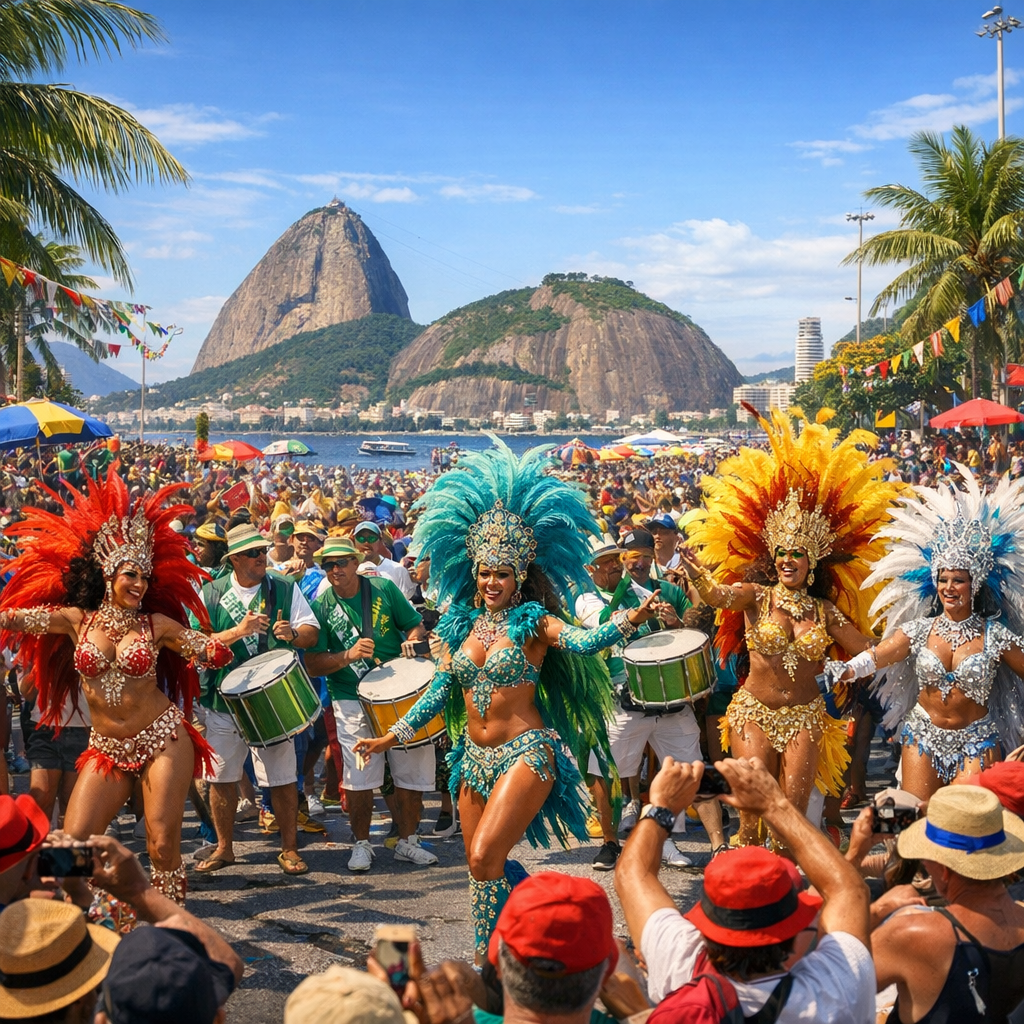
Rio Carnival unfolds on two parallel tracks. At the Sambadrome, the purpose-built parade avenue designed by Oscar Niemeyer, the top-tier Grupo Especial — the twelve best samba schools in Rio — each get a 70-80 minute window to parade a themed enredo (storyline) through elaborate floats, thousands of costumed performers, and a live drum corps (bateria) hundreds strong. Judges score each school across nine categories, from percussion to costume design to how well the samba lyrics tell the chosen story; the reigning champion opens the first night, and the two lowest scorers from the previous year close out the final nights, a structure that's been in place since the format professionalized. Winners are announced Ash Wednesday.
Away from the Sambadrome, Rio's real everyday Carnival happens in the streets: blocos and bandas, free roaming street parties where a truck or brass band leads dancing crowds through neighborhoods. Cordão do Bola Preta, founded in 1918, is the oldest and largest, pulling in roughly 200,000 people for its Saturday morning march through downtown Rio. Monobloco, based in Leblon, has drawn crowds in the hundreds of thousands and has the honor of closing out the Sambadrome season. Suvaco do Cristo throws its party literally under the outstretched arms of Christ the Redeemer. With roughly 500 blocos and 250-plus groups parading citywide, street Carnival is where you'll find the most direct, unscripted version of Afro-Brazilian musical culture — no ticket required.
Choosing How to Experience It
Sambadrome grandstand tickets are the best value way to see the Grupo Especial competition up close — elevated bleacher seating with a clear view of the full spectacle, starting around $50 USD per night. Front boxes and camarotes (VIP boxes with services like open bar and private restrooms) run from roughly $270 up to $1,050+ USD depending on the parade night and vantage point, and sell out early for the marquee Sunday and Monday nights. Joining a street bloco costs nothing beyond showing up, and is the most immersive way to experience Carnival the way most Rio residents actually do — check a bloco schedule (Cordão do Bola Preta and Monobloco are famously welcoming to visitors) and just walk into the crowd. Many first-time BTN travelers do a mix: one Sambadrome night for the full competitive spectacle, then several bloco mornings for the community energy.
Where to Stay in Rio
Copacabana and Ipanema are the classic beachfront bases, walkable to many major blocos and a short ride from the Sambadrome, though prices spike hard during Carnival week. Santa Teresa, a hillside neighborhood with strong Afro-Brazilian cultural history and arts scene, offers a quieter, more local-feeling stay with easy access into the city center. Lapa, right next to the historic Pequena África district where samba itself was born, puts you inside the nightlife and live-music heart of the city. Whichever base you choose, book accommodations as far ahead as possible — Carnival week sells out Rio's hotel inventory months in advance.
🏨 Book Rio Hotels →Getting There (and Brazil's New Visa Requirement)
Rio de Janeiro-Galeão International Airport (GIG) is the main gateway, with direct flights from several major US hub cities; book early, since fares and seats tighten significantly as Carnival approaches. Important: Brazil reinstated a visa requirement for US citizens on April 10, 2025, ending the visa-free entry Americans had enjoyed for several years. US travelers now need an eVisa before departure, applied for online through Brazil's official portal (brazil.vfsevisa.com); the government application fee is $80.90 USD, though total cost can run higher if you use a third-party processing service instead of applying directly. Processing takes up to 10 business days, so apply at least a month before you travel, and print your approved eVisa — you won't be allowed to board without it.
Who This Festival Is For
Diaspora travelers who want to connect with the African roots of Brazilian culture, not just its beaches; samba, percussion, and dance enthusiasts; Carnival and festival-circuit travelers checking off the biggest one in the world; and anyone drawn to the history of how a marginalized Black community turned mutual aid, faith, and music into a globally celebrated tradition.
BTN Insider Tips
Book your eVisa the moment you book your flight. With the April 2025 requirement now in effect, this is a new step US travelers can't skip — leave a full month buffer.
Pick at least one samba school's rehearsal or community event if your dates allow it. Many schools open rehearsals at their home quadra (community hall) in the months before Carnival, offering a far more intimate look at the culture than the Sambadrome show alone.
Don't skip the street. The Sambadrome is spectacular, but the blocos are where Rio's Black Carnival heritage lives day to day — budget at least two mornings for them.
Protect your belongings and stay in groups at blocos — these are dense, joyous crowds, and standard big-crowd precautions apply.
Plan Your Trip
Rio Carnival is Afro-Brazilian history, faith, and artistry turned into the largest celebration on the planet — from the tias baianas of Pequena África to the Sambadrome's judged competition and the free street blocos in between. Lock in your eVisa, book your stay, and get ready for February 2027.
🎟️ Festival Details →✈️ Book Your Rio Trip →*Some links on this page are affiliate links — BTN may earn a commission at no extra cost to you.