Where American Jazz History Still Happens Every September
Long before jazz festivals were a genre unto themselves, there was Monterey. Since debuting on October 3, 1958, at the Monterey County Fairgrounds, the Monterey Jazz Festival has run every single year with the exception of 2020, making it one of the longest continuously operating jazz festivals anywhere in the world — and the granddaddy of the American jazz festival circuit. For nearly seven decades, this unassuming 20-acre fairgrounds on California's Central Coast has hosted the artists who built jazz, and it continues to be a pilgrimage site for anyone who takes Black American music seriously.
Event at a Glance
- Event: Monterey Jazz Festival 2026
- Location: Monterey County Fairgrounds, Monterey, CA
- When: Expected the third weekend of September 2026 (approx. September 18–20), following the festival's longstanding Friday-through-Sunday tradition — confirm exact 2026 dates and lineup at montereyjazzfestival.org before booking
- Price: Weekend and single-day passes from $200+; grounds access and arena seating vary by package
- Main Audience: Jazz purists, music history lovers, Black travel and culture enthusiasts, Central Coast road-trippers
- Travel Vibe: Sophisticated, nostalgic, coastal, golden-hour outdoor listening
A Festival Born From a Bold Idea
The Monterey Jazz Festival was championed by pianist Dave Brubeck and co-founded by music critic Ralph J. Gleason and disc jockey Jimmy Lyons, who ran the festival as its general manager for 35 years. What started as an ambitious one-weekend experiment on a county fairgrounds became the template for the modern jazz festival — multiple stages, day-into-night programming, and a lineup built around the idea that jazz deserved the same scale and spectacle as any other American art form. As a nonprofit, the festival has funneled proceeds back into jazz education since its very first year, a mission that continues today.
A Stage Built by Black Jazz Legends
Monterey's reputation isn't built on nostalgia alone — it's built on who actually stood on that fairgrounds stage. Over the decades, the festival's bill has included some of the most important Black artists in the history of American music: Dizzy Gillespie, Miles Davis, Thelonious Monk, John Coltrane, Duke Ellington, Louis Armstrong, Cannonball Adderley, and Herbie Hancock all performed at Monterey during the festival's storied run. For Black travelers and jazz lovers, that lineage matters: this isn't a festival that discovered Black jazz artists after they became commercially safe — it built its entire identity around them from its first seasons, at a time when opportunities for Black musicians to headline major outdoor stages were far from guaranteed. Today's Monterey continues that thread, mixing marquee legacy acts with the next generation of Black jazz talent carrying the tradition forward.
What to Expect on the Fairgrounds
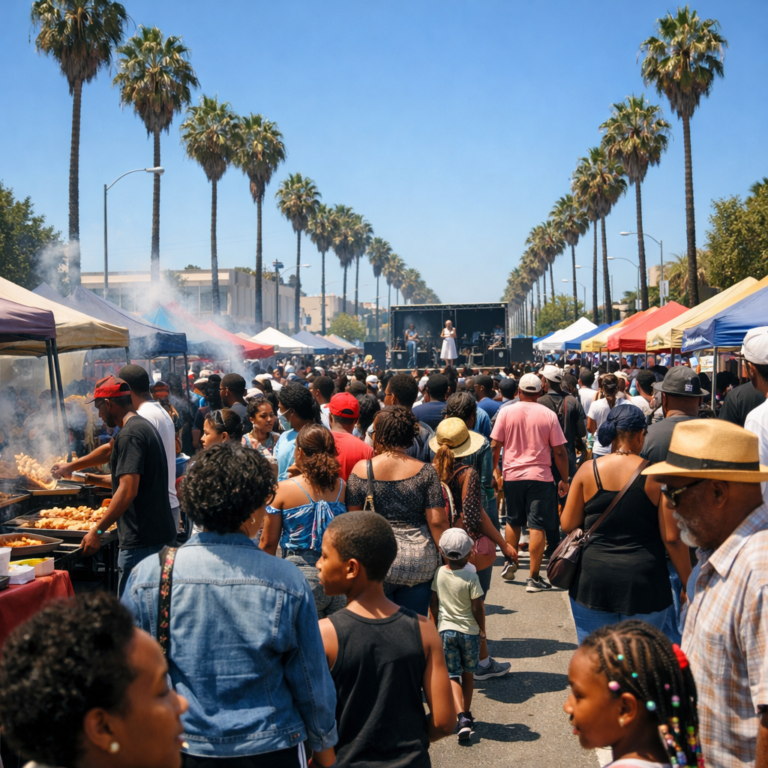
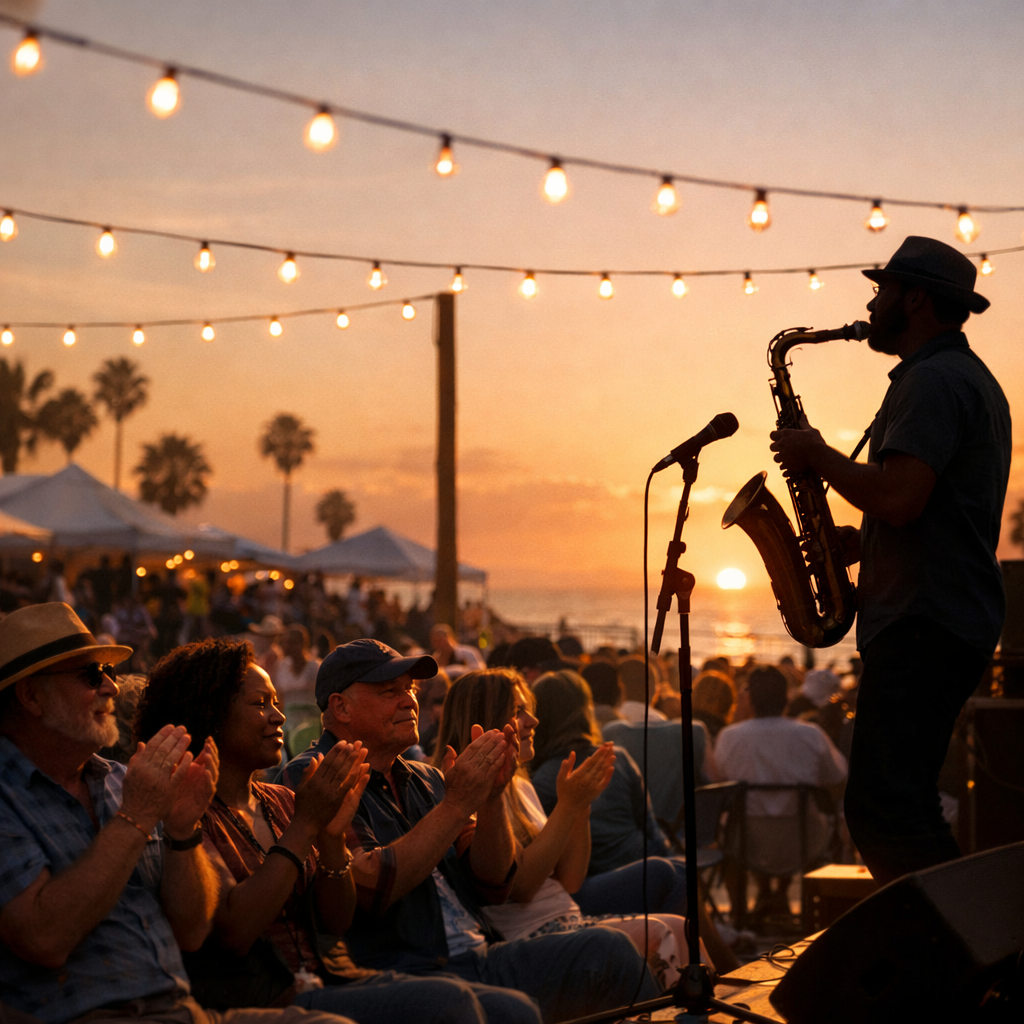
The Monterey County Fairgrounds transforms into a multi-stage jazz campus for the weekend, with simultaneous sets running across several venues — from the main arena to smaller, more intimate club-style stages tucked around the grounds. Expect a full day-to-night rhythm: afternoon sets in the California sun, and evening performances that stretch into the cool Central Coast night under string lights and open sky. Food and wine vendors line the walkways between stages, reflecting the region's status as a food and wine destination in its own right, and the fairgrounds' relatively compact footprint means you can wander between four or five different sets in a single afternoon without ever leaving the property.
🏨 Book Monterey Hotels →Getting There and Getting Around
Monterey sits on California's Central Coast, roughly a two-hour drive south of San Francisco and San Jose along Highway 1 or Highway 101, making it an easy long-weekend road trip for Bay Area and Northern California travelers. The nearest commercial airport is Monterey Regional Airport (MRY), with connecting flights through major West Coast hubs; many out-of-state visitors instead fly into San Jose (SJC) or San Francisco (SFO) and drive down the coast. Book accommodations early — festival weekend fills Monterey's hotel inventory fast, and the coastal drive down from the Bay Area is part of the experience, so budget time for it rather than rushing straight to the fairgrounds gate.
Who This Festival Is For
Serious jazz listeners who want to hear the music in the place where so much of its live-performance history was made, Black travelers building a bucket-list itinerary around America's Black musical legacy, and anyone who wants a sophisticated, adults-oriented festival weekend paired with California coastal scenery rather than a beach-carnival atmosphere.
BTN Insider Tips
Book your weekend pass early. Monterey is a small fairgrounds, not a stadium — capacity is limited and popular packages sell out well ahead of September.
Layer up for the evening. Central Coast September days can be warm, but fairgrounds nights get cool fast once the fog rolls in — bring a jacket for the night sets.
Build in extra time for the coast. Pair your festival trip with time in nearby Pacific Grove or along the Monterey Peninsula — you're already on one of the most scenic stretches of California coastline.
Confirm exact dates before you book flights. The festival consistently lands on the third weekend of September, but always verify the specific Friday-to-Sunday dates at montereyjazzfestival.org before locking in travel.
Plan Your Trip
Monterey isn't just a jazz festival — it's a living piece of Black American music history that happens to take place on a fairgrounds by the Pacific. Whether you come for the legacy or the lineup, this is a jazz travel weekend that belongs on every serious music lover's list.
🎷 Festival Details →✈️ Book Your Monterey Trip →*Some links on this page are affiliate links — BTN may earn a commission at no extra cost to you.