Clarksdale: Where the Blues Was Born
At the intersection of Highways 61 and 49 in the Mississippi Delta sits Clarksdale — the town where Muddy Waters, John Lee Hooker, Sam Cooke, and Ike Turner learned to play, and where legend says a young Robert Johnson met the devil at the Crossroads and traded his soul for a gift on guitar like no one had heard before. Long before blues had a name, it had an address, and that address was the Mississippi Delta — cotton fields, railroad tracks, and juke joints where field hollers and gospel turned into something new. This is ground zero for American music, and once a year, the town throws the door wide open. The Juke Joint Festival takes over downtown Clarksdale for a weekend that turns the birthplace of the blues into the biggest, loudest, most joyful blues party in the Delta — part street fair, part pilgrimage, and entirely unlike any other music festival you've been to.
Event at a Glance
- Event: Juke Joint Festival 2027 (24th Annual)
- Location: Downtown Clarksdale, Mississippi
- When: April 14–18, 2027; main festival day Saturday, April 17, 2027
- Price: Daytime stages free; nighttime juke joint crawl wristbands from $15–$20
- Main Audience: Blues lovers, music history buffs, road-trippers, Delta heritage travelers
- Travel Vibe: Small-town, soulful, gritty, authentic — part street fair, part pilgrimage
24 Years of Keeping the Delta's Music Alive
The Juke Joint Festival started as a small, community-rooted celebration and has grown into one of the most respected blues gatherings in the country — without ever losing the small-town fair feel that makes it special. Organized by the Clarksdale Downtown Development Association, the festival has always described itself as "half blues fest, half small-town fair, and all about the Delta," and that mission hasn't changed across 24 years of Aprils: educate and entertain both native Deltans and blues tourists alike through live music, art, storytelling, film, and family-friendly programming, all while keeping the region's fragile juke joint culture and its surviving venues economically alive for another year. Expect a lineup of 100-plus blues acts across the weekend — from Delta veterans who've been playing these same streets for decades to rising regional talent carrying the tradition forward — plus only-in-Clarksdale sideshows like racing pigs and monkey-dogs mixed in alongside the music, a reminder that this is a hometown celebration first and a tourist draw second.
That balance is exactly why the festival has endured while so many blues festivals elsewhere have leaned fully commercial. Clarksdale is a small town of a couple thousand residents, and for one weekend a year its entire downtown economy, civic identity, and musical heritage all show up on the same handful of blocks at once. The festival exists as much to fund preservation of the town's remaining juke joints as it does to draw visitors — buying a wristband or a plate of tamales here goes directly back into keeping Clarksdale's blues scene a living, working thing rather than a museum piece.
What Actually Happens: Day Stages and Night Crawls
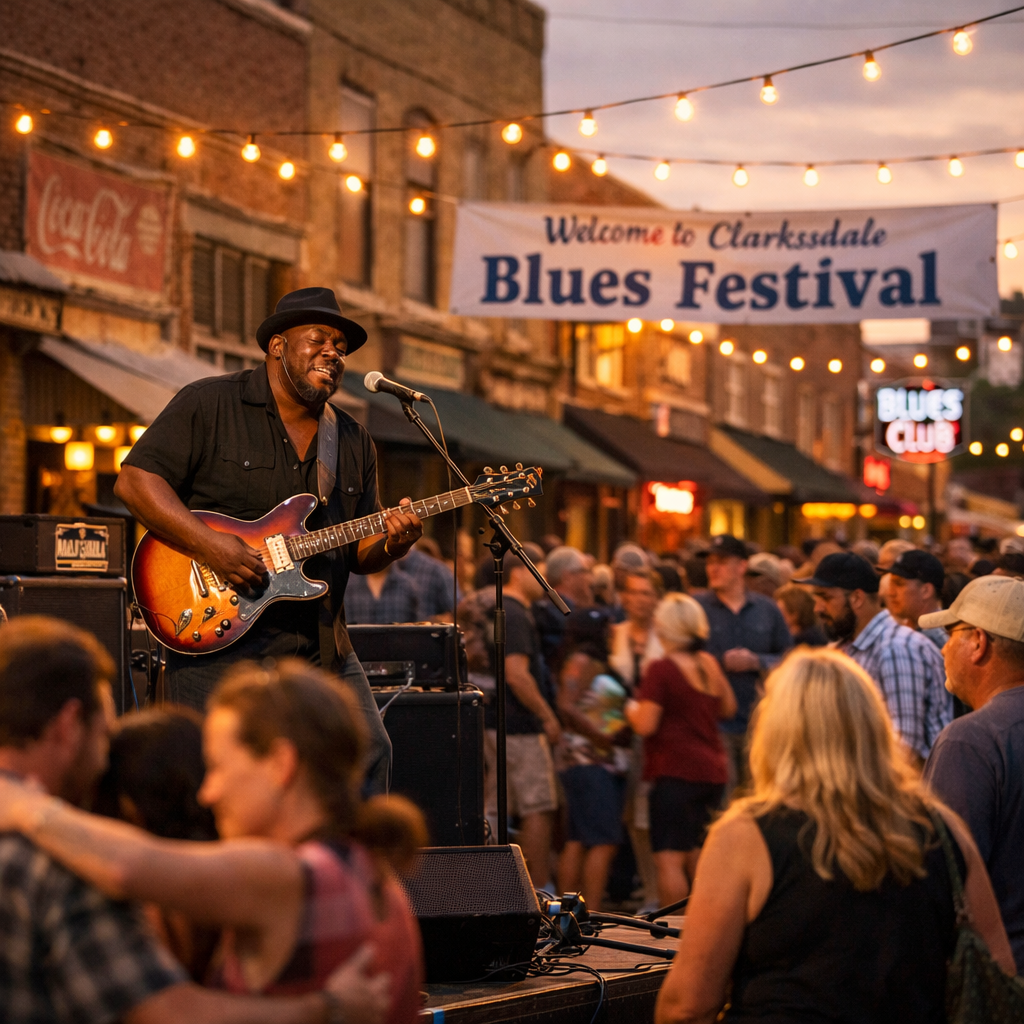
The Juke Joint Festival runs on two very different rhythms, and understanding both is the key to planning your visit. By day, downtown Clarksdale fills with roughly a dozen small outdoor stages set up along the streets, in courtyards, and tucked into pocket parks — all free to attend — where blues acts play back to back from mid-morning into early evening. It's a walkable, all-ages street-fair vibe: browse art and craft vendor booths, grab Delta tamales, barbecue, or fried catfish from food stalls lining the sidewalks, and wander freely between stages catching whichever sound pulls you in next. Kids run around, older Deltans hold court on lawn chairs they've set up in the same spot for years, and out-of-towners mix easily into the crowd. There's no ticket gate for any of it — just a town that opens its streets to a weekend-long block party built entirely around live blues.
When the sun goes down, the festival shifts into its signature event: the juke joint crawl. A wristband — historically priced around $15 presale and $20 at the door — gets you unlimited rides on the festival's blues shuttle bus and entry into 20-plus of Clarksdale's surviving juke joints, blues clubs, and indoor stages, including storied rooms like Red's Lounge and Ground Zero Blues Club. This is the real heart of the festival: cramped, sweaty, unglamorous rooms where the blues has always actually been played, packed shoulder to shoulder with locals and travelers who came from around the world for exactly this experience. The shuttle bus loop makes it possible to hit several venues in a single night without needing a car or a designated driver, hopping from a packed dance floor at one juke joint to a quieter, more intimate set at the next. Expect the night crawl to run late — this is when Clarksdale's blues scene shows its truest, least-polished face, and it's worth staying out for.
Part of the Mississippi Blues Trail
Clarksdale sits at the center of the Mississippi Blues Trail, the statewide network of historical markers tracing the genre's roots across the Delta from cotton fields to recording studios to the clubs where it all came together. The town is home to the Delta Blues Museum, housed in the old freight depot on Blues Alley, and the Rock & Blues Museum, along with markers commemorating Muddy Waters's cabin (relocated and preserved on museum grounds) and the fabled Crossroads of Highways 61 and 49 itself. Festival week effectively turns the whole Blues Trail experience up to full volume — the same streets and buildings referenced on those historical markers are the ones hosting day stages and hosting the crawl come nightfall. If you've ever wanted to combine a heritage road trip with a live-music blowout, this is the week to do it. Plan to arrive a day or two early to hit the museums and trail markers before the crowds and music take over downtown, since festival weekend itself leaves little time for quiet reflection at a historical marker.
Where to Stay in Clarksdale
Clarksdale is a small town, and festival-weekend lodging fills up months in advance. Downtown proper has a handful of blues-themed guesthouses and inns within easy walking distance of both the day stages and the juke joint crawl — staying downtown means you can leave the car behind entirely once the sun sets and the shuttle bus takes over. Several of these guesthouses lean fully into the blues heritage theme, with rooms named for Delta legends and porches that turn into informal jam sessions of their own during festival week. If downtown books out, nearby towns along Highway 61 and the greater Coahoma County area offer additional chain-hotel options, but expect a short drive or rideshare into the festival zone, and know that ride availability gets tight once the crawl is underway. Whatever you choose, book as early as you can — this is the single biggest weekend of the year for the town's hotel and guesthouse inventory, and rooms that are available in February are routinely gone by the time April rolls around.
🏨 Book Clarksdale Hotels →Getting There
The nearest major airports are Memphis International Airport (MEM), about an hour north via Highway 61, and Jackson-Medgar Wiley Evers International Airport (JAN), roughly two hours south. Memphis is the easier gateway for most travelers — it's a major connecting hub, rental cars are plentiful, and the drive south on Highway 61 into the Delta is a scenic, historically loaded warm-up for the festival itself, tracing the same route generations of blues musicians traveled between Memphis's Beale Street and the Delta's juke joints. A car is essential once you're in the region and for the drive in, though downtown Clarksdale itself and the juke joint crawl (via the free festival shuttle) are very walkable and rideable once you've parked for the weekend. If you're combining this trip with a broader Mississippi Blues Trail itinerary, Clarksdale makes an easy, central home base for day trips to nearby Delta towns before or after the festival dates.
Who This Festival Is For
Blues purists and music history travelers who want to stand in the actual rooms where the genre was shaped, road-trippers building a Mississippi Blues Trail itinerary around a single unforgettable weekend, and any diaspora traveler looking for an authentic, unpolished counterpoint to bigger commercial music festivals. This isn't a slick production with corporate stages and VIP tents — it's a small Delta town's biggest week of the year, and that unpolished, community-first feel is exactly the appeal. It's less suited to travelers who want resort-level amenities or a highly curated festival experience; Clarksdale asks you to meet it on its own terms, in its own juke joints, on its own streets.
BTN Insider Tips
Book lodging as early as possible — Clarksdale is small, and festival-weekend rooms downtown sell out months ahead.
Buy your juke joint crawl wristband presale — prices go up at the door, and the shuttle bus is the easiest way to hit multiple venues in one night without a car.
Wear comfortable shoes and pace yourself — between day stages and the night crawl, this is a full-day, full-night event that runs late.
Arrive a day early to visit the Delta Blues Museum, the Rock & Blues Museum, and the Blues Trail markers before the festival crowds take over downtown.
Bring cash for food vendors, cover charges at smaller juke joints, and tips for musicians — not every stop takes cards.
Plan Your Trip
The Juke Joint Festival is 24 years of proof that Delta blues is still very much alive — not preserved behind museum glass, but played live on a street stage and in a crowded juke joint on a Saturday night in Clarksdale, Mississippi. Book your stay, map out your day-stage circuit, and grab your crawl wristband early for a weekend that connects you directly to where this music started.
🎸 Festival Details →✈️ Book Your Clarksdale Trip →*Some links on this page are affiliate links — BTN may earn a commission at no extra cost to you.