Where Cuba's African Soul Takes the Stage
Every summer, Miami's Cuban-American cultural capital becomes the stage for one of the city's most vital — and most overlooked — cultural gatherings: the IFE-ILE Afro-Cuban Dance Festival. For a full weekend, dancers, drummers, scholars, and community members come together to celebrate the African roots of Cuban dance and music, tracing a line from the sacred rhythms of the orishas to the rumba, son, and contemporary choreography that grew out of them. It's a festival built on the belief that Cuban culture cannot be fully understood — or fully honored — without understanding its African foundations.
For Black diaspora travelers who think of Miami primarily through the lens of South Beach and Little Havana's cafecito culture, IFE-ILE is a reminder that the city's Afro-Latino heritage runs just as deep, and that Miami belongs firmly on any serious Black travel itinerary that includes Afro-Latino and Afro-Caribbean culture.
Event at a Glance
- Event: IFE-ILE Afro-Cuban Dance Festival
- Location: Miami, FL — historically hosted across Miami Dade College's Koubek Center (2705 SW 3rd St) and HistoryMiami Museum (101 W Flagler St), with pop-up outdoor performances along Calle Ocho
- When: Held annually since 1997, typically over a weekend in early-to-mid August (recent editions ran August 3-6, 2022 and August 8-10, 2024). 2027 dates had not yet been announced at publication — check IFE-ILE's official site closer to the date.
- Price: Individual workshops from roughly $20; single-night gala tickets from $15 (students/seniors) to $20 (general); full weekend passes run higher
- Produced by: The IFE-ILE Afro-Cuban Dance Company
- Travel Vibe: Cultural, educational, community-rooted, deeply rhythmic
The Company Behind the Celebration
The festival is produced by the IFE-ILE Afro-Cuban Dance Company, founded in Miami in 1996 by Havana-born choreographer and dancer Neri Torres, who trained in Cuba before continuing her studies at the University of Colorado at Boulder. Torres started the company partly in response to what she saw as a lack of representation of Afro-Cuban dance in Miami at the time, and partly to push back against a broader trend she's spoken about publicly: dance becoming "the privileged position of a few specialized performers," with everyone else reduced to spectators. IFE-ILE's mission has always been about restoring that participation — inviting the community back onto the floor, not just into the audience.
A year after founding the company, Torres launched the festival itself, in part because she recognized a gap in how Cuban culture gets talked about outside Cuba: "people don't necessarily grasp the culture's African roots," as she's put it. The festival exists to close that gap, using dance, drumming, and scholarship together rather than treating any one of them as the whole story.
Folkloric Roots Meet Contemporary Movement
What makes IFE-ILE distinct from a typical dance showcase is how deliberately it holds two things side by side: the sacred and social folkloric traditions that trace back to West and Central African diasporic communities in Cuba, and the contemporary choreography built on top of them.
Daytime workshops dig into the folkloric layer — rumba in its guaguancó, columbia, and yambú forms, movements associated with the orishas of Afro-Cuban Lucumí/Santería tradition, Palo, Arará, and Congo-rooted styles, alongside Haitian Gaga. Other sessions push into contemporary and popular forms that have grown out of that same lineage, including Afro-Modern technique, Cubatón, reggaetón, salsa, rueda, Capoeira Angola, and flamenco fusion — a reminder that Afro-Cuban dance has never stopped evolving.
The festival typically opens with a free public lecture-demonstration at HistoryMiami Museum, pairing scholars with dancers and musicians to walk through the history live rather than just talk about it. Academic panels have tackled everything from how traditional diaspora forms continue shaping contemporary choreography to dedicated tributes honoring pioneering Cuban dance figures.
The Saturday Night Gala
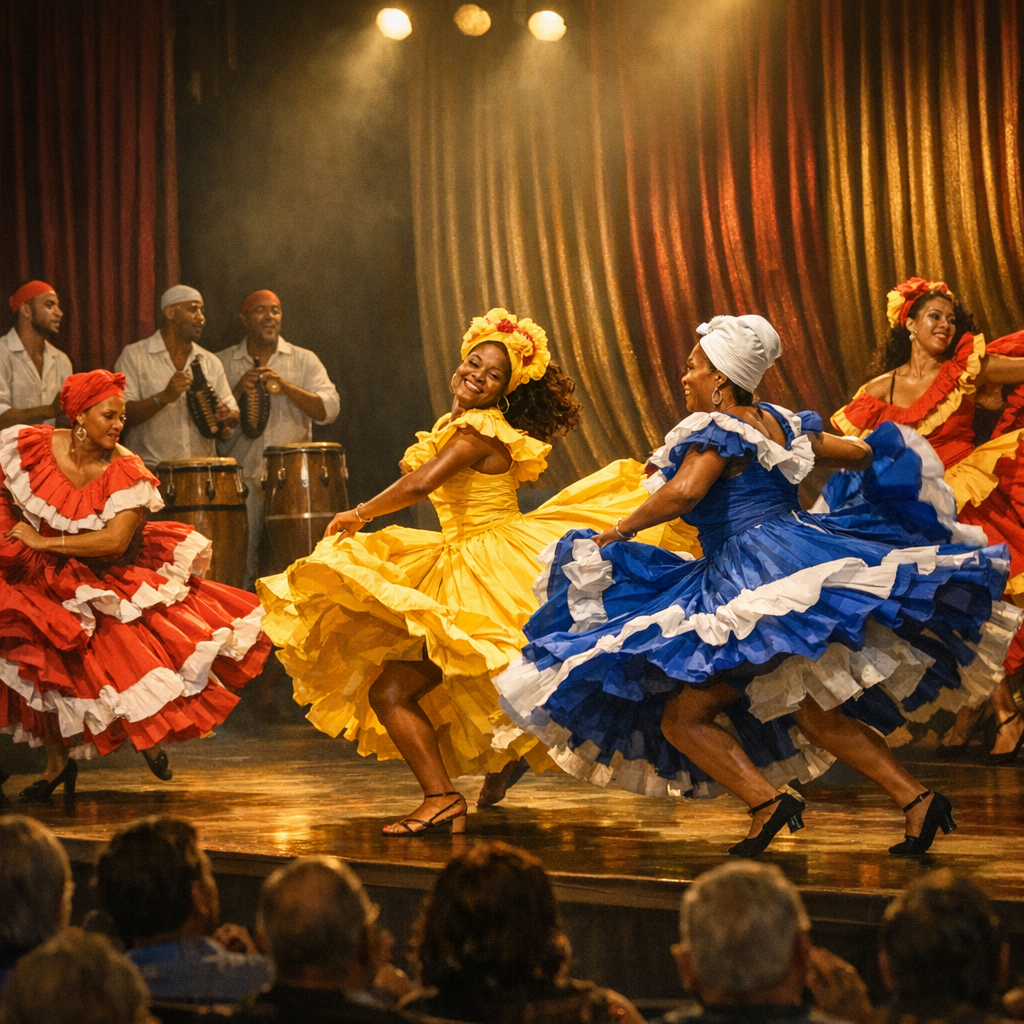
The centerpiece of the weekend is the Saturday night gala performance, usually staged at the Koubek Center. This is where IFE-ILE's own dancers take the stage alongside invited guest companies, and where the folkloric-meets-contemporary theme comes fully to life. Past galas have featured collaborations with out-of-town and international guest ensembles — including a Philadelphia-based company and dancers from a university dance program in Texas — performing a shared program spanning contemporary dance, rumba, and orisha-inspired work alongside Cubatón. Other editions have built entire narrative works around Afro-Cuban mythology, staged Abakuá masquerade dance, or paid tribute to icons like Celia Cruz. It's polished, theatrical, and unmistakably rooted in ritual — folkloric material given a fully contemporary stage treatment.
Who This Festival Is For
IFE-ILE draws a mix of serious dance students working through multi-day workshop tracks, casual visitors who just want to see a gala performance, academics and culture writers following the panel discussions, and — increasingly — out-of-town cultural tourists. Torres herself has noted that visitors from outside Miami are often specifically looking for cultural tourism experiences, which has pushed the festival to add more public-facing outdoor programming over the years, including informal street performances during Calle Ocho's Viernes Culturales art walk.
For Black and Afro-Latino travelers building a diaspora-focused itinerary, IFE-ILE offers something rarer than a concert or a parade: a structured, multi-day space to actually learn the movement vocabulary of Afro-Cuban culture, not just watch it from a distance.
Practical Travel Tips for Miami
Miami International Airport (MIA) is the main gateway, with extensive domestic and international connections that make a festival weekend easy to combine with a longer Florida trip. Little Havana, where the Koubek Center sits, is a short rideshare from South Beach and downtown, so travelers can base themselves near the beach and still make it to workshops and evening performances without a long commute.
Because the festival runs in the heart of Florida's hot, humid summer, plan for heat: light layers for daytime workshops, real shoes for movement sessions, and hydration if you're taking multiple classes back to back. Evening events at HistoryMiami Museum and the Koubek Center are indoors and air-conditioned, but outdoor Calle Ocho appearances are not. Book workshop passes and gala tickets in advance — sessions are capped by studio space, and popular tracks with visiting guest artists tend to fill up.
🏨 Book Miami Hotels →Why It Matters for Black Diaspora Travel
IFE-ILE is a useful corrective to a common blind spot in Black travel conversations, which can sometimes default to English-speaking Caribbean and African-American cultural touchpoints while overlooking the Afro-Latino world next door. Cuba's population is deeply shaped by the transatlantic slave trade, and its dance and music traditions — rumba, the orisha repertoire, Palo, Arará — are direct extensions of West and Central African religious and social practice, carried across the Atlantic and kept alive first in Cuba and now in diaspora communities like Miami's. A festival built specifically to make that African lineage explicit, rather than folding it quietly into "Latin culture" branding, is exactly the kind of programming that belongs on a Black travel radar.
It also models something valuable for cultural festival travel generally: a weekend that treats dance as scholarship, spiritual practice, and pure joy all at once, rather than picking just one.
BTN Insider Tips
Start with the free opening lecture-demonstration at HistoryMiami Museum if your schedule allows — it's the easiest low-cost way to understand the cultural context before diving into paid workshops or the gala.
Don't skip the workshops for the gala alone. The daytime sessions are where you actually learn the folkloric vocabulary — rumba, orishas, Palo — that the gala performances are built on.
Watch for outdoor Calle Ocho pop-ups. IFE-ILE has periodically added informal street performances during Viernes Culturales, a free way to catch a taste of the festival if your visit doesn't align with ticketed events.
Confirm current-year dates directly with IFE-ILE before booking flights — as an artist-run, grant-supported festival, exact dates and venues can shift year to year within its typical early-August window.
Plan Your Trip
The IFE-ILE Afro-Cuban Dance Festival is a rare thing in the festival circuit: a weekend that's equal parts classroom, sanctuary, and stage. Whether you come to take a rumba workshop, sit in on an academic panel, or simply watch the Saturday gala unfold, you'll leave with a clearer picture of just how much of Cuba's rhythm — and by extension, so much of the Caribbean and Latin dance world — traces straight back to Africa.
🎟️ Festival Details → ✈️ Book Your Miami Trip →*Some links on this page are affiliate links — Black Travel Now may earn a commission at no extra cost to you.