The World's Largest Free Showcase of Louisiana Music
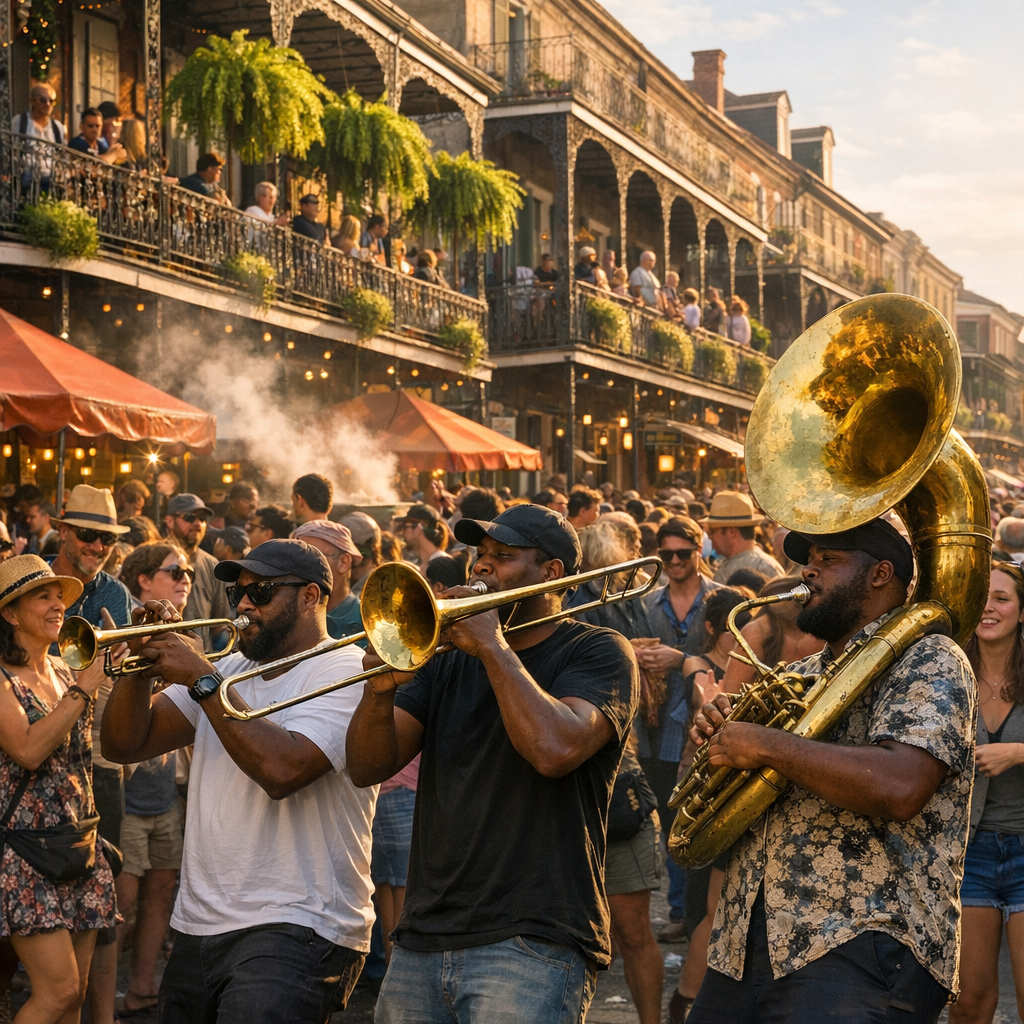
Every spring, the cobblestone streets, riverfront green space, and wrought-iron balconies of New Orleans' historic Vieux Carré fill with the sound of trumpets, trombones, and tubas as the French Quarter Festival takes over the city's oldest neighborhood. Billed as the world's largest showcase of Louisiana music, French Quarter Fest is completely free to attend — no ticket, no wristband, just an open invitation to experience the sounds and flavors that make New Orleans one of the most culturally significant cities in the Black diaspora.
For Black travelers building a festival itinerary around music, food, and heritage, French Quarter Fest belongs on the list for a simple reason: it is, at its core, a celebration of Black musical innovation. The brass bands, jazz combos, and second-line rhythms that fill more than 20 stages across the Quarter all trace their lineage directly back to Congo Square, the historic gathering place where enslaved Africans preserved West African drumming, call-and-response singing, and dance traditions like the Bamboula and Calinda on Sunday afternoons in the 18th and 19th centuries. Those rhythms never left New Orleans — they evolved into the jazz funeral, the second line parade, and ultimately jazz itself, widely regarded as America's only truly indigenous art form. Walk any street during French Quarter Fest and you are hearing a direct musical descendant of Congo Square.
Event at a Glance
- Event: French Quarter Festival 2027
- Location: The French Quarter (Vieux Carré) and Woldenberg Park riverfront, New Orleans, Louisiana
- When: April 8–11, 2027 (confirmed dates)
- Price: Free admission to all stages and performances
- Main Audience: Music lovers, food travelers, jazz and brass band devotees, diaspora heritage travelers
- Travel Vibe: Joyful, communal, walkable, deeply rooted in local culture
A Festival Born From the French Quarter Itself
French Quarter Festival traces its roots to 1983 and 1984, when New Orleans Mayor Ernest “Dutch” Morial — the city's first Black mayor — and a small group of local business owners and musicians organized a new event to celebrate the neighborhood in the wake of the 1984 World's Fair construction. What began as a modest six-stage gathering along Royal and Bourbon Streets has grown, under the nonprofit French Quarter Festivals, Inc. (FQFI), into a four-day citywide celebration drawing hundreds of thousands of visitors — attendance reached an estimated 800,000 people in 2019. FQFI, still a 501(c)(3) nonprofit today, also produces Satchmo SummerFest, the annual tribute to New Orleans-born jazz pioneer Louis Armstrong, and Holidays New Orleans Style, which grew out of the original "A Creole Christmas" programming — a reminder that Creole and Black musical heritage has been woven into this organization's mission from the start.
The festival paused in 2020 and 2021 during the pandemic and returned strong in 2022, and it has continued to grow each year since, cementing its place as one of the most beloved events on the New Orleans festival calendar — and notably, one of the only major ones that remains entirely free.
What to Expect: Stages, Sounds, and Second Lines
French Quarter Fest spreads across more than 20 stages tucked into courtyards, squares, and streets throughout the Quarter, plus a riverfront stage area at Woldenberg Park along the Mississippi. The lineup runs the full breadth of Louisiana's musical family tree: traditional jazz, contemporary brass band, R&B, funk, gospel, Zydeco, and blues, performed almost entirely by local and regional musicians. Brass bands — the direct descendants of the funeral processions and second lines that grew out of Congo Square's rhythms — are a signature feature, and it's common to catch an impromptu second-line parade winding through the crowd between sets, umbrellas twirling and handkerchiefs waving in the classic New Orleans style.
Because the festival is spread across the whole neighborhood rather than confined to a single fairground, part of the fun is simply wandering: turn a corner off Jackson Square and stumble into a gospel choir, then walk two blocks and catch a traditional jazz combo playing standards that date back a century.
A Culinary Showcase Rooted in Creole Tradition
Music isn't the only draw. Dozens of local restaurants set up food booths throughout the festival footprint, giving visitors a rare chance to sample a huge cross-section of New Orleans cooking in one weekend — from red beans and rice to gumbo, jambalaya, and fried seafood. Louisiana Creole cuisine, which draws on West African, Caribbean, French, and Spanish culinary traditions, was shaped in New Orleans kitchens where enslaved and free Black cooks were central to blending those influences into something distinct: dishes built on rice, okra, and slow-simmered stocks that remain the backbone of the city's food identity today. Sampling your way down a French Quarter Fest food line is, in a very real sense, tasting that layered culinary history one plate at a time.
Getting There and Planning Your Visit
New Orleans is served by Louis Armstrong New Orleans International Airport (MSY), with direct flights from most major U.S. hubs. Because French Quarter Fest falls in early-to-mid April, it lands after the citywide intensity of Mardi Gras and typically ahead of the peak heat and humidity of a Louisiana summer — making it one of the most comfortable times of year to explore the city on foot. Spring temperatures in New Orleans generally run mild to warm, so pack for sun during the day and cooler evenings along the river.
Since the festival is free and spread across the neighborhood, there's no single gate or ticket line to plan around — the main logistics to think through are lodging and transportation. Book accommodations in or near the French Quarter, the Marigny, or the Central Business District well ahead of the festival dates, since rooms fill quickly for this weekend even without a ticketed gate. Comfortable walking shoes are essential, as the best strategy is to wander freely between stages rather than trying to see everything on a fixed schedule.
🏨 Book New Orleans Hotels →Who This Festival Is For
French Quarter Fest is an ideal pick for Black travelers who want to experience New Orleans' musical and culinary heritage without the crowds, costs, and chaos of Mardi Gras or the ticketed structure of the city's bigger-name music festivals. It rewards travelers who want to walk, listen, eat, and soak in a neighborhood's culture at their own pace — solo travelers, couples, and small groups will all find it easy to build a relaxed long weekend around it.
BTN Insider Tips
Come hungry and graze widely. With dozens of restaurant booths spread across the footprint, the smartest strategy is to split meals with your travel companions so you can try more dishes.
Chase the brass bands. Some of the festival's best moments happen off the main stages, when a brass band strikes up in the street and pulls the crowd into an impromptu second line.
Book lodging early. Free admission means bigger crowds than you might expect — hotel rooms in the Quarter and nearby neighborhoods book up well ahead of the April dates.
Pace yourself across all four days. With over 20 stages running simultaneously, plan on returning day after day rather than trying to catch everything at once.
Plan Your Trip
French Quarter Festival is New Orleans' love letter to itself — a free, four-day immersion in the Black musical traditions born at Congo Square and the Creole culinary traditions shaped in its kitchens. Mark your calendar for April 8–11, 2027, and start planning your New Orleans getaway.
🎺 Festival Details → ✈️ Book Your New Orleans Trip →*Some links on this page are affiliate links — Black Travel Now may earn a commission at no extra cost to you.