A Hidden-Gem Blues Pilgrimage in the Hometown of the Pioneers
Off Interstate 40 at Exit 56, about an hour east of Memphis, sits Brownsville, Tennessee — a small West Tennessee Delta town with an outsized claim on American music history. This is the hometown of three Black blues pioneers whose fingerprints are all over modern popular music: guitarist and singer "Sleepy" John Estes, harmonica innovator Hammie Nixon, and mandolin master Yank Rachell. Every year, the Exit 56 Blues Fest gathers on Brownsville's Main Street to celebrate the country blues sound this trio helped shape — and it remains one of the most under-the-radar blues heritage stops on the whole Delta blues map.
A quick heads-up before you plan: as of this writing, the 2027 dates for Exit 56 Blues Fest have not yet been announced. The festival's most recently confirmed edition ran May 23-24, 2026 (its 16th annual year) over Memorial Day weekend, which has historically been the festival's home on the calendar. We're publishing this guide now as a bookmark-and-check-back resource — using the verified 2026 edition as our illustrative example — so you can start planning a West Tennessee blues road trip once next year's dates go live.
Event at a Glance
- Event: Exit 56 Blues Fest — 2027 edition, date TBA (2026 edition ran May 23-24, Memorial Day weekend)
- Location: West Tennessee Delta Heritage Center, 121 Sunny Hill Cove, Brownsville, TN 38012 (right off I-40 at Exit 56)
- Price: Historically a low-cost, family-friendly community festival
- Main Audience: Blues heritage travelers, roots-music fans, road-trippers, Delta blues completists
- Travel Vibe: Small-town, unhurried, deeply rooted in Black Southern musical history
Who Sleepy John Estes, Hammie Nixon, and Yank Rachell Were
"Sleepy" John Estes (1899/1900–1977) moved to Brownsville as a boy in 1915 and spent most of his life there, working as a farmer and musician. He developed a distinctive, aching "crying" vocal style and wrote autobiographical songs about real people and events from around Brownsville. Blind by the time blues historians rediscovered him in 1962, Estes went on to record for Delmark Records and play the Newport Folk Festival during the 1960s blues revival, influencing artists from Bob Dylan to Led Zeppelin. He was posthumously inducted into the Blues Hall of Fame in 1991, and his former home in Brownsville is preserved as a museum exhibit today.
Hammie Nixon (1908–1984), also a Brownsville native, was Estes's musical partner — and eventually his son-in-law — for roughly fifty years, starting with their first recordings together for Victor Records in 1929. Nixon is credited as a pioneer of the harmonica as a rhythm instrument, transforming it from a novelty solo act into an essential part of the blues ensemble sound. He kept performing after Estes's death, including stints with the Beale Street Jug Band.
Yank Rachell (1910–1997) grew up in Brownsville and got his first mandolin at age eight — the story goes he traded a pig for it. He became one of the acknowledged masters of the blues mandolin, playing alongside Estes for decades while also building his own long solo career that stretched into the 1990s. He co-wrote "She Caught the Katy," now a blues standard, with Taj Mahal. By the mid-1990s, Rachell was among the last surviving blues musicians whose careers had started back in the 1920s.
Together, this trio put Brownsville on the map as a true wellspring of Delta country blues — not a stop on the tour, but the source.
The Festival and Its Setting
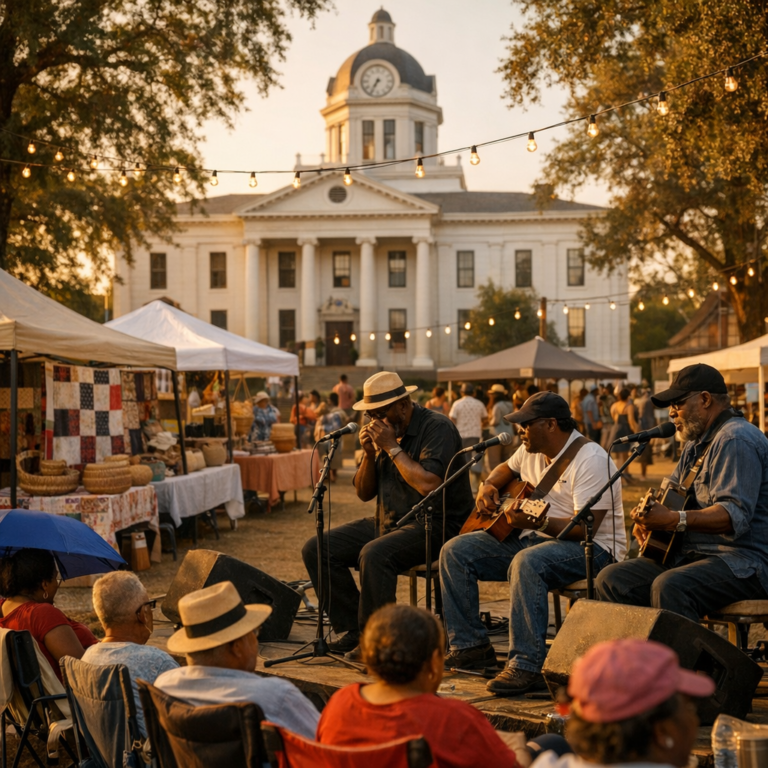
Exit 56 Blues Fest takes its name straight from the highway exit that leads travelers into town, and it's held at the West Tennessee Delta Heritage Center, a music-heritage museum and event space with more than 8,000 square feet of exhibits on West Tennessee music, cotton history, and the Hatchie River. The Heritage Center is a genuine two-for-one stop for music lovers: alongside the blues exhibits — including a recreation of Sleepy John Estes's last home — it also houses the world's only Tina Turner Museum, set inside her actual childhood school, Flagg Grove School, which was relocated to the site. Few festival grounds anywhere pack in this much authentic Black musical heritage in one place.
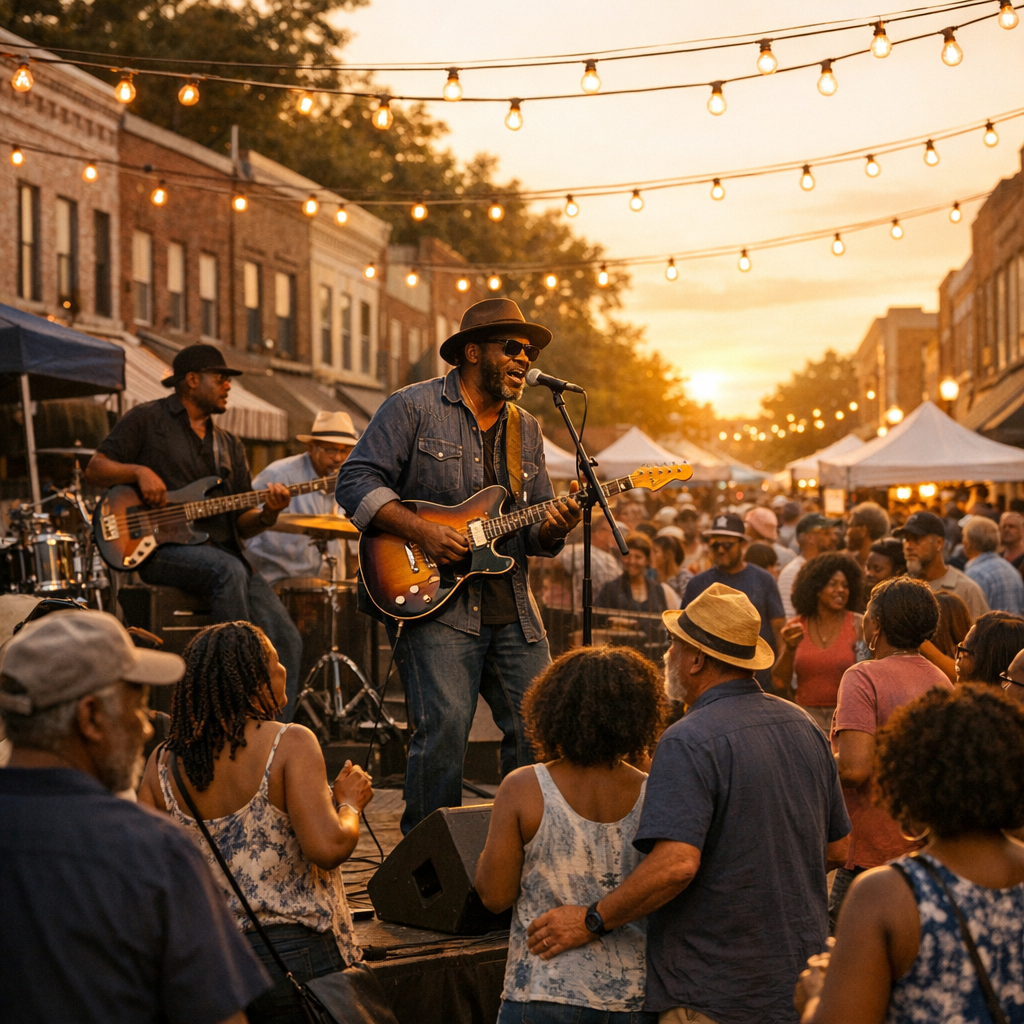
The festival itself is a proudly small-scale, community-rooted affair: live blues performances across a weekend, local and regional vendors, and in recent years a car show alongside the music. It's the kind of event where you can talk to the people running the sound board, browse handmade goods from the Heritage Center's gift shop, and never fight a crowd to see the stage.
What to Expect
Come for the music first — a lineup of blues acts playing across the weekend, generally running daytime-to-early-evening hours (the 2026 edition ran roughly 10am–6pm Saturday and 10am–5pm Sunday). Beyond the stage, expect a laid-back small-town festival atmosphere: food and craft vendors, a car show, and easy access to the Heritage Center's museum exhibits if you want to duck inside and learn the deeper history between sets. This is a festival built for browsing, listening, and soaking in a slower pace — not a big-city ticketed mega-fest.
Getting There: The Road Trip
Brownsville's location right off I-40 makes it an easy detour for anyone road-tripping through West Tennessee. From Memphis, it's about an hour east via I-40 — genuinely one of the easiest blues-heritage day trips out of the city, and a natural add-on if you're already doing the Memphis blues circuit (Beale Street, the Blues Hall of Fame, Stax). From Nashville, plan on roughly a half-day's drive west on I-40, making Brownsville a worthwhile stop if you're crossing the state between Nashville and Memphis rather than a standalone destination from Music City. Either way, I-40 does the work — this is about as straightforward a Delta blues detour as exists anywhere in Tennessee.
Why It's a Hidden-Gem Blues Heritage Stop
Most blues pilgrimages run through Memphis, Clarksdale, or the Mississippi Delta towns most tour itineraries already cover. Brownsville rarely makes that list — which is exactly why it's worth the detour. This is a chance to stand in the actual hometown of the musicians who shaped country blues, visit the preserved home of a Blues Hall of Fame inductee, and hear live blues on the same streets Estes, Nixon, and Rachell walked. For travelers building out a serious Black music heritage itinerary across the South, Exit 56 Blues Fest and the West Tennessee Delta Heritage Center belong on the list precisely because they're not already on everyone else's.
BTN Insider Tips
Bookmark this page and check back. Exit 56 Blues Fest has historically landed on Memorial Day weekend, but the 2027 dates were not yet announced as of this writing — don't book travel until the festival confirms next year's calendar.
Pair it with Memphis. An hour's drive means you can base yourself in Memphis, work through the Beale Street and Stax circuit, and add Brownsville as a day trip without needing a separate hotel stay.
Budget time for the Heritage Center itself. Between the blues exhibits and the Tina Turner Museum, this is a museum stop worth an hour or two on its own, festival weekend or not.
Small festival, big history. Don't expect a massive production — expect an intimate, community-run event whose real value is the depth of the history behind it.
Plan Your Trip
Exit 56 Blues Fest won't be for everyone — it's small, it's unhurried, and it runs on hometown pride rather than headline bookings. But for anyone serious about Black blues heritage, Brownsville, Tennessee is a genuine pilgrimage site. Bookmark this guide, keep an eye on the festival's official channels for 2027 dates, and start sketching out a West Tennessee blues road trip.
🎸 Check Festival Details →✈️ Book Your Memphis-Area Stay →*Some links on this page are affiliate links — Black Travel Now may earn a commission at no extra cost to you.