A City Built on Black Music, Throwing the World's Biggest Free Jazz Party
Detroit doesn't need to borrow its music credentials from anywhere. This is the city that gave the world Motown, that seeded techno in its basements, and that — quietly, before any of that — built one of the deepest jazz lineages in America. Paradise Valley and Black Bottom, Detroit's historic Black entertainment districts, produced or launched giants like Yusef Lateef, Elvin Jones, Milt Jackson, Kenny Burrell, Donald Byrd, Betty Carter, Alice Coltrane, and Geri Allen. That lineage is exactly why the Detroit Jazz Festival feels less like a tourist event bolted onto a city and more like a homecoming the city throws for itself every Labor Day weekend — then simply opens the doors and lets the whole world in for free.
And free is not an exaggeration or a marketing hook. The Detroit Jazz Festival is widely recognized as the largest free jazz festival on the planet, drawing hundreds of thousands of people downtown over four days without charging a cover at the gate, the stages, or the concerts. For a BTN reader building out a Black travel bucket list, this is about as close to a can't-miss as festivals get: world-class programming, deep cultural roots, and a price tag of zero.
Event at a Glance
- Event: Detroit Jazz Festival 2026
- Location: Hart Plaza and downtown Detroit, Michigan (plus the Gretchen C. Valade Jazz Center at Wayne State University)
- When: September 4–7, 2026 (Labor Day weekend)
- Price: Free — donations encouraged, no admission charge to enter the festival or any concert
- 2026 Artist-in-Residence: Joe Lovano
- Main Audience: Jazz lovers, families, Detroit natives, day-trippers from across the Midwest, music history buffs
- Travel Vibe: Downtown riverfront, multi-generational, laid-back but world-class
History and Mission: More Than 40 Years of Keeping Jazz Free
The festival traces back to 1980, when it launched as the Montreux-Detroit Jazz Festival, a partnership with Switzerland's famed Montreux Jazz Festival that brought shared programming to both cities before the arrangement dissolved in the early 1990s. Ford Motor Company later stepped in as title sponsor, and for a stretch in the 2000s the event carried corporate branding before operating independently as the Detroit International Jazz Festival from 2005 to 2011 — the same festival, under an older name, during a period when it was finding its footing as a standalone nonprofit event. In 2006, the Detroit International Jazz Festival Foundation was formed as a 501(c)(3), and Gretchen Valade — granddaughter of Carhartt's founder and chair of Mack Avenue Records — donated $10 million that is widely credited with saving the festival from financial collapse. She chaired the foundation until her death in 2022, and in 2012 the event settled into the name it carries today: the Detroit Jazz Festival.
More than four decades later, the Detroit Jazz Festival Foundation's mission hasn't changed: celebrate Detroit's rich jazz history through year-round concerts and education, and keep the flagship festival completely free and accessible to the public. The 2024 opening of the Gretchen C. Valade Jazz Center at Wayne State University added a permanent, year-round home for that educational mission alongside the annual Labor Day weekend gathering.
What Actually Happens: Three Stages, 60+ Acts, One Legendary Weekend
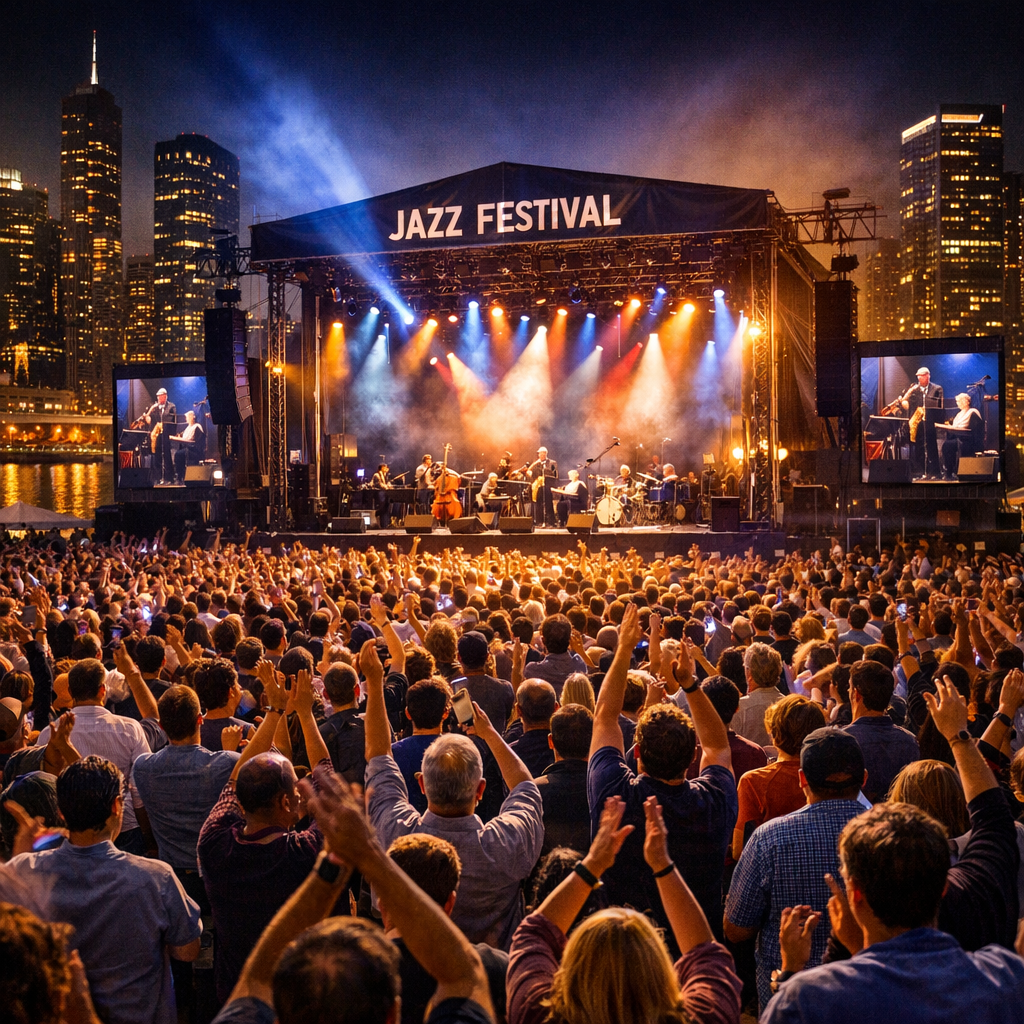
For 2026, festival organizers have consolidated all three main downtown stages into Hart Plaza, a move designed to improve mobility between sets, tighten the audience experience, and — per the foundation — strengthen the festival's long-term ability to stay free. Across the four days, expect more than 60 acts spanning straight-ahead, fusion, vocal, and big-band jazz, with 2026 names already announced including Ron Carter, Bob James, Ravi Coltrane, Artemis, Kurt Elling, and Yellowjackets, among others still being added to the bill.
The centerpiece of each year's programming is the Artist-in-Residence, a musician commissioned to appear across multiple sets, formats, and collaborations throughout the weekend rather than a single headline slot. Grammy-winning saxophonist Joe Lovano holds that role for 2026, meaning festivalgoers can expect to catch him in several different contexts across the four days rather than one appearance. Beyond the main stages, the festival maintains an open call for artist submissions and continues year-round educational programming through the Valade Jazz Center, reinforcing that this is a foundation with a mission, not just a promoter with a weekend event.
Where to Stay in Detroit
Hart Plaza sits directly on the Detroit River at the foot of downtown, which makes proximity easy to plan around. The Renaissance Center and surrounding downtown core put you within walking distance of the festival grounds and Detroit's People Mover loop. Greektown offers a livelier nightlife base with easy access via the People Mover, while Corktown — Detroit's oldest neighborhood — gives you a more residential, restaurant-forward feel with a short rideshare or QLine streetcar ride into downtown. Because this falls on Labor Day weekend, one of Detroit's busiest tourism stretches of the year, book your downtown hotel as early as possible.
🏨 Book Detroit Hotels →Getting There
Detroit Metropolitan Wayne County Airport (DTW) is the main gateway, roughly 25 minutes from downtown by car or rideshare, with extensive domestic connections that make Detroit an easy add-on for a Midwest or East Coast trip. Once downtown, the People Mover and QLine streetcar make getting between your hotel, restaurants, and Hart Plaza simple without a car. If you're driving in from Chicago, Cleveland, Toronto, or elsewhere in the Midwest, note that Labor Day weekend traffic into downtown builds quickly on festival days — plan for it, and consider parking once and using the People Mover to get around.
Who This Festival Is For
This is a rare festival that works equally well as a solo jazz pilgrimage, a multi-generational family outing, or a spontaneous day trip if you happen to be in the Midwest over Labor Day. Because it's completely free, it's especially friendly to families and budget-conscious travelers who still want a world-class live music experience. Jazz historians and Black music lineage enthusiasts will find Detroit's own story — Paradise Valley, Motown, Berry Gordy's early jazz influences, and the musicians this city produced — as compelling as anything on the stage schedule.
BTN Insider Tips
Arrive early for headline sets. Because there's no ticket to secure your spot, prime viewing areas near the main stages fill up well before top-billed acts start — free doesn't mean empty.
Bring cash or a card for donations and vendors. The festival runs on donations and sponsorships to stay free — dropping something in the donation bins helps keep it that way for the next generation.
Pack for a riverfront September evening. Hart Plaza sits right on the water, and Labor Day weekend evenings in Detroit can turn breezy after sunset — bring a light layer.
Catch the Artist-in-Residence more than once. Joe Lovano's residency spans multiple performances and formats across the weekend — don't assume one set is the whole story.
Plan Your Trip
The Detroit Jazz Festival is proof that a festival can be massive, free, and world-class all at once — and that Detroit's jazz legacy is very much alive, not just a museum piece. Four days, three stages, 60-plus acts, and a Great Lakes waterfront backdrop, all for the price of a plane ticket and a place to stay.
🎷 Festival Details →✈️ Book Your Detroit Trip →*Some links on this page are affiliate links — BTN may earn a commission at no extra cost to you.