From the Great Migration to Millennium Park
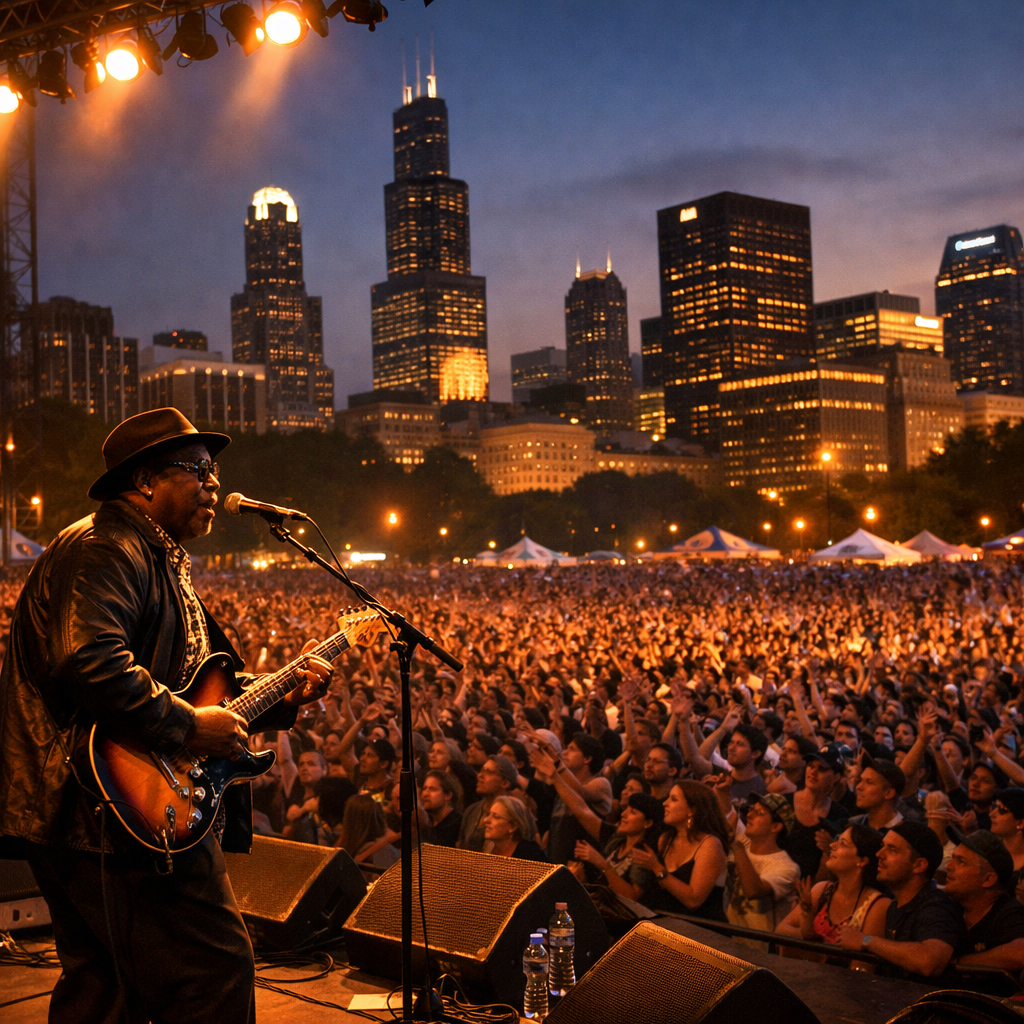
Every note played on the Chicago Blues Festival's main stage carries the weight of a journey that started hundreds of miles south. Between the 1910s and the 1970s, hundreds of thousands of Black Southerners rode the Illinois Central Railroad out of the Mississippi Delta and into Chicago, bringing acoustic Delta blues with them. On the city's South and West Sides, that sound plugged in — literally. Amplified guitars, driving rhythm sections, and harmonica through a microphone turned rural blues into Chicago Blues, the electric sound that would go on to shape rock and roll, soul, and R&B worldwide. The Chicago Blues Festival is what happens when a city finally throws that history the biggest, loudest, freest party in the world — three days (soon to be four) of the genre's living legends and its future headliners, on a stage built in the shadow of the same skyline that welcomed those migrants a century ago.
Event at a Glance
- Event: Chicago Blues Festival
- Location: Millennium Park & Ramova Theatre, Chicago, IL
- When: Expected early June 2027 (exact 2027 dates TBA as of publish — the 2026 edition ran June 4–7 at Millennium Park and the Ramova Theatre)
- Price: Free (some Ramova Theatre programming may be ticketed)
- Main Audience: Blues purists, music-history travelers, multigenerational families, first-time Chicago visitors
- Travel Vibe: Laid-back, soulful, deeply rooted in Black American music history
A Festival Built on the Blues' Own History
The Chicago Blues Festival launched in 1984, the brainchild of the city's Department of Cultural Affairs, and it grew directly out of Chicago's status as the blues' second home. For decades before the festival existed, the real festival was happening every Sunday for free on Maxwell Street — the open-air market on the Near West Side where migrants from the Delta set up amps on the sidewalk and played for tips. Maxwell Street wasn't just a place blues was performed; by most accounts of the musicians and historians who lived it, it's a place blues was actively created, as newly arrived players traded licks with Chicago veterans and pushed the sound toward the electrified, amplified style that defined the genre. Muddy Waters, Howlin' Wolf, and Little Walter all passed through that scene. When the city's cultural affairs office built an official festival around Chicago blues four decades ago, it was formalizing — and honoring — a tradition Maxwell Street had already been running for free for generations. That lineage is why the festival has never charged admission: free access was the whole point on Maxwell Street, and the festival was built to carry that spirit forward at a much bigger scale.
What Actually Happens
The festival's main stages fill Millennium Park, the festival's home since 2017 (it ran for decades before that in Grant Park's Petrillo Music Shell). Across multiple stages, the lineup runs from Chicago blues royalty to touring headliners to next-generation players carrying the tradition forward, with programming timed so you can wander between stages and catch a little bit of everything over a long afternoon and evening. In recent years the festival has expanded beyond the park itself, adding ticketed and free programming at the historic Ramova Theatre in Bridgeport — a beautifully restored 1929 movie palace turned live music venue — giving the festival an indoor, intimate counterpart to the open-air main stages. Expect vendor rows selling Chicago food alongside the music, a strong local presence (this is very much a festival Chicago residents show up for, not just tourists), and programming that explicitly connects the modern lineup back to Maxwell Street and the city's blues archives. If you only have one day, plan around the evening headliner slot on the main Millennium Park stage — that's when the crowd is thickest and the energy peaks.
Where to Stay in Chicago
For festival access, the Loop and South Loop put you within walking distance of Millennium Park and a short rideshare from the Ramova Theatre in Bridgeport. Travelers who want a more residential, budget-friendly base should look at Hyde Park or Bronzeville — both South Side neighborhoods steeped in Black Chicago history, with easy transit access back downtown for the festival. Book early: early June overlaps with graduation travel and the start of Chicago's busy summer festival season, and downtown hotel inventory tightens fast.
🏨 Book Chicago Hotels →Getting There
Chicago is served by two major airports — O'Hare International (ORD) and Midway International (MDW) — both with extensive direct-flight networks from across the US, making this one of the most flight-friendly free festivals in the country. From either airport, the CTA Blue Line (O'Hare) or Orange Line (Midway) connects directly downtown for a fraction of a rideshare fare. Once you're downtown, Millennium Park and the Loop are entirely walkable, and the Ramova Theatre is a quick rideshare or Green/Red Line ride from downtown.
Who This Festival Is For
Blues purists and music-history travelers who want to stand where the genre's electric sound was born, multigenerational families (this is a genuinely all-ages, free event), first-time Chicago visitors who want a cultural anchor for a longer city trip, and anyone building a Black-music pilgrimage that also includes stops like Memphis, Clarksdale, or New Orleans.
BTN Insider Tips
Come for the free main stage, stay for the Ramova. The Millennium Park lineup is the headline draw, but the Ramova Theatre shows are smaller, often ticketed, and worth budgeting for if a favorite artist is playing there.
Bring a blanket and claim ground early for evening headliner sets — the Pritzker Pavilion lawn fills up well before the marquee act takes the stage.
Pair it with Chicago's blues history in person. Ask locally about the current Maxwell Street Market and South Side blues clubs to round out the free festival with the neighborhoods that built the sound.
Watch for official dates in early spring. The city typically confirms its summer festival calendar in the winter months before the event — check back for confirmed 2027 dates.
Plan Your Trip
The Chicago Blues Festival is proof that the biggest tribute to a genre can still be a free one. Trace the line from Maxwell Street to Millennium Park, catch a legend on the main stage, and let Chicago show you why it's still the blues' most important city.
🎟️ Festival Details →✈️ Book Your Chicago Trip →*Some links on this page are affiliate links — BTN may earn a commission at no extra cost to you.