Fifty years of blues, gospel, and handmade heritage on a small-town Alabama courthouse square — and 2026 marks a generational torch-passing.
Introduction
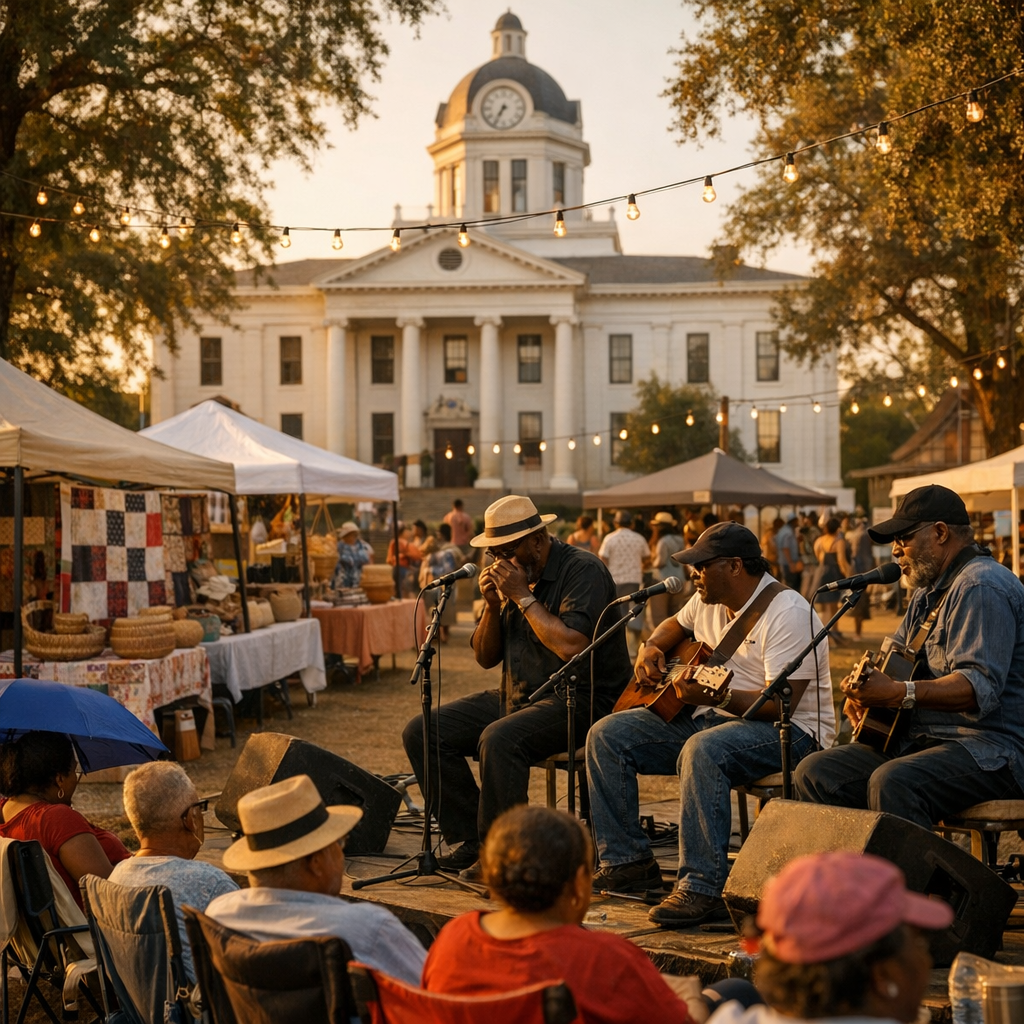
Skip the interstate exits crowded with chain hotels and drive instead into the quiet heart of Alabama's Black Belt, where twice a year the sleepy courthouse square of Eutaw, Alabama, comes alive with the sound of blues guitar, harmonica, and gospel quartets rising over folding chairs and quilt tables. The Black Belt Folk Roots Festival is not a flashy destination festival with a corporate stage and wristband upsells. It is something rarer: a free, homegrown, half-century-old celebration of the people who kept rural Black Southern culture alive through quilting, basket weaving, storytelling, and music, staged in the shadow of a 19th-century courthouse in a town of about 2,700 people. In 2025 it celebrated its 50th anniversary. In 2026, it enters a new era — and it belongs on the radar of any traveler who wants to experience Black Southern heritage the way it has actually been lived, not the way it gets packaged for a brochure.
Event at a Glance
- Event: Black Belt Folk Roots Festival
- Dates: Saturday–Sunday, August 22–23, 2026 (traditionally the 4th Saturday and Sunday of August)
- Location: Rev. Thomas Gilmore Square, the historic Old Greene County Courthouse Square, 101 Tuscaloosa Street, Eutaw, AL 35462
- Cost: Free and open to the public
- Organizer: The Society of Folk Arts & Culture
- Best For: Music lovers, folk art and quilt collectors, heritage travelers, families, and road-trippers chasing hidden-gem Southern culture
- Nearest Cities: Tuscaloosa (about 35 miles) and Birmingham (about 87 miles), both via I-20/I-59
Fifty Years of Keeping the Folkways Alive
The festival traces back to 1975, when Jane Sapp — then working at the Miles College Eutaw campus — helped bring together the artists, musicians, and craftspeople of Greene County to honor a generation for whom homemade wasn't a lifestyle choice, it was survival. Quilts kept families warm through Black Belt winters. Baskets were woven by hand to gather crops from the region's dark, fertile soil (the "Black Belt" name itself comes from that soil, not solely from the region's demographics, though both meanings have layered together over generations). Storytelling and shape-note gospel singing passed down history in a place where written records of Black rural life were often thin. What began as a small community gathering grew, year after year, into an institution: by 2024 it was in its 49th year, and on August 23–24, 2025, Eutaw threw the festival's landmark 50th anniversary celebration on the same courthouse square where it always happens.
That half-century of continuity is what makes the Black Belt Folk Roots Festival worth the detour. This is one of the longest-running Black folk arts festivals in the Deep South, run not by a tourism board or a promoter but by the Society of Folk Arts & Culture — a volunteer-driven organization coordinated for years by Dr. Carol Zippert alongside collaborators like Teresa Atkins and Barbara Hunter, with founder Jane Sapp still honored as the guiding spirit behind it all.
A New Chapter: 2026 as a Generational Handoff
The 2026 festival, set for August 22–23, arrives as what organizers are calling a celebration "in transition." At the 50th anniversary gathering in 2025, Dr. Zippert announced that future festivals would shift toward being planned and produced by younger artists, with the senior tradition-bearers who built the festival's first 50 years retained in their own coveted, honored roles rather than stepping aside entirely. In other words: 2026 is the first festival where the folkways get handed to a new generation to carry forward, while the elders who preserved them for half a century remain very much part of the picture. For visitors, that means this year's edition carries a little extra emotional weight — a living, in-progress example of how Black Southern folk culture actually survives: not frozen in amber, but passed hand to hand.
What to Expect: Blues on Saturday, Gospel on Sunday
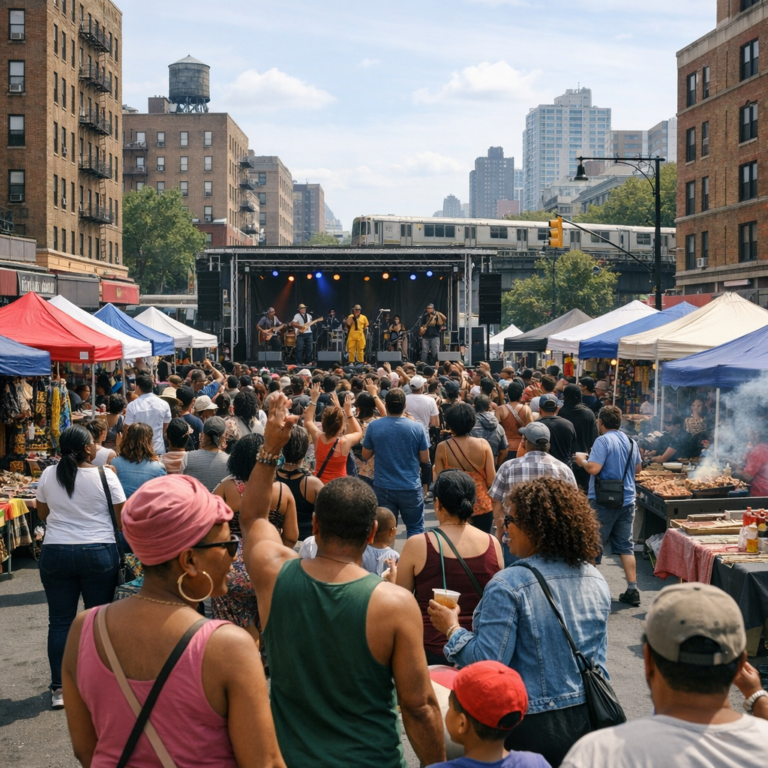
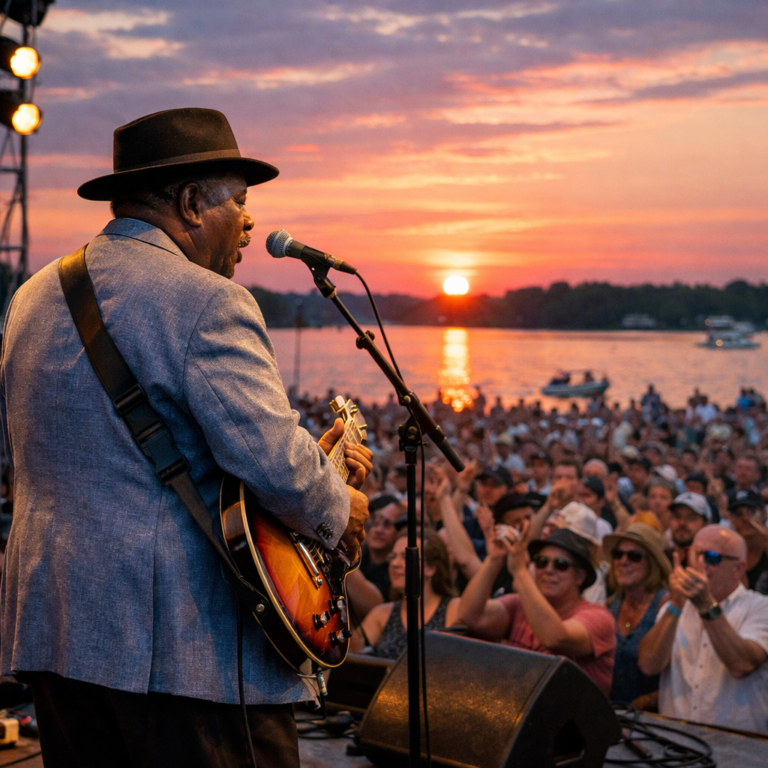
The festival's two-day rhythm has stayed consistent for decades, and it is a smart structure for first-time visitors to plan around. Saturday belongs to the blues — raw, unamplified-feeling performances built around themes of struggle, hardship, and pain, played by musicians steeped in the Black Belt's deep blues tradition, alongside dancers, storytellers, and a full lineup of craftspeople demonstrating quilting, basket weaving, woodcarving, and doll-making right where you can watch their hands work. Sunday turns toward the sacred: old-timey gospel music and shape-note singing meant, in the festival's own words, to "lift the spirit in the joy of making it over." It's a genuinely moving arc to experience across one weekend — Saturday's hardship songs giving way to Sunday's release.
Throughout the weekend, a Kid's Tent keeps younger visitors busy with hands-on pottery, face painting, African drumming, and games, so this is very much a family-friendly stop, not just a music-and-crafts event for adults. Food has always been central, too: expect soul food plates, fried chicken and fish, barbecue, and homemade desserts from local cooks — the kind of festival food that exists nowhere on a menu, only at a folding table on a courthouse lawn.
The Courthouse Square Setting
Part of what makes this festival special is simply where it happens. Eutaw's Greene County Courthouse Square is a nationally recognized historic district, and the festival unfolds around Rev. Thomas Gilmore Square — named for Greene County's first Black sheriff since Reconstruction — right at the literal civic center of a small Black Belt town. There's no festival campus, no gated entry, no shuttle system. You park near the square, walk past antebellum and Victorian-era storefronts, and the whole event is scaled to a human, walkable size. If you've only experienced large-scale Black cultural festivals in big cities, the intimacy here is its own kind of reward — you'll likely end up in conversation with the quilter or the blues guitarist themselves, not just watching from a distance.
Getting There: A Weekend Road Trip from Tuscaloosa or Birmingham
Eutaw sits in Greene County, about 35 miles southwest of Tuscaloosa and roughly 87 miles from Birmingham, both reachable via I-20/I-59 in well under two hours. That makes the festival an easy weekend add-on if you're already routing through West Alabama, and a genuinely worthwhile standalone day trip or overnight from either city. Birmingham-Shuttlesworth International Airport is the most practical fly-in option for out-of-state visitors, with Tuscaloosa Regional Airport serving smaller regional flights closer to Eutaw itself. Because Eutaw is a small town, hotel options directly on-site are limited — most visitors base themselves in Tuscaloosa or Birmingham and drive in for the day, which also opens up the chance to pair the festival with University of Alabama campus sites, Birmingham's civil rights heritage trail, or a broader Black Belt heritage road trip through nearby Greensboro and Selma.
Practical Tips for First-Timers
Admission is free, and past festivals have generally run through the afternoon and into the evening across both days, though exact 2026 hours had not yet been published as of this writing — call the festival line at 205-372-0525 or check the Society of Folk Arts & Culture's festival site closer to the date to confirm the day-of schedule. Alabama in late August runs hot and humid, so plan for sun protection, water, and comfortable shoes for walking the square. Bring cash for food vendors and craft purchases — buying directly from a quilter or basket weaver on the square is about as close as travel gets to supporting Black Southern folk art at its literal source. And because this is a volunteer-run community event rather than a corporate festival, patience and warmth go a long way; you're a guest in a tradition that predates most festivals on anyone's bucket list.
Why It's Worth the Detour
There is no shortage of major Black cultural festivals competing for a spot on your calendar, but few offer what Eutaw does: fifty-plus years of unbroken continuity, a literal changing of the guard playing out in real time, and an intimacy that lets you watch a blues set ten feet from the stage and then buy a hand-stitched quilt from the same person who spent all summer making it. The Black Belt Folk Roots Festival isn't trying to be a destination festival. It's trying to keep a folkway alive — and in 2026, it's inviting a new generation to help carry it. That combination of history, transition, and small-town warmth is exactly the kind of hidden-gem experience worth planning a Black Southern road trip around.
Plan Your West Alabama Road Trip
Book Hotels in Tuscaloosa or BirminghamFind FlightsFestival InfoSome links on this page are affiliate links. Black Travel Now may earn a commission at no extra cost to you.
Want more hidden-gem Southern heritage festivals, road trip itineraries, and Black travel guides like this one? Follow and subscribe to Black Travel Now — we're building the one-stop shop for the Black travel experience, one small-town homecoming at a time.