Where Caribbean Carnival Meets the Crescent City
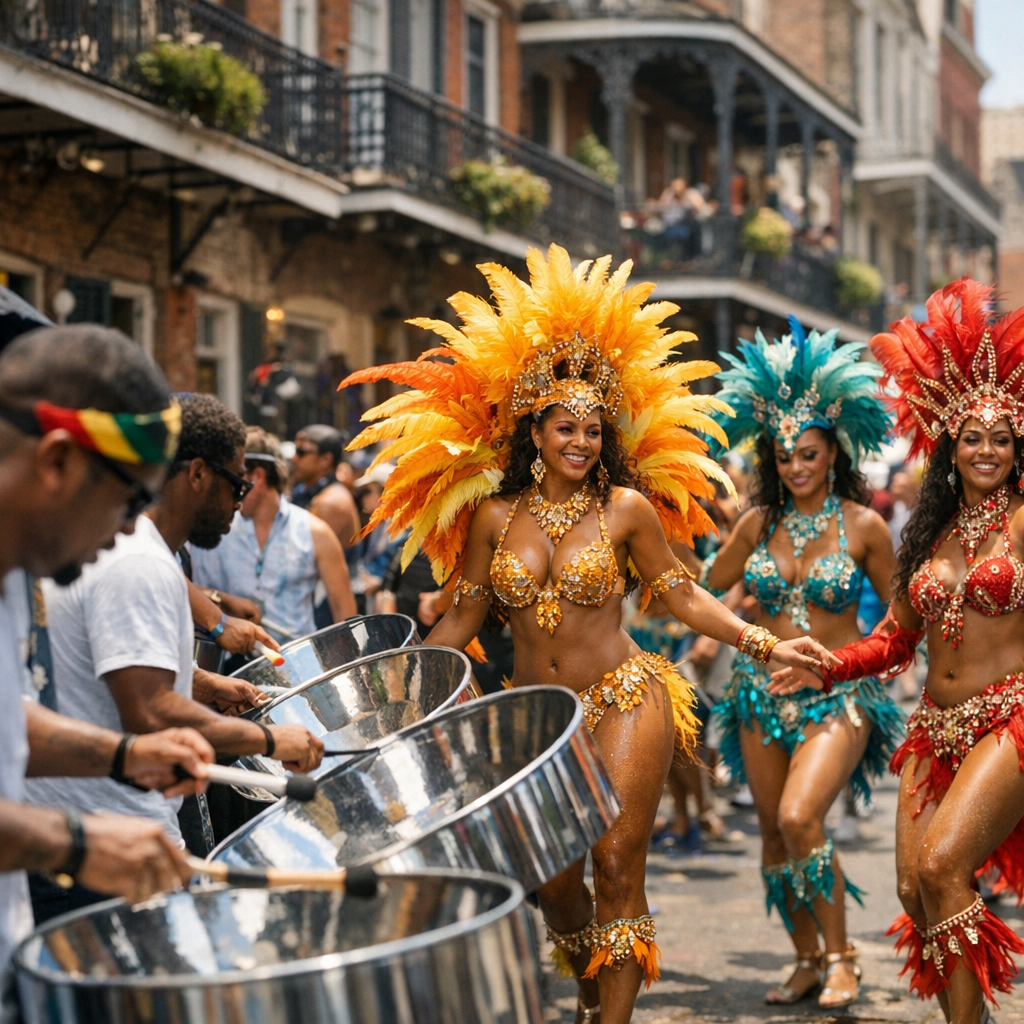
New Orleans doesn't need an introduction to parades, brass bands, or masked revelers dancing through its streets. But once a year, the city's deep Caribbean diaspora community throws a celebration that swaps second-line rhythms for soca and steel pan, and Mardi Gras beads for feathered carnival costumes straight out of Port of Spain. That celebration is Bayou Bacchanal — New Orleans's own homegrown Caribbean Carnival, and one of the most vibrant, community-rooted cultural events the city hosts.
Bayou Bacchanal is organized by Friends of Culture (formally registered as Caribbean Carnival/Friends of Culture), a Louisiana 501(c)(3) nonprofit founded and led by Marilyn C. LaForce. The organization has been registered in Louisiana since June 2001, and its mission is simple but powerful: create a permanent, visible space for Caribbean culture in a city whose own Afro-diasporic roots run just as deep. Over more than two decades, Friends of Culture has built partnerships with organizations like the St. Lucia Consulate, Southern University of New Orleans, Ashe Cultural Arts Center, and the World Trade Center of New Orleans (which supported the group's steel pan programming as far back as 2011-2012), and received support from the National Performance Network's Artists Relief Fund, backed by the Ford Foundation, in 2020.
Event at a Glance
- Event: Bayou Bacchanal 2026
- Location: Louis Armstrong Park / Congo Square, New Orleans, Louisiana
- When: Bayou Bacchanal is held annually, traditionally the first weekend of November (the 2024 edition ran November 1-2). Friends of Culture typically confirms exact dates and registration details a few months out — check their official channels before booking travel.
- Price: Free to attend as a spectator; masquerade band registration and costume packages vary by year
- Main Audience: Caribbean diaspora families, soca and carnival lovers, culture-focused travelers, New Orleans locals
- Travel Vibe: Community-centered, joyful, music-driven, refreshingly uncrowded compared to Mardi Gras or Jazz Fest
What Bayou Bacchanal Actually Is
At its core, Bayou Bacchanal is a masquerade parade: costumed revelers — some in full feathered carnival regalia, sequins and all, others simply in Caribbean colors — dance through New Orleans streets to the metallic ring of steel pan drums and the driving beat of soca. Unlike the ticketed, band-registration-heavy carnivals of Trinidad or Barbados, Bayou Bacchanal keeps its doors open: costumes are encouraged but never required, and both locals and visitors are welcome to fall in with the procession. The parade winds toward a festival gathering where the real party continues — live concerts, Caribbean food vendors serving up dishes like curry goat, jerk chicken, doubles, and roti, plus arts-and-crafts vendors selling island-made goods.
The steel pan itself is the event's signature sound and its clearest link back to the Caribbean. Originating in Trinidad and Tobago, steel pan (or "pan") is one of the most distinctive instruments to come out of the 20th-century Caribbean, and Friends of Culture has made it central to Bayou Bacchanal's identity — not just as parade music, but as a program the organization has actively taught and supported in New Orleans for well over a decade.
Friends of Culture: More Than a Festival
What sets Bayou Bacchanal apart from a typical festival booking is the nonprofit engine behind it. Friends of Culture isn't a promoter that flies in for one weekend a year — it's a standing community organization with a two-decade footprint in New Orleans, built on volunteer labor, grassroots fundraising, and partnerships with consulates, universities, and arts institutions. That grounding shows up in the event itself: Bayou Bacchanal feels less like a commercial carnival stop and more like an extended family reunion for New Orleans's Caribbean-descended and Caribbean-immigrant residents, alongside anyone else who wants to join the dance line.
Cultural Significance for New Orleans's Caribbean Diaspora
New Orleans's Caribbean connections run centuries deep — through the colonial-era exchange between Louisiana and Saint-Domingue (Haiti), through Congo Square itself as a historic gathering site for African and Afro-Caribbean cultural expression, and through generations of Caribbean immigrants who have called the city home. Bayou Bacchanal makes that connection visible and current. Holding the parade at Louis Armstrong Park's Congo Square isn't incidental — it situates a modern Caribbean carnival on ground that has functioned as a gathering place for African diasporic music, dance, and community for more than two centuries. For New Orleans's Caribbean community, Bayou Bacchanal is a rare, sustained public claim on that same civic and cultural space — a chance to be seen, heard, and celebrated on their own terms, in their own soca and steel pan sound, in a city that so often gets defined by its other, more famous traditions.
What to Expect If You Go
Expect an afternoon that moves at Caribbean-carnival pace: a costumed procession forming up, steel pan and soca setting the tempo, and a festival grounds humming with food, vendors, and music once the parade arrives. Bring cash for food and craft vendors, wear comfortable shoes for standing and dancing, and don't be shy about joining the masquerade line even without a full costume — a bright color, a feather, or simply enthusiasm is often enough. Because the event draws a real cross-section of New Orleans's Caribbean community rather than a purely tourist crowd, it's also one of the more genuinely local cultural experiences you can add to a New Orleans trip.
Practical Travel Tips for New Orleans
November in New Orleans is a travel sweet spot: the punishing summer humidity has broken, hotel rates and crowds are noticeably lighter than Mardi Gras season or Jazz Fest in spring, and the city's restaurant and live-music scene is running at full steam. A Bayou Bacchanal weekend pairs naturally with everything else New Orleans does well — French Quarter walking tours, live brass band sets on Frenchmen Street, and a proper Creole and Cajun food crawl through po'boys, gumbo, and beignets. Stay in the French Quarter or Marigny/Bywater if you want to walk to both Bayou Bacchanal and the city's nightlife; Mid-City is a quieter, still-central alternative near Louis Armstrong Park itself.
Because Friends of Culture typically finalizes exact dates and registration details only a few months ahead of the event, book flexible travel and refundable accommodations when possible, and follow Friends of Culture's official channels (Instagram: @caribbeancarnivalfoc) as the date approaches for the confirmed 2026 schedule.
🏨 Book New Orleans Hotels →Who This Festival Is For
Bayou Bacchanal is built for Caribbean diaspora travelers looking to connect with community outside their home islands, soca and steel pan fans wanting a lower-key alternative to the big-ticket carnivals, and any Black traveler curious about New Orleans's often-overlooked Caribbean threads. It's also simply a great pick for anyone who wants a joyful, music-filled New Orleans weekend without the price tag and crowds of Mardi Gras or Jazz Fest.
BTN Insider Tips
Follow Friends of Culture on Instagram (@caribbeancarnivalfoc) for the confirmed 2026 date and registration details — they typically post these a few months out rather than a year in advance.
Wear real shoes and Caribbean colors. You don't need a full costume to join the masquerade line, but comfortable footwear for a few hours on your feet is non-negotiable.
Bring cash for food and craft vendors at the festival grounds.
Book flexible New Orleans travel since exact dates are usually confirmed only a few months ahead.
Pair the trip with New Orleans's food and music scene — a Bayou Bacchanal weekend is a great excuse for a broader French Quarter and Frenchmen Street itinerary.
Plan Your Trip
Bayou Bacchanal is proof that New Orleans's cultural calendar runs deeper than Mardi Gras and Jazz Fest — it's a two-decades-strong, community-built Caribbean Carnival hiding in plain sight at Congo Square. Follow Friends of Culture for the confirmed 2026 dates, book your New Orleans stay, and get ready to dance behind the steel pan.
🎟️ Festival Details → ✈️ Book Your New Orleans Trip →*Some links on this page are affiliate links. Black Travel Now may earn a commission at no extra cost to you.