For four days every Labor Day weekend, Washington Park on Chicago's South Side turns into a recreated African village — drum circles, quilt pavilions, and a marketplace of art and textiles from across the diaspora. Here's everything to know before you go.
Introduction
Most festivals ask you to show up and watch. The African Festival of the Arts asks you to shop, taste, dance, and talk to the artist standing right behind the painting you're admiring. Held every Labor Day weekend in Chicago's historic Washington Park, this is one of the longest-running Pan-African arts festivals in the country — a sprawling, open-air celebration where hundreds of vendor tents fill the park's tree-lined paths with African fabrics, fine art, jewelry, and sculpture, drum circles pull in passersby, and the "Bank of the Nile" food court serves dishes from across the African continent and the wider diaspora. For 35-plus years, it's been a Chicago institution and a genuine homecoming for Black Chicagoans and visitors alike — not a trade show with African themes bolted on, but a community built around the idea that African and African diaspora art, culture, and commerce deserve center stage, not a side table.
Event at a Glance
- Event: African Festival of the Arts
- Dates: Labor Day weekend 2026 — Friday, September 4 through Monday, September 7, 2026 (a four-day run, consistent with the festival's long-standing format; confirm exact daily hours closer to the date at the official site below)
- Location: Washington Park, Chicago, IL (South Side, adjacent to Hyde Park and the University of Chicago)
- Host Organization: Africa International House USA (AIH)
- Admission: Free and open to the public, with donations and vendor purchases supporting the festival
- Best For: Families, art collectors and browsers, culture travelers, first-time visitors to Chicago's South Side, group outings
- Vibe: Warm, communal, market-day energy — part outdoor art fair, part family reunion, part live music festival
- Recommended Trip Length: A day trip works, but 2–3 days lets you pair the festival with Chicago's broader South Side arts and culture scene
History: 35-Plus Years in Washington Park
The African Festival of the Arts traces back to 1990, when it was founded to give African and African diaspora artists, craftspeople, and performers a dedicated stage in Chicago — and to give Black Chicagoans a Labor Day tradition built entirely around their own culture. More than three decades later, it's grown into one of the largest events of its kind in the Midwest, drawing crowds from across the city and beyond every year it runs. Washington Park itself is no accidental backdrop: designed by Frederick Law Olmsted and Calvert Vaux (the same team behind Central Park), it sits at the heart of Chicago's historic Black South Side, near the DuSable Black History Museum and the University of Chicago. Hosting a Pan-African arts festival here, on Labor Day weekend, ties the event to both the neighborhood's deep cultural roots and the holiday's own labor and community history. The festival has weathered funding and logistical challenges over the years, as long-running community festivals often do — but it has consistently returned, powered by Africa International House USA's ongoing programming and a loyal base of vendors, performers, and attendees who treat the weekend as unmissable.
What to Expect
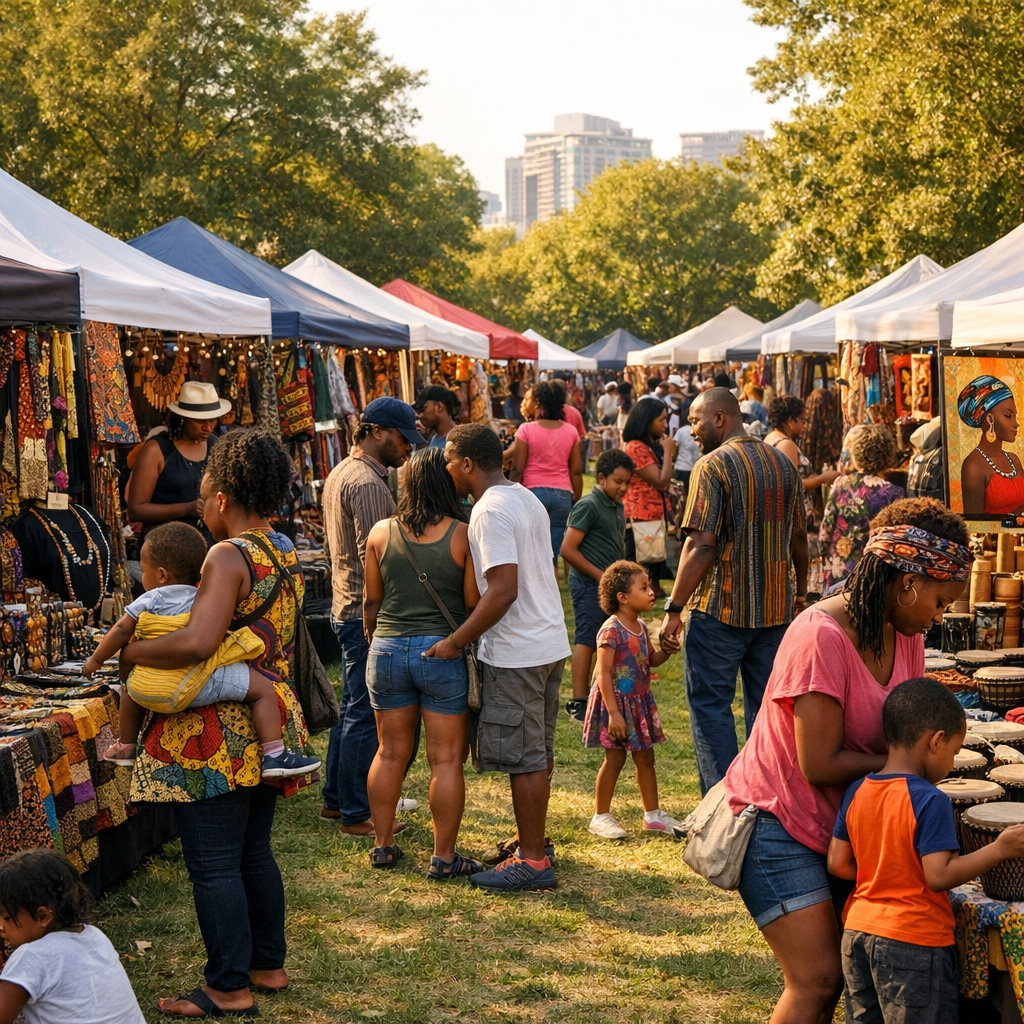
The festival's layout is essentially a walkable African village built inside a city park. Rows of vendor tents — often numbering in the hundreds — line the paths, selling handwoven textiles and kente cloth, beadwork and jewelry, fine art and photography, sculpture, and a dedicated quilt pavilion showcasing African and African-American quilting traditions. Drum circles anchor several corners of the grounds, with rhythms that pull spectators in to dance rather than just watch, and stilt walkers and other performers move through the crowd throughout the day. A main stage runs a rotating lineup of live music — Afrobeat, jazz, R&B, gospel, and traditional African performance groups — from midday into the evening. When it's time to eat, the "Bank of the Nile" food court is the festival's culinary heart, with vendors serving dishes from across the African continent alongside Caribbean and African-American soul food, so you can genuinely eat your way around the diaspora in an afternoon. Kids' programming, cultural demonstrations, and community organization booths round out the grounds, making this as much a family day as it is an art market.
Where to Stay in Chicago
For easy access to Washington Park, look at hotels in Hyde Park, the neighborhood directly to the east — it puts you minutes from the festival grounds and close to the Museum of Science and Industry and the University of Chicago campus. Downtown and South Loop hotels are a solid alternative if you want easy access to the rest of Chicago's attractions, with a straightforward 15–20 minute drive or rideshare down to Washington Park. Since Labor Day weekend is peak late-summer travel season in Chicago, book early — rates climb and availability tightens as the holiday weekend approaches.
Where to Eat
Beyond the festival's own food court, Chicago's South Side has real depth. Daley's Restaurant, one of the city's oldest Black-owned restaurants, is a soul-food landmark not far from Washington Park. Pearl's Place in Bronzeville is a reliable Southern-comfort spot worth the short drive, and Peach's Restaurant is a favorite for weekend brunch. For something different after a day of festival food, Ain't She Sweet Cafe in Bronzeville offers a laid-back café stop, and Bronzeville Winery is a solid choice for a more upscale dinner to close out the day.
City Guide: Beyond the Festival
Washington Park sits right in the middle of one of the most historically significant Black neighborhoods in the country, so build in time beyond the festival grounds. The DuSable Black History Museum and Education Center, one of the oldest Black history museums in the U.S., is a short walk away inside the park itself. Bronzeville, just north, is packed with historic sites tied to the Great Migration and the neighborhood's era as the "Black Metropolis," including the Victory Monument and the Bronzeville Walk of Fame. Hyde Park adds the Museum of Science and Industry, the University of Chicago's Gothic campus, and the Obama Presidential Center campus taking shape nearby. Even a single extra day turns this from a festival day trip into a genuine South Side cultural itinerary.
Who It's For
This festival is built for a wide range of visitors: families looking for a genuinely kid-friendly, culturally rich outdoor day; art lovers and collectors who want to buy directly from African and diaspora artists without a gallery markup; culture travelers looking to experience Chicago's Black South Side beyond the downtown tourist track; first-time visitors who want an easy, welcoming entry point into the city's Black cultural life; and anyone who wants a Labor Day weekend that means something beyond a cookout. It's an all-ages, come-as-you-are event — no dress code, no velvet rope, just a park full of art, music, and food.
BTN Insider Tips
- Bring cash — many independent vendors prefer it, even though more now take cards.
- Go early on Saturday or Sunday for the best vendor selection before popular pieces sell out, and go late afternoon into evening for the strongest live music and drum-circle energy.
- Wear comfortable shoes — the festival spans a large stretch of the park and there's a lot of ground to cover.
- Bring a tote or bag for purchases; you will end up buying more than you planned.
- Check aihusa.org and the festival's social channels in the weeks before Labor Day for the confirmed daily schedule, stage lineup, and any last-minute updates.
- Pair your visit with a stop at the DuSable Black History Museum, right in the same park, to round out the day.
Mark Your Calendar
The African Festival of the Arts returns to Washington Park for Labor Day weekend 2026, running Friday, September 4 through Monday, September 7. As with past editions, expect the festival's official site and social media to post confirmed daily hours, the full vendor list, and the live music lineup closer to the date — bookmark this page and check back, and follow @AfricanFestChi for real-time updates as the weekend approaches.
Final Takeaway
Thirty-five-plus years in, the African Festival of the Arts is still one of the most authentic, community-rooted Labor Day traditions in the country — proof that a park, a few hundred vendor tents, and a lot of drumming can add up to something that feels like family. Whether you're coming for the art, the food, the music, or all three, Washington Park on Labor Day weekend is worth building a trip around.
Plan Your Labor Day Weekend in Chicago
Book Hotels Find Flights Official Festival Info at aihusa.orgSome links on this page are affiliate links. Black Travel Now may earn a commission at no extra cost to you.
Want more Black arts and culture festival guides, city-by-city itineraries, and event breakdowns like this one? Follow and subscribe to Black Travel Now — we're building the one-stop shop for the Black travel experience, one park, one festival, one city at a time.