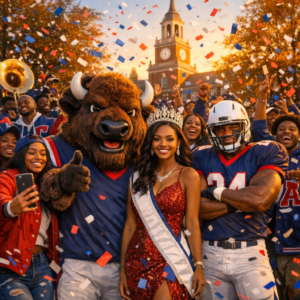
The Bells at Shorter Hall Are Ringing. Every Bulldog Comes Home.
There is a particular kind of quiet pride that settles over Wilberforce, Ohio every October — not the roar of a 40,000-seat stadium, but something older and, in its own way, heavier. It is the feeling of standing on the campus where Black higher education in America truly began, surrounded by alumni who came back not just to see old friends, but to touch the ground their ancestors fought to stand on. You walk past Shorter Hall. You pass the historical markers. You realize you are not just at a homecoming — you are at the birthplace.
That is Wilberforce University Homecoming. Wilberforce is not the largest HBCU, and its homecoming will never try to out-shout the ones with 40-artist concert lineups. What it has instead is something no other school in America can claim: it is the oldest private historically Black university in the country, founded in 1856, and every homecoming here carries that weight. For one meaningful week every October — Homecoming Week 2026 is expected to fall in mid-to-late October (exact dates to be confirmed by the university closer to the date) — this small campus off Bickett Road becomes the center of the Bulldog universe.
🐾 Get Wilberforce Homecoming Details
What Makes Wilberforce Homecoming Unlike Any Other
Every HBCU has a homecoming. Wilberforce's stands apart for three reasons.
First, and above all, the history itself. Wilberforce University was founded in 1856 — making it, by wide recognition, the oldest private Black-founded university in the United States. It predates the Civil War. It predates Reconstruction. When Black Americans were barred from nearly every college in the country, Wilberforce already existed. That is not a marketing line. That is a fact every Bulldog carries with pride, and homecoming is the week the whole campus leans into it.
Second, the AME Church connection. In 1863, with the Methodist Episcopal Church unable to keep the school open through the financial strain of the Civil War, Bishop Daniel Alexander Payne led the African Methodist Episcopal Church in purchasing the entire campus for $10,000 — making Wilberforce the first university in America owned and operated by African Americans. Payne then became its president, the first Black college president in United States history. That lineage still runs through campus today, from Payne Theological Seminary to the university's ongoing AME affiliation.
Third, the intimacy. Wilberforce is a small campus, and its homecoming feels like it — a gathering of a few hundred families rather than a few hundred thousand strangers. You will know most of the people in the room. That closeness, paired with the sheer historical gravity of the place, gives Wilberforce Homecoming a tone unlike any other HBCU celebration in the country.
The History: Wilberforce University & Its Homecoming Tradition
Wilberforce University was established in 1856 by the Methodist Episcopal Church's Cincinnati Conference, working in cooperation with African Methodist Episcopal Church leaders, on land once known as Tawawa Springs — a name derived from a Shawnee phrase meaning "bath of gold." It was named for William Wilberforce, the British abolitionist who spent his life fighting to end the transatlantic slave trade.
The Civil War nearly ended the school before it truly began. Enrollment collapsed and the Methodist Episcopal Church could no longer sustain it. In 1863, Bishop Daniel A. Payne brokered the purchase of the entire campus on behalf of the AME Church, becoming the university's president in the process. That moment made Wilberforce the first Black-owned and Black-operated university in American history, and it remains affiliated with the AME Church to this day. Wilberforce also became the birthplace of Payne Theological Seminary, founded the same year, which stands today as the oldest historically Black theological seminary in the United States.
In 1887, the Ohio legislature established a state-funded normal and industrial department inside Wilberforce to train Black teachers and tradesmen — a department that would eventually separate to become Central State University, the public HBCU that today sits directly next door on the same stretch of road. The two schools share a birthplace, a hometown, and, every October, an entire community's worth of homecoming energy.
Wilberforce Homecoming grew out of that 170-year story — a tradition of alumni returning each fall not just to cheer on the Bulldogs, but to stand, quite literally, on the ground where Black higher education in America began.
Why Wilberforce Homecoming Matters
Wilberforce Homecoming matters because Wilberforce itself matters more than almost any other name in Black educational history. This is the campus that proved, before the Civil War had even ended, that Black Americans could own, govern, and operate a university entirely on their own terms. Every graduate who crosses back onto this campus during homecoming week is reconnecting with that legacy directly — not through a plaque or a museum exhibit, but by walking the same ground.
For visitors who never attended Wilberforce, homecoming week is a rare, quiet opportunity to stand inside that history. There is no other HBCU homecoming in America where you can say, without exaggeration, that you are visiting the literal starting point of Black higher education.
Why You Should Attend Wilberforce Homecoming 2026
You do not need to be a Bulldog alum to feel the significance of Wilberforce Homecoming. This is a homecoming built on substance over spectacle — the step shows, the coronation, the gospel and choir performances, and the tailgate all carry an unmistakable sense of purpose that comes from celebrating on genuinely sacred educational ground.
Come ready to see green and gold everywhere — on tailgate tents, on Greek line jackets, on the crowd packed in for the step show. It is an intimate, deeply meaningful HBCU homecoming, the kind where a stranger becomes a friend by the second conversation.
You will leave with a deeper understanding of where it all started.
✈️ Plan Your Wilberforce Homecoming Trip
What to Expect: Day by Day
- Sunday – Founders' Worship Service: Given Wilberforce's AME roots, homecoming week traditionally opens with a worship service honoring the university's founders and its ongoing church affiliation.
- Monday & Tuesday – Alumni Check-In & Campus Programming: Returning graduates check in, reconnect at informal mixers, and campus organizations begin homecoming programming for students.
- Wednesday – Coronation: The homecoming queen and king coronation ceremony honors student leaders in front of family, classmates, and returning alumni.
- Thursday – Step Show: Wilberforce's Divine 9 chapters bring the energy, with a step show that draws alumni back to the yard early. Expect stomps, chants, and a crowd on its feet.
- Friday – Coronation Gala & Comedy or Concert Night: An evening of formalwear and celebration, often paired with a comedy show or musical performance for students and alumni alike.
- Saturday – Parade, Tailgate & Football: The centerpiece of the week — a homecoming parade through campus, an all-day tailgate, and the Bulldogs on the field. Green and gold as far as you can see.
Exact 2026 dates and the full event lineup should be confirmed directly with Wilberforce University's Office of Alumni Affairs, as HBCU homecoming calendars are typically finalized in late summer.
Career & Networking Opportunities
Wilberforce's small, tight-knit alumni base makes homecoming an unusually personal place to reconnect professionally, particularly given the university's historic strength in education, theology, and ministry.
- Alumni association gatherings — Wilberforce's National Alumni Association typically organizes receptions during homecoming week. Reach out to your regional chapter before you travel.
- Payne Theological Seminary connections — graduates of the seminary and AME clergy from across the country often return during homecoming, making it a meaningful gathering point for ministry-focused alumni.
- Faculty and small-class connections — because Wilberforce is intimate by design, it is common to run into former professors who still remember you by name years later.
Social Events & Parties
Homecoming week transforms the quiet stretch of Wilberforce and neighboring Xenia into a steady rhythm of alumni mixers, step show afterparties, and tailgate gatherings. Because the town itself is small, much of the after-hours social scene naturally spills into nearby Xenia, Yellow Springs, and greater Dayton, where alumni chapters and local hosts often organize dinners, brunches, and evening get-togethers.
Saturday night, after the football game, tends to be the social high point of the week, with alumni gathering across the Dayton area to keep the reunion going well past the final whistle.
Where to Eat: Near Wilberforce (Xenia, Yellow Springs & Dayton) for Homecoming
Wilberforce itself is a tiny campus town with few dining options, so most homecoming meals happen a short drive away.
- The Winds Cafe (Yellow Springs) — A longstanding, highly regarded farm-to-table restaurant just minutes from campus, known for a seasonal menu and an intimate dining room. A great choice for a homecoming dinner with family.
- Coco's Bistro (Dayton) — A Black-owned French-Caribbean bistro in downtown Dayton, blending Haitian flavors with classic French technique. One of the most distinctive dinner options in the region.
- Peach's Grill (Yellow Springs) — A casual local favorite known for its peach-inspired dishes and laid-back patio, good for a relaxed lunch between homecoming events.
- Salar Restaurant & Lounge (Dayton) — A Peruvian restaurant in the Dayton area known for ceviche, pisco cocktails, and a lively atmosphere — a nice change of pace during homecoming week.
- Lily's Bistro (Dayton's Oregon District) — A local favorite in one of Dayton's most walkable nightlife districts, known for approachable, well-executed American fare.
- Marathon Diner (Xenia) — A classic, no-frills Xenia diner that has fed generations of locals — the closest thing to a quick, casual bite near campus.
What to Do in the Wilberforce, Xenia & Yellow Springs Area
- Central State University campus — Right next door, worth a walk-through during homecoming week as the two schools' shared history comes full circle.
- Glen Helen Nature Preserve (Yellow Springs) — Hundreds of acres of wooded trails, waterfalls, and a natural spring just minutes from campus — a peaceful morning escape before the tailgate crowds arrive.
- Downtown Yellow Springs — A walkable, artsy small town full of independent shops, galleries, and cafes, and home to Antioch College — a nice change of pace during homecoming week.
- Dayton Aviation Heritage National Historical Park — The Wright Cycle Company Complex and related sites tell the story of the Wright Brothers' Dayton roots, about 25 minutes from campus.
- RiverScape MetroPark (Dayton) — A scenic riverfront park in downtown Dayton with walking paths, public art, and seasonal events — an easy stop for a break between homecoming activities.
Black History & Cultural Sites in the Wilberforce & Dayton Region
- National Afro-American Museum & Cultural Center — Located right in Wilberforce, essentially on the Wilberforce/Central State campus corridor, this Ohio History Connection site is devoted entirely to African American history and culture, housing archives connected to Colonel Charles Young and one of the largest African American doll collections in the country. There may be no more fitting stop anywhere in the country during an HBCU homecoming than this one, given how directly it is tied to the ground you are standing on.
- Payne Theological Seminary — Founded in 1856 alongside Wilberforce University itself, this is the oldest historically Black theological seminary in the United States, named for Bishop Daniel A. Payne. Walking its grounds during homecoming is walking through the origin story of Black higher education and Black religious leadership in America simultaneously.
- Paul Laurence Dunbar House State Memorial (Dayton) — The preserved home of Paul Laurence Dunbar, the pioneering Black poet born and raised in Dayton, whose work gave voice to Black American life at the turn of the 20th century. An essential, moving visit.
- Wilberforce's Underground Railroad heritage — The Wilberforce area was a documented stop on the Underground Railroad decades before the university's founding, part of a broader network of Ohio communities that aided people escaping slavery. That history sits quietly beneath the campus you are walking during homecoming week.
Recommended Places to Stay
Wilberforce itself has essentially no lodging, so most homecoming visitors stay in Xenia or the greater Dayton/Beavercreek area, roughly 10–25 minutes from campus. Book early — rooms in this area go quickly during homecoming week.
Premium
- Renaissance Dayton Hotel — A stylish, full-service downtown Dayton hotel near the Convention Center. Estimated from $200–$250/night during homecoming week.
- Delta Hotels by Marriott Dayton — A polished, modern option convenient to downtown Dayton attractions. Estimated from $180–$230/night.
Mid-Range
- Courtyard by Marriott Dayton Beavercreek — A reliable, well-located option close to both campus and Wright-Patterson Air Force Base. Estimated from $150–$180/night.
- Hilton Garden Inn Dayton Beavercreek — Comfortable, convenient, and a short drive to Wilberforce and Xenia. Estimated from $140–$170/night.
Budget & Group
- Holiday Inn Express Xenia — The closest major chain hotel to campus, straightforward and budget-friendly. Estimated from $110–$140/night.
- Airbnb in Yellow Springs or Xenia — Full-house rentals close to campus are a smart, cost-effective option for groups and families traveling together for homecoming.
🏨 Find & Compare Hotels Near Wilberforce for Homecoming →
BTN Travel Tip: Your Wilberforce Homecoming Itinerary
- Friday – Arrive & Museum Visit: Check into your Xenia or Dayton-area hotel, then spend the afternoon at the National Afro-American Museum & Cultural Center right in Wilberforce. Evening coronation gala or comedy show on campus.
- Saturday – Parade, Tailgate & Football: The full homecoming day. Catch the morning parade, settle in for the tailgate, and cheer on the Bulldogs. Dinner afterward at Coco's Bistro or The Winds Cafe.
- Sunday – Payne Theological Seminary + Depart: A quiet morning walk through Payne Theological Seminary and the historic campus grounds, brunch in Yellow Springs, then head home.
Mark Your Calendar
Wilberforce University Homecoming 2026
📅 Homecoming Week 2026 — expected mid-to-late October (exact dates TBA; confirm with the university)
📍 Wilberforce University, 1055 North Bickett Road, Wilberforce, OH 45384
🎟️ Most events free or low-cost with game-day admission — wilberforce.edu
⚠️ Homecoming week schedules are typically posted by the university in late summer — check back for the confirmed 2026 lineup.
🐾 Get Wilberforce Homecoming Updates →
How to Stay Connected
- Official Website: wilberforce.edu
- Hashtags: #WilberforceHomecoming2026 #WilberforceUniversity #Bulldogs #WU1856
- BTN Coverage: Follow @myblacktravelnow for HBCU homecoming guides and Ohio travel tips