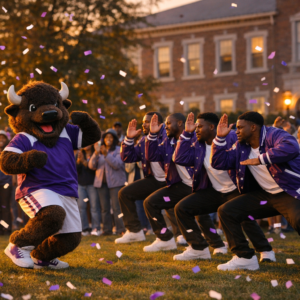
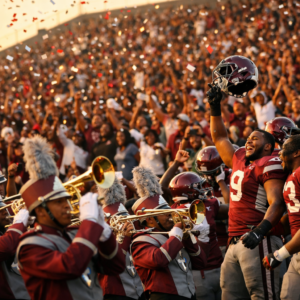
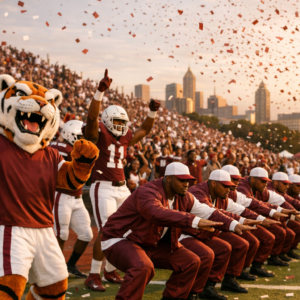
The Yard Turns Black and Gold. Every Yellow Jacket Comes Home.
There is a particular kind of pride that comes from loving a school the world has tried to overlook. West Virginia State University sits on a quiet 100-acre campus in Institute, West Virginia, just outside the state capital of Charleston — and for one long weekend every October, that quiet campus comes alive with black-and-gold pride, brass instruments, tailgate smoke, and generations of alumni walking the same paths that once led a teenage math prodigy named Katherine Johnson to a degree that would eventually help put astronauts into orbit.
That is West Virginia State University Homecoming — a smaller, close-knit HBCU homecoming with an outsized story. This year, the Yellow Jackets come home October 1–4, 2026.
🎟️ Get Homecoming Details & Tickets
What Makes West Virginia State Homecoming Unlike Any Other
West Virginia State isn't the biggest HBCU homecoming on the calendar — and that is exactly the point. Three things make it worth the trip.
First, the university's improbable survival story. Founded in 1891, West Virginia State is one of the original 19 land-grant institutions created for Black students under the second Morrill Act of 1890. It has weathered desegregation, the loss of its federal land-grant status, and decades of demographic change — and it is still standing, still HBCU-designated, still throwing homecoming every fall.
Second, the Katherine Johnson connection. This is the campus where a 14-year-old genius named Katherine Johnson enrolled, graduated summa cum laude at 18, and set off on a path that eventually led to NASA's Space Task Group — the same story told in the film Hidden Figures. Walking this Yard means walking where she walked.
Third, the intimacy of it all. This is a homecoming where you can actually find your old professor in the crowd, where the band director still remembers your section, and where Institute and neighboring Charleston roll out the welcome mat for a weekend that feels like a family reunion as much as a football weekend.
The History: West Virginia State University & Its Legendary Homecoming
West Virginia State University was founded in 1891 as the West Virginia Colored Institute, established as one of the original 19 historically Black land-grant colleges created under the second Morrill Act of 1890. The school opened its doors in May 1892 with just over 40 students on land in Institute, West Virginia — a small unincorporated community that would take its name directly from the school itself.
The university's history took a dramatic turn after the 1954 Brown v. Board of Education decision. As West Virginia's public colleges desegregated, the student body at what was then West Virginia State College shifted rapidly, and in 1957 the institution lost its federal land-grant designation entirely. It took a 12-year campaign led by then-president Hazo W. Carter Jr. to win it back — the land-grant status was restored at the state level in 1991 and fully restored federally in 2001, cementing West Virginia State's place among the nation's HBCU land-grant institutions once again.
Homecoming at West Virginia State grew out of that same resilience — an annual reminder, every October, that the Yellow Jackets are still here, still HBCU, and still worth celebrating.
Why West Virginia State Homecoming Matters
West Virginia State's homecoming carries a weight that goes beyond football and fellowship. This is the alma mater of Katherine Johnson, the NASA mathematician whose hand-calculated trajectories helped send John Glenn into orbit and whose story was introduced to a new generation through the 2016 film Hidden Figures. Johnson enrolled at West Virginia State College after graduating high school at just 14, and completed her degree in mathematics and French in 1937, summa cum laude, at 18 years old — mentored along the way by mathematician W.W. Schieffelin Claytor, who reportedly added entire courses just to keep challenging her. She was a member of Alpha Kappa Alpha sorority on this campus. In 1999, the university named her its Outstanding Alumnus of the Year, and in 2018, it unveiled a life-size statue of her and established a STEM scholarship in her honor — both still on campus today.
It's also worth telling this story honestly, the way any respectful HBCU history should be told: like nearby Bluefield State, West Virginia State's student demographics shifted enormously after desegregation. By 2017, the university's enrollment was reported at roughly 75% white and only about 8% African American — while the institution has retained its federally designated HBCU status throughout. Homecoming, in that light, becomes something even more meaningful: an intentional, annual act of Black alumni, Black faculty, and Black Charleston-area families reclaiming and re-centering the university's founding purpose and legacy, even as its present-day student body looks different than it once did.
That story also fits a broader pattern often missed in conversations about Black America: Appalachia has its own deep Black history, from the coal camps to the salt furnaces of the Kanawha Valley, and West Virginia State's founding as a land-grant HBCU is one of the clearest threads connecting that history to the present. Homecoming weekend is, in part, a chance to honor that thread out loud.
Why You Should Attend West Virginia State Homecoming 2026
You don't need a West Virginia State diploma to feel the pull of this weekend. If you have any interest in HBCU history, in the real-life story behind Hidden Figures, or in Appalachian Black culture — a corner of Black America that rarely gets its due — this is a homecoming worth building a trip around.
Come for the marching band and the black-and-gold tailgate fits. Stay for the campus statue of Katherine Johnson, the small-town warmth of Institute, and a weekend in Charleston that pairs easily with a broader West Virginia getaway.
It's a smaller stage — but the story on it is enormous.
✈️ Plan Your West Virginia State Trip
What to Expect: Day by Day
- Thursday, October 1 — Kickoff & Arrivals: Alumni begin rolling into Institute and Charleston. Campus kicks off homecoming week with welcome events and early alumni gatherings.
- Friday, October 2 — Coronation & Campus Traditions: Homecoming court and coronation festivities, plus student pep rallies and step/stroll showcases that bring the Yard to life the night before the big day.
- Saturday, October 3 — Parade, Tailgate & Football: The signature day. A homecoming parade through campus, an all-day tailgate loaded with black-and-gold fits and Yellow Jacket pride, the marching band battling for bragging rights, and the football game itself.
- Sunday, October 4 — Closing Brunch & Departures: A final gospel brunch or worship service, last walks across the Yard, and goodbyes until next year.
Exact event-by-event scheduling is finalized closer to the date — check the official WVSU events calendar linked above for the confirmed homecoming week program.
Career & Networking Opportunities
West Virginia State's alumni network is smaller than the mega-HBCUs, and that's an advantage if you're looking to actually make a connection instead of getting lost in a crowd of thousands.
- Alumni Association events — the WVSU National Alumni Association typically organizes reunion gatherings and class-year meetups throughout homecoming weekend. Reach out ahead of time to find your class's plans.
- STEM and Katherine Johnson Scholarship connections — given the university's science and math legacy, homecoming week is a natural moment to connect with STEM faculty, scholarship donors, and students carrying that torch forward.
- State capital proximity — with Charleston just minutes away, homecoming weekend is a convenient time to combine alumni networking with visits to West Virginia state government offices, agencies, and Charleston-based employers headquartered near the Capitol complex.
Social Events & Parties
Homecoming weekend brings a steady rhythm of campus and Charleston-area social events — step and stroll showcases, a coronation party for the homecoming court, and Greek-life gatherings from West Virginia State's Divine Nine chapters. Because this is a smaller HBCU market, most of the official action centers on campus itself in Institute, with overflow dinners, after-parties, and lounge nights happening a short drive away in downtown Charleston.
Saturday night, after the football game and tailgate wind down, is when Charleston's downtown restaurants and bars fill with returning alumni looking to keep the reunion energy going. Expect food trucks parked along the tailgate lot throughout the day, and, depending on the year's programming, a gospel concert or homecoming step show as one of the week's ticketed highlights.
Where to Eat: Charleston's Best for West Virginia State Homecoming
- Pies & Pints — 222 Capitol Street in downtown Charleston. Inventive specialty pizzas paired with an outstanding craft beer list, in a casual space that's easy for groups.
- Bluegrass Kitchen — A beloved Elk City neighborhood scratch kitchen serving Southern-inspired comfort food with a local, community-first feel.
- Black Sheep Burrito & Brews — A downtown Charleston favorite for Mexican-inspired burritos and bowls alongside an extensive craft beer selection.
- Tricky Fish — Downtown Charleston seafood with Cajun-leaning flavor, a solid pick for a sit-down homecoming dinner.
- Laury's Restaurant — A long-standing Kanawha City fine-dining institution, ideal for a celebratory homecoming weekend dinner.
- Ellen's Ice Cream — A Capitol Street sweet-treat stop, perfect for capping off a day of tailgating and campus tours.
What to Do in Charleston, WV
- Capitol Street — Charleston's historic downtown shopping and dining corridor, home to galleries, cafes, and Pies & Pints itself.
- West Virginia State Capitol — The gold-domed state Capitol building overlooking the Kanawha River is one of Charleston's most photographed landmarks and a short walk from downtown.
- Clay Center for the Arts & Sciences — A downtown cultural hub featuring the Avampato Discovery Museum, the Walker Theatre, and the ElectricSky Theater planetarium.
- West Virginia State Museum — Housed within the Culture Center downtown, covering the full sweep of West Virginia history.
- Haddad Riverfront Park — Charleston's riverfront gathering space, home to festivals throughout the year and a scenic Kanawha River walk.
- Kanawha State Forest — A 9,300-acre forest just outside the city with hiking trails and camping, a great way to spend a quiet morning before the tailgate ramps up.
Black History & Cultural Sites in Charleston & West Virginia
- Katherine Johnson Statue, West Virginia State University — The life-size statue unveiled on campus in 2018, honoring the NASA mathematician and WVSU alumna whose story was told in Hidden Figures. The most essential stop of the entire weekend.
- West Virginia State University campus itself — Founded in 1891 as the West Virginia Colored Institute, the campus remains one of the most historically significant HBCU land-grant sites in Appalachia.
- East End Historic District, Charleston — A well-preserved Charleston neighborhood with homes dating to the late 19th and early 20th centuries, reflecting the city's growth during its rise as state capital.
- Garnet High School site — The historic former home of one of Charleston's African American high schools, an important marker of the city's segregation-era Black education history.
- West Side neighborhood, Charleston — A historic urban Charleston neighborhood with deep community roots, worth a respectful drive-through for context on the city's Black history.
Recommended Places to Stay
Charleston is a small capital city, so book early — homecoming weekend rooms move fast in a market this size.
Premium
- Charleston Marriott Town Center — Downtown, connected to the Charleston Coliseum & Convention Center. Estimated from $190–$230/night during homecoming weekend.
- Embassy Suites by Hilton Charleston — Downtown suites with complimentary breakfast, a comfortable option for families or groups. Estimated from $170–$210/night.
Mid-Range
- Hampton Inn & Suites Charleston-Civic Center — Reliable, walkable to downtown venues. Estimated from $140–$160/night.
- Holiday Inn Express Charleston — Straightforward comfort close to downtown. Estimated from $125–$145/night.
Budget & Group
- Airbnb in Kanawha City or East End — Full-house rentals convenient to both downtown Charleston and the short drive to Institute, ideal for larger alumni groups splitting costs.
🏨 Find & Compare Charleston, WV Hotels →
BTN Travel Tip: Your West Virginia State Homecoming Itinerary
- Thursday — Arrive & Katherine Johnson Statue: Check in, drive out to campus in Institute for a quiet visit to the Katherine Johnson statue before the crowds arrive.
- Friday — Capitol Street + Coronation: Spend the afternoon on Capitol Street, dinner at Pies & Pints, then head to campus for coronation and pep rally energy.
- Saturday — Parade, Tailgate & Game: Start early with the parade, settle in for the all-day tailgate, catch the football game, then dinner at Laury's or Tricky Fish before the Saturday night social scene downtown.
- Sunday — Brunch & Clay Center: Closing brunch, a stop at the Clay Center or West Virginia State Museum, then depart.
Mark Your Calendar
West Virginia State University Homecoming 2026
📅 October 1–4, 2026
📍 West Virginia State University, 5000 Fairlawn Avenue, Institute, WV 25112
🎟️ Event details and schedule — wvstateu.edu/events
⚠️ Charleston-area hotel rooms are limited during homecoming week — book as early as possible.
How to Stay Connected
- Official Website: wvstateu.edu
- West Virginia State University Instagram: @wvstateu
- Hashtags: #WVStateHomecoming2026 #YellowJacketPride #WVStateU
- BTN Coverage: Follow @myblacktravelnow for homecoming guides and Charleston, WV travel tips