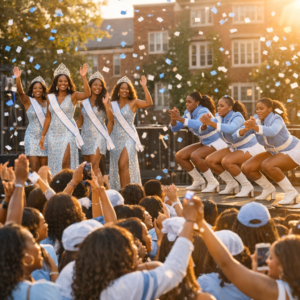
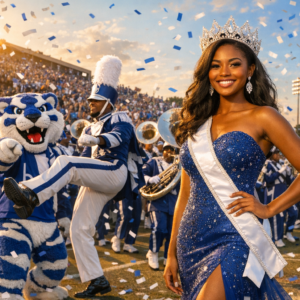
Hawkcoming Is Here. And Every Hawk Knows the Nest Never Forgets.
There is a moment every Hawk describes the same way. You pull onto the rural, tree-lined campus in Princess Anne, Maryland — a small town on the Eastern Shore where the University of Maryland Eastern Shore has stood since 1886 — and the first thing you hear is the drumline. Then you see them: alumni in maroon and gray reuniting across generations, from graduates who walked the same halls in the 1960s to students who just crossed the stage last spring. Step teams are warming up. The smell of grills drifts across the quad. And you feel something that a big city can never quite replicate — the closeness of a small, proud HBCU family that has never stopped showing up for each other.
That is UMES Homecoming — known on campus and across the Eastern Shore as Hawkcoming. For one week every fall, Princess Anne, Maryland belongs to the Hawks. Hawkcoming 2026 is expected to unfold in October, built around a Saturday home football game and capping a week of step shows, a Hawk Walk, comedy, and tailgating (exact 2026 dates were not yet published by the UMES Athletics or Alumni offices at the time of writing — confirm before booking travel).
What Makes UMES Hawkcoming Unlike Any Other
There are dozens of HBCU homecomings across the country. UMES Hawkcoming carves out its own identity for three reasons.
First, the university itself. Founded in 1886, UMES is Maryland's only historically Black land-grant institution and one of just 19 land-grant HBCUs in the nation — a designation that comes with a mission to serve agriculture, natural resources, and applied sciences alongside the liberal arts. It is one of 12 institutions in the University System of Maryland, and it has quietly produced NFL Hall of Famers, Grammy-adjacent musicians, NASA scientists, and Olympic athletes from a campus of barely 1,138 rural acres.
Second, the Eastern Shore itself. This is not a downtown campus in a major metro — it is farmland, waterways, and small towns on a peninsula steeped in some of the most consequential Black history in America. The same soil that produced Harriet Tubman and Frederick Douglass also produced a thriving Black land-grant university. Homecoming here carries that weight, whether or not it's spoken aloud.
Third, the intimacy. UMES Homecoming is smaller than the mega-homecomings at Howard or FAMU, and that is exactly the point. You will run into the same people all week — at the tailgate, at the step show, at the gas station. It is HBCU homecoming the way it felt before it became a national spectacle: personal, warm, and unmistakably a family reunion.
The History: UMES & Its Legendary Hawkcoming
The University of Maryland Eastern Shore opened its doors on September 13, 1886, as the Delaware Conference Academy, founded under the auspices of the Delaware Conference of the Methodist Episcopal Church to educate the formerly enslaved and their descendants at a time when almost no other option existed for Black students on the Delmarva Peninsula. The school was later renamed Princess Anne Academy, then Maryland State College, before becoming the University of Maryland Eastern Shore in 1970.
In 1890, the Second Morrill Act forced states with segregated land-grant systems to fund a parallel institution for Black students, and Maryland's obligation was fulfilled through this campus — making UMES one of the nation's original 1890 land-grant HBCUs, a distinction it shares with schools like Alabama A&M and North Carolina A&T. Today it is part of the 12-institution University System of Maryland, and its athletic teams — the Hawks, led by mascot Harry the Hawk, competing in maroon and gray — carry that history into the Mid-Eastern Athletic Conference.
Hawkcoming grew out of this same lineage: a campus tradition where generations of Hawks — many of whom are the first in their families to attend college — return each fall to a small town that shaped them and a university that, against long odds, has kept its doors open for 140 years.
Why UMES Hawkcoming Matters
UMES Homecoming matters because of where it sits, literally and figuratively. Princess Anne is minutes from the same Eastern Shore counties where Harriet Tubman was born into bondage and later returned, again and again, to lead others north — and where Frederick Douglass was born enslaved in Talbot County before becoming the most photographed American of the 19th century. UMES rose from that same regional soil less than three decades after emancipation, built by and for the descendants of the enslaved people this peninsula once held captive.
Coming back to Hawkcoming is an act of continuity — a reminder that the Eastern Shore is not only a place associated with plantations and the Underground Railroad, but also a place where a Black land-grant university has trained pharmacists, engineers, agricultural scientists, and Hall of Fame athletes for well over a century. For visitors who are not alumni, Hawkcoming is a quiet, powerful entry point into an under-told chapter of Black American history and achievement.
Why You Should Attend UMES Hawkcoming 2026
You don't need a UMES degree to enjoy Hawkcoming, and if you've never experienced a smaller HBCU homecoming, this is a great introduction. The tailgate is unpretentious and welcoming. The step show showcases Divine Nine chapters with the same intensity you'd find at a bigger school. And because Princess Anne sits less than an hour from Ocean City's beaches and boardwalk, Hawkcoming doubles easily as a long weekend getaway — homecoming by day, Atlantic coastline by night.
Bring your maroon and gray. Bring comfortable shoes for the Hawk Walk. And bring an appetite — Eastern Shore homecoming tailgates run on fried chicken, seafood, and Old Bay in equal measure.
What to Expect: Day by Day
- Monday — Kickoff & Coronation events: Homecoming week traditionally opens with student government kickoff events and homecoming court coronation on campus.
- Tuesday — Fashion & Talent Showcase: Student organizations and Greek chapters host a fashion or talent show in the student union.
- Wednesday — Comedy Show: A campus comedy night draws students, alumni, and locals from Princess Anne and Salisbury.
- Thursday — Step Show: The Divine Nine step show is consistently one of the week's most anticipated events, with UMES's National Pan-Hellenic Council chapters headlining.
- Friday — Hawk Walk & Pep Rally: A campus-wide parade and pep rally the night before the big game builds momentum for kickoff.
- Saturday — Tailgate & Football Game: The signature day. Alumni chapters, student groups, and family tailgates fill the lots surrounding the athletic complex hours before kickoff, followed by the Hawks taking the field. Go Hawks.
Note: this is the typical Hawkcoming week structure based on prior years — confirm the finalized 2026 schedule with the UMES Office of Alumni Affairs or Athletics closer to fall.
Career & Networking Opportunities
UMES has built a reputation well beyond its size in fields like pharmacy, agriculture, aviation science, engineering, and marine/environmental science, and Hawkcoming week is when that professional network resurfaces in force.
- Alumni chapter meetups — UMES alumni chapters in Baltimore, D.C., Philadelphia, and across the Mid-Atlantic often plan homecoming-adjacent gatherings; check with the National Alumni Association before you travel.
- School and department receptions — the School of Pharmacy & Health Professions, the School of Agricultural and Natural Sciences, and the School of Business, Technology and Law frequently host homecoming-week receptions for graduates in those fields.
- Campus conversations — with a smaller alumni base than mega-HBCUs, it's genuinely easier to have a real conversation with a UMES grad who's now a working pharmacist, agronomist, engineer, or coach.
Social Events & Parties
Princess Anne itself is a quiet college town, so much of Hawkcoming's after-dark energy migrates about 15 minutes north to Salisbury, the Eastern Shore's largest city, where restaurants, bars, and event spaces host homecoming crowds all week. Some alumni and visitors extend the trip east to Ocean City, roughly 45 minutes away, for a beach-town nightlife capper on Saturday night after the game.
Expect informal step-off afterparties, Greek chapter socials, and Salisbury bar takeovers throughout the week, alongside the official on-campus events.
Where to Eat: The Eastern Shore's Best for Hawkcoming
- The Red Roost (Whitehaven) — A legendary Eastern Shore crab house housed in a converted 1930s chicken barn. All-you-can-eat steamed crabs and a bushel-basket atmosphere that defines Eastern Shore dining.
- Market Street Inn (Salisbury) — A riverside Salisbury institution with a raw bar, crab cakes, and live music — a reliable homecoming-week dinner spot for groups.
- Brew River Restaurant & Bar (Salisbury) — Scenic Wicomico River views, a broad American menu, and a patio that stays lively into the evening.
- Cactus Taverna (Salisbury) — Mediterranean and Greek fare in downtown Salisbury, a good change of pace between tailgates.
- Mojo's Tacos (Salisbury) — Casual, affordable, and popular with the college crowd — a solid late-week lunch stop.
- Fager's Island (Ocean City) — If your Hawkcoming weekend stretches to the coast, this bayside Ocean City staple is known for its sunset views and seafood.
What to Do on Maryland's Eastern Shore
- Assateague Island National Seashore — Home to the famous wild ponies, unspoiled beaches, and dunes, about an hour from campus. A must if you've never seen it.
- Salisbury Zoo — A free, well-regarded small zoo in Salisbury's City Park, a relaxed way to spend a few hours before evening homecoming events.
- Ward Museum of Wildfowl Art — Salisbury's tribute to the Eastern Shore's decoy-carving tradition, and a window into the region's working waterfront culture.
- Ocean City Boardwalk — A 2.25-mile stretch of arcades, fries, and Atlantic views, roughly 45 minutes from Princess Anne — an easy add-on to a Hawkcoming weekend.
- Downtown Salisbury's 3rd Friday — If your visit lines up, Salisbury's monthly evening street festival of music, art, and local vendors is worth a look.
Black History & Cultural Sites on Maryland's Eastern Shore
Few regions in America carry more weight in the story of Black freedom than the Eastern Shore, and Hawkcoming is a natural moment to sit with that history.
- Harriet Tubman Underground Railroad National Historical Park & Visitor Center — Located in Church Creek in Dorchester County, roughly 45 minutes from Princess Anne, this National Park Service site preserves the actual landscapes Tubman moved through as she guided an estimated 70 enslaved people to freedom. The visitor center anchors the broader Harriet Tubman Underground Railroad Byway that winds through the surrounding marshes and farmland.
- Bucktown Village Store — The small Dorchester County store where a teenage Harriet Tubman was struck in the head defending another enslaved person — a formative moment in her life, still standing today.
- Frederick Douglass's birthplace, Talbot County — Douglass was born enslaved near Tuckahoe Creek on Maryland's Eastern Shore before escaping to freedom and becoming one of the most important orators and writers in American history. Sites and markers across Talbot County trace his early life.
- Stanley Institute — Near Cambridge, one of Maryland's oldest surviving one-room schoolhouses built by and for the Black community after emancipation.
- UMES itself — Founded 1886 to educate the descendants of the enslaved people this same region once held in bondage, the campus is, in its own right, a living piece of that history.
Recommended Places to Stay
Princess Anne itself has limited lodging, so most Hawkcoming visitors base themselves in nearby Salisbury or extend to Ocean City for the weekend. Book early — homecoming week and fall beach season can overlap.
Premium
- The Atlantic Hotel (Ocean City) — A historic boardwalk hotel dating to 1875, still family-owned, for travelers extending their Hawkcoming trip to the coast. From roughly $200–$300/night in shoulder season.
- Hyatt Place Salisbury — Modern, reliable, and the closest full-service upscale option to campus. From roughly $180–$220/night.
Mid-Range
- Courtyard by Marriott Salisbury — A dependable Salisbury option close to downtown restaurants. From roughly $140–$170/night.
- Fenwick Inn (Ocean City) — A comfortable oceanfront-adjacent option for a coastal extension of the trip. From roughly $130–$180/night.
Budget & Group
- Days Inn by Wyndham Salisbury — Straightforward and affordable, a short drive from campus. From roughly $90–$110/night.
- Airbnb rentals in Salisbury or Princess Anne — Full-house rentals are often the most practical option for larger alumni groups traveling together for Hawkcoming.
🏨 Find & Compare Eastern Shore Hotels for Hawkcoming →
BTN Travel Tip: Your Hawkcoming Itinerary
- Thursday — Arrive & Step Show: Drive in, check into Salisbury lodging, and catch the campus step show in the evening.
- Friday — Harriet Tubman Byway + Hawk Walk: Spend the morning at the Harriet Tubman Underground Railroad Visitor Center in Church Creek, then head back for the evening Hawk Walk and pep rally.
- Saturday — Tailgate + Football + Salisbury Night Out: Full tailgate day on campus, the football game in the afternoon, then dinner and nightlife in downtown Salisbury.
- Sunday — Assateague or Ocean City + Depart: A relaxed morning at Assateague Island or the Ocean City boardwalk before heading home.
Mark Your Calendar
UMES Homecoming (Hawkcoming) 2026
📅 Expected October 2026 — exact dates TBA; confirm with UMES Athletics/Alumni Affairs
📍 University of Maryland Eastern Shore, 11868 Academic Oval, Princess Anne, MD 21853
🦅 Ticket and schedule info — umeshawks.com
⚠️ Lodging in Salisbury and Ocean City can book up during fall weekends — reserve early.
How to Stay Connected
- Official Website: umes.edu/homecoming
- Athletics: umeshawks.com
- Hashtags: #UMESHawkcoming2026 #UMES #HawkPride #EasternShoreHBCU
- BTN Coverage: Follow @myblacktravelnow for Hawkcoming updates and Eastern Shore travel tips