The Band Is Coming Home. And America Already Knows Their Name.
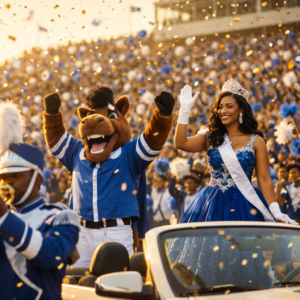
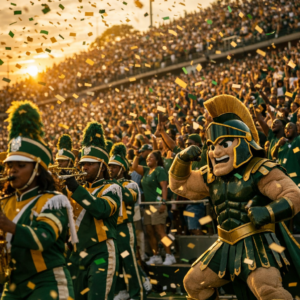
There is a sound that rolls across the small city of Talladega, Alabama every fall, and if you have never heard it in person, no video does it justice. It starts with a snare cadence echoing off the brick of Swayne Hall, then the horns come in, then the whole Great Marching Tornadoes horn line hits the field at once, and 2,000 people who grew up in this town — alongside alumni who flew in from Chicago, Atlanta, D.C., and Los Angeles — lose their minds in unison. This is not a big city. This is not a 40,000-person homecoming. This is something smaller, tighter, and in its own way more remarkable: a band from a college of about 1,300 students that has stood on a stage in front of a sitting President of the United States and a national NFL audience, and then came right back home to Talladega to do it again for the people who raised them.
That is Talladega College Homecoming — Alabama's original HBCU homecoming, hosted by the oldest private historically Black college in the state, built around a Founders Weekend tradition older than most schools' entire existence, and anchored every single year by a marching band whose reputation now precedes the school itself. Talladega College Homecoming 2026 is expected the first week of November, following the college's long-running Founders Weekend pattern — exact dates are set to be confirmed by the college and updated here the moment they drop.
🌪️ Get Talladega Homecoming Updates
What Makes Talladega College Homecoming Unlike Any Other
Every HBCU homecoming has a personality. Talladega's is built on three things you will not find in quite the same combination anywhere else.
First, the Great Marching Tornadoes. In January 2017, Talladega College's band accepted an invitation to perform in the Presidential Inaugural Parade in Washington, D.C. — a decision the small campus debated for weeks and one that put a college most Americans had never heard of on the front page of national news. The band also performed halftime shows for the New Orleans Saints in 2016, 2017, and 2021, carrying the Great Marching Tornadoes' sound from a 50-acre campus in rural Alabama to NFL stadiums in front of tens of thousands of fans. For a program this size, that kind of national stage is almost unheard of — and every homecoming since has carried a little of that same electricity.
Second, the history behind the name. Talladega College is Alabama's oldest private historically Black college, founded in 1867 by William Savery and Thomas Tarrant, two formerly enslaved men who met with fellow freedmen at a Freedmen's Bureau convention and committed to building a school "for the preservation of our liberties." Homecoming here is not separate from that history — it is fused with it, celebrated the same weekend as Founders Day.
Third, the size of the room. Talladega is a town, not a metro area, and the college itself enrolls roughly 1,300 students. That means homecoming here feels like a family reunion where you actually recognize faces — alumni, current students, and the whole town of Talladega collapse into one shared celebration in a way a 40,000-person homecoming simply cannot replicate.
The History: Talladega College & Its Founders Weekend Homecoming
The story of Talladega College begins in November 1865, when William Savery and Thomas Tarrant — both formerly enslaved and living in Talladega — traveled to a Freedmen's Bureau convention in Mobile, Alabama, and joined other freedmen in declaring, "We regard the education of our children and youths as vital to the preservation of our liberties." With the backing of General Wager Swayne of the Freedmen's Bureau and the American Missionary Association, the group built a schoolhouse from salvaged lumber, then purchased a former Baptist Academy building — one originally constructed using enslaved labor before the Civil War — and reopened it in November 1867 as Swayne School with about 140 pupils. That building, now known as Swayne Hall, still stands on campus today and was designated a National Historic Landmark in 1974. It is, quite literally, the founding symbol of the oldest private HBCU in Alabama.
Talladega's homecoming grew directly out of this origin story. Unlike schools where homecoming and founders' celebrations are separate events, Talladega combines them into one weekend: a wreath-laying ceremony honoring the founders at Oak Hill Cemetery, a Founders Day Convocation, the annual Founders' Day Parade through town, and then the full slate of homecoming programming — gospel concerts, battle of the bands, step shows, tailgating, and the football game — all under one banner. Recent years have carried themes like "A Different World. A Different Talladega," reflecting a campus that takes pride in both its past and its present.
Why Talladega College Homecoming Matters
Talladega College Homecoming matters because it represents something HBCU culture does not always get enough credit for: the power of a small institution to punch far above its size. This is not one of the mega-endowment HBCUs with tens of thousands of living alumni and national television deals. It is a modest campus in a small Alabama town that produced a band good enough to perform on a presidential stage and an NFL field — and that achievement belongs not just to the band members, but to the entire community that rallied to fund the trip, cheer them on, and welcome them home.
Coming back to Talladega for homecoming is an act of showing up for a legacy that started with two formerly enslaved men who believed education was the key to freedom, and it continues today every time an alum returns, every time a local business sponsors the parade, and every time a visitor from outside Alabama decides this small campus is worth the drive.
Why You Should Attend Talladega College Homecoming 2026
You do not need a Talladega degree to feel the pull of this weekend. The Great Marching Tornadoes' halftime performance alone is worth the trip — this is a band that has rehearsed for a presidential audience, and it shows in every formation. The Founders' Day Parade winds through the actual streets of Talladega, giving visitors an up-close, small-town parade experience you simply cannot get at a big-city homecoming. The Battle of the Bands and step shows bring HBCU culture at its most joyful and competitive, and the tailgate scene — while more intimate than a major university's — carries the same fashion, food, and family energy that defines every great homecoming Saturday.
If you have only ever experienced homecoming at the largest HBCUs, Talladega offers something different and genuinely worth adding to your HBCU homecoming list: the chance to see where a band this famous actually comes from.
✈️ Plan Your Trip to Talladega
What to Expect: Founders Weekend & Homecoming
- Wreath-Laying Ceremony: A solemn morning tribute at Oak Hill Cemetery honoring founders William Savery and Thomas Tarrant and the generations who built the college.
- Founders Day Convocation: A formal campus ceremony at DeForest Chapel reflecting on the college's history, mission, and academic achievements.
- Gospel Concert: An evening of praise and worship that has become a homecoming week staple, drawing alumni back to campus early in the week.
- Battle of the Bands & Step Show: Mid-week energy peaks with the Great Marching Tornadoes squaring off against visiting bands, followed by a Greek step show showcase.
- Founders' Day Parade: A Saturday morning march through the streets of Talladega, led by the band, with floats, Greek organizations, and community groups.
- Tailgate, Basketball & Football: The full homecoming Saturday — tailgating on campus, basketball games, and the Tornadoes taking the football field with the band providing every ounce of halftime spectacle.
- 1867 Society Scholarship Gala: A formal evening closing out the weekend, raising scholarship funds in honor of the college's founding year.
Career & Networking Opportunities
Talladega's alumni network is small but disproportionately influential, and homecoming week is when that network shows up in force.
- Alumni association events — Talladega National Alumni Association chapters from across the country host receptions and reunions throughout homecoming weekend.
- Notable alumni connections — Talladega's graduates include Dr. William R. Harvey, longtime president of Hampton University, who has publicly championed his alma mater. Homecoming weekend is a genuine opportunity to connect with high-achieving alumni in education, ministry, business, and public service.
- The 1867 Society Scholarship Gala — a formal networking evening that doubles as a fundraiser, drawing donors, faculty, and professionals invested in the college's future.
Social Events & Parties
Talladega's social calendar during homecoming week is smaller in scale than a major metro homecoming, but it makes up for it in warmth and access. The Gospel concert and Battle of the Bands draw big crowds early in the week, while the step show is consistently one of the most talked-about nights on campus. Because Talladega is a compact town, much of the after-hours social scene spills into nearby Birmingham (about 40 minutes away), where alumni groups often book out lounges and event spaces for Friday and Saturday night after-parties following the on-campus programming.
Where to Eat: Talladega & Birmingham's Best for Homecoming
- The Shack BBQ — A local Talladega favorite known for its ribs and smoked meats; a go-to stop before or after any campus event.
- Campbell's BBQ — Talladega barbecue with standout smoked chicken and pulled pork, popular with homecoming crowds all week.
- Back Porch Grill — Talladega's spot for seafood and American comfort food in a relaxed, sit-down setting.
- Cafe Royale — A charming Talladega cafe for a lighter breakfast or lunch between homecoming events.
- Niki's West — A beloved Birmingham meat-and-three institution serving Southern comfort food cafeteria-style; well worth the short drive from Talladega.
- Dreamland BBQ — The legendary Alabama barbecue brand, with a Birmingham location serving the ribs that built its statewide reputation.
What to Do in Talladega & the Surrounding Area
- Talladega College Campus Tour — Walk the grounds of Alabama's oldest private HBCU, including Swayne Hall, the National Historic Landmark building where the college's story began.
- The Amistad Murals at Savery Library — Hale Woodruff's celebrated murals depicting the 1839 Amistad mutiny are one of the great hidden treasures of Black American art, housed right on campus.
- Talladega Superspeedway — A fun local landmark and one of NASCAR's most famous tracks, just minutes from campus, for visitors who want a quintessential Alabama detour between homecoming events.
- Cheaha State Park — Alabama's highest point, roughly 30 minutes from Talladega, offering scenic hiking and views if you want a quiet morning before the homecoming crowds arrive.
- Downtown Birmingham — A short drive away for visitors who want to extend the trip with big-city dining, shopping, and nightlife.
Black History & Cultural Sites in the Talladega & Birmingham Area
- Swayne Hall, Talladega College — Built before the Civil War and repurposed by the college's founders in 1867, this National Historic Landmark is the literal foundation of Black higher education in Alabama.
- The Amistad Murals, Savery Library — Hale Woodruff's murals memorializing the Amistad mutiny remain one of the most significant works of Black American historical art on any HBCU campus.
- Birmingham Civil Rights Institute — A short drive from Talladega, this Smithsonian-affiliated museum chronicles Birmingham's central role in the civil rights movement.
- 16th Street Baptist Church — Site of the tragic 1963 bombing that galvanized the civil rights movement nationally; a solemn and essential stop in Birmingham's Civil Rights District.
- Kelly Ingram Park — Adjacent to the Institute and the church, this park's sculptures memorialize the confrontations of the 1963 Birmingham campaign.
Recommended Places to Stay
Talladega itself has limited hotel inventory, so many visitors base themselves in Birmingham (about 40 minutes away) and drive in for events. Book early — homecoming weekend sells out local rooms fast.
Premium
- Redmont Hotel Birmingham, Curio Collection by Hilton — A historic downtown Birmingham hotel with a rooftop bar. Estimated from $190–$230/night.
- Elyton Hotel, Autograph Collection — Elegant downtown Birmingham property with skyline rooftop views. Estimated from $200–$240/night.
Mid-Range
- Marriott Birmingham — Reliable full-service option near downtown Birmingham. Estimated from $140–$180/night.
- The Westin Birmingham — Centrally located near the convention center. Estimated from $150–$190/night.
Budget & Local
- Holiday Inn Express & Suites Talladega — The most convenient on-the-ground option, minutes from campus, with breakfast included. Estimated from $90–$130/night (rates rise sharply on homecoming and race weekends).
- Super 8 by Wyndham Talladega — A no-frills budget option right in Talladega. Estimated from $65–$95/night.
🏨 Find & Compare Hotels Near Talladega →
BTN Travel Tip: Your Talladega Homecoming Itinerary
- Arrival Day — Settle In & Explore: Check in (Birmingham or Talladega), tour the Talladega College campus and Amistad Murals in the afternoon, catch the Gospel Concert in the evening.
- Midweek — Birmingham Civil Rights District: Spend a morning at the Birmingham Civil Rights Institute, 16th Street Baptist Church, and Kelly Ingram Park, then head back for the Battle of the Bands.
- Step Show Night: Dinner at Campbell's BBQ or The Shack BBQ, then the Greek step show on campus.
- Parade Morning: Get downtown early for the Founders' Day Parade — arrive before the band steps off, the crowds line up fast.
- Homecoming Saturday: Tailgate on campus, catch the football game, watch the Great Marching Tornadoes own halftime, then head to the 1867 Society Scholarship Gala or a Birmingham after-party.
- Closing Day — Cheaha or Departure: A quiet morning hike at Cheaha State Park before heading home, or brunch in Birmingham before your flight.
Mark Your Calendar
Talladega College Homecoming 2026
📅 Expected early November 2026 — exact dates to be officially confirmed by the college
📍 Talladega College, 627 West Battle Street, Talladega, AL 35160
🌪️ Info & updates — talladega.edu/founders-weekend
⚠️ Talladega has limited on-the-ground hotel inventory — book Birmingham or Talladega rooms as soon as dates are announced.
How to Stay Connected
- Official Website: talladega.edu/founders-weekend
- Talladega College on Facebook: The Talladega College
- Hashtags: #TalladegaHomecoming2026 #TalladegaCollege #GreatMarchingTornadoes
- BTN Coverage: Follow @myblacktravelnow for HBCU homecoming guides and Alabama travel tips