Small Campus, Big Spirit: Homecoming Comes Home to the Tigers
There is a particular kind of magic that happens when a small, storied Black college homecoming unfolds a few miles from the biggest football program in America. Tuscaloosa, Alabama is Crimson Tide country — a city that shuts down for Alabama football Saturdays and paints its identity in crimson and white. But every year, on the west side of town, a different story is being told. On a 105-acre campus founded in 1876 to educate the children of the formerly enslaved, Stillman College Tigers alumni come home — not to a stadium of 100,000, but to a Yard-sized community where everybody still knows your name.
That is Stillman College Homecoming. It is intimate where Alabama's homecoming is massive, historic where the university across town is merely famous, and it carries 150 years of HBCU legacy in a city that the rest of America mostly associates with a different shade of crimson.
Because Stillman's homecoming traditionally lands in early February rather than the fall, and the college has not yet published its exact 2027 dates as of this writing, we're flagging the week as “early February 2027 — exact date TBA.” Stillman's most recent homecoming ran February 1–8, 2026, as part of the college's 150th-anniversary celebration, so mark your calendar for the announcement and watch this space for the confirmed dates.
Check Stillman Homecoming 2027 Dates
What Makes Stillman Homecoming Unlike Any Other
Every HBCU has a homecoming. Stillman's stands apart for three reasons.
First, Stillman College itself. Founded in 1876 as the Tuscaloosa Institute by Rev. Charles Allen Stillman, pastor of Tuscaloosa's First Presbyterian Church, the school was created specifically to train Black men for the ministry at a time when almost no Southern institution would educate a Black student at all. It grew into a four-year liberal arts college in 1949, earned full accreditation in 1953, and in 2021 its historic campus was added to the National Register of Historic Places. Few HBCUs carry a founding story this directly tied to the Reconstruction-era fight for Black education.
Second, the contrast of Tuscaloosa itself. This is a city where the University of Alabama's 40,000 students and legendary football program dominate the local identity — and where, just blocks away, Stillman's roughly 900 students keep a different, older Black institution alive. Homecoming week at Stillman is proof that HBCU culture in Tuscaloosa didn't just survive the shadow of Alabama football; it built its own traditions right alongside it.
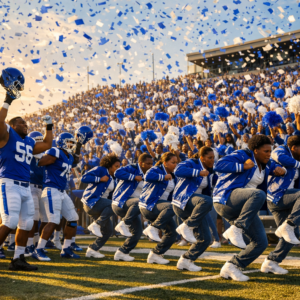
Third, the format. Unlike most HBCU homecomings built around a fall football Saturday, Stillman's is a late-winter, basketball-centered week — complete with a homecoming block party built around a trail-ride theme, Greek and non-Greek step shows, and a Black-out basketball doubleheader that functions as Stillman's version of the big game.
The History: Stillman College & Its Legendary Homecoming
Stillman College's founding is inseparable from the story of Black education in the post-Civil War South. Authorized by the Presbyterian Church in 1875 and opened in 1876 as the Tuscaloosa Institute, the school existed to do what almost no Southern institution would: train Black ministers and educators at a moment when the region was actively closing doors to Black advancement. The college was later renamed for its founder and, over the next century, evolved from a ministry-training institute into a full four-year liberal arts college, admitting its first class of college-level students in 1949 and earning Southern Association of Colleges and Schools accreditation in 1953.
Stillman's history includes a quietly remarkable footnote: in 1966, a young Condoleezza Rice lived on the Stillman campus as the daughter of John Rice, then the college's Dean of Students, years before she became the 66th U.S. Secretary of State. The college also earned a National Innovation in Technology Award from Apple for its early leadership in wireless computing, and in 2004 it cracked U.S. News & World Report's rankings for the first time — a point of pride for a small institution that has never had Howard-, Morehouse-, or Spelman-sized name recognition, but has produced generations of Black educators, ministers, and professionals from Alabama and across the Southeast.
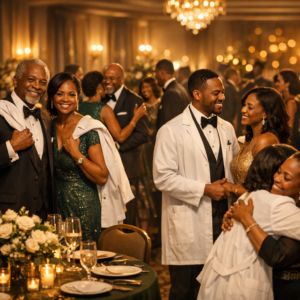
Homecoming grew out of that same close-knit identity. Rather than the sprawling, multi-tens-of-thousands-strong reunions seen at the country's largest HBCUs, Stillman's homecoming has stayed a genuine hometown reunion — alumni classes reuniting by decade, a parade down the same streets generation after generation, and a campus small enough that you really can find everyone you're looking for by Saturday night.
Why Stillman Homecoming Matters
Stillman Homecoming matters because it is a living rebuttal to the idea that Black institutional life in Alabama is secondary to what happens at the University of Alabama. In a city built around Crimson Tide football, Stillman has spent 150 years proving that a small Presbyterian-founded HBCU could educate generations of Black professionals, preserve its own campus as a National Register historic site, and still throw a homecoming that its alumni cross state lines to attend.
For alumni, it's a chance to reconnect with a campus family that, because of Stillman's size, tends to run deeper than at larger schools — professors who remembered your name, classmates who became your lifelong network, a Greek Row that has hosted the same organizations for decades. For visitors, it's a window into an HBCU homecoming that hasn't been scaled up for mass tourism — it's still, at its core, a family reunion.
Why You Should Attend Stillman Homecoming 2027
You do not need a Stillman degree to feel the pull of this week. The trail-ride-themed block party, the Greek and non-Greek step shows, and the Black-out basketball doubleheader are all open to the public, and the parade down MLK Boulevard is a free, joyful piece of Black Tuscaloosa that outsiders rarely see.
Because the crowd is smaller than at the country's marquee HBCU homecomings, this is also one of the more accessible ways to experience real HBCU homecoming culture — the step shows, the fashion, the alumni pride — without needing to plan a year in advance or fight for sold-out tickets.
Come see what 150 years of Black educational resilience looks like in the heart of Alabama football country.
Plan Your Stillman Homecoming Trip
What to Expect: Day by Day
Stillman has not yet released its full 2027 schedule, but based on the confirmed 150th-anniversary 2026 week (February 1–8), homecoming typically follows this rhythm:
- Opening Sunday — Kickoff Prayer & Worship: A chapel service and evening praise-and-worship set the spiritual tone, a nod to the college's Presbyterian founding.
- Monday — Build A Tiger & Greek Row Day Party: Daytime festivities on Greek Row welcome students, alumni, and the public.
- Tuesday — Homecoming Block Party (Trail Ride Theme): Held on the football field, free for students and open to the public for a small fee.
- Wednesday — Non-Greek Step Show: Free and open, plus a ticketed President's Box reception.
- Thursday — Spirit Day, Pep Rally & Black-Out Basketball Doubleheader: The Tigers and Lady Tigers take the court in a nighttime doubleheader, followed by a late silent headphone party.
- Friday — Athletic Hall of Fame Breakfast & Greek Step Show: A ticketed alumni breakfast honors Stillman's athletic legends, followed by the marquee Greek step show that night.
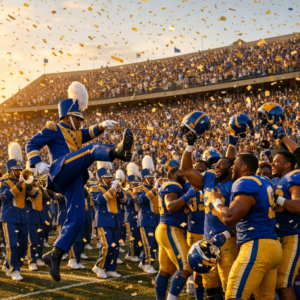
- Saturday — Parade & Homecoming Basketball: A morning parade down MLK Boulevard leads into the homecoming basketball games — Stillman's answer to a football Saturday.
- Closing Sunday — Worship & Farewell Brunch: A closing service and alumni brunch send everyone home until next year.
Career & Networking Opportunities
Stillman's alumni network is smaller than a Howard or a Morehouse, but that has an upside: it's tight, and it's concentrated across Alabama, Georgia, and the broader Southeast in fields like education, ministry, healthcare, and public service. Homecoming week is when that network shows up in person.
- Alumni chapter reunions — milestone classes (25th, 50th reunions and beyond) organize formal gatherings during homecoming week; check with the National Alumni Association before you travel.
- Athletic Hall of Fame Breakfast — a ticketed morning event that doubles as an informal professional and community gathering for alumni across generations.
- Faculty and administration face time — because of Stillman's size, current students and young alumni have real access to faculty, deans, and even the college's leadership during homecoming events, a rarity at larger institutions.
Social Events & Parties
Stillman's homecoming social calendar runs smaller and more contained than a big-city HBCU homecoming, which is part of its charm — nearly everything happens on or immediately around campus rather than scattered across a sprawling metro area.
The Greek and non-Greek step shows are the social centerpieces of the week, drawing the campus's Divine Nine chapters into direct competition. The trail-ride-themed block party brings a distinctly Alabama Black Belt flavor — horses, western wear, and Southern hip-hop — that you won't see at most other HBCU homecomings. A late-night silent headphone party gives students a lower-key after-hours option, while alumni tend to gravitate toward smaller, chapter-organized gatherings around town.
Where to Eat: Tuscaloosa's Best for Stillman Homecoming
- Dreamland Bar-B-Que — The original location of this legendary Alabama rib joint, founded in 1958 in Tuscaloosa's Jerusalem Heights neighborhood by “Big Daddy” John Bishop. Ranked among the South's best BBQ joints by Southern Living — a mandatory homecoming-week stop.
- The Waysider — A Tuscaloosa breakfast institution operating out of a converted house since the early 1950s, known for its biscuits, ham, and old-school Southern breakfast plates.
- City Cafe — A long-running downtown Tuscaloosa meat-and-three, the kind of soul food diner where the daily specials board is as important as the menu.
- Cypress Inn — An upscale Southern restaurant overlooking the Black Warrior River, great for a sit-down alumni dinner with a view.
- Chuck's Fish — An Alabama-based seafood restaurant with a downtown Tuscaloosa location, known for fresh Gulf catch and a polished atmosphere.
- Rama Jama's — A diner literally across the street from Bryant-Denny Stadium, famous for burgers and football memorabilia — worth a visit just to see the other side of Tuscaloosa's sports culture.
What to Do in Tuscaloosa
- Stillman College campus — Walk the 105-acre campus, listed on the National Register of Historic Places in 2021, and see the buildings where 150 years of HBCU history happened.
- Murphy African-American Museum — A downtown Tuscaloosa museum dedicated to local Black history and heritage; an essential stop for homecoming visitors.
- The Bama Theatre — A 1,094-seat 1938 downtown venue hosting concerts, film, and theater — check what's showing during your visit.
- Moundville Archaeological Park — A major Mississippian-culture Native American site about 15 miles south of the city, one of the largest of its kind in the country.
- University of Alabama campus — Yes, it's the other school in town, but a walk past Foster Auditorium and the Malone-Hood Plaza (see below) is a powerful way to understand the fuller picture of Tuscaloosa's civil rights history.
Black History & Cultural Sites in Tuscaloosa
- Malone-Hood Plaza & the Autherine Lucy Clock Tower — Located at Foster Auditorium on the University of Alabama campus, this is the site of Governor George Wallace's 1963 “Stand in the Schoolhouse Door,” where he attempted to block Vivian Malone and James Hood from enrolling. The plaza and clock tower now honor Malone, Hood, and Autherine Lucy, the first Black student admitted to a white public university in Alabama in 1956.
- Murphy African-American Museum — A dedicated repository of Tuscaloosa's Black history, housed in a historic home downtown.
- Bloody Tuesday sites, downtown Tuscaloosa — In June 1964, civil rights marchers protesting segregated courthouse facilities were beaten, tear-gassed, and arrested near the historic courthouse square; 33 people were hospitalized. Local civil rights trail markers commemorate the events.
- Stillman College itself — As a National Register-listed HBCU campus founded in 1876 to educate the formerly enslaved and their descendants, the college is, in its entirety, a Black history site.
Recommended Places to Stay
Tuscaloosa hotel rooms move fast on any big campus weekend — book as early as you can.
Premium
- Hotel Capstone, a DoubleTree by Hilton — An upscale, centrally located downtown Tuscaloosa hotel near both campuses. From roughly $220–$260/night on event weekends.
- Embassy Suites by Hilton Tuscaloosa Downtown Legacy Park — All-suite riverside property with easy access to downtown. From roughly $230–$270/night.
Mid-Range
- Courtyard by Marriott Tuscaloosa — Reliable, well-located mid-range option. From roughly $150–$180/night.
- Hampton Inn Tuscaloosa-University Mall — Comfortable, convenient, and typically a strong value on campus weekends. From roughly $130–$160/night.
Budget & Group
- Days Inn or La Quinta Inn locations along McFarland Boulevard — Budget-friendly chain options a short drive from both campuses. From roughly $90–$120/night.
- Airbnb rentals near downtown Tuscaloosa — Full-house rentals are a smart choice for groups traveling together for homecoming week.
Find & Compare Tuscaloosa Hotels for Stillman Homecoming →
BTN Travel Tip: Your Stillman Homecoming Itinerary
- Day 1 — Arrive & Murphy African-American Museum: Check in, spend the afternoon at the Murphy African-American Museum, catch the evening chapel or worship service.
- Day 2 — Greek Row & Malone-Hood Plaza: Morning visit to Malone-Hood Plaza and Foster Auditorium, afternoon at the Greek Row day party.
- Day 3 — Block Party: Lunch at Dreamland Bar-B-Que, evening at the trail-ride-themed block party.
- Day 4 — Non-Greek Step Show: Explore campus and downtown by day, non-Greek step show at night.
- Day 5 — Pep Rally & Basketball Doubleheader: Spirit day on campus, Black-out doubleheader in the evening.
- Day 6 — Hall of Fame Breakfast & Greek Step Show: Alumni breakfast in the morning, the marquee Greek step show at night.
- Day 7 — Parade & Homecoming Basketball: Catch the MLK Boulevard parade, then the homecoming basketball games. Dinner at Cypress Inn or Chuck's Fish to close out the big day.
- Day 8 — Worship & Farewell Brunch: Closing service, farewell brunch, and departure.
Mark Your Calendar
Stillman College Homecoming 2027
Early February 2027 — exact dates TBA (2026's homecoming ran February 1–8 as part of the college's 150th-anniversary celebration)
Stillman College, 3601 Stillman Blvd, Tuscaloosa, AL 35401
Ticket and event pricing varies by event — stillman.edu/student-life/homecoming
Greek Step Show and the Homecoming Basketball Doubleheader are the events most likely to sell out — watch for the official 2027 schedule announcement.
Get Stillman Homecoming Updates →
How to Stay Connected
- Official Website: stillman.edu
- Stillman College Instagram: @officialstillman
- Hashtags: #StillmanHomecoming #StillmanTigers #Stillman150
- BTN Coverage: Follow @myblacktravelnow for HBCU homecoming guides and Tuscaloosa travel tips