Networking, career growth, and Black financial excellence — everything to know before you go.
Introduction
Some events are about getting away. Others are about leveling up. The NABA (National Association of Black Accountants, Inc.) Annual National Convention & Expo is where Black accountants, finance executives, entrepreneurs, and accounting students come together to build careers, close deals, and expand the pipeline of Black talent in one of the most influential professions in the country. It's the largest gathering of Black accounting and finance professionals in the nation, and for many attendees it's less a conference and more an annual wealth-building accelerator: real job offers, real capital connections, and a room full of people who control budgets, hire teams, and sign checks.
Event at a Glance
- Event: NABA Annual National Convention & Expo ("Insight" series)
- Host Organization: National Association of Black Accountants, Inc. (NABA Inc.)
- Dates: Early June 2027 (exact dates TBA — the 2026 edition ran June 6–9 in Las Vegas; 2027 dates had not yet been announced by NABA as of publish time)
- City & Venue: Las Vegas, Nevada is the most recently confirmed host (Aria Resort & Casino hosted 2025 and 2026); NABA has not yet confirmed the 2027 host city, so treat this as a strong likelihood rather than a lock
- Best For: CPAs, accountants, auditors, tax professionals, CFOs and finance executives, entrepreneurs, corporate recruiters, and accounting/finance students
- Career Fair: Yes — one of the largest career expos for Black accounting and finance talent in the country, with Fortune 500 firms, the Big Four, and government agencies recruiting on-site
- Networking Level: High — partners, CFOs, and hiring managers attend in person and actively recruit
- Dress Code: Business professional to business casual, with a formal look required for the career fair and awards programming
- Recommended Trip Length: 4–5 days
- Registration Types: Student member, professional member (by career level), non-member, executive, corporate/sponsor rate
History and Mission of NABA
NABA was founded in December 1969 in New York City, when nine African American financial leaders — Ronald Benjamin, Earl Biggett, Donald Bristow, Bertram Gibson, Kenneth Drummond, Richard McNamee, Frank Ross, George Wallace, and Michael Winston — came together to address the near-total exclusion of Black professionals from the accounting field. At the time, only about 136 African American CPAs existed among roughly 100,000 CPAs nationwide. More than 55 years later, NABA Inc. represents a community of over 32,000 members and is the leading organization committed to the professional development of Black accounting, finance, and business professionals. Its mission centers on five pillars — Engage, Empower, Educate, Enhance, and Elevate — built to expand access to networks, resources, and opportunities for underserved business leaders. NABA supports members through scholarships, a robust student chapter network at colleges and HBCUs, professional certifications support, and one of the most respected recruiting pipelines into public accounting, corporate finance, and government service.
Why This Convention Matters
This event belongs on your professional calendar because it delivers what few industry conferences can: direct, in-person access to the partners, CFOs, and recruiters who make hiring and promotion decisions across the accounting and finance industry. It's representation in action — a room where Black professionals are the majority, not the exception — in a field where Black CPAs remain significantly underrepresented relative to the overall population. Beyond individual career advancement, NABA's convention is part of a decades-long project of pipeline-building and wealth creation, connecting students and early-career professionals to firms actively trying to diversify their ranks. For anyone building a career in accounting, finance, or entrepreneurship, it is both a professional necessity and a genuine homecoming.
Who Should Attend
NABA draws public accountants and auditors from the Big Four and regional firms; corporate finance professionals, controllers, and CFOs; government and nonprofit finance professionals; tax professionals and financial planners; entrepreneurs and small business owners; accounting and finance students and recent graduates; career changers moving into finance; and corporate recruiters and sponsors actively hiring. Whether you're a sophomore accounting major or a sitting CFO, there's programming built for you.
What to Expect at the Convention
The week is dense: keynote speakers, technical CPE-eligible breakout sessions, panels on the state of the profession, an awards and scholarship gala, a full career fair and exhibitor expo hall, resume and interview prep, dedicated student programming, sponsored receptions, and evening mixers — plus the informal networking that happens in hotel lobbies and casino-floor conversations between all of it. Expect a packed schedule from morning to night, so pace yourself and don't try to attend everything.
Career Fair and Job Opportunities
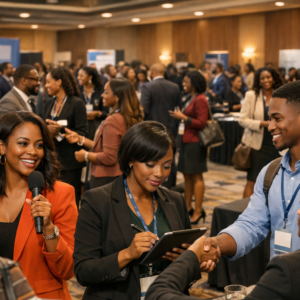
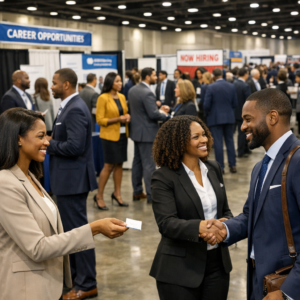
The Career Fair and Expo Hall is the marquee reason many attendees make the trip — it draws Fortune 500 companies, the Big Four accounting firms, regional CPA firms, federal agencies, and financial services giants all hiring and recruiting specifically for Black accounting and finance talent, from internships and entry-level staff roles to experienced-hire and executive positions. Come prepared, not just interested: bring an updated resume in both printed and digital form, use any online interview scheduling tools NABA makes available ahead of the event, and have a tight 30-second introduction ready that leads with your credentials (CPA status, concentration, years of experience). Students should lean into dedicated student programming, resume reviews, and mock interviews; working professionals looking to make a quiet move should network deliberately rather than broadcasting a job search; entrepreneurs should bring a one-page capabilities sheet or business card ready to hand off; and career changers should be ready to explain their transferable analytical and financial skills clearly and confidently.
Networking Strategy
Set two or three goals before you arrive — specific firms, executives, or opportunities you want to connect with — and treat the week as a campaign, not a walk-through. Attend the smaller regional and chapter receptions, not just the headline keynotes; some of the best connections happen in line for coffee or in the seat next to you before a session starts. Talk to peers as seriously as you talk to partners and CFOs — today's peer is tomorrow's hiring manager. Use LinkedIn before the event to see who's attending and after the event to follow up within 48 hours while the conversation is still fresh. Keep short notes on every meaningful conversation, and always be the one who follows up first.
Sessions to Prioritize
With a full slate of sessions on the schedule, prioritize by goal: for career growth, look for sessions on salary negotiation, personal branding, and partnership-track leadership; for staying current, prioritize sessions on AI and automation in accounting, data analytics, and audit technology; for entrepreneurs, look for sessions on business ownership, funding and capital access, and financial consulting; and for craft, prioritize sessions on CPA exam strategy, tax law updates, and forensic accounting. Don't skip sessions on wealth-building and personal financial planning — for an audience of finance professionals, they're consistently some of the most practical in the room.
How to Prepare Before You Go
Register as soon as pricing and dates are confirmed — early-bird pricing has historically saved hundreds of dollars over on-site registration. Book your hotel as soon as you register, since host-hotel blocks fill quickly. Review the full agenda and download the event app once available. Refresh your resume, LinkedIn, and any professional certifications before you land. Prepare your elevator pitch and research a few speakers, firms, or recruiters you specifically want to meet. Plan your outfits by day, schedule any one-on-one meetings in advance, and set three to five concrete goals for what "success" looks like by the time you fly home.
Dress Like You May Meet Your Next Employer
This is a professional financial-services event, not a festival — pack accordingly. Business professional is the safe default for the career fair, technical sessions, and any awards programming; business casual works for some daytime breakouts, but when in doubt, dress up rather than down. Comfortable dress shoes are non-negotiable — convention centers and resort casino floors are enormous and you'll be on your feet all day. Bring a day-to-night option that can transition from a panel to an evening reception, and keep one backup formal outfit ready in case an unexpected interview or invitation comes your way.
Where to Stay in Las Vegas
The host resort — Aria Resort & Casino hosted both 2025 and 2026 — is worth the premium if your budget allows, since so much informal networking happens in hotel lobbies, restaurants, and lounges outside of official programming. If Las Vegas is confirmed again for 2027, nearby CityCenter properties like Vdara and The Cosmopolitan of Las Vegas (both previous NABA host hotels) offer strong alternatives a short walk from the Strip's convention core, often at a lower nightly rate. Book as early as possible; convention-week demand fills host hotel blocks fast, and prices climb the longer you wait, especially with Las Vegas's variable event calendar.
Where to Eat, Meet, and Keep the Conversation Going
Las Vegas's dining scene doubles as a networking opportunity. For an upscale group dinner near the Strip, Carbone at Aria and Bavette's Steakhouse at Park MGM are reliable, reservation-worthy spots for closing a deal over a meal. For a Black-owned dining experience with real Vegas history, Ada's Wine Bar & Bites and rotating Black-owned pop-ups on the Downtown Las Vegas Arts District circuit are worth the rideshare. Mr Chow at Caesars Palace is a longtime favorite for impressing a client or recruiter over dim sum. For a business breakfast or quick morning meeting between sessions, the coffee bars and casual cafés inside Aria and the Cosmopolitan handle high foot traffic well. And for closing out a long conference day, the rooftop lounges along the Strip offer a lower-key setting to keep the conversation going with new contacts.
City Guide: What to Do Between Sessions
Las Vegas offers more than the Strip if you carve out even a half-day. The National Museum of African American History exhibits and the Historic Westside neighborhood — once home to Black-owned nightclubs during segregation when performers like Sammy Davis Jr. couldn't stay on the Strip they performed on — offer a meaningful counterpoint to the resort-corridor version of the city. The Mob Museum and The Neon Museum downtown are easy add-ons for an afternoon off, and the Bellagio Conservatory & Botanical Garden is a free, photogenic break between sessions. Even a couple of hours away from the convention floor turns this trip from a hotel-and-expo-hall visit into a genuine Las Vegas experience.
Budget Guide
Based on recent years' pricing, expect early-bird registration to range from roughly $99–$150 for student members up to $1,200–$1,500 for non-member executives, with professional-member rates typically falling in between; exact 2027 pricing has not been released, so treat these as planning estimates, not confirmed figures. Add hotel (host-resort rates run at a premium but are the most convenient for networking), flights, resort fees and local transportation, meals, at least one business-professional outfit, and a small cushion for printed materials or last-minute expenses. Special ticketed events like the awards gala typically run separately from general registration. Students should look into NABA's scholarship and chapter travel-assistance programs before paying full price, and working professionals should check whether their employer will reimburse registration and travel — many accounting firms do, and some treat NABA attendance as a recruiting or CPE investment. If you're a business owner, keep your receipts and check with a tax professional about deducting convention costs as a business expense.
Your ROI Is in the Follow-Up
Define what success looks like before you go, then chase it deliberately: target sessions and booths tied to your specific goals, aim to make 5–10 meaningful contacts rather than 50 shallow ones, and follow up with every one of them within 48 hours. Apply to roles you discussed at the career fair immediately, not weeks later. Send genuine thank-you notes, share a takeaway or two on LinkedIn to stay visible, and organize your notes and new contacts before you forget the context behind each conversation. The convention doesn't end when you fly home — staying involved with your NABA chapter afterward is often what turns a good week into a career or business turning point.
First-Timer Tips
Don't overpack your schedule — leave room to breathe. Arrive early for popular sessions and the career fair, since lines form fast. Introduce yourself confidently, even to strangers; nearly everyone there is also looking to meet new people. Keep your phone charged (bring a portable battery) and carry either printed resumes or a QR code linking to your LinkedIn or portfolio. Wear comfortable shoes every single day. Ask people what chapter or firm brought them to the convention — it's an easy, genuine icebreaker. Sit near others in sessions rather than isolating in a back corner, and don't be afraid to attend alone; most first-timers do. Follow the event hashtag and official NABA channels for schedule changes, and keep your evenings a little flexible in case a last-minute invitation comes through.
Mark Your Calendar and Start Planning Early
NABA's Annual National Convention & Expo happens every year in early June, and the 2027 edition had not yet been announced with confirmed dates or a host city as of this writing — Las Vegas has hosted three years running (2024, 2025, and 2026), making it a reasonable but unconfirmed bet for 2027. Check nabainc.org/convention directly in the fall and winter months, when NABA typically opens registration with an early-bird window. Registering as soon as it opens saves real money, and booking your hotel the moment you register locks in the best rate. Students should check for NABA scholarship, grant, or travel-assistance programs before paying full registration, and working professionals should start the internal conversation about employer reimbursement early.
Final Takeaway
NABA's convention is more than a conference. It is a professional homecoming, a career and wealth-building accelerator, and a celebration of Black excellence in one of the most powerful professions in the country — and for anyone building a career in accounting or finance, it's as much a cultural experience as it is a career move.
Plan Your NABA Convention Trip
Book HotelsFind FlightsCheck Dates at NABAinc.orgSome links on this page are affiliate links. Black Travel Now may earn a commission at no extra cost to you.
Want more Black professional travel guides, career-focused convention breakdowns, and city-by-city itineraries like this one? Follow and subscribe to Black Travel Now — we're building the one-stop shop for the Black travel experience, one career move at a time.