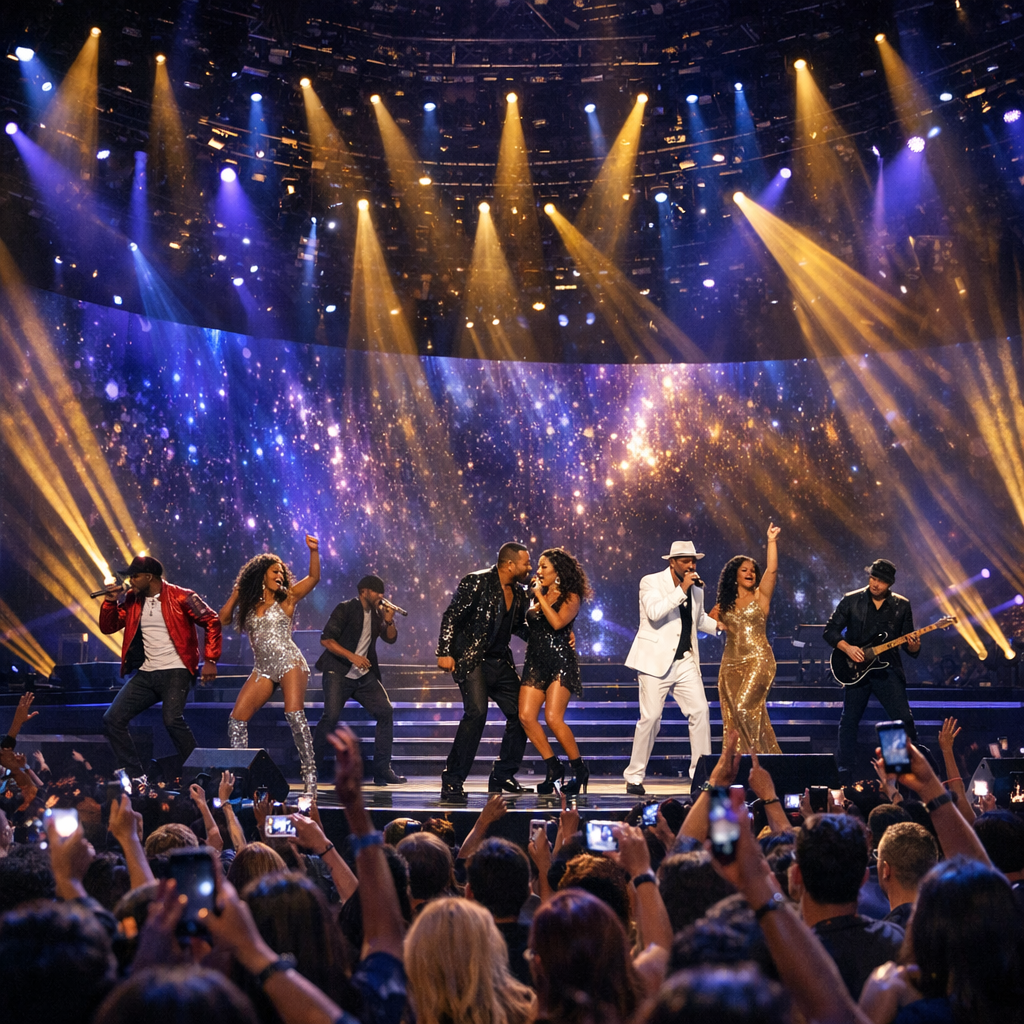
Hip-hop and R&B don't just show up at the VMAs — they run it. Here's everything Black Travel Now readers need to know before Moonman season hits again.
Introduction
Say what you want about award shows losing their shine — the MTV Video Music Awards never fully lost theirs, because the VMAs have always been a hip-hop and R&B stage first and a "music industry award show" second. From Beyoncé's "Formation" ambush at the 2016 show, to Missy Elliott, Lauryn Hill, and OutKast's most iconic performances living forever on YouTube, to a Video of the Year field that's been dominated by Black artists for the better part of two decades, the VMAs have functioned as an annual referendum on who actually moves culture. For Black Travel Now readers, that makes VMAs week less about red-carpet gossip and more about a genuine travel moment: watch parties, industry mixers, pop-up performances, and the kind of citywide energy that turns wherever the show lands into the center of the music world for 72 hours.
Event at a Glance
- Event: MTV Video Music Awards ("The VMAs")
- Host Network: MTV, simulcast on CBS
- Date: Sunday, September 27, 2026 (confirmed by MTV/Paramount's 2026 programming calendar)
- Host City & Venue: Not yet officially announced as of this writing (July 2026) — MTV typically confirms the venue 4–8 weeks out. The last two ceremonies (2024, 2025) were held at UBS Arena in Elmont, NY; prior editions have rotated through Los Angeles (The Kia Forum, Microsoft Theater), Brooklyn (Barclays Center), and Newark (Prudential Center). We'll update this page the moment a venue drops.
- Best For: Hip-hop and R&B fans, music-industry professionals, content creators, pop-culture travelers, viewing-party hosts
- Format: Live televised award show + performances, red carpet, official and unofficial after-parties
- How to Watch: Live on MTV and CBS, streaming on Paramount+
- Recommended Trip Length (if attending in-market): 2–4 days, built around the show and its surrounding industry events
A Quick History of the VMAs
MTV launched the Video Music Awards in 1984, back when the network's entire identity was built on the music video as an art form. What started as a celebration of the video format itself gradually became something bigger: the one night a year where MTV — a network that in its earliest years was notoriously slow to embrace Black artists — handed the mic almost entirely to hip-hop and R&B. The turning point is well documented. By the late 1990s and into the 2000s, the VMAs had become appointment viewing specifically because of Black performers: Lil' Kim's iconic 1999 look, Lauryn Hill and OutKast's history-making wins, Missy Elliott's genre-bending performances, Beyoncé's multiple stage takeovers, and a Moon Person trophy that, more often than not, ends up in the hands of a Black artist for Video of the Year. The show has moved venues more than a dozen times — Radio City Music Hall, Madison Square Garden, the Kia Forum, Barclays Center, Prudential Center, and most recently UBS Arena — but the creative center of gravity has stayed remarkably consistent.
Why the VMAs Matter for Black Culture Specifically
Unlike the Grammys, which Black artists and executives have publicly criticized for decades over Album of the Year snubs and genre-siloing, the VMAs' fan-and-industry-driven voting model has made it a more reliable stage for hip-hop and R&B to be recognized in the top categories, not just the "urban" ones. Video of the Year — the show's marquee category — has gone to Black artists more often than not over the past 20 years, and the performance slots are consistently where the internet's next "did you see that" moment gets made. The VMAs have also historically been where Black artists take real creative risks on live TV: political statements, surprise drops, career-redefining looks. For a culture that has often had to fight for institutional recognition elsewhere, the VMA stage has functioned as one of the few mainstream rooms where Black artistry gets treated as the main event instead of a supporting category.
What to Expect at the 2026 Show
Expect the format that's carried the VMAs for the last several cycles: a stacked performance lineup mixing hip-hop, R&B, and pop's biggest names, a hosted format with comedic bits between segments, tribute or Vanguard Award moments honoring an artist's full body of work, and a red carpet pre-show that's become its own content event on social media. Nominations for the 2026 show typically follow the June–July eligibility window and are usually announced 6–8 weeks before the ceremony, so watch MTV's official channels in late July and August for the nominee list — that's when you'll get a real read on how deep the hip-hop and R&B presence runs in the top categories this cycle. Once the venue is confirmed, expect the usual wave of official pre-parties, label showcases, and influencer-driven pop-up events in the host city the week of the show.
Planning a VMAs Weekend Trip — Where to Stay and Eat
Because the host city hasn't dropped yet, here's how to plan smart no matter where the show lands, using Los Angeles — the VMAs' most frequent West Coast home and the city where a huge share of the industry's pre- and post-show parties happen regardless of where the ceremony itself airs — as the model. If VMAs week lands in LA again, look at staying in West Hollywood or Downtown LA (near L.A. LIVE and Crypto.com Arena) for proximity to industry events; both areas put you within a short rideshare of most official after-parties. For food that matches the trip's energy, Black-owned spots like Post & Beam in Baldwin Hills (modern Southern, great for a group dinner before a show), Alta Adams on West Adams (chef Keith Corbin's California-soul menu, a favorite industry hangout), and Adrift Food Truck or Hotville Chicken for something faster between events are all worth building a night around. If the show instead lands back on the East Coast — as it has the last two years at UBS Arena — the same logic applies to Brooklyn or Manhattan: stay central, book early, and expect hotel prices to spike the week of the show regardless of city. The core planning rule doesn't change: book flights and hotels the moment a city is confirmed, because award-show weeks compress a normal month of demand into about five days.
How to Watch
The 2026 VMAs will air live on MTV and simulcast on CBS, with streaming available on Paramount+ for anyone traveling or without cable access. If you're hosting a watch party instead of chasing a plane ticket, treat it like the culture moment it is: build a menu around the host city's flavor once it's announced, get a group thread going for real-time reactions to the performances, and don't sleep on the red carpet pre-show — that's often where the night's best fashion moments and interviews happen before the cameras even go live for the main show.
BTN Insider Tips
Follow MTV's official VMA channels and Billboard's award-show coverage starting in late July for the venue and nominee announcements — both usually drop before the general public expects them. If you're planning to travel for the show itself, remember that VMA tickets are not sold to the general public the way concert tickets are; the in-room audience is largely industry, label, and promotional invites, so the real travel opportunity is the surrounding week — parties, pop-ups, and the citywide energy — not the ceremony seats themselves. Build flexibility into your plans until the city is locked, and set a calendar alert for early-to-mid August, which is historically when MTV has made its venue announcements in recent cycles.
Mark Your Calendar
The 2026 MTV Video Music Awards air Sunday, September 27, 2026, on MTV and CBS, streaming on Paramount+. The host venue had not been publicly announced as of this writing; Black Travel Now will update this page with confirmed city, venue, and travel details as soon as MTV makes the announcement. In the meantime, the safest bet for travelers is to watch for the nominee announcement (typically late July/early August) and the venue confirmation (typically 4–8 weeks before the show) and be ready to book fast once both are public.
Final Takeaway
The VMAs remain one of the few major award shows where Black artists aren't just nominated — they're consistently the reason people tune in. Whether you're planning a trip to the host city or building the ultimate watch-party playlist at home, VMAs weekend is a real moment on the Black culture calendar, and it's worth planning for even before the venue is locked in.
Plan Your VMAs Weekend Trip
Book HotelsFind FlightsOfficial VMAs Info at MTV.comSome links on this page are affiliate links. Black Travel Now may earn a commission at no extra cost to you.
Want more award-season culture guides, music-travel breakdowns, and city-by-city itineraries like this one? Follow and subscribe to Black Travel Now — we're building the one-stop shop for the Black travel experience, one big night at a time.


