The Hill Is Calling. Every Ram Knows You Come Home.
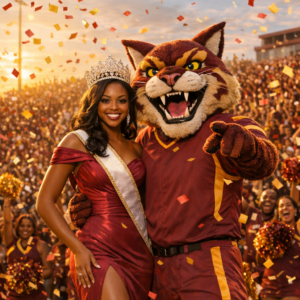
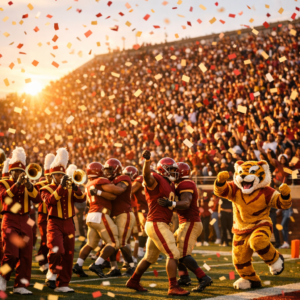
There is a spot on the Huston-Tillotson campus that locals and alumni simply call "the Hill" — Bluebonnet Hill, the rise of land in East Austin where the university's oldest buildings sit looking out over the city. During homecoming week, that hill fills with sound: brass and bass bleeding out of open dorm windows, cousins hollering across the quad when they spot someone they haven't seen since graduation, gold and maroon everywhere you turn. It is a small campus — barely 1,200 students most years — which means homecoming here does not feel like a stadium spectacle swallowing a city. It feels like a family reunion that happens to have a football game attached.
That is Huston-Tillotson University Homecoming — affectionately branded by alumni as the "fRAMily Reunion." It is Austin's only HBCU homecoming, held on the campus of Austin's only Historically Black College or University, and it carries a piece of Black baseball history most visitors never expect to find in the middle of a college quad.
🐏 See the Full Homecoming Schedule
What Makes Huston-Tillotson Homecoming Unlike Any Other
Every HBCU homecoming has its own personality. Huston-Tillotson's comes from three things you cannot manufacture anywhere else.
First, Huston-Tillotson University itself. It is Austin's oldest institution of higher learning and the city's only HBCU — a small, tight-knit campus where students and alumni genuinely know each other's names. That intimacy shows up in homecoming: this is not a 40,000-person mega-event, it's a reunion where the current student body, the returning alumni, and the surrounding East Austin community are all folded into the same week.
Second, Downs Field. Just off HT's campus sits one of the most significant surviving sites in Black baseball history — a ballpark where Satchel Paige, Willie Wells, Smokey Joe Williams, and even a young Willie Mays once played. No other HBCU homecoming in the country hands you a walkable piece of Negro Leagues history as part of the campus itself.
Third, East Austin. The neighborhood surrounding the university was, for decades, the heart of Black Austin — a community built by a 1928 city plan that pushed Black residents east of I-35, and rebuilt by that same community into a cultural home. Homecoming week here is inseparable from the streets, churches, and businesses of East Austin.
The History: Huston-Tillotson University & Its Homecoming Tradition
Huston-Tillotson's roots go back further than most people realize. Tillotson Collegiate and Normal Institute was founded in 1875 by the American Missionary Association to educate the formerly enslaved and their descendants. A year later, in 1876, the Methodist Episcopal Church founded Samuel Huston College nearby, with the same mission. For three-quarters of a century, the two schools educated Black Austinites separately, just blocks apart in East Austin.
On October 24, 1952, the two colleges merged to form Huston-Tillotson College — combining two legacies of Black education into one institution on the same historic ground. The school became Huston-Tillotson University in 2005, and today it remains Austin's only HBCU and one of the oldest institutions of higher education in Texas.
The Rams have produced graduates who reshaped the country in quiet, significant ways: Dr. Herman A. Barnett III, the first African American admitted to the University of Texas Medical School; Juanita Craft, the civil rights organizer and Texas NAACP field secretary; Azie Taylor Morton, who became the 36th Treasurer of the United States and remains the only African American to hold that office; Robert G. Stanton, the first African American Director of the National Park Service; and Ahmed Johnson, the professional wrestler who became a WWE Intercontinental Champion. Homecoming is when this lineage — educators, civil rights leaders, a U.S. Treasurer, a wrestling champion — comes back to the same small hill where it all started.
Why Huston-Tillotson Homecoming Matters
Huston-Tillotson Homecoming matters because it is a living reminder that Black higher education did not need a big campus or a big city to change lives. Two small, underfunded institutions — built by and for people the rest of the country's universities refused to educate — merged, survived, and kept producing doctors, civil servants, and leaders for 150 years, all from the same patch of East Austin ground.
It also matters because it is tied directly to Downs Field, a site that tells a story most American sports history skips over entirely: that Black baseball had its own stadiums, its own stars, and its own devoted crowds, right here in Austin, decades before integration. Coming back for homecoming means honoring both stories at once — the classroom and the ballpark, the degree and the diamond.
Why You Should Attend Huston-Tillotson Homecoming 2027
You do not need to be a Ram to experience this homecoming, and if you have never been to a small-campus HBCU homecoming, HT is one of the most welcoming ways to try one. Because the campus and crowd are more intimate than a Howard or a Grambling, visitors get an unusually close, unfiltered look at HBCU culture — the step show inside Mary E. Branch Gymnasium, the tailgates, the gospel and Greek life energy, all happening close enough that you're never watching from a distance.
Come for the fRAMily Reunion energy. Stay for East Austin — the barbecue, the murals, the history, and a ballpark most of America has never heard of but should.
✈️ Plan Your Trip to HT Homecoming
What to Expect: Day by Day
- Early in the week — Arrival & Alumni Check-In: Returning Rams start rolling into East Austin, checking into hotels and Airbnbs, and reconnecting at informal alumni chapter meetups around the city.
- Midweek — Coronation & Spirit Events: HT's homecoming traditionally crowns its homecoming court and builds spirit with campus-wide pep events, continuing the "fRAMily Reunion" theme alumni have embraced for years.
- Step Show (date TBA, expected early-to-mid February 2027): The traditional centerpiece of HT Homecoming week — typically a 7:00 PM step show at Mary E. Branch Gymnasium, with Divine 9 organizations and campus talent bringing the house down.
- Friday — Alumni & Community Day: Alumni brunches, campus tours, and East Austin community gatherings typically fill the day ahead of the big Saturday.
- Tailgate & Basketball Doubleheader (date TBA, expected February 2027): HT Homecoming's traditional marquee day, typically a women's and men's basketball doubleheader with tailgates spilling across campus grounds beforehand — opponent and tip-off times to be confirmed by the university for 2027.
- Sunday — Closing & Giving: Homecoming week traditionally winds down with worship services, the alumni Giving Challenge, and one last walk around the Hill before everyone heads home.
Note: Homecoming 2027 dates have not yet been announced by Huston-Tillotson University. Step show, tailgate, and basketball-doubleheader details above reflect the university's typical homecoming-week pattern from past years; confirm exact 2027 dates and times via the official HT homecoming page closer to the event.
Career & Networking Opportunities
Because Huston-Tillotson's alumni base is smaller and tighter than a major research university's, homecoming networking here tends to be personal rather than transactional — you are far more likely to end up in a real conversation with a Ram than lost in a crowd.
- HTIAA Austin Chapter events — the Huston-Tillotson Intercollegiate Alumni Association's Austin chapter organizes homecoming-week gatherings; check htaustinalumni.com for the current schedule.
- Vendor & business showcases — HT opens homecoming week to community vendor registration, giving Black-owned Austin businesses a direct line to alumni and campus visitors.
- Small-campus access — with a student body under 1,500, homecoming is one of the rare HBCU weekends where a visiting professional can realistically meet university leadership, faculty, and student leaders in the same afternoon.
Social Events & Parties
HT Homecoming's social scene runs on Mardi Gras energy — the stated aesthetic of past HT Homecoming celebrations — mixed with East Austin's own after-dark culture. Expect campus step shows and gymnasium events to anchor the official calendar, while East Austin's bars and lounges, including historic spots like Victory East and its in-house speakeasy Busy Signal, fill in around the edges with live music and late-night gatherings.
Because the official footprint is smaller than a big-city HBCU homecoming, unofficial after-parties tend to cluster close to campus and along the East 11th and 12th Street corridors — easy to find, easy to walk between.
Where to Eat: Austin's Best for HT Homecoming
- Sam's BBQ — An East Austin institution at 12th and Chicon, blocks from campus, serving Austin's original hot sausage and slow-smoked brisket since the late 1950s. As close to a required stop as homecoming food gets.
- Distant Relatives — A MICHELIN Bib Gourmand barbecue project built around African-inspired, live-fire cooking. One of the most talked-about food experiences in Austin right now.
- Mama'z Soul Kitchen — Classic Southern soul food with a rotating daily menu — the kind of comfort plate homecoming weekend calls for.
- Victory East — A historic East Austin restaurant and bar blending Southern comfort with Caribbean fusion, doubling as a homecoming-night social hub.
- Hoover's Cooking — More than two decades deep in Austin, serving Texas-Southern comfort classics to generations of HT students and families.
- Bird Bird Biscuit — The homecoming-morning move: fried chicken biscuit sandwiches built for a crowd that was out late the night before.
What to Do in Austin
- Texas State Capitol — The largest state capitol building in the country, a short drive from campus and worth the walk-through between homecoming events.
- South Congress Avenue (SoCo) — Austin's most photographed strip, packed with boutiques, murals, and food trucks.
- Lady Bird Lake & the Ann and Roy Butler Hike-and-Bike Trail — A scenic way to clear your head before a night of homecoming events.
- Zilker Park — Austin's green heart, home to Barton Springs Pool for anyone who wants a swim between game and gala.
- Franklin Barbecue — One of the most famous barbecue lines in America; go early if you want in before campus events start.
- Rainey Street Historic District — Austin's bungalow-turned-bar district, a popular after-dark stop for visiting alumni.
Black History & Cultural Sites in Austin
- Downs Field — Located at 2816 East 12th Street, directly tied to HT's campus, this ballpark hosted the Austin Black Senators and Negro Leagues legends including Satchel Paige, Willie Wells, Smokey Joe Williams, and Willie Mays. Designated a Texas Historical Commission landmark in 2015 — the first baseball field in Texas to receive that honor — it now features murals of Negro Leagues legends by artist Reginald Adams. This is a must-see during homecoming week and arguably East Austin's single most important piece of Black sports history.
- George Washington Carver Museum, Cultural and Genealogy Center — Located at 1165 Angelina Street, this is one of the oldest African American museums in Texas, preserving East Austin's Black history through exhibits, archives, and genealogy resources.
- Six Square: Austin's Black Cultural Heritage District — The formally designated six-square-mile district covering historic East Austin, born out of the city's 1928 segregation plan and now a hub for preserving and celebrating Black Austin's history and businesses.
- Huston-Tillotson University's own campus — Austin's oldest institution of higher education, sitting on ground that has hosted Black education continuously since 1875 — a historic site in its own right, homecoming or not.
Recommended Places to Stay
Austin hotel rates spike during major events, and rooms near East Austin and downtown book quickly during homecoming week. Reserve early. Rates below are estimates.
Premium
- Fairmont Austin — Downtown luxury with skyline views, an easy drive to campus. Estimated from $280–$350/night.
- JW Marriott Austin — Downtown's largest luxury property, steps from the Capitol and Congress Avenue. Estimated from $260–$320/night.
Mid-Range
- Hotel Van Zandt (Kimpton) — A stylish, music-driven boutique hotel on Rainey Street, close to downtown nightlife. Estimated from $200–$260/night.
- Canopy by Hilton Austin Downtown — A reliable, modern mid-range option within easy reach of both downtown and East Austin. Estimated from $180–$230/night.
Budget & Group
- Native Hostel — A design-forward hostel in East Austin, walkable to campus and Downs Field, with private and shared room options. Estimated from $60–$120/night.
- Airbnb in East Austin / Six Square district — Full-house rentals in Austin's historic Black neighborhood, ideal for groups and multi-generational homecoming crews.
🏨 Find & Compare Austin Hotels for Homecoming →
BTN Travel Tip: Your HT Homecoming Itinerary
- Day 1 — Arrive & Downs Field: Check in, then walk over to Downs Field before the crowds arrive. Read the historical markers, take in the murals, and picture Satchel Paige on that mound.
- Day 2 — Carver Museum + Sam's BBQ: Morning at the George Washington Carver Museum, lunch at Sam's BBQ two minutes from campus.
- Day 3 — Six Square + Step Show: Spend the afternoon walking the Six Square district, then head to Mary E. Branch Gymnasium for the step show.
- Day 4 — Rest & Explore: South Congress Avenue, Zilker Park, or Lady Bird Lake — recover before the big day.
- Day 5 — Tailgate + Basketball Doubleheader: Tailgate on campus grounds, women's basketball at 1:00 PM, men's at 3:00 PM. Dinner at Victory East or Mama'z Soul Kitchen, then East Austin nightlife.
- Day 6 — Brunch & Depart: Bird Bird Biscuit for the road, one last look at the Hill before you go.
Mark Your Calendar
Huston-Tillotson University Homecoming 2027
📅 Expected: February 2027 — exact dates to be announced by Huston-Tillotson University
📍 Huston-Tillotson University, 900 Chicon St, Austin, TX 78702
🐏 Tickets & schedule — htu.edu/homecoming
⚠️ Huston-Tillotson's homecoming is held in February, not the fall — plan accordingly if you're coming from out of state.
How to Stay Connected
- Official Website: htu.edu/homecoming
- Huston-Tillotson University Instagram: @hustontillotson
- Hashtags: #HTHomecoming2027 #fRAMilyReunion #HTRams
- BTN Coverage: Follow @myblacktravelnow for HBCU homecoming guides and Austin travel tips