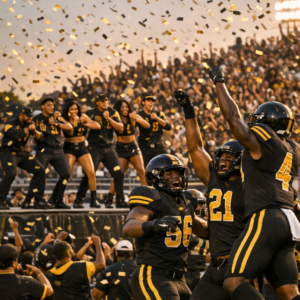
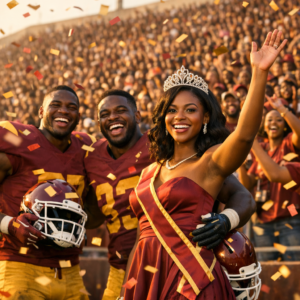
Two Schools. One City. The Biggest Rivalry in Black College Football Takes Over Orlando.
There is a specific sound the Florida Classic makes, and it is unlike anything else in college football. It is not just the roar of 60,000-plus fans in Camping World Stadium. It is not just the crack of pads on the opening kickoff. It is the sound of two marching bands — FAMU's legendary Marching 100 in orange and green, Bethune-Cookman's Marching Wildcats in maroon and gold — trading sixteenth notes across the field at halftime like it's a duel, because it is one. The NCAA gives halftime thirty minutes. The Florida Classic routinely takes forty-five, and nobody in the building is complaining.
You feel it before you see it — in the hotel lobbies filling with orange and green next to maroon and gold, in the tailgate lots outside the stadium turning into a block party by 10 a.m., in the unmistakable sense that an entire city has been taken over for a weekend by two rival schools who have been doing this to each other since 1925.
That is the Florida Classic — the biggest Black college football game in the country, and one of the largest HBCU classics of any kind. And on Saturday, November 21, 2026, the Florida A&M University Rattlers and the Bethune-Cookman University Wildcats meet again at Camping World Stadium in Orlando, in a city built for a weekend like this — because when the last note of the battle of the bands fades, Orlando still has theme parks, restaurants, and a downtown ready to keep the party going.
🏈 Get Your Florida Classic 2026 Tickets
What Makes the Florida Classic Unlike Any Other Classic
HBCU football has no shortage of great rivalry weekends. But three things put the Florida Classic in a category by itself.
First, this is a true rivalry, not a homecoming. This is not one school hosting its own alumni on its own campus. It is two proud in-state HBCUs — FAMU from Tallahassee, Bethune-Cookman from Daytona Beach — meeting on a neutral field with over a century of history between them. FAMU currently leads the all-time series 54-25-1 across more than 80 meetings, and every single one has mattered.
Second, the scale is genuinely massive. Since the Classic moved to Orlando in 1997, it has averaged nearly 62,000 fans a year, with a record crowd of 73,358 in 2003. The event generates an estimated $31 million in economic impact for Central Florida every year it's played. Organizers describe it as America's largest HBCU football and entertainment event, with more than two million fans having attended since its founding in 1978.
Third, Orlando itself is the wild card no other classic has. Most Classic weekends happen in a college town or a mid-size Southern city. The Florida Classic happens in the theme-park capital of the world. Families flying in for the Rattlers-Wildcats rivalry can extend the trip into a full theme-park vacation, alumni can host receptions in a city built for hospitality, and there is genuinely something for every generation of the family to do before and after kickoff.
The History: FAMU, Bethune-Cookman & the Rivalry
The story starts with two institutions built for the same purpose in the same state, a century apart in founding but united in mission. Florida A&M University was founded in 1887 in Tallahassee as the State Normal College for Colored Students, growing into one of the nation's most prominent HBCUs, home of the Rattlers and the world-famous Marching 100. Bethune-Cookman University traces its roots to 1904, when Dr. Mary McLeod Bethune opened a small school for Black girls in Daytona Beach with $1.50 and unshakeable faith — an institution that grew into a university and produced generations of Wildcats.
The two schools first met on the football field in 1925, when FAMU defeated Bethune-Cookman 23-0. What began as a campus rivalry became an annual neutral-site spectacle in 1978, played at Tampa Stadium for nearly two decades before the game moved to Orlando in 1997 — the move that turned a strong regional rivalry into a national HBCU institution. Attendance nearly jumped from an average of 45,000 in the Tampa years to nearly 62,000 in Orlando.
Every Florida Classic carries the weight of that history: FAMU's Rattlers in orange and green, chasing win number 55; Bethune-Cookman's Wildcats in maroon and gold, playing for a program built from nothing by a woman who became one of the most important educators in American history. Neither side has ever treated this as just another game.
Why the Florida Classic Matters
The Florida Classic matters because it is proof, every single November, of what two historically Black institutions can build when they refuse to be small. FAMU and Bethune-Cookman were both founded to do the impossible — educate Black students in a state and an era that tried to deny them the chance — and more than a hundred years later, their rivalry fills a 65,000-seat NFL stadium and anchors one of the largest gatherings of Black excellence in the country.
For alumni of either school, the Classic is a homecoming without a campus — a chance to reconnect with classmates, fraternity brothers, sorority sisters, and band mates from every era. For the two universities, it is one of the single largest fundraising and visibility events of the year, supporting scholarships and academic programs on both campuses. For visitors with no connection to either school, it is simply one of the best weekends in Black American culture — football, music, fashion, and family, all in one place.
Why You Should Attend Florida Classic 2026
You do not need a Rattler or Wildcat in your family to have one of the best weekends of your year at the Florida Classic. The battle of the bands alone is worth the trip — two of the most decorated marching band programs in the country, going note for note, drill for drill, in front of a packed house. Add in the tailgates, the Greek presence, the fashion, and the fact that you're doing all of it in Orlando, and you have a weekend that works for families, alumni, first-timers, and theme-park lovers alike.
Come dressed to represent — orange and green, maroon and gold, or your own HBCU colors are all welcome in the stands and in the parking lots.
✈️ Plan Your Florida Classic Trip
What to Expect: Classic Weekend by Weekend
- Thursday, November 19 — Florida Classic Golf Tournament: The weekend kicks off with the official Florida Classic Golf Tournament, drawing alumni, sponsors, and business leaders from both schools for a day of networking on the course.
- Friday, November 20 — Consortium Kickoff Luncheon: A daytime business and community luncheon that brings together the Florida Classic Consortium — the network of sponsors, alumni chapters, and civic partners who help power the weekend.
- Friday, November 20 — Florida Blue Battle of the Bands: The undercard that some fans say is the real main event. FAMU's Marching 100 and Bethune-Cookman's Marching Wildcats face off in a standalone battle of the bands, separate from the halftime show, drawing its own massive crowd.
- Saturday, November 21 — Tailgates & Kickoff: Lots around Camping World Stadium open early and fill fast with orange-and-green and maroon-and-gold tailgates. Kickoff is set for 3:30 p.m. ET, with the halftime marching band showcase as the emotional centerpiece of the day.
- Saturday night — Postgame parties: Downtown Orlando and the surrounding hotel districts fill with official and unofficial afterparties celebrating whichever side came out on top.
Exact times for satellite events can shift year to year — always confirm the current schedule at floridaclassic.org before you book.
Career & Networking Opportunities
The Florida Classic isn't just a football weekend — it's one of the largest gatherings of Black professionals in Central Florida every fall, and the Consortium Kickoff Luncheon is built specifically around that reality.
- Consortium Kickoff Luncheon — corporate sponsors, university leadership, and community organizations use this event to build partnerships that extend well beyond game day.
- Alumni chapter events — FAMU and Bethune-Cookman alumni chapters from across Florida and beyond host receptions and mixers throughout the weekend; check with your local chapter before you travel.
- Golf Tournament connections — the Thursday golf tournament draws a business-minded crowd and is a low-key but effective place to make new professional connections tied to both universities.
Social Events & Parties
Orlando goes all-in for Classic weekend. Downtown venues, hotel ballrooms, and event spaces near International Drive fill with official and unofficial Florida Classic events from Thursday night through Saturday night. The Battle of the Bands on Friday night is treated by many attendees as its own separate ticketed night out, and Saturday's postgame is when the city's nightlife scene fully absorbs the orange-green-maroon-gold crowd. Because Orlando is a major event destination year-round, expect promoters from Atlanta, Miami, and beyond to bring parties into town for the weekend — book your hotel early, as rooms move fast.
Where to Eat: Orlando's Best for Classic Weekend
- 4 Rivers Smokehouse — A Florida-born barbecue institution with locations across the Orlando area, known for slow-smoked, wet-aged brisket. Founded on a "Barbecue Ministry" community-giving model, it's a hearty, crowd-friendly stop before or after the game.
- Nile Ethiopian Restaurant — On International Drive, Nile has served authentic Ethiopian dishes with house spice blends since 2006. A flavorful change of pace for a group dinner during Classic weekend.
- Prato — A highly-rated contemporary Italian spot in nearby Winter Park, known for wood-fired pizzas, handmade pasta, and a lively communal bar — a good pick for a relaxed pre-game or celebratory dinner.
- The Boathouse — A polished steakhouse-and-seafood spot near downtown Orlando, popular for its waterfront setting and standout shrimp mac and cheese.
- Strong Water Tavern — Caribbean-inflected small plates, rum flights, and dishes like ropa vieja make this a flavorful stop for anyone craving island flavor during the weekend.
- Bosphorous Turkish Cuisine — In the Dr. Phillips dining district, a highly-rated spot for authentic Turkish mezze and grilled specialties if your group wants something different from the usual game-day menu.
What to Do in Orlando
- Camping World Stadium tailgate grounds — The heart of Classic Saturday. Arrive early; the lots around the stadium are a full day of food, music, and reunion energy before kickoff.
- Downtown Orlando — Just minutes from the stadium, downtown's restaurants, bars, and event spaces fill up with Classic weekend energy, especially Friday and Saturday nights.
- Dr. Phillips Center for the Performing Arts — Orlando's premier performing arts venue downtown; worth checking for a show if your trip stretches beyond game day.
- Theme park add-on day — This is the one thing no other Classic city can offer: Walt Disney World and Universal Orlando are both a short drive away. Plenty of families turn Florida Classic weekend into a long theme-park trip, using Thursday or Sunday for the parks and Friday/Saturday for the football and band traditions.
Black History & Cultural Sites in Orlando
- Wells'Built Museum of African American History and Culture — Located at 511 West South Street in Orlando's historic Parramore district, this museum occupies a hotel built in 1926 by Dr. William Monroe Wells to serve Black travelers during segregation, when the "Chitlin' Circuit" performers who played its adjoining South Street Casino had nowhere else to stay. Listed on the National Register of Historic Places since 2000, it now houses African American history and Civil Rights memorabilia and African art. Small admission fee applies.
- Parramore — The historic Black neighborhood adjacent to Camping World Stadium, established in the 1880s and the center of African American life in Orlando through the Jim Crow era. Walking its streets connects you directly to the city's Black history, just steps from where the Classic is played.
- Booker T. Washington Library site — Opened in 1924 in Parramore as the segregation-era library branch serving Orlando's Black residents, led for decades by the city's first Black librarian, Eddie T. Jackson.
- Black Bottom House of Prayer — A century-old Black church in Parramore that has become a focal point of historic preservation efforts in the neighborhood, documented by the Orange County Regional History Center.
- Orange County Regional History Center — Downtown Orlando's history museum, expanding its collection to better reflect Central Florida's full community history, including Parramore's Black heritage.
Recommended Places to Stay
Downtown Orlando hotels near Camping World Stadium fill quickly for Classic weekend. Reserve early.
Premium
- Grand Bohemian Orlando, Autograph Collection — A design-forward luxury hotel in the heart of downtown Orlando with a rooftop pool and skyline views. Estimated from $600+/night during Classic weekend.
- The Alfond Inn — A boutique luxury property in nearby Winter Park with a 9.2 guest rating. Estimated from $440+/night.
Mid-Range
- DoubleTree by Hilton Orlando Downtown — Reliable downtown option near the Kia Center and downtown entertainment district.
- AC Hotel by Marriott Orlando Downtown — Modern rooms close to downtown dining. Estimated from $390+/night.
- Residence Inn by Marriott Orlando Downtown — Suite-style rooms, ideal for groups or extended stays. Estimated from $200+/night.
Budget
- Days Inn by Wyndham Orlando Downtown — Simple, budget-friendly, minutes from downtown. Estimated from $95+/night.
- Baymont by Wyndham Orlando North Millenia — Outdoor pool and free Wi-Fi at a lower price point. Estimated from $90+/night.
🏨 Find & Compare Orlando Hotels for the Florida Classic →
BTN Travel Tip: Your Florida Classic Itinerary
- Thursday — Arrive & Golf: Fly in, check in downtown, and catch (or just watch) the Florida Classic Golf Tournament if business networking is on your agenda.
- Friday — Parramore & Battle of the Bands: Spend the afternoon at the Wells'Built Museum and walking Parramore, then head to the Consortium Kickoff Luncheon or straight into the Florida Blue Battle of the Bands that night.
- Saturday — Tailgate, Kickoff, Afterparty: Arrive at the stadium lots early for the tailgate. Kickoff at 3:30 p.m. ET. Watch the halftime showdown between the Marching 100 and the Marching Wildcats. Stay downtown for the postgame celebration.
- Sunday — Theme Park Day (optional): Extend the trip with a day at Walt Disney World or Universal Orlando before heading home.
Mark Your Calendar
Florida Classic 2026
📅 Saturday, November 21, 2026 — kickoff 3:30 p.m. ET (weekend events begin Thursday, November 19)
📍 Camping World Stadium, One Citrus Bowl Place, Orlando, FL 32805
🏈 Tickets & full schedule — floridaclassic.org
⚠️ Hotels near downtown Orlando sell out for Classic weekend — book as early as possible.
🏈 Get Florida Classic Tickets →
How to Stay Connected
- Official Website: floridaclassic.org
- Hashtags: #FloridaClassic2026 #FAMU #BCU #RattlersVsWildcats
- BTN Coverage: Follow @myblacktravelnow for Florida Classic guides and Orlando travel tips