Jubilee Hall Is Still Standing. And Every Bulldog Comes Home to See It.
There is a moment every Fisk alum describes the same way. You walk back onto the historic quad on Jefferson Street, and the first thing you see is Jubilee Hall — the same red-brick tower that has stood since 1876, the same building your great-great-grandmother's generation might have known, funded not by a wealthy donor but by the voices of Fisk students who sang their way across Europe to save their own school. You stand there for a second, and it hits you: this campus is not just where you got your degree. It is one of the most sacred addresses in Black American history.
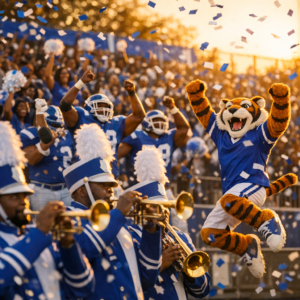
Then the drumline starts. And you remember it's homecoming.
That is Fisk University Homecoming — a week where academic legacy and pure joy collide in Nashville, Tennessee. In 2026, homecoming week is expected to run Sunday, November 1 through Sunday, November 8 (Fisk typically opens the week with the Battle on Jefferson Street basketball rivalry game on the first Sunday or Monday of November — confirm exact dates on Fisk's official homecoming page as they're finalized). For eight days, the Bulldogs come home.
🎟️ Get Fisk Homecoming 2026 Details
What Makes Fisk Homecoming Unlike Any Other
Every HBCU has a homecoming. Fisk's carries a weight most others simply cannot claim — and three things set it apart.
First, Fisk University itself. Founded in 1866, less than a year after the Civil War ended, Fisk is one of the very first institutions of higher learning established in America for the formerly enslaved. Its academic reputation is not folklore — Fisk has produced more Black PhD recipients per capita than almost any university in the country, and its alumni roll includes W.E.B. Du Bois, John Lewis, Diane Nash, James Weldon Johnson, poet Robert Hayden, and painter Aaron Douglas. When Fisk alumni come home, they come from the front lines of American intellectual and civil rights history.
Second, the Fisk Jubilee Singers legacy. In 1871, with the university on the brink of financial collapse, a group of Fisk students — many of them formerly enslaved — set out on a fundraising tour singing the spirituals passed down through slavery. They saved their school. They introduced the spiritual as an American art form to audiences across the U.S. and Europe, performed for Queen Victoria, and used the proceeds to build Jubilee Hall in 1876 — the oldest permanent building constructed for the higher education of African Americans in the United States, now a National Historic Landmark. That story is not distant history at Fisk. It's the reason the campus still stands, and it's part of the emotional current running through every homecoming.
Third, Jefferson Street and Nashville's Black cultural power. Fisk's campus sits on Jefferson Street, once the beating heart of Black Nashville — a strip of clubs and juke joints where a young, still-unknown guitarist named Jimi Hendrix played gigs in the early 1960s before he ever became a star. Homecoming week opens with the Battle on Jefferson Street, the fierce basketball rivalry game between Fisk and neighboring Tennessee State University, a nod to the street's decades of Black music, culture, and competition.
The History: Fisk University & Its Extraordinary Homecoming Legacy
Fisk University opened its doors on January 9, 1866, as the Fisk Free Colored School, founded by the American Missionary Association with support from General Clinton B. Fisk of the Freedmen's Bureau. It was built, quite literally, in former Union Army barracks near what is now Nashville's downtown — a school for people who, less than a year earlier, had been legally forbidden from reading at all.
Within a decade, Fisk had already produced one of the most remarkable stories in American cultural history. Facing closure in 1871, a nine-member student vocal ensemble — the Fisk Jubilee Singers — toured the country and then Europe performing the spirituals born out of slavery. They were nearly booed off stages in an era when Black voices were mocked, not celebrated. Instead, they became international sensations, performed before European royalty, and raised enough money to build Jubilee Hall and secure Fisk's future permanently. In doing so, they preserved and popularized the spiritual as a defining American musical form — the direct ancestor of gospel, blues, and much of American popular music.
From that foundation, Fisk built one of the most academically decorated legacies of any HBCU in the country, producing generations of scholars, artists, and civil rights leaders. Fisk Homecoming grew up around that legacy — a week that has always carried both celebration and reverence, joy and remembrance, in equal measure.
Why Fisk Homecoming Matters
Fisk Homecoming matters because Fisk's survival was never guaranteed — and every homecoming is, at its core, a celebration that the school still exists at all. Coming back to Jubilee Hall is an act of reconnection with the students who sang their way through humiliation and hardship to keep the doors open, and with the generations after them who turned that foundation into a legacy of scholars, artists, and freedom fighters.
For visitors who didn't attend Fisk, homecoming week is a rare, immersive window into one of the deepest wells of Black academic and cultural history in America — wrapped inside a full week of music, food, and celebration in Nashville.
Why You Should Attend Fisk Homecoming 2026
You do not need a Fisk degree to feel the pull of this week. The Battle on Jefferson Street rivalry game, the step shows, the concerts, and the sheer history embedded in every corner of campus make this one of the most meaningful HBCU homecomings to experience even as a first-time visitor.
It's also simply beautiful. Fisk's small, historic campus means homecoming feels intimate compared to the mega-events at larger HBCUs — you're steps from Jubilee Hall, steps from the Chapel, steps from the energy of Jefferson Street. Dress sharp. Bring comfortable shoes. Bring your camera — this campus is a National Historic Landmark district, and it photographs like one.
You will leave changed. That's not an exaggeration.
✈️ Plan Your Fisk Homecoming Trip
What to Expect: Day by Day
- Sunday, November 1 — Battle on Jefferson Street: Homecoming week traditionally opens with the Fisk vs. Tennessee State basketball rivalry game at Gentry Center — one of the most electric tip-offs of the fall semester and a nod to the historic Jefferson Street rivalry between the two schools.
- Monday & Tuesday — Convocation & Welcome Week Events: Coronation, welcome receptions, and campus programming kick off as alumni and families begin arriving in Nashville.
- Wednesday — Founders & Fisk Jubilee Singers Tribute: A programming day honoring Fisk's founding and the Jubilee Singers legacy, often including performances that connect directly to Jubilee Hall's history.
- Thursday — Step Show & Greek Life Showcase: Fisk's Divine 9 chapters and visiting HBCU step teams bring serious energy to campus. Expect a packed house.
- Friday — Concert & Comedy Night: Fisk's homecoming concert and comedy show bring national touring talent to Nashville for one of the week's biggest ticketed nights.
- Saturday — Parade, Tailgate & Football Game: The signature day. The homecoming parade winds through the historic district, the tailgate takes over campus with music and fashion, and the football game caps the afternoon.
- Sunday, November 8 — Closing Brunches & Departure: Alumni chapter brunches, a final walk past Jubilee Hall, and goodbyes until next year.
Career & Networking Opportunities
Fisk's alumni network punches far above its size — small class sizes historically translated into an unusually tight-knit, high-achieving alumni base across medicine, law, academia, the arts, and public service. Homecoming week is one of the best times all year to plug into it.
- Alumni chapter events — Fisk's National Alumni Association chapters across the country host receptions and gatherings throughout homecoming week. Reach out to your local chapter before you travel.
- Departmental and Greek alumni receptions — many academic departments and Divine 9 chapters host their own alumni meetups during the week, often the most valuable rooms for reconnecting professionally.
- Campus conversations — with a campus this small, some of the most useful career conversations of the week happen simply walking between Jubilee Hall and the Chapel with people you haven't seen in years.
Social Events & Parties
Nashville shows up for Fisk Homecoming. Official campus events — the concert, comedy show, and step show — tend to sell out, so buy tickets as soon as they're released. The Battle on Jefferson Street game is also a hot ticket given the TSU rivalry history.
Off campus, promoters bring homecoming parties to venues across Nashville all week, with Jefferson Street venues and downtown spots hosting the bulk of the late-night energy. Saturday night, after the football game and tailgate, is the peak of the week — expect multiple major parties running at once across the city.
Where to Eat: Nashville's Best for Fisk Homecoming
- Swett's — A Nashville soul food institution for generations, known for home-style Southern cooking and legendary hospitality. A must for homecoming week.
- Silver Sands — A family-owned downtown Nashville restaurant serving traditional Southern dishes from recipes passed down three generations.
- Monique's Homestyle Cooking — Open more than two decades and best known for its fried chicken and down-home plates.
- Cal's Country Kitchen — A "meat and three" staple serving classic Nashville comfort food favorites.
- Kingdom Cafe & Grill — Family-run and known locally for a welcoming, soulful dining experience.
- Barr's Music City Soul Food — Cafeteria-style soul food, notably open on Sundays — convenient for homecoming week travelers.
What to Do in Nashville
- Walk the Fisk campus and Jubilee Hall — Even a short self-guided walk past Jubilee Hall, the Fisk Memorial Chapel, and the historic quad is worth the trip on its own. This is a National Historic Landmark district.
- Jefferson Street — Once Nashville's Black Broadway and center of the city's R&B and jazz club scene, Jefferson Street hosted legends for decades and gave a then-unknown Jimi Hendrix some of his earliest gigs. Walk it with intention.
- Broadway & Lower Broadway — Nashville's famous honky-tonk strip is a short trip from campus if you want a taste of Music City's mainstream side between homecoming events.
- Music Row — The historic recording industry district, worth a drive-by for music lovers.
- Ryman Auditorium — The "Mother Church of Country Music" also has deep ties to Black performers, having hosted Louis Armstrong, B.B. King, and other legends over the decades.
Black History & Cultural Sites in Nashville
- Jubilee Hall (Fisk University) — Built in 1876 with funds raised by the Fisk Jubilee Singers' historic tour, this is the oldest permanent building constructed for the higher education of African Americans in the U.S. and a National Historic Landmark. Standing in front of it is standing inside the story of how Fisk survived.
- National Museum of African American Music — Located on Fifth Avenue downtown, NMAAM traces more than 50 genres of music born from the Black American experience through immersive, interactive exhibits. Set aside a half day.
- Jefferson Street Sound Museum — A small, deeply personal museum preserving the instruments, photos, and recordings of Jefferson Street's golden era of Black music and nightlife.
- Belle Meade Historic Site — Its "Journey to Jubilee" program examines the lives of the enslaved people who lived and worked on the plantation, offering essential historical context beyond campus.
- First Baptist Church, Capitol Hill — A key organizing site for Nashville's civil rights sit-in movement, closely tied to Fisk students and alumni including Diane Nash and John Lewis.
Recommended Places to Stay
Nashville hotel rooms move fast during Fisk Homecoming, especially with the city's year-round tourism demand. Book early. (Rates below are estimates for homecoming week and will vary.)
Premium
- JW Marriott Nashville — Downtown high-rise luxury, walkable to Broadway and NMAAM. From an estimated $400+/night during homecoming week.
- The Hermitage Hotel — Nashville's storied Beaux-Arts grand hotel, downtown. From an estimated $450+/night.
Mid-Range
- Renaissance Nashville Hotel — Downtown, convention-district convenient, reliable and central. From an estimated $250/night.
- Home2 Suites by Hilton Nashville Downtown — Suite-style rooms with kitchenettes, good for longer homecoming week stays. From an estimated $220/night.
Budget & Group
- Airbnb in Germantown, Salemtown, or North Nashville — Neighborhoods close to the Fisk/Jefferson Street corridor with full-house rental options, ideal for groups splitting costs.
🏨 Find & Compare Nashville Hotels for Fisk Homecoming →
BTN Travel Tip: Your Fisk Homecoming Itinerary
- Sunday — Arrive & Battle on Jefferson Street: Check in, settle in, then head to Gentry Center for the Fisk vs. TSU rivalry game to kick off the week right.
- Monday — Campus & Jubilee Hall: Walk the historic quad, snap photos at Jubilee Hall, visit the Fisk Memorial Chapel.
- Tuesday — NMAAM: Spend the afternoon at the National Museum of African American Music downtown.
- Wednesday — Jefferson Street Sound Museum + dinner at Swett's: A deep dive into Nashville's Black music history followed by soul food.
- Thursday — Step Show: Evening at the Divine 9 step show — arrive early, seats go fast.
- Friday — Concert Night: Rest up during the day, then head to the homecoming concert.
- Saturday — Parade, Tailgate & Football: The full homecoming day. Parade in the morning, tailgate through the afternoon, football, and a night out after.
- Sunday — Brunch & Depart: Farewell brunch with your chapter or crew before heading home.
Mark Your Calendar
Fisk University Homecoming 2026
📅 Sunday, November 1 – Sunday, November 8, 2026 (estimated based on Fisk's consistent first-week-of-November pattern; confirm final dates on Fisk's official site)
📍 Fisk University, 1000 17th Ave N, Nashville, TN 37208
🎟️ Details and tickets — fisk.edu/event/homecoming-week
⚠️ The step show, concert, and Battle on Jefferson Street tend to sell out. Watch Fisk's official channels for ticket release dates.
🎟️ Get Fisk Homecoming Tickets →
How to Stay Connected
- Official Website: fisk.edu/event/homecoming-week
- Fisk University Instagram: @fiskuniversity
- Hashtags: #FiskHomecoming2026 #FiskUniversity #BattleOnJeffersonStreet #Bulldogs
- BTN Coverage: Follow @myblacktravelnow for homecoming guides and Nashville travel tips