An Island Ruled From Oman for 266 Years
Most travelers who land in Zanzibar know it as a beach destination with a complicated past. Fewer realize that for nearly three centuries, this Indian Ocean archipelago wasn't just influenced by Oman — it was Oman, or at least its seat of imperial power. Omani forces expelled the Portuguese from Zanzibar in 1698, folding the islands into the Omani sphere. In 1832, Sultan Said bin Sultan al-Said made a decision that reshaped East African history: he moved his entire royal court from Muscat to Zanzibar, ruling both Oman and a swath of the East African coast as one realm from Stone Town's palaces. When his empire split between his sons in 1861, Zanzibar became its own sultanate — independently wealthy, independently powerful, and still unmistakably Omani in language, religion, architecture, and rule. That dynasty, the Al Bu Said line, governed Zanzibar until January 1964. This is the story BTN's Spice Island Soul guide to Zanzibar only has room to touch on — the political history of a genuine East African Arab empire, how it ended, and the almost-unknown diaspora it created in the opposite direction: not Africans forced into exile, but an Arab elite forced out of Africa and back to a homeland many had never seen.
Stone Town as the Seat of an Empire
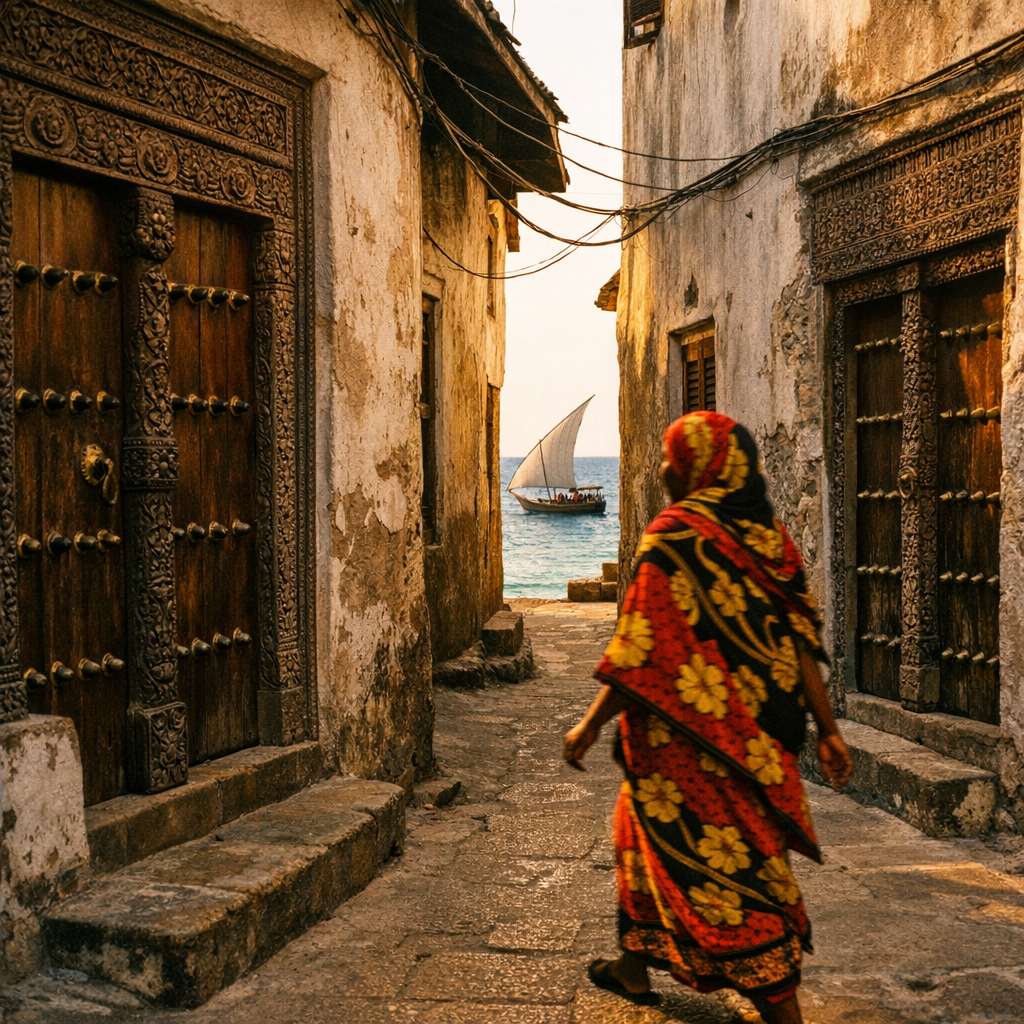
Walk Stone Town's alleys today and you're walking through what was, for over a century, one of the most important power centers on the Indian Ocean rim — the capital of a sultanate that controlled trade routes stretching from the Comoros to the Kenyan coast to the deep interior of the continent. The Beit al-Sahel (the Sultan's "House of the Coast," now the Palace Museum) and the House of Wonders next door weren't just architectural flourishes; they were the literal seat of Omani administrative power in Africa, built to project the wealth of a sultanate that, at its height, was one of the richest states in East Africa. For the deeper dive into Stone Town's UNESCO-listed streets, carved doors, and Forodhani Gardens food scene, BTN's companion Spice Island guide covers that ground thoroughly — this piece exists to unpack the political and human history sitting underneath those beautiful buildings.
The Slave Market: What the Numbers and the Silence Both Tell You
The Sultanate's wealth was not innocent. Zanzibar under Omani rule became the largest slave-trading entrepôt on the East African coast, a market that moved enslaved people from the Great Lakes region and the deep interior toward the Arabian Peninsula, Persia, and the Indian Ocean world — a trade route far less discussed in Western education than the Atlantic crossing, but comparable in scale and brutality. Zanzibar's slave market operated openly in the heart of what is now Stone Town until 1873, when British diplomatic pressure — backed by the threat of naval blockade — finally forced Sultan Barghash to sign a treaty abolishing the trade. It was one of the last openly operating slave markets anywhere in the world to fall.
Construction of Christ Church Cathedral began on the site that same Christmas of 1873, with the altar deliberately positioned over the spot where the market's whipping post once stood. The building was completed and consecrated in 1879. Below it, of the roughly fifteen underground holding chambers that once existed, two remain open to visitors — one where women and children were held, one for men — narrow, low-ceilinged stone rooms where captives were chained by the neck or ankle to await auction. In 1998, Swedish sculptor Clara Sörnäs installed the memorial that now stands in the adjoining pit: five life-sized figures bound together by neck chains, positioned exactly as enslaved people were displayed for sale. BTN's Spice Island guide walks through what it feels like to visit this site in person; what's worth sitting with here is who built the market, who profited from it for over a century and a half, and who was finally forced to answer for it.
January 1964: The Revolution That Ended the Sultanate
Zanzibar's independence from Britain in December 1963 lasted barely a month. The new government kept the sultan on the throne and kept political power concentrated in the hands of the Arab and Omani-descended minority, even though they represented a small fraction of the islands' population. On January 12, 1964, a self-declared "field marshal" named John Okello led a few hundred armed insurgents from the Afro-Shirazi Party in an uprising against the government. Within days, police resistance collapsed, Sultan Jamshid bin Abdullah — the last Sultan of Zanzibar — fled into exile by yacht and then plane, and the 266-year run of Omani rule over Zanzibar was over.
What followed was brutal. Estimates of the dead range from the low thousands into the tens of thousands, with Arab and South Asian residents targeted specifically because of their ethnicity and their association with the old order — a grim historical inversion in which the descendants of a ruling class that had grown wealthy on slavery became targets of ethnic violence themselves. Survivors were stripped of property, land, and government positions. In April 1964, the new Zanzibari republic merged with mainland Tanganyika to form the country known today as Tanzania — the "Tan" in Tanzania literally comes from Tanganyika, the "Zan" from Zanzibar.
The Exodus to Oman — and Muscat's Zanzibari Community Today
Thousands of Zanzibaris of Omani and Arab descent fled in the revolution's aftermath, and for many, "returning" to Oman was returning to a country most had never actually lived in — their families had been in East Africa for generations. The reception was not always warm. Oman's government under Sultan Said bin Taimur initially restricted their entry, wary of outsiders reshaping traditional Omani society, and those who did arrive in the years after 1970 found a country with almost no modern infrastructure — at the time, Oman had only a handful of hospitals and schools nationwide.
Despite that rocky start, the Zanzibari-Omani community — often called "Zinjibaris" — became instrumental in building the modern Omani state, filling desperately needed roles as doctors, engineers, teachers, and civil servants during the reign of Sultan Qaboos. Today, Muscat has a visible, permanent Zanzibari cultural imprint: restaurants serving East African-inflected Omani dishes built around coconut, cassava, and Swahili spicing; family names and neighborhoods tracing directly back to Stone Town; and a community that still, generations later, negotiates a dual identity as both fully Omani and distinctly East African. It's one of the more overlooked diaspora stories in the world — an African-Arab community exiled from Africa, absorbed unevenly into the Arabian Peninsula, and still cooking Zanzibari food in Omani kitchens sixty years later.
Two Zanzibars, One Trip
None of this history should scare you off Zanzibar's beaches — if anything, it should deepen the trip. BTN recommends treating Zanzibar as a destination with two complementary layers. For the spice farms, the Nungwi and Paje beach scene, Forodhani Gardens' night market, and where to eat and stay across the island, read BTN's full Spice Island Soul guide. Use this piece as the historical and political backbone underneath that trip — the "why" behind the doors, the palaces, and the memorial you'll walk past on your way to the beach.
Planning Your Trip: Visas, Timing, and Getting There
US citizens must apply for a Tanzania e-Visa in advance at the official government portal, visa.immigration.go.tz — visa-on-arrival was discontinued in January 2025, so this is no longer optional. A single-entry tourist e-Visa for US passport holders runs around $100 plus a small processing fee, and approval typically arrives by email within 5–10 business days, so apply well before you travel. Zanzibar's Abeid Amani Karume International Airport (ZNZ) is reachable via one-stop connections through Doha, Addis Ababa, or Amsterdam, or via a short domestic hop from Dar es Salaam if you're combining the trip with a mainland safari. June through October is the long dry season and the best window for both beach weather and historic-site walking tours in Stone Town's heat.
BTN Verdict
Zanzibar's beaches are the draw, but its history is the reason this island belongs on any serious diaspora travel list. This was the seat of a 266-year Omani Arab empire built substantially on the East African slave trade, ended by a revolution violent enough to send its ruling class fleeing across an ocean — to a homeland many of them had never set foot in. Walking Stone Town's alleys, standing in the slave market's underground chambers, and understanding what happened in January 1964 gives the carved doors and coral-stone palaces a weight that beach photos alone can't capture. Pair this history with BTN's Spice Island guide for the full Zanzibar picture, book with intention, and go prepared to sit with all of it.
*Affiliate links — BTN may earn a commission at no extra cost to you.