Two Islands, One Territory: A World's-Best Beach and the History Beneath It
Ask a hundred travel editors to name the best beach on Earth, and Grace Bay wins that argument more often than any other stretch of sand alive. Ask most of those same visitors what's on Grand Turk — the low-key capital island just a 40-minute flight away — and you'll get a shrug. That gap is exactly why Turks and Caicos belongs on the Black Travel Now radar twice over. Providenciales gives you the flagship, magazine-cover beach vacation. Grand Turk gives you something Provo's resort strip doesn't: a quiet, sobering look at the salt-and-cotton economy that enslaved Africans were forced to build here, and that still shapes the islands' landscape today.
This guide covers both halves honestly — the luxury and the history — because a complete BTN destination profile doesn't get to skip the parts that are uncomfortable.
Grace Bay Beach: The World's Best, Measured Twice
Grace Bay isn't locally hyped — it's independently, repeatedly crowned. The beach has taken first or second place around a dozen times combined between the World Travel Awards' "World's Leading Beach Destination" category and Tripadvisor's Travelers' Choice "World's Best Beach" award, making it one of the most consistently decorated beaches on the planet across two of the industry's most-watched rankings.
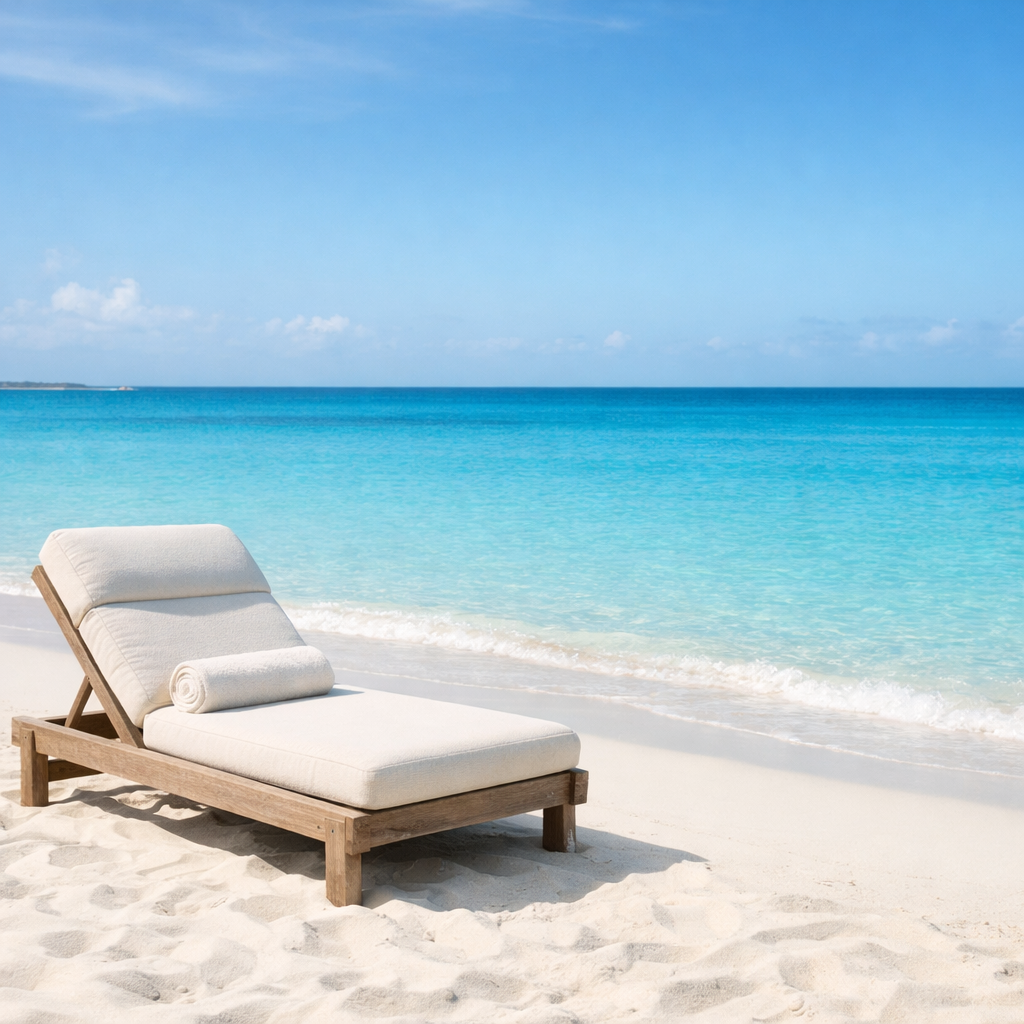
The beach itself explains the streak. Grace Bay proper runs a little over 3 miles along the north shore of Providenciales, with powder-fine white sand and turquoise water so calm it barely qualifies as surf. An offshore barrier reef roughly a mile out absorbs the Atlantic swell before it reaches shore, which is why the water stays flat, clear, and startlingly blue-green even on windy days. Walk the beach in either direction and it links up with Bight Beach and Leeward Beach for close to 7 miles of unbroken, resort-lined shoreline — no rocks, no seaweed drifts, no crowds pushing in on you.
Where to Stay on Grace Bay
- Ritz-Carlton, Turks and Caicos — the newest flagship on the beach (opened 2021), all-suite, oceanfront, and the current benchmark for full-service luxury on Provo.
- Grace Bay Club — adults-only and family wings, a longtime favorite for travelers who want quiet, understated five-star service over big-resort energy.
- Seven Stars Resort & Spa — spacious all-suite condos directly on the beach, popular with families and groups splitting a multi-bedroom unit.
- Club Med Turkoise — the all-inclusive anchor of Grace Bay, adults-focused, built around watersports and a genuinely social atmosphere.
The Plantation Ruins Grace Bay Doesn't Advertise
Most visitors never leave the Grace Bay strip long enough to notice, but Providenciales itself holds a direct physical link to the slavery era: the ruins of Cheshire Hall Plantation, on a hilltop off the Leeward Highway just outside downtown. British Loyalist Thomas Stubbs established the roughly 5,000-acre estate around 1783, growing sea island cotton and sisal, before selling it to his brother Wade Stubbs in 1810. At its peak the plantation was worked by hundreds of enslaved people. Drought and pest infestation eventually broke the operation, and the buildings — the great house foundation, slave quarters, kitchen, cistern, and cotton press — sat abandoned and picked over for the better part of two centuries before the Turks and Caicos National Trust began stabilizing and opening the site to visitors in the 1990s. It's a modest, low-key stop by design; that's part of what makes it worth the twenty-minute detour from the beach.
Grand Turk: Salt, Empire, and the Labor Behind It
The bigger historical story, though, belongs to Grand Turk — the small, sleepy island that gives the whole territory its name, roughly 40 minutes by air from Providenciales. For nearly 300 years, sea salt — not tourism — was the backbone of the Turks and Caicos economy. Bermudian settlers arrived in 1681 and set up the earliest salt "raking" operations, damming shallow coastal flats into salinas (salt ponds) and letting seawater evaporate under the Caribbean sun until it left behind harvestable salt. Demand was serious business: the salt trade fed fisheries and food preservation across the Americas, and George Washington himself is documented as having personally requested salt from these islands for his Continental Army troops during the Revolutionary War.
None of that industry ran on volunteer labor. Loyalist planters who resettled here after the American Revolution brought enslaved Africans with them, and the population of enslaved people and their descendants soon outnumbered European settlers on the islands. They raked salt under brutal sun in shin-deep brine — work that caused severe, well-documented physical damage to skin and eyes — and grew what cotton the thin soil would support. Britain abolished the slave trade in 1807 and slavery itself across its colonies by 1833. In the years immediately after, roughly 189 Africans liberated from illegal slave ships — including the notorious Trouvadore, wrecked off these islands in 1841 — were resettled in Turks and Caicos rather than returned to Africa, adding another layer to the population's ancestry.
Walk along Cockburn Town today and several of those original salinas are still there, including Red Salina bordering the town itself and Hawkes Nest Salina near the cruise center — quiet, shallow, mineral-crusted water bodies that look almost decorative until you know what generations of forced labor they represent. The wild donkeys that still wander Grand Turk's streets are living leftovers of the salt trade too — they were the primary transport for hauling raked salt before mechanization arrived.
Visiting Grand Turk Today
Grand Turk moves at a completely different speed than Provo. Cockburn Town's pastel colonial buildings, the Turks and Caicos National Museum (built partly around the story of the Trouvadore and the liberated Africans it carried), and a handful of unhurried beach bars make it an easy half-day or full-day trip — many visitors arrive via cruise ship, since Grand Turk is a major Caribbean cruise port, while others fly in specifically to slow down after Provo's resort pace. There's no ferry between the two islands — interCaribbean Airways and Caicos Express run the short domestic flight — so budget for a quick hop rather than a boat ride.
Must-Try Food
- Conch salad — raw, diced conch "cooked" in citrus with peppers and onion, sold fresh at beachside shacks across Provo.
- Cracked conch — tenderized, breaded, and fried; the territory's signature comfort food.
- Turks Head beer — the local lager, named for the territory's iconic Turk's head cactus.
- Johnny cake — dense, slightly sweet fried bread served at nearly every local breakfast.
- Grouper and mahi-mahi — grilled dockside, whatever came in that morning.
Getting There & Getting Around
Providenciales International Airport (PLS) has direct flights from Miami, New York, Charlotte, Atlanta, Boston, and several other US gateways, plus Toronto and London. Grand Turk's JAGS McCartney International Airport (GDT) connects mainly through Provo and via cruise arrivals. On the ground, rent a car on Providenciales — there's no public transit, and a vehicle makes it easy to combine Grace Bay with Cheshire Hall and the western beaches. On Grand Turk, golf carts, scooters, and taxis cover the compact island easily; a car isn't necessary for a short visit.
✈️ Find Turks and Caicos Flights →Best Time to Visit
December through April is peak season — dry, breezy, and busiest on Grace Bay, with the highest room rates of the year. May, June, and November offer a strong middle ground: still warm, noticeably fewer crowds, better hotel pricing. Hurricane season runs June through November, peaking August through October, so travel insurance is worth the cost if you're booking during those months.
Entry Requirements for US Citizens
Turks and Caicos is a British Overseas Territory, and US citizens do not need a visa for tourist stays under 90 days. A valid passport is required for entry and exit — most guidance recommends at least three months of validity remaining and two blank pages for entry stamps. No vaccination requirements are currently in place for US travelers. Rules can shift, so confirm current entry requirements before you book.
Budget Guide
Budget: $150-250/day — guesthouse or condo off the beach, local conch shacks, rental car split among a group.
Mid-range: $350-550/day — Grace Bay condo or mid-tier resort, restaurant dining, day trip to Grand Turk.
Luxury: $700-1,500+/day — Ritz-Carlton or Grace Bay Club oceanfront suite, private charters, fine dining.
Turks and Caicos runs expensive by Caribbean standards — most goods are imported, and Grace Bay's resort concentration keeps room rates high nearly year-round. It's genuinely one of the pricier islands in the region, not a hidden budget gem.
BTN Insider Tips
Pair the two islands deliberately. Spend the bulk of your trip on Grace Bay, then carve out one full day for a Grand Turk flight — it reframes the whole trip from "pretty beach vacation" to a fuller picture of the territory's history.
Visit Cheshire Hall in the morning before the heat sets in; there's minimal shade on the site.
The US dollar is the official currency — no exchange needed, no currency math.
English is the official language throughout the territory.
Book Grace Bay resorts early for December–April travel; the best oceanfront rooms sell out months ahead.
Is Turks and Caicos Safe for Black Travelers?
Turks and Caicos is a majority-Black nation — most of the local population descends from the enslaved Africans and liberated Trouvadore survivors who built the territory's salt and cotton economy — and it's consistently rated among the safer, more welcoming Caribbean destinations for Black travelers, with low visible tourist crime on Provo's resort corridor. Standard precautions apply: secure valuables, use licensed taxis or rental cars rather than hitchhiking, and be more cautious after dark away from the main resort areas, particularly outside Grace Bay.
Book Your Turks and Caicos Trip
Grace Bay will give you the beach everyone's told you about. Grand Turk will give you the history nobody put on the postcard. Book both.
✈️ Book Your Turks and Caicos Trip Now →*Affiliate links — BTN may earn a commission at no extra cost to you.