The Greatest Show on Earth Was Born as an Act of Defiance
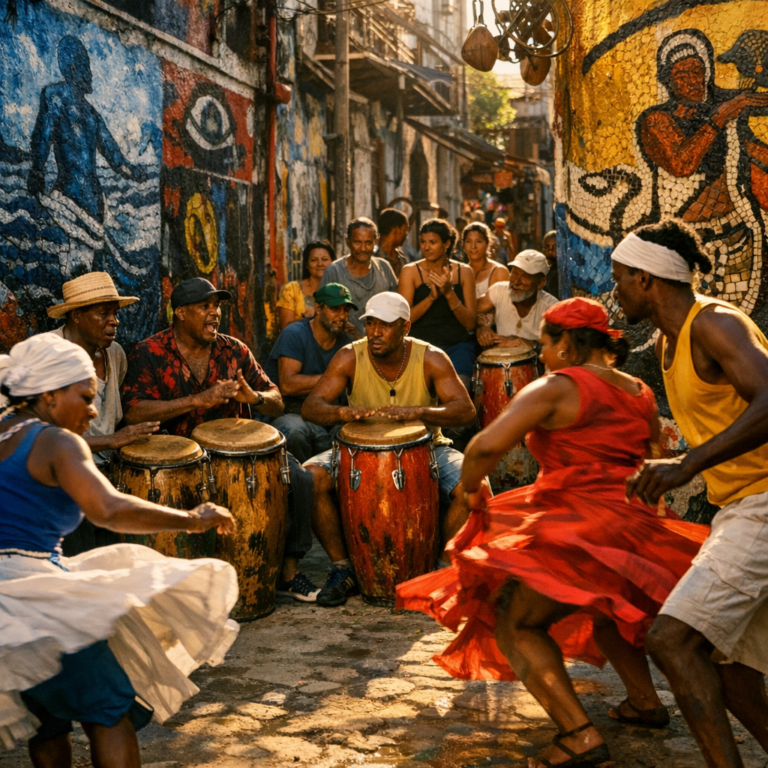
Every year in the days before Ash Wednesday, Port of Spain becomes the loudest, most joyful city on the planet. Steelpan orchestras rehearse until 2AM. Mas bands unveil costumes with thousands of hand-sewn feathers and crystals. Soca anthems blast from truck-mounted speaker walls the size of houses. And in the pitch-dark hours before sunrise on Carnival Monday, tens of thousands of people cover themselves in mud, paint, and oil and dance through the streets in a ritual called J'ouvert — "daybreak" in French Creole.
It looks, from the outside, like pure revelry. It is that. But Trinidad Carnival did not start as a party the colonizers threw for the enjoyment of the enslaved. It started as their party — and when the British colonial government tried to shut it down, formerly enslaved Afro-Trinidadians fought in the streets to keep it. The mud on your skin at J'ouvert, the steel drum under your feet at Panorama, the feathers on a masquerader's back on Carnival Tuesday — all of it descends from that fight. This is a festival where the history isn't a footnote. It's the whole point.
Why Black Travelers Choose Trinidad Carnival
There is no bigger flagship event in Black Caribbean culture. Trinidad Carnival is the mothership — the festival that Notting Hill Carnival, Toronto's Caribana, Brooklyn's Labor Day Carnival, Miami Carnival, and dozens of other diaspora carnivals around the world were built to echo. If you love soca, if you love mas, if you love steelpan, you are, at some point, going to want to experience the original.
It is also simply one of the most electric, all-consuming cultural experiences a traveler can have. For roughly two weeks, an entire nation organizes itself around music, costume, and collective release. Fetes (parties) run nightly. Panorama, the steelpan competition, draws tens of thousands to Queen's Park Savannah. And Carnival Monday and Tuesday turn Port of Spain's streets into a two-day, nonstop, nation-wide dance.
The Canboulay Riots: How Carnival Survived a Colonial Ban
To understand why Trinidad Carnival matters so much, you have to go back to Canboulay (from the French cannes brûlées, "burnt cane"). After emancipation in 1834, freed Afro-Trinidadians built their own Carnival traditions around torchlight processions, drumming, and stick-fighting — partly drawn from harvest and emancipation-day observances, and partly a direct reclaiming of public space that slavery had denied them.
British colonial authorities saw this growing Black cultural presence as a threat to public order. In 1881, police under Captain Arthur Baker moved to suppress the Canboulay procession in Port of Spain, enforcing an 1868 ordinance against it. What followed was a violent clash between police and revelers — the Canboulay Riots. Afro-Trinidadians did not back down quietly, and the colonial government's crackdown backfired, triggering further unrest in San Fernando and Princes Town by 1884, after which the Peace Preservation Act banned public torch-carrying, drumming, horn-blowing, and stick-fighting outright.
The drums were banned. The people did not stop making music — they adapted, and that adaptation is directly responsible for the sound of Carnival today. Every year, the Canboulay Riots Re-enactment is staged on the Friday before Carnival at Piccadilly Greens in Port of Spain, with actors, drummers, and stick-fighters recreating the 1881 clash at dawn. It is one of the most powerful, least-touristed events of the entire Carnival calendar, and it belongs on your itinerary.
J'ouvert: The Pre-Dawn Ritual That Still Carries the Fire
J'ouvert is Carnival's opening ceremony and its rawest expression. Officially, it kicks off around 4AM on Carnival Monday morning — though on the ground, bands and revelers are often moving well before official start times, which is where the "2AM" lore many veteran J'ouvert-goers swear by comes from. Either way: you are getting up in the middle of the night for this.
Participants ("j'ouvert-ists") cover themselves in mud, paint, oil, chocolate, or powder and move through the streets behind trucks blasting soca and chutney-soca until the sun comes up. There are no elaborate costumes here — J'ouvert is the deliberate opposite of Carnival Tuesday's polish. It's chaotic, communal, and unpretentious by design, and many Trinidadians consider it the truest expression of Carnival's original defiant spirit: reclaiming the streets, at the hour colonial curfews once forbade it, covered in the same soot and mud that 19th-century cane-burners once carried.
Steelpan: The Instrument Afro-Trinidadians Built From Oil Drums
When drumming was banned after the Canboulay Riots, Afro-Trinidadian musicians in neighborhoods like Belmont and Laventille didn't stop making rhythm — they rebuilt it from whatever was on hand. First came tamboo bamboo bands in the 1890s: stamping tubes of varying length and pitch, cut from bamboo, used to replace the banned drums. By the 1930s, tamboo bamboo gave way to metal — biscuit tins, paint cans, brake drums, dustbin lids — as musicians discovered that hammered and dented metal surfaces could be tuned to distinct notes.
The breakthrough came in the 1940s, when 55-gallon oil drums — left behind in huge numbers by a US military base in Trinidad during World War II — turned out to be the ideal canvas. Pan-makers discovered they could section and indent a drum's surface to produce a full chromatic range of notes. The steelpan was born: one of the very few acoustic instruments invented in the entire 20th century, and it came directly out of an Afro-Trinidadian community that had been told its music wasn't allowed. By 1945, steelpan bands played at Trinidad's VE Day celebrations, and pan has never stopped evolving since. Today, Panorama — the national steelband competition held the Saturday before Carnival at Queen's Park Savannah — draws dozens of orchestras, some with well over 100 players, competing for national pride as much as prize money. Go. It is unlike any concert you've attended.
Mas Bands and Carnival Tuesday: The Costumes, the Music, the Road
If J'ouvert is Carnival's raw opening statement, Carnival Monday and Tuesday are its full-color finale. "Mas" (from masquerade) bands are large costumed groups — sometimes thousands of members — who spend the year designing and building elaborate feathered, beaded, and bejeweled costumes, then "play mas" by parading and dancing through Port of Spain behind giant sound trucks blasting the year's biggest soca hits. Bands compete for titles like Band of the Year, and masqueraders choose sections within a band based on costume design, price, and crew.
Joining a mas band as a visitor is very achievable and is how most first-time Carnival travelers experience the road: you register (often called "paying your mas") months in advance, which includes your costume, and on the day you simply show up, put it on, and dance for hours behind the truck. Popular bands sell out sections by the previous Carnival's end, which is exactly why this is a plan-a-year-ahead festival.
Trinidad Carnival 2027: Dates and Booking Timeline
Trinidad Carnival 2027 is confirmed for Carnival Monday, February 8, 2027 and Carnival Tuesday, February 9, 2027, with J'ouvert beginning in the pre-dawn hours of Carnival Monday (officially around 4AM). The Panorama steelpan finals fall on the Saturday before Carnival, and the Canboulay Riots Re-enactment is staged the Friday before Carnival at Piccadilly Greens. Fete season effectively runs from New Year's through Ash Wednesday.
Because flights, hotels, and mas band costume sections all sell out, the realistic booking window is 9-12 months ahead — which means if you want 2027, the time to start planning is now. Confirm exact fete and Panorama sub-dates closer to the season, as secondary event dates are finalized by the National Carnival Commission (NCC) in the months leading up to Carnival.
Where to Stay
Luxury: Hyatt Regency Trinidad on the Port of Spain waterfront offers the best combination of comfort and proximity to the Savannah and Woodbrook. Mid-range: Boutique guesthouses in Woodbrook and St. James put you inside walking distance of fetes and the J'ouvert route — book these first, they go early. Budget: Shared Carnival houses and Airbnbs across St. James and Newtown offer the best value, especially split among a group, but expect Carnival-week rates 3-5x normal pricing.
🏨 Book Port of Spain Hotels →Getting There & Entry Requirements
Fly into Piarco International Airport (POS), just outside Port of Spain, with direct or one-stop service from New York, Miami, Fort Lauderdale, Toronto, and London. US citizens do not need a visa for tourist stays under 90 days — just a passport valid at least six months beyond your travel dates. Book flights the moment your mas band section is confirmed, since Carnival-week seats and fares climb fast.
✈️ Find Flights to Port of Spain →Budget Guide
Budget: $150-250/day — shared Carnival house, street food and doubles, maxi-taxi transport, one budget mas section (~$300-500 registered ahead).
Mid-range: $300-500/day — boutique guesthouse in Woodbrook/St. James, mix of fetes, a premium mas section ($600-1,200), private transfers.
Luxury: $600+/day — hotel with Savannah views, all-inclusive fete packages, top-tier mas band section with front-line costume, private security and transport.
BTN Insider Tips
Register your mas band section 8-12 months out. Popular bands (Tribe, Bliss, Yuma, Harts) sell out well before the season starts.
Do J'ouvert even if you never plan to "play mas." It's the most affordable, most unfiltered way to experience Carnival's original spirit, and many visitors say it's the highlight of the whole trip.
Go to Panorama finals. It's often overlooked by first-timers chasing fetes, but it's the single best showcase of Afro-Trinidadian musical genius on the island.
Protect your phone and valuables at J'ouvert and on the road. Use a waterproof pouch — you will get muddy, painted, and soaked, guaranteed.
Book accommodation before flights. Carnival-week rooms in Woodbrook and St. James disappear before airfare does.
Is Trinidad Carnival Safe Right Now?
Here's the straight answer, because a plan-ahead piece like this owes you the current picture, not just the festival's history: as of mid-2026, the US State Department rates Trinidad and Tobago at Level 3, "Reconsider Travel," citing violent crime, and the government has kept a nationwide State of Emergency in place since July 2025 (most recently extended through roughly mid-September 2026), with increased police and military presence but no curfew currently imposed. None of this is Carnival-specific — millions of visitors attend Carnival every year, tourist zones like Woodbrook, St. James, and the Savannah see heavy police presence during the season, and the vast majority of incidents cited in advisories occur outside areas visitors frequent.
Still, because Carnival 2027 is more than half a year out, conditions can and do change. Check travel.state.gov and the US Embassy Port of Spain site again as your trip approaches, book accommodation in the established Carnival districts, use registered transport rather than unmarked taxis, travel with your band or group rather than solo late at night, and keep the same big-city street smarts you'd use anywhere with a real nightlife scene.
Mark Your Calendar
- Friday before Carnival — Canboulay Riots Re-enactment, Piccadilly Greens, Port of Spain
- Saturday before Carnival — Panorama Finals, Queen's Park Savannah
- February 8, 2027 — Carnival Monday, J'ouvert (pre-dawn) and Monday mas
- February 9, 2027 — Carnival Tuesday, full costume parade
Book Your Trinidad Carnival 2027 Trip
Trinidad Carnival is not a destination you decide on in December for a February trip. It's the one flagship event on this entire site that genuinely rewards planning a year out — the mas band section, the flight, the guesthouse in Woodbrook, all of it. But start now, and by the time you're covered in mud at 4AM on Carnival Monday, dancing to a rhythm invented from an oil drum by people the colonial government tried to silence, you'll understand exactly why this is called the greatest show on earth.
✈️ Book Your Trinidad Carnival Trip Now →*Affiliate links — BTN may earn a commission at no extra cost to you.