They Won Their Freedom a Century Before Emancipation
Most of the history taught about Black freedom in the Americas centers on emancipation dates and independence wars fought generations later. Suriname's story runs on a different timeline entirely. Deep in the rainforest interior of this small South American country — wedged between Guyana and French Guiana, culturally more Caribbean than Latin American — live the descendants of enslaved Africans who escaped Dutch plantations, waged a sustained guerrilla war from the jungle, and forced a European colonial power to sign peace treaties recognizing their freedom and their land. That happened in the 1760s. Haiti's revolution was still decades away. Most of Latin America wouldn't see independence movements for another sixty years. This is one of the most significant and least-known chapters of African diaspora resistance anywhere in the world, and you can still visit the villages where it happened.
The Saamaka and the Century-Long War for Freedom
Starting in the late 1600s, enslaved Africans on Suriname's brutal sugar and coffee plantations began escaping into the dense rainforest interior — individually, in small groups, and in organized collective revolts. They came from a range of West and Central African peoples, including Akan, Kongo, and Fon backgrounds, and they carried that knowledge with them into the bush: farming, spirit work, martial organization, and the discipline to survive in territory the Dutch considered impenetrable.
What followed was nearly a century of armed resistance. These escaped communities — known collectively today as Maroons, or Businenge — organized themselves into distinct nations, built defensible settlements along the interior rivers, and raided colonial plantations to free more enslaved people and secure supplies. They became so militarily formidable that 18th-century Dutch colonial maps show fortifications built specifically to defend against Maroon incursions. The Dutch tried to crush them repeatedly and failed.
By the 1760s, the colonial government had no choice but to negotiate. The Ndyuka Maroons signed the first formal peace treaty on October 10, 1760, drafted in part by a formerly enslaved Jamaican, granting them territorial autonomy in the interior. In 1762, the Saamaka (Saramaccan) Maroons won their own treaty with the Dutch Crown, formally recognizing their freedom, their territorial rights, and their trading privileges. The Matawai and other groups secured similar recognition in the years that followed. This was, in effect, sovereign Black self-governance on the American continent roughly a century before Suriname's general emancipation in 1863 — and generations before most of Latin America existed as independent nations at all.
The Saamaka, Ndyuka, Matawai, Aluku, Paramaka, and Kwinti remain distinct Maroon nations in Suriname and neighboring French Guiana today, each with its own territory, leadership structure, and traditions. Their history is not a museum exhibit — it's a living, self-governing culture you can still visit.
Keti Koti: Suriname's Emancipation Day
Every July 1st, Suriname observes Keti Koti — "the chain is broken" in Sranan Tongo — officially known as Dag der Vrijheden (Day of the Freedoms). It commemorates the abolition of slavery in Suriname in 1863, though formerly enslaved people were bound to a mandatory ten-year transition of continued plantation labor and didn't achieve full freedom until 1873. Keti Koti became an official public holiday in 1955 and today is one of the most important dates on the national calendar.
Paramaribo, Suriname's UNESCO-listed colonial capital, is the center of the commemoration. Expect wreath-laying ceremonies at monuments to the enslaved, church services, traditional Winti spiritual ceremonies, parades in white clothing symbolizing purification and new beginnings, live kaseko and kawina music, and food stalls serving traditional dishes across the city. The Kwakoe monument, unveiled in Paramaribo in 1963, stands as a permanent tribute to emancipation. If Emancipation Day travel is on your list, note that Keti Koti has already passed for 2026 (it falls annually on July 1) — mark your calendar now for next year, and know that Suriname's diaspora communities in the Netherlands, particularly Amsterdam and Rotterdam, hold their own major Keti Koti festivals around the same date if you can't make Paramaribo itself.
Life on the River: Interior Villages and the Saramaccan Language
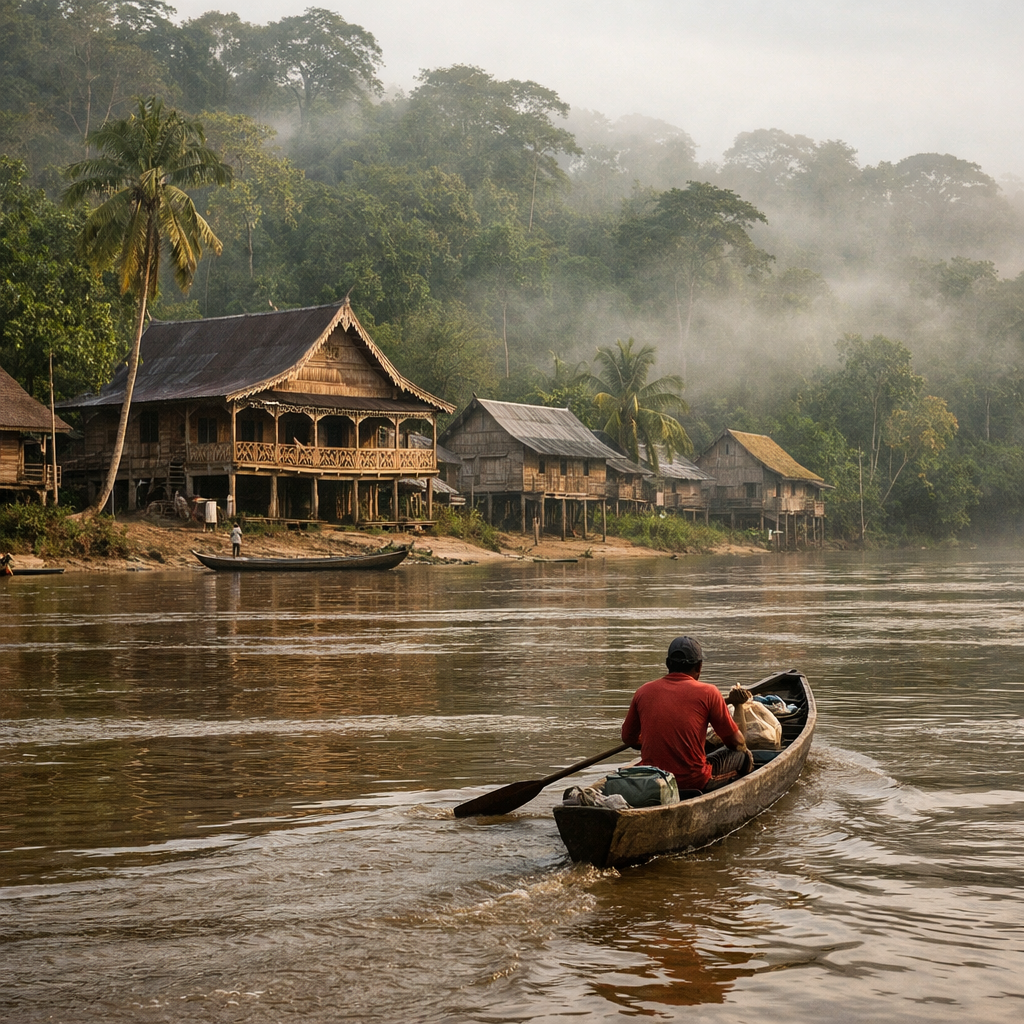
Travel a few hours upriver from Paramaribo by road and boat, and you arrive in a different world. Along the Upper Suriname River and its tributaries, Saamaka villages sit on the riverbank exactly as they have for centuries — clusters of wooden houses on stilts, elaborately carved doors and shutters decorated with tembe woodcarving patterns passed down through generations, and dugout canoes as the primary mode of transport between settlements. Villages like Botopasi, Pikin Slee (home to a genuinely excellent open-air museum on Maroon history), Awarradam, and Danpaati give visitors a rare, respectful window into a culture that has maintained its own governance, spiritual practice, and language for over 250 years.
That language is Saramaccan, and it remains the primary spoken language in many interior villages today. It's a striking linguistic artifact of the Maroons' origins: roughly half its vocabulary traces to West and Central African languages, with the remainder split between English, Portuguese, and Amerindian and Dutch influences — a direct reflection of the diverse origins of the people who built it while escaping bondage. Sranan Tongo and Dutch are Suriname's national linguae francae, but in the deep interior, Saramaccan is what you'll actually hear spoken on the riverbank.
This isn't a culture on display for tourists — it's a living, self-governing society that happens to welcome respectful visitors. Ask before photographing people, dress modestly, and follow your guide's lead on cultural protocol, particularly around spiritual sites and ceremonies.
Getting There and What to Actually Expect
Entry requirements: Unlike most of Central and South America, Suriname is not visa-free for US citizens. Travelers must obtain entry authorization online before departure through Suriname's official e-Visa system, operated by VFS Global as the authorized partner of the Government of Suriname (suriname.vfsevisa.com). As of current published guidance, the entry fee runs approximately USD 50 (or 50 euros) and must be paid and approved online prior to boarding — airlines can and do deny boarding without it. Note that this figure runs higher than some older estimates still circulating online (which quote $25-35), so confirm the current fee directly on the official VFS Global portal before you book, and apply several days ahead of travel to leave room for processing.
Getting to the interior: Visiting the river villages is not a casual add-on to a Paramaribo city trip. There's no showing up independently and hopping on a public boat. Interior visits require a licensed local tour operator who arranges the overland transfer to the riverbank, the boat transfer upriver (sometimes hours long), lodge accommodations, meals, and a guide who can navigate both the logistics and the cultural protocol. Some of the more remote lodges are reached by small charter plane rather than boat. Book through a licensed operator well in advance — this is guided, structured travel, not backpacker improvisation.
Budget: Realistic all-in trip costs — international flights plus a multi-day guided interior river tour with lodge stays — start around $1,400 per person. Paramaribo itself is inexpensive by regional standards; the interior tour is where most of the budget goes, and it's worth every dollar.
🏨 Book Paramaribo Hotels →Where to Stay
Paramaribo: Torarica Resort is the city's established upscale option with a pool and central location near the historic district. Guesthouses in the UNESCO-listed old town put you walking distance from the wooden colonial architecture and the Waterkant riverfront.
Interior river lodges: Danpaati River Lodge and Awarradam Jungle Lodge are the two most established options for a Saamaka village-adjacent stay, both bookable only through licensed tour operators as part of a package, not as standalone reservations.
BTN Insider Tips
Book your interior tour before you book flights. Licensed operators have limited capacity and specific departure schedules — lock in your river lodge dates first, then build your flights around them.
Bring cash. Interior villages have no ATMs, and card acceptance in Paramaribo itself is inconsistent outside major hotels.
Learn a greeting in Sranan Tongo. "Fa waka" (how's it going) goes a long way in Paramaribo, even though Saramaccan is what you'll hear upriver.
This is not a beach trip. Suriname's appeal is historical, cultural, and rainforest-based. Come for the story and the river, not resort amenities.
Mark Your Calendar
- July 1 — Keti Koti (Emancipation Day), Paramaribo — national holiday with ceremonies, parades, and music citywide
- November 25 — Suriname Independence Day
- Year-round — Interior river village tours run year-round, though the rainy season (roughly April–August) can affect river levels and access
Book Your Suriname Trip
The Saamaka and the other Maroon nations of Suriname's interior didn't wait to be freed — they fought for it, won it, and built a culture that has survived intact for over 250 years. Very few places on earth let you witness that legacy still living, still speaking its own language, still paddling its own rivers. Suriname takes more planning than most Caribbean and Latin American trips. That's exactly why so few travelers have been.
✈️ Book Your Suriname Trip Now →*Affiliate links — BTN may earn a commission at no extra cost to you.