Who Are the Garifuna, and Why Does St. Vincent Matter?
Long before "Garifuna" became a name recognized from Los Angeles to New York to London, the story began here, on the volcanic slopes of a small Windward Island most people couldn't find on a map. St. Vincent is the ancestral homeland of the Garifuna people — called "Black Caribs" in colonial-era records — an Afro-Indigenous nation born from the meeting of two peoples who each had every reason to resist European conquest.
Historians trace the Garifuna's African roots to shipwrecked and self-liberated Africans who reached St. Vincent's shores in the 1600s, joined over time by enslaved people who escaped bondage on neighboring islands and made their way to St. Vincent's forested interior. There, they intermarried with the Indigenous Kalinago (Island Carib) people who already called the island Yurumein. Over generations, the two communities merged into one people with their own language, spiritual practices, and identity — Africans who became Indigenous to the Caribbean, and Indigenous people who became part of the African diaspora, at the same time.
This is why a trip built around Garifuna history in St. Vincent is fundamentally different from a beach vacation. This is not a resort story. It is an origin story — for a nation of several hundred thousand people spread today across Belize, Honduras, Guatemala, and Nicaragua, along with diaspora communities in the United States, all of whom trace their bloodline back to these hillsides and, ultimately, to one small uninhabited island called Balliceaux.
Chatoyer, the Carib Wars, and a Nation That Would Not Bend
By the mid-1700s, the Garifuna controlled most of St. Vincent's windward (eastern) coast, while the British colonial government held the leeward side around Kingstown. The two sides fought the First Carib War in 1772–73, which the Garifuna did not lose. The resulting treaty was the first time the British Crown had been forced to sign a formal accord with a non-white people in the Caribbean since a Jamaican Maroon treaty decades earlier — a genuinely remarkable fact of colonial history.
That peace didn't hold. By 1795, Britain was steadily encroaching on Garifuna land to expand sugar plantations, and Paramount Chief Joseph Chatoyer — known to his own people as Satuye — organized a new uprising alongside French revolutionary sympathizers who opposed British interests in the Windward Islands. Chatoyer split command with his brother Duvalle and pushed British forces back toward Kingstown. On March 14, 1795, at Dorsetshire Hill overlooking the capital, Chatoyer was killed in battle by a British officer, Major Alexander Leith. His death didn't end the resistance — Duvalle and others fought on for nearly two more years — but it marked the turning point of what's known as the Second Carib War. Today, March 14 is St. Vincent and the Grenadines' National Heroes Day, and Chatoyer is the country's first and only officially recognized National Hero.
The war dragged on until 1796, when British reinforcements under General Ralph Abercromby finally broke organized Garifuna resistance. What followed was not a peace settlement. It was a punishment.
Balliceaux: Where a Nation Was Nearly Extinguished
This is the part of the story BTN will not soften, because softening it dishonors the people who lived — and died — through it.
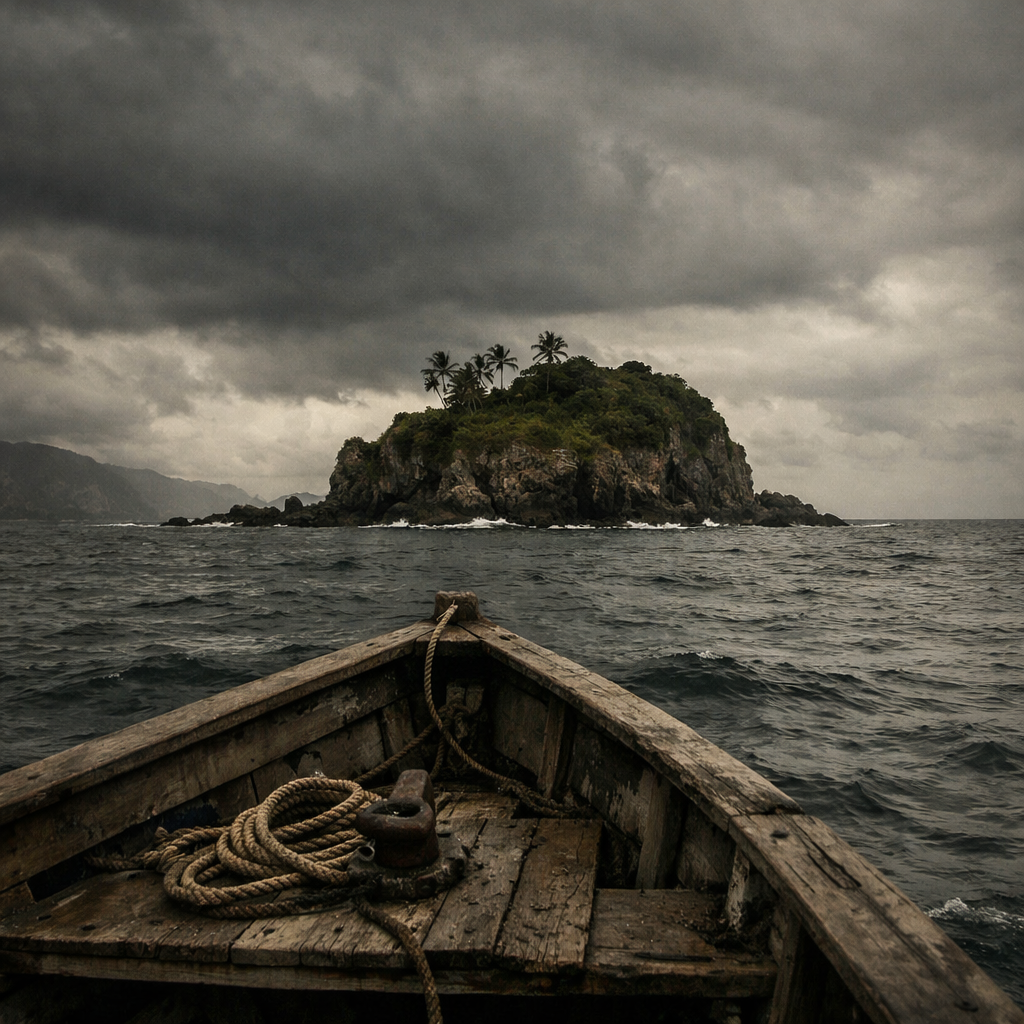
After their military defeat, the British made a deliberate decision: rather than allow the Garifuna to remain on St. Vincent, they would remove the entire population from the island. Troops rounded up Garifuna men, women, and children from across the windward coast and ferried them to Balliceaux, a small, dry, uninhabited islet in the Grenadines with no reliable fresh water source and no infrastructure to support the thousands of people about to be confined there.
More than 5,000 Garifuna were interned on Balliceaux beginning in 1796, held in overcrowded conditions with scarce food and water while the British arranged ships for deportation. Dysentery and yellow fever swept through the camp. By the time survivors were loaded onto ships months later, historians estimate that well over half of those interned had died on Balliceaux — not in battle, but from starvation and disease. Of the more than 5,000 originally rounded up from St. Vincent, only about 2,500 lived to see land again.
There is no plaque on Balliceaux today. No visitor center, no marked graves, no interpretive signage. It is simply an empty island, left exactly as it was — which is, in its own way, part of what makes standing on it so heavy.
Roatán, and a Diaspora Forged From Exile
The survivors were put back on ships and deported roughly 2,000 miles across the Caribbean Sea. On April 12, 1797, they landed at Punta Gorda on the island of Roatán, off the coast of what is now Honduras — a date still honored by Garifuna communities as the anniversary of their arrival in the Central American mainland region. BTN tells the fuller story of that landing, the diaspora it set in motion, and what survives of Garifuna language and culture today in Exiled to Paradise: The Afro-Indigenous Nation Britain Tried to Erase.
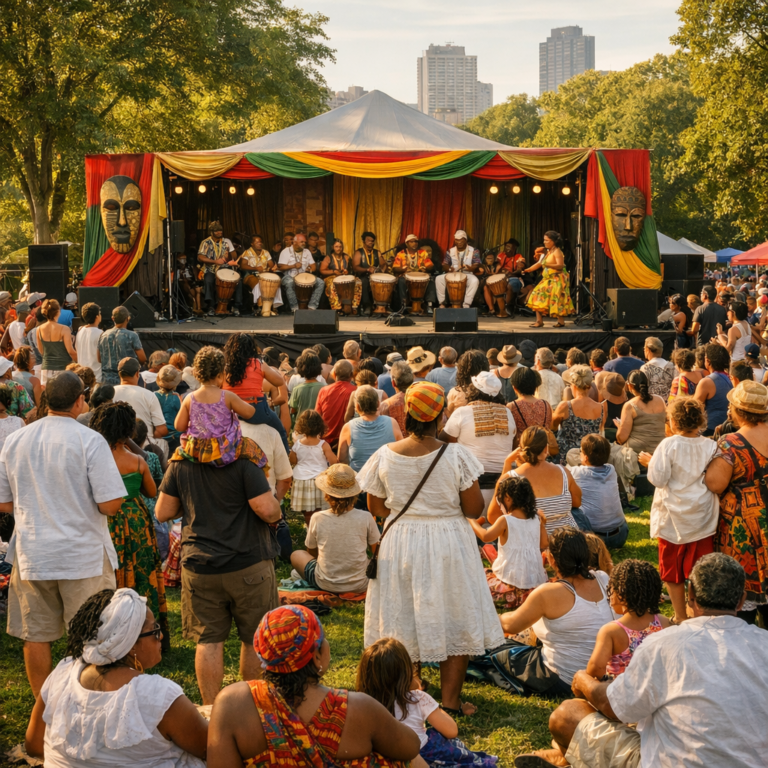
From Roatán, Garifuna families spread along the Central American coastline over the following decades, establishing communities in Trujillo and La Ceiba, Honduras; Livingston, Guatemala; and eventually Dangriga and Hopkins in Belize, where the arrival of Garifuna settlers in 1832 is now commemorated every November 19 as Garifuna Settlement Day — the most widely celebrated Garifuna heritage holiday in the diaspora today. BTN has covered all three of these living Garifuna centers: Roatán and Trujillo, Honduras, Livingston, Guatemala, and Hopkins and Dangriga, Belize — and each carries forward language, punta music, and cassava-based foodways that trace directly back to St. Vincent. In 2001, UNESCO recognized Garifuna language, dance, and music as a Masterpiece of the Oral and Intangible Heritage of Humanity, a rare formal acknowledgment of a culture forged out of resistance and survival.
Not every Garifuna left St. Vincent. A small number evaded British capture entirely by retreating into the island's mountainous interior, particularly around Sandy Bay, Owia, and Fancy on the windward coast. Their descendants were pardoned in 1805 and remain on St. Vincent today — meaning this island is simultaneously the site of the Garifuna's founding trauma and home to an unbroken, if diminished, Garifuna and Carib presence that never left.
Visiting St. Vincent Today
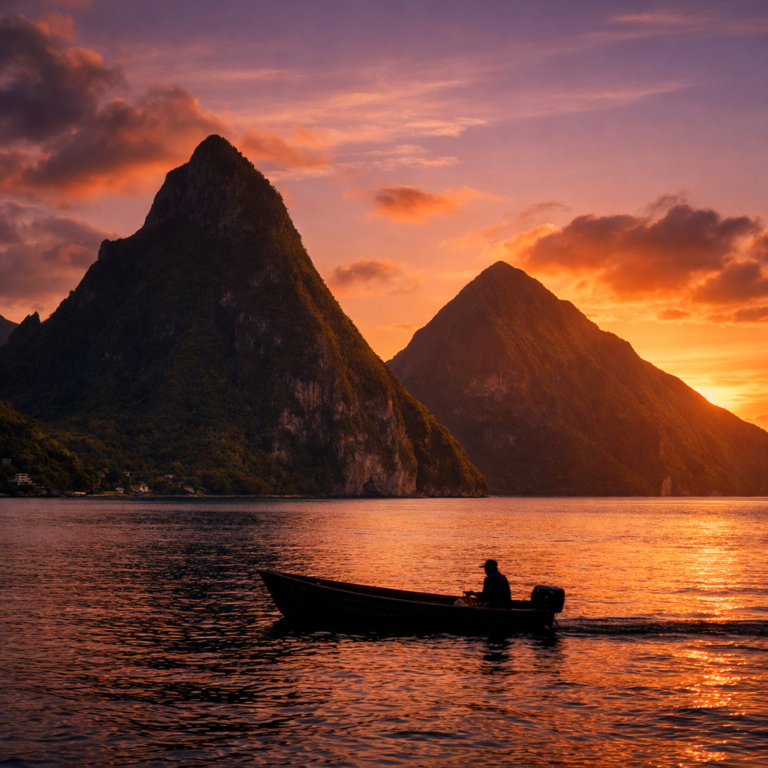
St. Vincent is a lush, mountainous, still-uncrowded island in the Grenadines chain — volcanic peaks, black-sand beaches, and a relaxed pace that has kept it well off the mass-tourism radar compared to neighbors like Barbados or St. Lucia. Most visitors fly into Argyle International Airport (SVD) near Kingstown, with connections through Barbados, Trinidad, or St. Lucia. Kingstown itself is a good base, with the windward Garifuna/Carib communities of Sandy Bay, Owia, and Fancy reachable by road along the island's northeastern coast — worth visiting on their own terms, as living communities, not museum pieces.
Getting to Balliceaux, and What to Actually Expect
Balliceaux sits uninhabited in the Grenadines between Bequia and Mustique, and there is no ferry, no scheduled tour, and no dock. The only way to reach it is by chartering a boat, typically out of Bequia (about a 45–60 minute crossing) or from Kingstown with a longer sailing day. There are no facilities of any kind on the island — no restrooms, no shade structures, no food or water vendors, no cell signal to rely on. Whatever you need for the day, you bring with you and take back out.
Because there's little formal interpretation on-site, the trip is only as meaningful as the guide leading it. Book through a St. Vincent-based operator or a Garifuna cultural guide who can narrate the history accurately as you approach — several Bequia-based boat charter operators and Kingstown heritage-tour guides now offer Balliceaux as a half-day or full-day add-on specifically framed around this history rather than as a beach excursion. Treat the landing itself the way you would a grave site: quiet, unhurried, no music, pack out everything you bring in. This is not a snorkeling stop.
Seas are calmest and charters most reliable during the dry season, December through April, which is also the best overall window for a St. Vincent trip.
Budget Guide
A thoughtful 4-night St. Vincent itinerary that includes a chartered boat day-trip toward Balliceaux, a guesthouse stay, and time in Kingstown and the windward Garifuna communities runs from roughly $900 per person, depending on flight routing and guesthouse choice.
Budget: $120–180/day — guesthouse lodging, local restaurants, shared boat charters.
Mid-range: $200–300/day — boutique guesthouse, private guide for windward-coast and Balliceaux excursions.
Luxury: $350+/day — private villa or resort on Bequia, private full-day charter with a dedicated historian-guide.
BTN Insider Notes
Set expectations before you book. Balliceaux is not a developed heritage site. There is no museum, no marker, no gift shop. The value of the trip is historical and reflective, not scenic or recreational — go in knowing that, and it will not disappoint you.
Go with a guide who treats this as history, not a photo op. Ask any charter operator directly how they narrate the Balliceaux story before booking.
Pair it with the windward coast. Sandy Bay, Owia, and Fancy are living Garifuna and Carib communities today, not just historical footnotes — visiting them alongside Balliceaux gives the fuller picture of a people who both survived in place and were scattered across a diaspora.
Try the food. Cassava bread (locally, "cassava" or "farine"), a staple passed down from Kalinago and Garifuna foodways, is still made on St. Vincent's windward coast much as it has been for centuries. Pair it with the national dish, roasted breadfruit and fried jackfish, and callaloo soup.
Practicalities: US citizens need only a valid passport for short tourist stays — no visa required. The currency is the East Caribbean Dollar (XCD), English is the official language, and the general emergency number is 911.
Why This History Belongs on Every Diaspora Traveler's Radar
It would be easy for a travel site to skip Balliceaux entirely — there's no resort to book, no five-star review to chase, no Instagram-ready infinity pool. But Black Travel Now exists to cover the full black travel experience, and that experience includes the places where our history was made, however painful. Every Garifuna drumbeat in Dangriga, every punta rhythm in Trujillo, every cassava cake sold roadside in Livingston carries the memory of Balliceaux inside it — a people who were nearly erased on a forgotten island and who, instead, built an entire diaspora out of what was left. Standing on St. Vincent's windward coast, or on Balliceaux itself, is one way of saying: we know what happened here, and we remember.
*Affiliate links — BTN may earn a commission at no extra cost to you.