Why Seoul Is Suddenly Everywhere in Black Travel Content
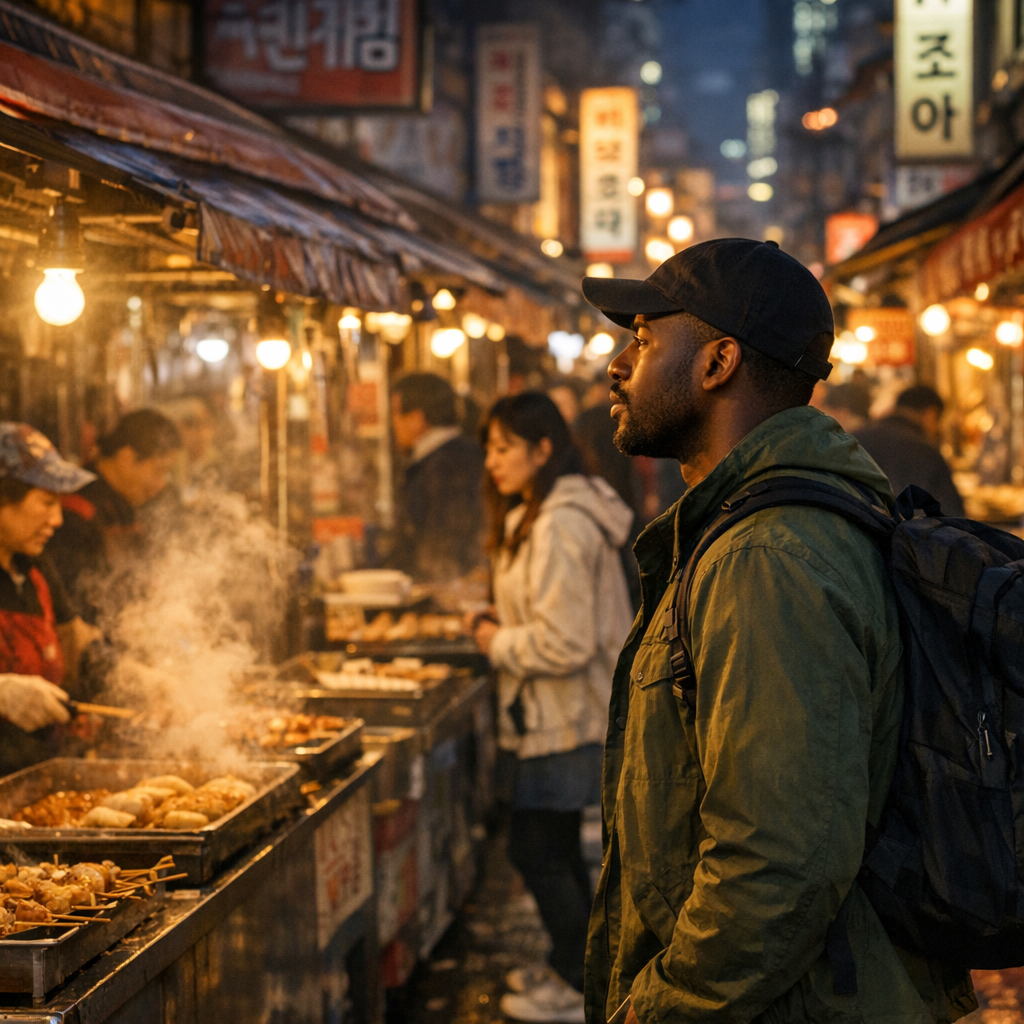
A few years ago, Seoul barely registered on the Black travel radar. Today it's one of the fastest-growing destinations in Black travel content — TikToks of Black creators eating tteokbokki in Myeongdong, YouTube vlogs of ARMY and Blinks pilgrimaging to Hybe headquarters, Instagram reels of glass towers lit up over the Han River at night. The gateway drug is almost always fandom. K-pop, K-dramas, K-beauty, and Korean street food built a bridge into Korean culture for millions of Black fans long before they ever booked a flight — and now that bridge is turning into boarding passes.
What makes Seoul different from a lot of "trending" destinations is that the fandom pipeline has produced something rare: a genuinely deep, well-documented body of first-person Black travel content about the city. This isn't influencers parachuting in for a weekend of photos. It's years of accumulated vlogs, blog posts, and forum threads from Black travelers, expats, and English teachers who have lived the day-to-day reality of being Black in South Korea — the good, the occasionally awkward, and the increasingly normal.
The Honest Take: What Black Travelers Actually Report
Here's where BTN wants to be straight with you, because a one-stop guide that only tells you the fun parts isn't doing its job. The consistent, cross-referenced takeaway from years of first-person accounts is this: South Korea is generally very safe for Black travelers, but it is not a place where you'll blend in, and staring or curiosity — especially outside central Seoul — is common enough that you should expect it rather than be blindsided by it.
Multiple Black travel vloggers and long-term expats describe the same pattern. In Seoul itself, particularly in international-facing neighborhoods like Itaewon, Hongdae, and Gangnam, Black travelers report feeling comfortable and largely unremarkable — Seoul is a genuinely cosmopolitan city with a visible foreign population. Venture into smaller cities, rural areas, or older neighborhoods, and it's common to draw stares, occasional phone photos taken without permission, or children pointing and commenting to parents. Almost universally, travelers describe this as curiosity rather than hostility — South Korea remains a relatively homogeneous society, and many Koreans, especially outside major cities, simply have limited everyday exposure to Black people in person.
It's also worth being upfront that Korean beauty standards and media have a well-documented colorism problem, and some Black travelers — particularly those with darker skin or natural hair textures — report occasional insensitive comments or product-shelf realities (limited foundation shade ranges) that reflect that. None of this is unique to Korea, and none of it has stopped a fast-growing wave of Black tourists and long-term residents from having overwhelmingly positive experiences — but going in informed beats expecting either a diaspora-homecoming warmth or a hostile experience.
The flip side, and it's a big one: crime against tourists in Seoul is exceptionally low by global standards, the public transit system is safe at any hour, and the overall traveler consensus is that whatever discomfort comes from being stared at rarely escalates into anything more serious. A growing number of Black solo female travelers specifically cite Seoul as one of the safer big cities they've visited, precisely because violent crime is so rare.
The Entry Requirements — What's Actually Current Right Now
This is the part of the guide we want you to actually trust, because visa rules change and outdated blog posts are one of the most common ways travelers get bad information. Here's where things stand as of mid-2026:
- Base rule: US citizens can enter South Korea visa-free for stays of up to 90 days for tourism, independent of any K-ETA requirement. This baseline hasn't changed and isn't tied to the temporary exemption below.
- K-ETA (Korea Electronic Travel Authorization): Since 2021, South Korea has generally required most visa-exempt visitors, including US citizens, to obtain this pre-arrival electronic authorization before traveling — similar to the US ESTA or Canada's eTA.
- The temporary exemption: As part of a "Visit Korea Year" push to boost inbound tourism, South Korea suspended the K-ETA requirement for citizens of a group of countries that includes the United States. This waiver started April 1, 2023, and has been extended more than once since — first through the end of 2024, then through the end of 2025, and most recently, per an official notice posted to the K-ETA government portal in March 2026, extended again through December 31, 2026.
In practical terms: as of this writing, eligible US travelers can enter South Korea for short-term tourism without applying for a K-ETA at all — just a valid passport (Korean authorities generally want at least six months of validity remaining) and, if asked, proof of onward travel and funds. Because this exemption has already been extended multiple times and is explicitly labeled temporary, don't take "through 2026" as a permanent policy. Check the official K-ETA portal (k-eta.go.kr) or your airline's entry-requirement page within a few weeks of your travel date to confirm the exemption is still active — especially for any trip planned for early 2027 or later, when this waiver is currently scheduled to lapse unless extended again.
The Growing Black Diaspora and Traveler Community in Seoul
Part of what's fueling Seoul's rise in Black travel content is a genuine, established community on the ground. Black English teachers (through programs like EPIK and private hagwons), military-adjacent families near US bases, international students, and a growing number of Black expat entrepreneurs and creators have built real infrastructure — Facebook groups, Discord servers, and in-person meetups — for Black residents and visitors to connect. Itaewon in particular has long served as an international hub with restaurants, barbershops, and hair-care stores catering to Black hair and skin needs — a detail that matters more than it sounds when you're 20 hours of flying from home.
This existing community means new Black visitors aren't landing cold. There are people to ask about where to get a fresh cut, which skincare actually works on melanin-rich skin, and which K-pop fan-café pop-ups are worth the wait in line.
Top Neighborhoods to Explore
Hongdae — Seoul's youth and indie-culture district: street performances, budget shopping, and nightlife that runs until sunrise, plus the loudest K-pop busking and dance-cover culture in the city.
Itaewon — The most internationally diverse neighborhood, home to the bulk of Seoul's Black expat infrastructure, international restaurants, and a genuinely mixed nightlife crowd.
Gangnam — Yes, that Gangnam. K-pop agency headquarters (Hybe, SM, JYP), high-end K-beauty flagships, and the glossy Seoul you've seen in a hundred music videos.
Myeongdong — Ground zero for K-beauty shopping and street food, with skincare shops stacked three deep on every block.
Ikseondong — A restored hanok (traditional house) village turned into one of Seoul's most photogenic pockets of cafes and boutique shops.
Where the K-Culture Pilgrimage Actually Takes You
For K-pop and K-drama fans, Seoul functions almost like a theme park of familiar landmarks: the Hybe Insight museum and headquarters exterior in Yongsan, SM Town's exhibition space, drama-filming cafes cataloged obsessively online, and fan-run "rice wreath" cafes that pop up around idols' birthdays. K-drama location tourism has become its own mini-industry, with operators now running itineraries built entirely around specific shows.
Must-Try Foods
Korean fried chicken — double-fried, crispy, in a dozen sauce variations, paired with beer (chimaek).
Tteokbokki — chewy rice cakes in a sweet-spicy gochujang sauce, sold at street carts across the city for a few dollars a portion.
Korean BBQ — grill-it-yourself galbi and samgyeopsal, wrapped in lettuce with garlic and ssamjang. Budget a full evening; it's an event, not a quick meal.
Bibimbap — the classic mixed rice bowl with vegetables, gochujang, and a fried egg, found everywhere from cheap diners to upscale restaurants.
Hotteok — sweet, syrup-filled street-cart pancakes, especially popular in the cooler autumn months.
Where to Stay
Luxury: Signiel Seoul, in the Lotte World Tower, offers some of the best skyline views in the city alongside five-star service. The Shilla Seoul is the classic grand-dame choice for travelers who want old-school Korean hospitality with modern polish.
Mid-Range: Hotels clustered around Myeongdong and Hongdae offer excellent value, walkable access to shopping and nightlife, and reliably clean, modern rooms in the $100-180/night range.
Budget: Seoul's guesthouse and hostel scene, concentrated in Hongdae and around Seoul Station, is excellent — clean, social, and often $25-45/night, with many catering specifically to international backpackers and K-culture pilgrims.
🏨 Book Seoul Hotels →Getting There
Incheon International Airport (ICN) is one of the best-connected, most efficiently run airports in the world, with direct flights from New York (JFK), Los Angeles, Atlanta, Chicago, Dallas, and Seattle, among other major US cities. West Coast flights run 11-13 hours direct; East Coast routes typically connect through a hub, running 16-20 hours total. Book 3-4 months out for the best fares, and target shoulder-season travel for both price and weather.
✈️ Find Seoul Flights →Getting Around
Seoul's subway system is one of the best in the world — extensive, punctual, clean, and fully bilingual with English signage and announcements. Get a T-money card at any convenience store on arrival; it works on subways, buses, and even some taxis. Kakao T (the local ride-hailing app) is the practical alternative to Uber, which has limited functionality in Korea. Taxis are plentiful, metered, and inexpensive by Western standards.
Best Time to Visit
Autumn (late September through November) is BTN's top recommendation — crisp air, brilliant fall foliage in palaces and mountain parks, and comfortable walking-around temperatures in the 50s-60s°F, all without the humidity of summer or the biting cold of winter. Spring (April-May) is a close second, prized for cherry blossoms. Summer brings heat, humidity, and monsoon rains; winter is cold but hosts excellent Christmas markets and K-drama-worthy snow scenes.
Budget Guide
Budget: $60-100/day — guesthouse or hostel, street food and casual dining, subway transport, mostly free or low-cost attractions.
Mid-range: $120-200/day — 3-4 star hotel, mix of casual and sit-down dining, some paid attractions and K-culture tours.
Luxury: $300-500+/day — five-star property, premium dining, private guides, K-beauty and shopping splurges.
BTN Insider Tips
Download Papago before you land. The Naver-made translation app handles Korean far better than Google Translate for real-time conversations and menu photos.
Get a T-money card and a local SIM or eSIM on day one. Both are available at Incheon Airport, and connectivity plus transit access make the rest of the trip dramatically smoother.
Pack hair and skin products from home. Outside Itaewon's specialty stores, availability for Black hair care and deeper foundation shades is still limited.
Expect and prepare for stares outside central Seoul. It's almost always curiosity, not hostility, but knowing that in advance changes how it lands emotionally.
Reconfirm the K-ETA exemption before you book. Policies tied to promotional "Visit Korea Year" waivers can change; check k-eta.go.kr in the weeks before departure.
Is Seoul Safe for Black Travelers?
Overall, yes — Seoul consistently ranks among the safer major cities in the world for violent crime, and the transit system is safe to use at any hour. The realistic caveat, echoed across a wide range of first-person Black traveler accounts, is social rather than physical: expect curiosity, occasional staring, and the reality of standing out in a still-largely-homogeneous society, particularly outside the international pockets of Seoul itself. None of this has stopped a fast-growing wave of Black tourists, content creators, students, and long-term residents from building genuinely rewarding lives and trips in and around the city — just go in with eyes open rather than expecting either extreme.
Mark Your Calendar
- Late September–early October — Chuseok (Korean Thanksgiving) brings major cultural events, though some businesses close
- October — Seoul Lantern Festival lights up Cheonggyecheon Stream
- Year-round — K-pop concerts, fan meets, and album-release pop-up cafes, announced on short notice via fandom social media
- November — Peak fall-foliage season in palace gardens and nearby mountains
Book Your Seoul Trip
Between the K-culture pilgrimage, the food, the safety, and a rare window of visa simplicity, 2026 is shaping up to be one of the easiest years yet for Black travelers to finally make the Seoul trip fandom has been building toward for years.
✈️ Book Your Seoul Trip Now →*Affiliate links — BTN may earn a commission at no extra cost to you. Entry requirements referenced above (K-ETA exemption status, visa-free stay length) reflect information verified as of publication; always confirm current requirements directly with official South Korean government sources before booking.