The Governor's Invitation
In the spring of 1858, a delegation of Black San Franciscans quietly crossed the border into a British colony most Americans had barely heard of. Word had reached California's free Black community — then numbering in the thousands and living under an increasingly hostile legal climate — that the governor of the Colony of Vancouver Island was willing to receive them as full settlers. That governor was Sir James Douglas, himself of mixed Black Caribbean and Scottish heritage, and the message his emissaries carried back to San Francisco changed the direction of hundreds of lives.
California in the 1850s was no refuge for free Black Americans. The state had entered the union as "free" on paper, but the 1850 Fugitive Slave Act and the 1857 Dred Scott decision left Black Californians exposed to kidnapping, denied citizenship, and shut out of the courts — Black residents could not testify against a white person in a California courtroom. When rumors circulated that California legislators were considering laws to bar Black immigration entirely, community leaders like Mifflin Wistar Gibbs sought an exit. Gibbs and a small group traveled north to meet Douglas directly. The governor, aware of his own ancestry and eager to build a stable settler population that could help counter American annexationist pressure on the colony, assured them that people of African descent would be treated fairly under British law — law that had abolished slavery throughout the empire more than two decades earlier, in 1834.
What followed was one of the largest organized Black migrations in North American history that most travelers have never heard of. An estimated 600 to 800 Black Californians sailed north in 1858, many aboard the steamer Commodore and other vessels bound for Victoria on Vancouver Island. Some stayed in the growing port town, where men like Gibbs and Peter Lester built successful businesses. Others pushed further into the colony, and a determined cluster of families made their way to a rugged, fertile island in the Gulf of Georgia that the local Hul'qumi'num-speaking peoples knew for its salt springs — a place the newcomers would call Salt Spring Island.
Why Salt Spring, and Why It Mattered
Salt Spring Island offered something California increasingly refused to guarantee: the right to own land outright, unmolested. Under British colonial law, settlers of any race could pre-empt Crown land, clear it, and hold title. For families who had spent years — sometimes generations — enslaved or living under threat of enslavement, the ability to legally own the ground beneath their feet was not a lifestyle choice. It was the entire point.
The island's north end, around Vesuvius Bay and stretching toward what is now Ganges, became home to a cluster of Black homesteads through the late 1850s and 1860s. These were working farms — livestock, orchards, timber cleared by hand — built by people who had crossed an ocean of legal and physical danger to get there. It was not, however, an unblemished paradise. The settlers faced isolation, brutal winters, a devastating smallpox epidemic in 1862, and — later in the 1860s — a spate of unsolved killings of Black settlers near Vesuvius Bay that remain a dark and largely unresolved chapter of the island's history. Racism did not vanish at the 49th parallel; it simply took a different, sometimes quieter, and sometimes still violent shape. What did change was the legal footing: land title, court testimony, and the vote were rights British Columbia's Black settlers could exercise that California denied them.
The Stark Family
No name is more closely associated with Salt Spring's Black pioneer history than Sylvia Stark. Born around 1839 into slavery in Clay County, Missouri, Sylvia was the daughter of Howard Estes, who purchased his own freedom and that of his family after prospecting during the 1849 California Gold Rush. The Estes family made their way west to California by wagon in the early 1850s, fleeing racial violence in Missouri, and it was there that a teenage Sylvia married Louis Stark, a man who had also escaped slavery.
When the 1858 migration north began, the Starks were among those who chose to go. They sailed to Victoria and eventually settled at Vesuvius Bay on Salt Spring Island, clearing land, planting an orchard, and raising six children on a homestead they built themselves. The family endured the 1862 smallpox epidemic that devastated Indigenous and settler communities across the region alike, and later spent time farming near Cedar on Vancouver Island before Sylvia returned to Salt Spring in 1885 to work the family farm alongside her son Willis. She lived to be roughly 105 years old, dying on Salt Spring Island in 1944 — a living link between antebellum slavery in Missouri and mid-twentieth-century Canada. One of her daughters, Emma Arabella Stark, went on to become believed to be Vancouver Island's first Black female schoolteacher, extending the family's legacy in education across generations.
The Alexander Family
Alongside the Starks, Charles and Nancy Alexander are among the most documented of Salt Spring's founding Black families. The Alexanders arrived in the colony in 1858, part of the same wave of migration that brought the Estes and Stark families north, and their descendants remain part of the historical record kept by British Columbia's Black history institutions today. The BC Black History Awareness Society has produced dedicated documentary material on the Alexander family's journey and legacy, and place names on the island and across the wider region still carry echoes of the Black pioneers who settled there — a quiet but persistent form of commemoration in a province where this history is not always taught in schools.
John Craven Jones, Educator
Education mattered enormously to a community that had, in many cases, been legally barred from literacy under slavery. Among Salt Spring's pioneer generation, John Craven Jones stands out as the settlement's schoolteacher, providing formal instruction to island children — Black, white, and Indigenous alike, in a colony with far fewer schools than students — for roughly two decades before eventually returning to the United States. Jones's tenure represents an important and under-told thread in this story: Black settlers on Salt Spring were not only farmers carving homesteads out of forest, they were also building civic institutions — schools among them — in a frontier colony that badly needed them. As with several details of this period, the fullest documentation of Jones's specific dates and the arc of his time on the island rests with local archives and the BC Black History Awareness Society rather than a single widely published source, so travelers curious about the finer points of his story are best served by consulting the Society directly.
A History Kept Alive Through Community Work, Not a Museum
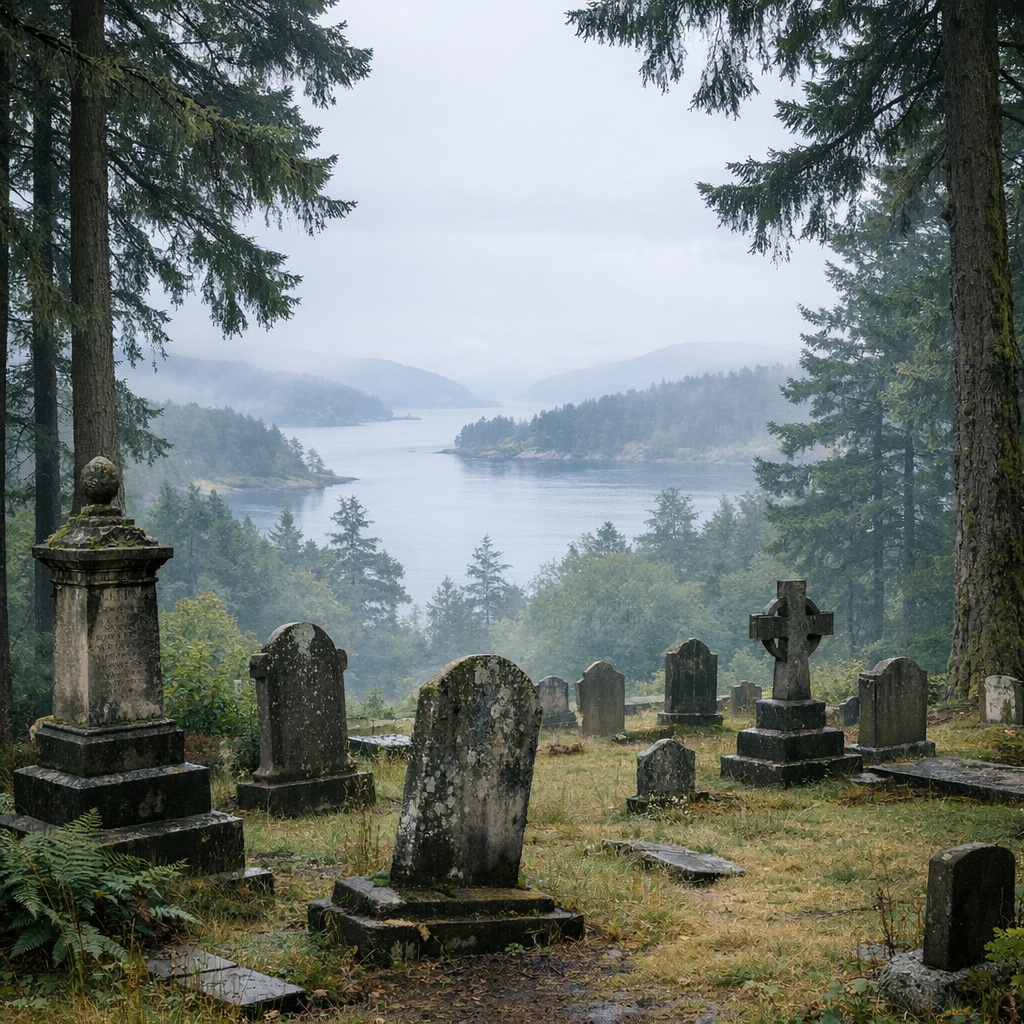
Here is something worth understanding before you plan a visit: unlike many historic sites built around a single museum building or visitor center, Salt Spring's Black pioneer history is preserved primarily through community and institutional research rather than an on-site interpretive museum dedicated to the subject. The BC Black History Awareness Society, based in Victoria, is the leading organization documenting this era — through oral histories, archival research, cemetery records, and a digital museum project cataloguing stories, images, and video interviews related to Black pioneers across British Columbia, including those who settled Salt Spring Island. Their work has also documented related Black pioneer burial sites elsewhere on Vancouver Island, including a substantial number of graves at Victoria's Ross Bay Cemetery.
Sylvia Stark herself is understood to be buried in the Ganges area of Salt Spring Island, and descendants of the pioneer families still have ties to the island today. But because grave locations, marker conditions, and public accessibility can change — and because this history has been pieced together over decades by researchers and family descendants rather than centralized in a single official record — we're intentionally not publishing turn-by-turn directions to specific gravesites or markers in this article. If you want to visit a specific site respectfully and accurately, the BC Black History Awareness Society is the authoritative current source for confirmed locations, visiting protocols, and the latest research. Reach out to them before your trip; they are the people doing the work of keeping this history from disappearing, and they can point you to what's appropriate to see and how to see it respectfully.
Getting to Salt Spring Island
Salt Spring Island sits in the Gulf Islands between Vancouver Island and the British Columbia mainland, and it's reached almost exclusively by BC Ferries. The most common routes run from Swartz Bay (near Victoria) to Fulford Harbour, and from Tsawwassen (near Vancouver) to Long Harbour, with additional inter-island connections through the southern Gulf Islands. Round-trip fares for a vehicle and driver typically start around $40 USD depending on route and season, with walk-on passenger fares considerably cheaper — a real option if you're planning to explore on foot or by bike once you arrive.
If you're coming from the US, the most practical routing for most travelers is flying into Seattle or Victoria, then connecting to the ferry network from there. Victoria International Airport puts you within a short drive of the Swartz Bay terminal, making it the more direct gateway for a Salt Spring-focused itinerary.
Getting Around the Island
Salt Spring is compact but hilly and largely rural, so plan your transportation before you arrive. Renting a car on Vancouver Island and bringing it over on the ferry gives you the most flexibility for reaching the island's north end, where the historic Black settlement areas around Vesuvius and Ganges are located. For a slower, more contemplative pace — arguably better suited to a trip centered on reflection and history — bike rentals are available on the island and are a popular way to move between Ganges village, Vesuvius Bay, and the island's scenic backroads. Guided heritage walking tours focused on the island's pioneer history, offered seasonally through local operators and historical societies, are another excellent option if you want context and storytelling alongside the scenery; check availability and book ahead, as offerings can be limited outside peak season.
Best Time to Visit
Plan your trip for May through September. The Gulf Islands' famously mild, wet winters give way to a dry, sunny summer season during these months, ferry schedules run at their fullest frequency, and the island's farmers markets, galleries, and seasonal tours are all in full swing. Salt Spring's Saturday Market in Ganges, running through the warmer months, is a worthwhile stop in its own right, showcasing the island's strong artisan and small-farm culture — a living continuation, in some sense, of the agricultural life the original pioneer families built here more than 165 years ago.
Why This Trip Belongs on Your List
Black Canadian history rarely gets the spotlight that Black American history does, and the story of Salt Spring Island is a striking example of why that gap matters. This is a story of people who looked at the legal walls closing in around them in 1850s California and chose to cross an international border — and an ocean of Georgia Strait — to build something durable under a different flag. It's a story about a governor of African descent extending an invitation that reshaped a colony's demographics. It's a story preserved today not by grand monuments but by dedicated researchers, family descendants, and a small nonprofit historical society doing the patient work of keeping names, dates, and gravesites from being forgotten.
Pair a Salt Spring visit with time in Victoria, where much of the same migration's history is documented at Ross Bay Cemetery and through the BC Black History Awareness Society's ongoing programming, and you'll come away with one of the fullest pictures available anywhere of Black settlement in 19th-century Canada. Ready to plan your Gulf Islands trip? Book your BC Ferries crossing, line up a rental car or bike on Vancouver Island, and reach out to the BC Black History Awareness Society ahead of time if you'd like guidance on visiting responsibly — this is a piece of Black diaspora history that deserves to be seen, understood, and remembered.
✈️ Book Your BC Trip Now →*Affiliate links — BTN may earn a commission at no extra cost to you.